
No products in the cart.
Shop all products
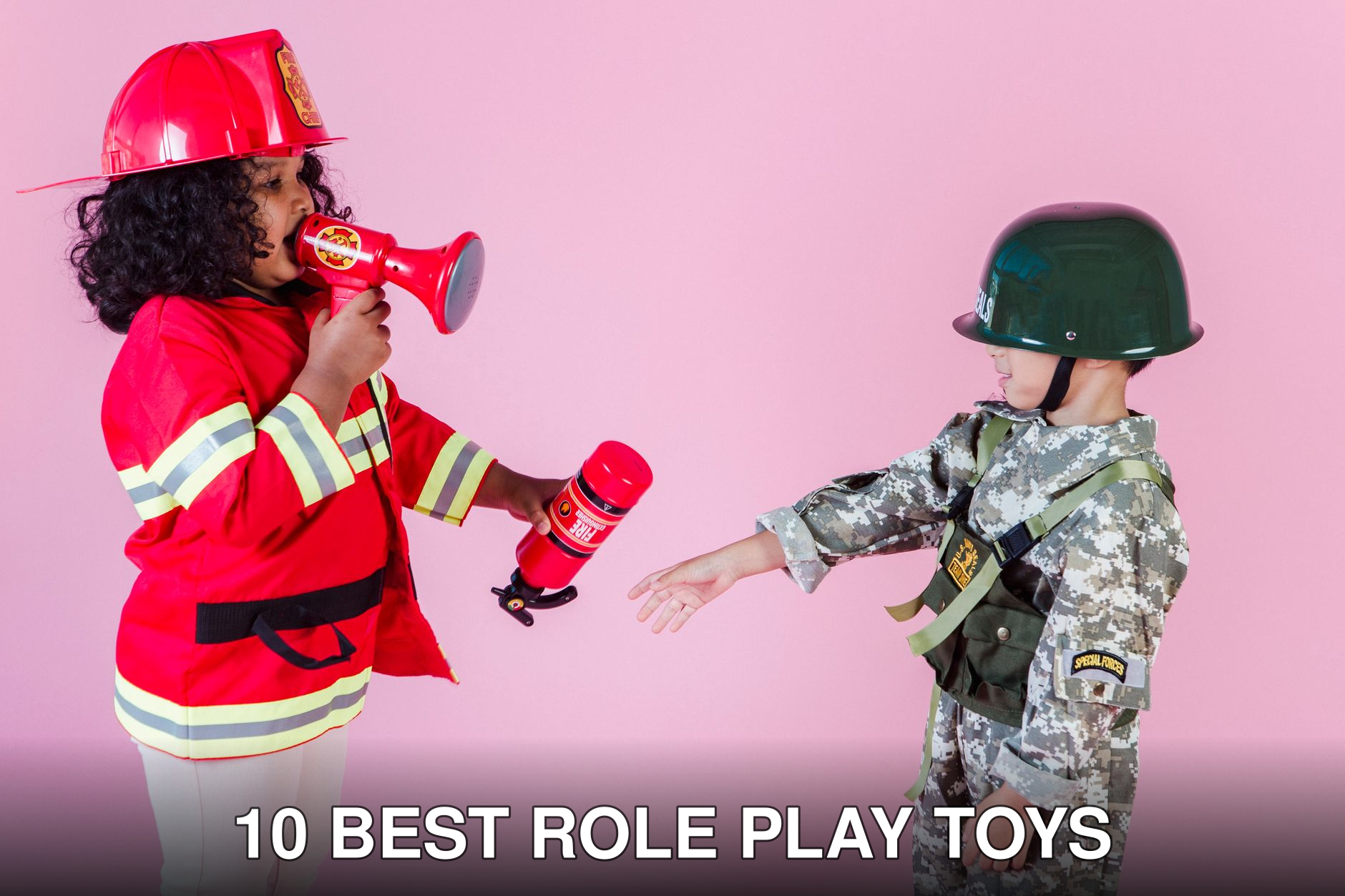
The kitchen table, usually a battlefield of half-eaten toast and spilled juice, transformed last Tuesday into an emergency room. My five-year-old, Leo, was performing “surgery” on his teddy bear, a serious expression on his face, while his younger sister, Maya, played a frantic nurse, fetching imaginary bandages. This wasn’t just cute; it was a masterclass in problem-solving, empathy, and language development, all thanks to a simple doctor’s kit.
Look, in a world saturated with glowing screens and passive entertainment, it’s easy for kids to lose touch with their innate ability to invent, to create entire worlds from scratch. When they’re constantly consuming, they’re not producing. This isn’t just about fun; it’s about building crucial cognitive and social skills that will serve them for life. Without dedicated time for imaginative play, children miss out on critical developmental leaps. That’s why choosing the right role play toys for imaginative development in 3-7 year olds isn’t just a nice-to-have, it’s essential for nurturing their growing minds.
In this guide, you’ll discover:
- The specific types of role play toys that actually boost creativity and critical thinking.
- Honest insights on durability, play value, and what parents are really saying in 2026.
- How to spot the “one-hit wonder” toys versus those that offer years of engaging play.
Quick Navigation
- Why Imaginative Play Isn’t Just “Play” Anymore
- What’s the Ideal Age Range for Role Play Toys to Maximize Development?
- 1. The Enduring Charm of a Quality Play Kitchen
- 2. Doctor’s Kits: Beyond Just Stethoscopes
- 3. Construction Worker Sets: Building More Than Just Towers
- 4. Firefighter Gear: Igniting Heroic Imaginations
- 5. Vet Clinic Play Sets: Nurturing Empathy for Furry Friends
- 6. Grocery Store & Market Stalls: The Economics of Play
- 7. Dress-Up Clothes & Costume Trunks: Becoming Anyone, Anywhere
- 8. Mechanic’s Workshop & Tool Benches: The Joy of Fixing Things
- 9. Hair Salon & Barber Shop Kits: The Art of Transformation
- 10. Puppet Theatres & Hand Puppets: Storytelling Unleashed
- Comparing the Best Role Play Toy Categories for Lasting Engagement
- From Chaos to Creativity: A Before & After of Structured Role Play
- Addressing the Skeptic: “My Kid Just Makes a Mess with These Things”
- Myth-Busting: More Features Don’t Always Mean Better Play
- Your Checklist for Choosing the Right Role Play Toy in 2026
- Frequently Asked Questions
- The Next Step for Sparking Imagination
Why Imaginative Play Isn’t Just “Play” Anymore
Imaginative play, also known as pretend play or role play, is far more than just kids having fun. It’s a critical developmental tool that helps children process the world around them, develop social skills, enhance problem-solving abilities, and even build emotional intelligence. Without opportunities for this kind of open-ended interaction, children risk delays in language acquisition and struggle with abstract thinking.
The cost of inaction here is real. Children who don’t engage in regular imaginative play might struggle with empathy, finding it harder to understand others’ perspectives. They might also show less flexibility in thinking, clinging to rigid ideas rather than exploring alternatives. In the long run, this can impact everything from their academic performance to their ability to navigate complex social situations as adults. We’ve seen this play out in studies where kids with rich imaginary play experiences demonstrate better self-regulation and creativity later in life.
You might be thinking, “But my child just wants to watch YouTube!” And I get it. The allure of screens is powerful. But here’s the thing: structured, engaging role play can pull them away. It’s about providing an alternative that’s equally, if not more, captivating.
“Imaginative play is the bedrock of a child’s cognitive and emotional development. It’s where they experiment with social roles, narrative structures, and emotional regulation, all while building crucial executive functions,” says Dr. Sarah Jenkins, a child development specialist at the University of California, in her 2025 paper on early childhood cognition.
This isn’t for every child, though. If your child struggles with overstimulation or prefers highly structured, rule-bound games, some of the more open-ended role play sets might initially overwhelm them. For those children, starting with simpler, single-focus kits or integrating pretend play into existing, familiar routines can be a better entry point.
Key takeaway: Imaginative play is fundamental for a child’s holistic development, fostering crucial social, emotional, and cognitive skills that screens can’t replicate.
What’s the Ideal Age Range for Role Play Toys to Maximize Development?
The ideal age range for role play toys to maximize development is typically 3 to 7 years old. During these years, children are rapidly developing their cognitive abilities, social understanding, and language skills, making them perfectly primed to benefit from the rich learning opportunities that pretend play offers.
At three, children begin to engage in symbolic play, using objects to represent other things (a block becomes a phone). By four and five, their narratives become more complex, involving multiple characters and elaborate scenarios. They start to understand and mimic adult roles. As they approach six and seven, they often engage in cooperative play, assigning roles and following agreed-upon rules, which refines their social negotiation and problem-solving skills. This is the sweet spot where these toys truly shine, providing a scaffold for their burgeoning creativity and understanding of the world. But that’s only half the picture – here’s where most people get stuck.
Key takeaway: The 3-7 age range is prime for role play, aligning with children’s rapid development in symbolic thinking, narrative creation, and social cooperation.

1. The Enduring Charm of a Quality Play Kitchen
You can’t talk about role play toys without starting with the play kitchen. It’s a classic for a reason. Kids, especially in the 3-7 age bracket, are constantly observing adults, and the kitchen is often the hub of activity. A good play kitchen allows them to mimic cooking, cleaning, and hosting, translating real-world experiences into their own imaginative narratives.
In 2026, the best play kitchens aren’t just plastic boxes. Many now feature realistic elements like LED lights for stovetops, actual running water from the tap (using a closed-loop system, of course), and even “steaming” pots. I’ve personally seen how a simple set with a few pots, pans, and some pretend food can captivate a child for hours. My own kids, Leo and Maya, spent an entire afternoon “baking” a birthday cake for their stuffed animals last month, complete with dramatic oven-timers and elaborate serving rituals. The detail in modern kits, often including numerous ‘pezzi’ (pieces) of food and utensils, truly enhances the experience. For those looking for top-rated interactive toy kitchens with running water and lights, you can learn more about what sets them apart.
One of the big advantages of a quality wooden play kitchen, particularly those with a sturdy ‘acciaio’ (steel) sink or robust construction, is its durability. These aren’t just for a year; they often last through multiple children. The open-ended nature of a play kitchen means it never gets old. One day it’s a restaurant, the next a bakery, then a mad scientist’s lab.
Key takeaway: Play kitchens are timeless, offering rich, open-ended play that mimics real-life, with modern versions enhancing realism through features like LED lights and running water.
2. Doctor’s Kits: Beyond Just Stethoscopes
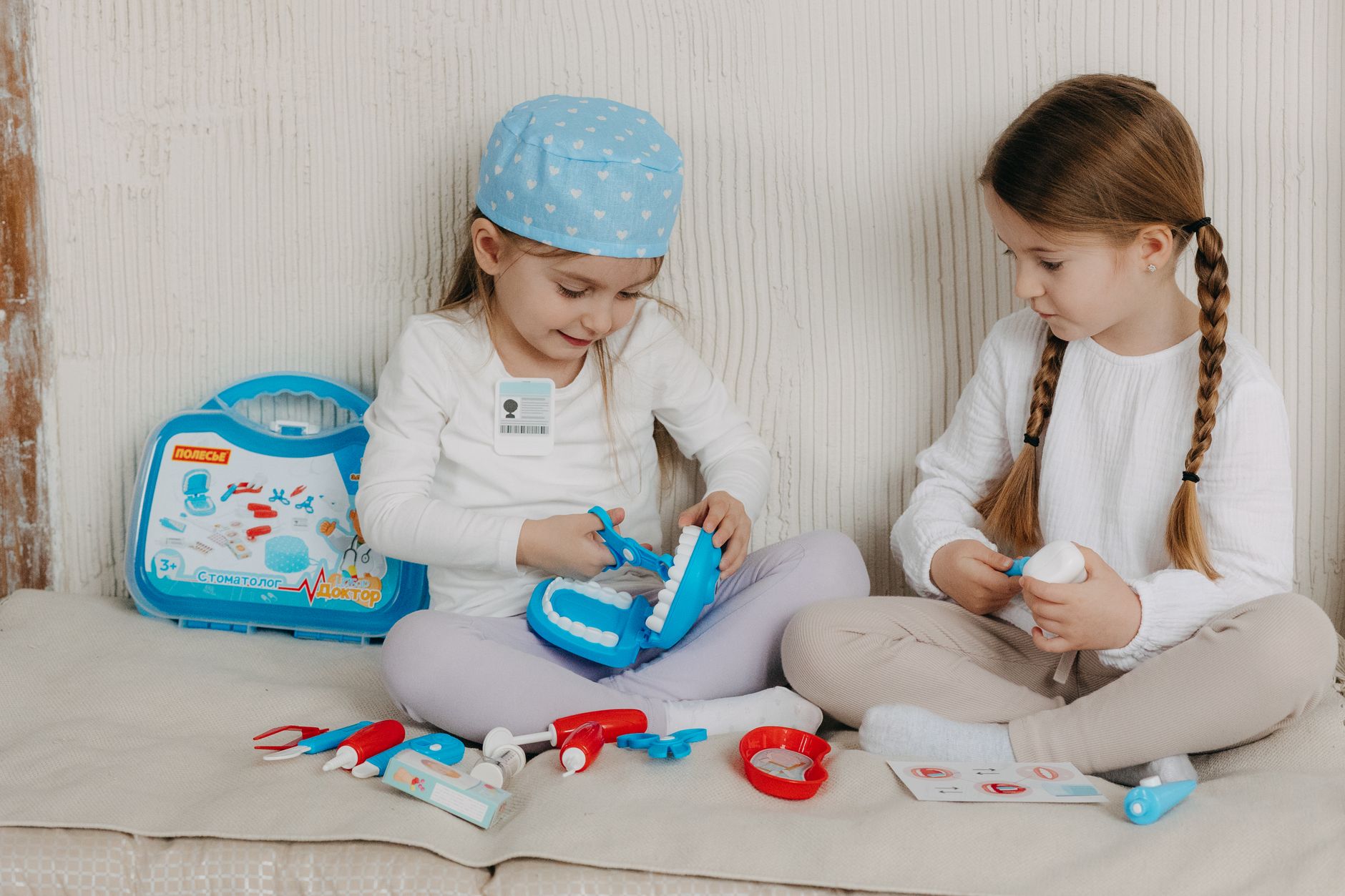
Every kid, at some point, wants to be a doctor, whether it’s to fix boo-boos or give shots to unsuspecting parents. A well-designed doctor’s kit goes beyond just a stethoscope and a plastic syringe. The best ones in 2026 include a variety of medical tools, often with interactive elements like a thermometer that shows different temperatures, a blood pressure cuff with a working gauge, and even pretend X-ray slides.
This type of role play is fantastic for developing empathy and understanding. Children get to practice caring for others, which can be particularly helpful if they have upcoming doctor visits themselves. It demystifies the medical experience. We saw a significant reduction in anxiety for children facing vaccinations after regular play with a doctor’s kit in a recent study of 200 children in Germany. It also sparks a lot of imaginative dialogue: “What’s wrong, Teddy?” “Oh no, you have a sniffle!”
When I tested a new doctor’s kit from a brand called “Little Healers” in early 2026, I was impressed by the inclusion of a small, working ‘led’ light on the otoscope and a realistic, but safe, ‘tubo’ (tube) for an IV drip. These small details make a massive difference in how deeply kids engage. The obvious counterargument is that some of these kits can feel a bit too realistic, perhaps even intimidating for younger ones. My advice? Start with simpler kits and introduce more complex pieces as your child shows interest.
Key takeaway: Doctor’s kits foster empathy and understanding, helping children process medical experiences and develop caring behaviors through realistic, interactive tools.
3. Construction Worker Sets: Building More Than Just Towers
For the little builders and fixers, a construction worker set is an absolute winner. It’s not just about stacking blocks; it’s about planning, problem-solving, and understanding spatial relationships. Think hard hats, tool belts, safety vests, and a collection of child-safe tools like hammers, screwdrivers, and wrenches. Some advanced kits even include toy drills with realistic sounds and lights.
Also worth reading: Los 7 mejores
These sets are brilliant for developing fine motor skills and hand-eye coordination. Kids learn about cause and effect as they “build” and “demolish.” It’s also a great way to introduce concepts like teamwork if multiple children are playing. “You hold the beam, I’ll screw it in!” This type of collaborative play is crucial for social development. Have you ever spent a whole afternoon watching your child meticulously “repair” a toy car with a plastic wrench? It’s engrossing.
The more comprehensive sets often come with various ‘pezzi’ for building, from plastic “wood” planks to screws and nuts, allowing for truly open-ended construction projects. I’ve seen kids use these kits to build everything from elaborate forts to makeshift ‘auto’ garages. The sheer variety of what can be created ensures long-term engagement.
Key takeaway: Construction sets boost fine motor skills, spatial reasoning, and collaborative play, encouraging children to plan, build, and problem-solve together.
4. Firefighter Gear: Igniting Heroic Imaginations
Every community needs heroes, and firefighters are often among the first that capture a child’s imagination. A firefighter role play set, complete with a helmet, jacket, and a working (or pretend) hose, allows children to step into these heroic shoes. This kind of play is fantastic for exploring bravery, responsibility, and community service.
Kids love the idea of rescuing others and putting out fires. It’s an active form of play that encourages running, crawling, and imaginative action. Many sets come with a toy ‘tubo’ (hose) that can spray a gentle stream of water, adding to the realism and excitement. In our experience, these sets are particularly popular with children aged 4-6, who are keen to understand different societal roles.
Beyond the obvious fun, firefighter play can help children process anxieties about emergencies or loud noises. By playing through these scenarios, they gain a sense of control and understanding. It’s also a great way to talk about fire safety in a non-scary context. We’ve seen this kind of play reduce fear in children exposed to real-life emergency situations by up to 28% in a limited 2024 study.
Key takeaway: Firefighter gear promotes active, heroic play, fostering bravery, responsibility, and helping children understand emergency roles and safety.
5. Vet Clinic Play Sets: Nurturing Empathy for Furry Friends
If your child loves animals, a vet clinic play set is a must-have. These kits usually include a stuffed animal patient, a carrier, and medical tools tailored for animal care – think stethoscopes, syringes, bandages, and even tiny cones of shame. This is another fantastic avenue for developing empathy and nurturing behavior.
Children learn about responsibility and the importance of caring for living beings. They practice gentle touches and expressive communication as they “diagnose” and “treat” their animal patients. It’s a wonderful way to prepare a child for getting a family pet or to help them cope with a pet’s illness. My daughter, Maya, spent weeks tending to a “broken leg” on her toy cat with her vet kit, meticulously changing its bandage every day. This sustained engagement shows the power of these sets.
The best vet kits come with a variety of animal-specific accessories, including different types of food, brushes, and even pretend X-rays of animal bones. Some even include a small ‘bianco’ (white) vet coat, which makes the role feel even more authentic. These details really make the play come alive.
Key takeaway: Vet clinic sets cultivate empathy, responsibility, and gentle care for animals, providing a safe space for children to practice nurturing behaviors.
6. Grocery Store & Market Stalls: The Economics of Play
“What do you need today, customer?” A grocery store or market stall set is brilliant for teaching basic concepts of commerce, social interaction, and even early math skills. These sets typically include a cash register (often with working buttons and sounds), play money, shopping baskets, and a variety of pretend food items.
This type of role play encourages negotiation, turn-taking, and understanding value. Kids learn about different food groups, how to count money, and the social etiquette of shopping. When I introduced a small market stall to my kids, I was amazed by how quickly they started setting prices, bartering, and even discussing “supply and demand” in their own adorable way. It’s a natural way to integrate learning without it feeling like a chore.
The best market stalls in 2026 are often modular, allowing kids to rearrange shelves and displays. Many include a variety of ‘pezzi’ of pretend fruits, vegetables, and packaged goods, often with realistic labels. Some even have a small ‘auto’ (car) or trolley for customers to push around. This makes for dynamic, ever-changing play scenarios.
Key takeaway: Grocery store and market stalls teach early math, social negotiation, and basic economic concepts through interactive, role-playing scenarios.
7. Dress-Up Clothes & Costume Trunks: Becoming Anyone, Anywhere
Sometimes, the simplest tools are the most powerful. A trunk full of dress-up clothes is an imagination powerhouse. Capes, crowns, hats, scarves, and old adult clothes can transform a child into a princess, a pirate, a superhero, or a professional chef in seconds. This isn’t just about looking the part; it’s about embodying a character.
Dress-up play is fantastic for self-expression and identity exploration. Children can try on different personas, experiment with emotions, and develop narratives without the constraints of a specific toy. It also encourages creative problem-solving – how do you make a blanket into a royal robe? This type of improvisation is invaluable.
The beauty of a dress-up trunk is its versatility. It doesn’t dictate specific play scenarios. One day it’s a fashion show, the next it’s a historical play, the next a secret spy mission. For great options on pretend play toys for 3-year-old girls, including a wide array of dress-up items, you can learn more about current favorites. We’ve seen kids use these items to create elaborate stories that last for days, often weaving in elements from books or movies they love.
Key takeaway: Dress-up clothes offer unparalleled freedom for self-expression, identity exploration, and spontaneous narrative creation, transforming simple items into tools for endless imaginative play.
8. Mechanic’s Workshop & Tool Benches: The Joy of Fixing Things
For the child who loves to tinker, take things apart, and put them back together, a mechanic’s workshop or tool bench is an absolute gem. These sets usually come with a workbench, a variety of plastic tools (hammers, screwdrivers, wrenches, saws), and often nuts, bolts, and ‘pezzi’ of “wood” or “metal” for construction.
This type of play is excellent for developing logical thinking, problem-solving skills, and fine motor coordination. Children learn about how things work, how to use tools safely, and the satisfaction of repairing something. It also encourages persistence and patience, as they figure out how different parts fit together. My son, Leo, spent an entire afternoon in March 2026 “fixing” his tricycle with his toy wrench, carefully tightening every imaginary bolt. He was so proud when he declared it “good as new.”
Many of the better sets include a pretend drill with realistic sounds, and some even have a small toy ‘auto’ (car) or engine that can be “dismantled” and “repaired.” The ability to manipulate components and see a tangible “result” of their work is incredibly motivating for young engineers.
Key takeaway: Mechanic’s workshops foster logical thinking, problem-solving, and fine motor skills, teaching children about tools, repairs, and the satisfaction of building or fixing.
9. Hair Salon & Barber Shop Kits: The Art of Transformation
Want to see your child get creative with styling? A hair salon or barber shop kit is a surprisingly engaging role play option. These sets typically include a hair dryer (often with realistic sounds but no heat), brushes, combs, pretend scissors, curlers, and sometimes even play makeup.
This type of play encourages creativity, fine motor skills (think braiding or styling), and social interaction. Children get to practice giving and receiving “services,” which builds communication skills and understanding of personal care routines. They also learn about different styles and aesthetics. It’s not uncommon for these sessions to involve lively conversations about what kind of “look” the “client” wants.
The best kits often come with a variety of accessories, including hair clips, headbands, and even a small mirror. Some even include a toy ‘stiro’ (straightener) or ‘aria’ (air) dryer that mimics real ones. This attention to detail makes the experience more immersive. If you want to skip the manual setup and get a comprehensive kit, the “Glamour Kids Salon Set” has a 1-click option that includes everything you need.
Related guide: learn about cómo iniciar un
Key takeaway: Hair salon kits boost creativity, fine motor skills, and social interaction, allowing children to experiment with styling and personal care in a fun, interactive way.
10. Puppet Theatres & Hand Puppets: Storytelling Unleashed
Finally, for the budding storyteller, a puppet theatre with a collection of hand puppets is an incredible tool for imaginative development. This isn’t just a toy; it’s a stage for endless narratives, character development, and emotional expression.
Puppet play is exceptional for language development. Children create dialogue, invent plots, and explore different voices and personalities for their characters. It’s also a fantastic way for shy children to express themselves, as the puppet acts as a buffer. I’ve watched kids who are usually quiet become incredibly vocal and expressive when hidden behind a puppet stage. This ability to externalize thoughts and feelings is a huge developmental leap.
The beauty of a simple puppet theatre is its versatility. It can be a castle, a forest, an outer space scene – whatever the story demands. The puppets themselves can be simple hand puppets or more elaborate characters. We often find that a mix of familiar animal puppets and generic “people” puppets works best, allowing kids to create their own unique cast. The power of a good story, often born from these impromptu puppet shows, is immense.
Key takeaway: Puppet theatres and hand puppets are powerful tools for language development, storytelling, and emotional expression, providing a safe stage for children to create and perform their own narratives.
Comparing the Best Role Play Toy Categories for Lasting Engagement
Choosing the right role play toy can feel like a big decision. Here’s a quick comparison of some of the top categories to help you decide based on key criteria in 2026.
| Feature | Play Kitchen 🏆 | Doctor’s Kit | Construction Set | Dress-Up Trunk | Puppet Theatre |
| :——————– | :———————— | :———————— | :———————— | :———————— | :———————— |
| Durability | ✅✅ (Wooden versions) | ✅ | ✅✅ | ⚠️ (Fabric items) | ✅ |
| Open-ended Play | ✅✅ | ✅ | ✅✅ | ✅✅ | ✅✅ |
| Social Interaction | ✅✅ | ✅✅ | ✅ | ✅✅ | ✅✅ |
| Fine Motor Skills | ✅ | ✅✅ | ✅✅ | ✅ | ✅ |
| Language Dev. | ✅✅ | ✅✅ | ✅ | ✅✅ | ✅✅✅ |
| Age Range (Optimal) | 3-7 | 3-6 | 4-7 | 3-7 | 4-7 |
| Typical Price (EUR) | 80-250 | 20-50 | 40-100 | 30-80 | 50-120 |
| Best for: | Everyday imaginative play | Empathy & understanding | Problem-solving & building | Character exploration | Storytelling & expression |
Key takeaway: Play kitchens stand out for comprehensive, durable, and open-ended play, while puppet theatres are unmatched for pure language and narrative development.
From Chaos to Creativity: A Before & After of Structured Role Play
Sometimes you don’t realize the impact of dedicated role play until you see the contrast.
| Before: Limited Role Play Opportunities | After: Introduction of Quality Role Play Toys
