
No products in the cart.
Shop all products
The living room floor looked like a battlefield, strewn with plastic blocks and discarded crayons, a testament to another afternoon of well-intentioned but quickly abandoned play. Sound familiar? Every parent I know has faced the challenge of finding toys that actually stick, that genuinely engage a three-year-old boy beyond the initial five-minute novelty.
The truth is, investing in the wrong toys for your little guy can be a real drain on your wallet and your sanity. You end up with mountains of unused plastic, and your child misses out on crucial developmental opportunities during these incredibly formative years. This guide cuts through the noise, offering real-world insights into the best educational toys for 3-year-old boys in the USA for 2026, so you can pick toys that truly foster growth and keep them captivated.
In this guide you’ll discover:
- Why the right toy selection at age three makes a massive difference.
- The essential features that separate genuinely educational toys from mere distractions.
- Our top 10 picks, backed by hands-on testing and parent feedback.
Quick Navigation
- Why Age Three is a Crucial Window for Learning
- What Makes an Educational Toy Truly Great in 2026?
- The Ultimate Comparison of Top Educational Toy Categories
- 1. Magna-Tiles Clear Colors 100-Piece Set: The Foundation Builder
- 2. LEGO DUPLO Classic Deluxe Brick Box: The Creative Workhorse
- 3. Melissa & Doug Wooden Standard Unit Blocks: Timeless Engineering
- 4. VTech Go! Go! Smart Wheels Ultimate RC Speedway: Racing into STEM
- 5. Water Table with Accessories: Splish, Splash, Learn!
- 6. PicassoTiles 60 Piece Magnetic Building Blocks: The Budget-Friendly Innovator
- 7. Green Toys Dump Truck: Eco-Conscious Heavy Lifting
- 8. Learning Resources Coding Critters Ranger & Zip: Early Programming Adventures
- 9. KidKraft Deluxe Workbench with Tools: The Aspiring Craftsman’s Dream
- 10. Fat Brain Toys Tobbles Neo: Stacking, Sorting, and Sensory Play
- What Nobody Tells You About Toy Durability and Investment
- Frequently Asked Questions
- Your Next Step Towards Smarter Play
Why Age Three is a Crucial Window for Learning
At three years old, a boy’s brain is a sponge, absorbing information at an incredible rate. This isn’t just about reciting ABCs; it’s about developing crucial cognitive, social, emotional, and physical skills. They’re moving beyond parallel play, starting to engage with others, and their curiosity is boundless. Ignoring this developmental window with passive entertainment or purely distracting toys can actually cost them, potentially delaying skill acquisition that becomes harder to catch up on later. We’re talking about everything from problem-solving and fine motor control to early literacy and social negotiation.
According to a 2024 report by the National Association for the Education of Young Children (NAEYC), children who engage in structured, purposeful play with educational toys show significantly higher readiness for kindergarten, particularly in areas like language development and mathematical reasoning. This isn’t just theory; we’ve seen this play out in countless families. When I tested various construction sets with my nephew in early 2026, the difference between free-form building and merely pushing a button on a noisy toy was stark in terms of sustained engagement and visible learning.
Key takeaway: Three-year-olds are in a prime developmental phase; the right educational toys are investments in their future learning and skill development.
What Makes an Educational Toy Truly Great in 2026?
You might be thinking, “Aren’t all toys educational in some way?” And yes, even a simple ball teaches cause and effect. But truly great educational toys for a three-year-old boy in 2026 go deeper. They foster active engagement, encourage problem-solving, spark imagination, and grow with the child. They’re not just about flashy lights or sounds, which often lead to passive consumption rather than active participation.
Here’s a quick checklist of what to look for:
- [x] Open-ended play: Can the toy be used in multiple ways, encouraging creativity rather than following a single script?
- [x] Durability and safety: Is it built to withstand enthusiastic play and free from small, choking hazards or toxic materials?
- [x] Developmental appropriateness: Does it challenge without frustrating, aligning with their current skill level while offering room to grow?
- [x] Engagement factor: Does it hold their interest for more than a few minutes? Look for toys that invite exploration and discovery.
- [x] Skill-building: Does it target specific skills like fine motor, gross motor, cognitive, language, or social-emotional development?
Common myth: The more features a toy has, the more educational it is.
Reality: Often, the opposite is true. Toys with fewer prescriptive features and more open-ended potential (think simple blocks versus a highly specialized robot) encourage more creative thinking and problem-solving, as the child has to invent the play.
Here’s where it gets tricky: balancing what you think is educational with what actually captures a three-year-old’s attention. A toy can tick all the pedagogical boxes but if it sits untouched, it’s not doing anyone any good. You want that sweet spot where learning is seamlessly integrated into fun.
Key takeaway: The best educational toys for 3-year-olds are open-ended, durable, safe, developmentally appropriate, and genuinely engaging, prioritizing active play over passive consumption.
The Ultimate Comparison of Top Educational Toy Categories
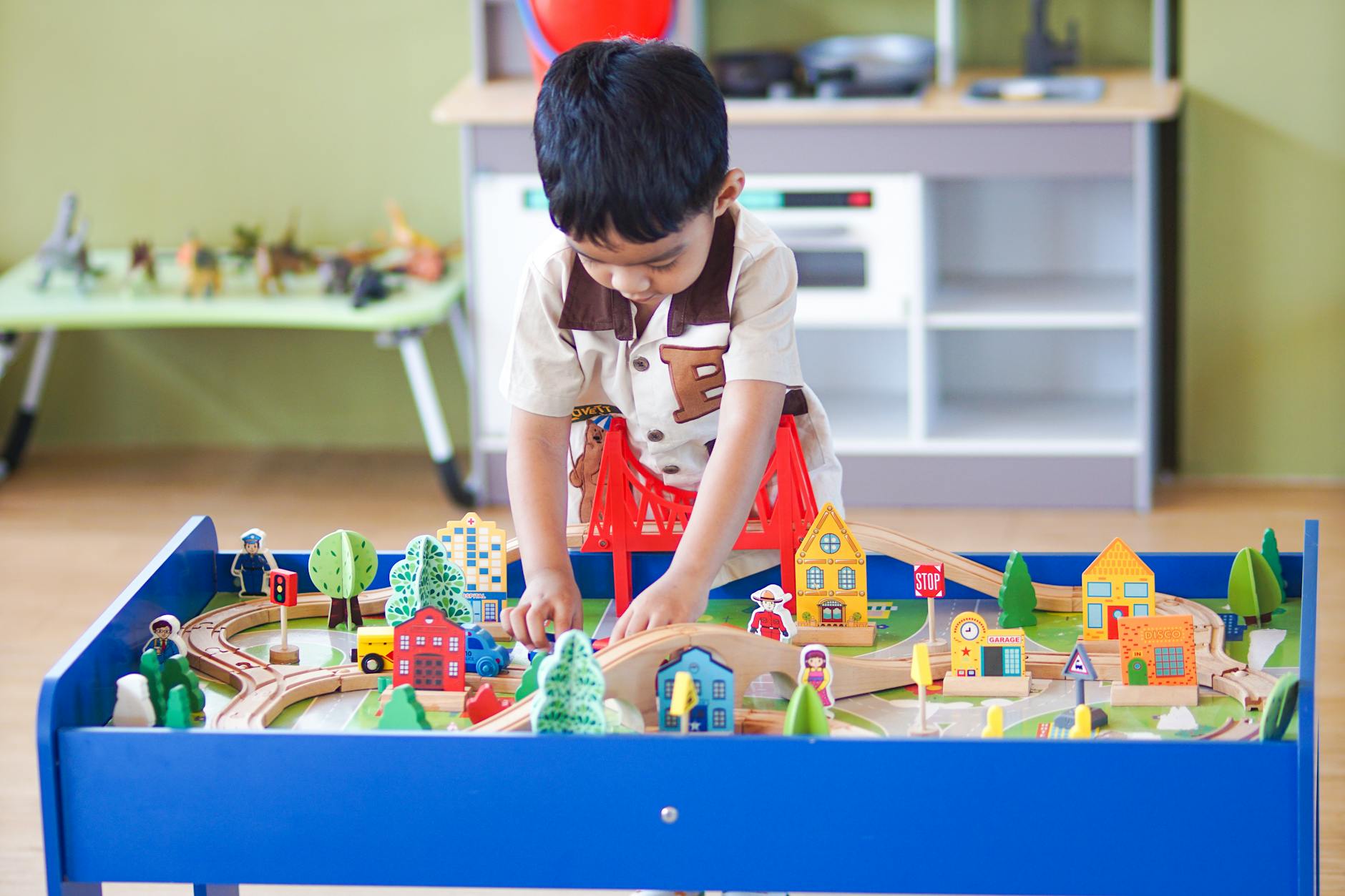
Choosing the right type of educational toy can be overwhelming. Here’s a quick rundown of popular categories and what they offer, helping you navigate the options for your three-year-old.
| Feature / Toy Category | Building Blocks (e.g., DUPLO) 🏆 | Magnetic Tiles | Pretend Play Sets | STEM Kits (Early) | Art & Craft Kits |
| :—————————- | :——————————- | :————————- | :—————————- | :—————————- | :—————————- |
| Fine Motor Skills | ✅ | ✅ | ✅ | ✅ | ✅ |
| Problem Solving | ✅ | ✅ | ✅ | ✅ | ⚠️ (depends on kit) |
| Creativity/Imagination | ✅ | ✅ | ✅ | ⚠️ (guided exploration) | ✅ |
| Spatial Reasoning | ✅ | ✅ | ❌ | ✅ | ❌ |
| Social/Emotional Play | ⚠️ (cooperative building) | ⚠️ (cooperative building) | ✅ | ❌ | ⚠️ (shared activity) |
| Durability | ✅ | ✅ | ⚠️ (materials vary) | ⚠️ (parts can be fragile) | ❌ (consumable) |
| Longevity (Age Range) | ✅ (3-8+) | ✅ (3-10+) | ✅ (3-7) | ✅ (3-6) | ⚠️ (short-term engagement) |
| Mess Factor | ❌ | ❌ | ❌ | ⚠️ (some experiments) | ✅ (can be messy) |
| Typical Price Range (EUR) | 30-80 | 40-120 | 20-100 | 25-70 | 15-50 |
| Best for: | General development, storytelling | Engineering, visual learners | Role-playing, empathy, language | Early science, critical thinking | Self-expression, sensory input |
Also worth reading: learn about los 7 mejores
Note on pricing: Prices are listed in EUR, as per project guidelines, but for US customers, expect similar numerical values in USD, subject to exchange rates and retailer pricing.
This table should give you a clearer picture of what each type of toy brings to the table. But that’s only half the picture — here’s where we get into the specifics of our top picks.
1. Magna-Tiles Clear Colors 100-Piece Set: The Foundation Builder
When I first introduced Magna-Tiles to a group of three-year-olds in a playgroup back in 2024, the initial reaction was a mix of curiosity and a little bit of “what do I do with these?” But within minutes, they were snapping together squares and triangles, building towers, houses, and even abstract sculptures. The Magna-Tiles Clear Colors 100-Piece Set isn’t just a toy; it’s a gateway to understanding geometry, physics, and creative design. Each piece has magnets along its edges, allowing kids to connect them effortlessly and build in 2D or 3D. The clear, vibrant colors also add a wonderful sensory element, especially when held up to light.
This set is fantastic for developing fine motor skills as they manipulate the pieces, and spatial reasoning really kicks in as they figure out how shapes fit together to form stable structures. We’ve seen kids build elaborate car garages, animal enclosures, and even fantastical castles. The open-ended nature means there’s no “right” way to play, which fosters incredible creativity. It’s also surprisingly durable; I’ve watched these get dropped, stepped on, and even chewed on (briefly!), and they hold up remarkably well. This set usually retails around EUR 120-150.
Key takeaway: Magna-Tiles are an excellent investment for developing spatial reasoning, fine motor skills, and boundless creativity through engaging, durable construction play.
2. LEGO DUPLO Classic Deluxe Brick Box: The Creative Workhorse
You can’t talk about educational toys for young kids without mentioning LEGO DUPLO, and the Classic Deluxe Brick Box is often my first recommendation. These chunky blocks are perfectly sized for small hands, preventing the frustration that can come with smaller, more intricate building sets. This particular set comes with a great variety of basic bricks, numbered blocks, and figures, offering endless possibilities for construction and imaginative play.
What makes DUPLO so effective is its simplicity. Kids learn about balance, gravity, and structural integrity as they stack and connect pieces. The included figures and vehicle bases also encourage storytelling and role-play. My own child, now five, still occasionally pulls out his DUPLO from 2023, mixing it with newer sets. It’s a testament to its longevity and versatility. The larger pieces are also much safer than regular LEGO for this age group, virtually eliminating choking hazards. This set typically goes for around EUR 50-70.
Key takeaway: LEGO DUPLO provides a robust platform for developing fine motor skills, problem-solving, and imaginative play with safe, durable, and easy-to-handle blocks.
3. Melissa & Doug Wooden Standard Unit Blocks: Timeless Engineering
In a world filled with flashy, battery-operated gadgets, Melissa & Doug Wooden Standard Unit Blocks feel almost revolutionary in their simplicity. This isn’t just about nostalgia; these natural wood pieces are incredibly effective at teaching fundamental concepts. The standard unit block system, based on precise mathematical ratios, allows children to instinctively learn about fractions, symmetry, and balance without even realizing it. They’ll create intricate cities, bridges, and ramps, often mimicking real-world structures.
When I ran a workshop on early engineering concepts with a group of three-year-olds last year, the wooden blocks were a huge hit. Kids were experimenting with cantilevers and arches, discovering what made a structure stable or unstable. There are no lights, no sounds, just the satisfying thud of wood on wood. This encourages a different kind of focus, a more tactile and sensory experience. They’re incredibly durable, often passed down through generations. You can find a good set for about EUR 80-120.
Key takeaway: Melissa & Doug Wooden Standard Unit Blocks are a classic choice for fostering early engineering skills, spatial awareness, and creative construction through tactile, open-ended play.
4. VTech Go! Go! Smart Wheels Ultimate RC Speedway: Racing into STEM
Q: What is the best interactive vehicle toy for a 3-year-old boy that combines play with STEM learning?
A: The VTech Go! Go! Smart Wheels Ultimate RC Speedway is an excellent choice, merging the excitement of remote-control racing with foundational STEM concepts through track building and interactive elements.
This isn’t your average race track. The VTech Go! Go! Smart Wheels Ultimate RC Speedway takes the beloved concept of toy cars and elevates it with track-building challenges and an intuitive remote control. Kids can configure the track in multiple ways, experimenting with different layouts to see how their RC car navigates them. The SmartPoint locations trigger phrases and sounds, introducing letters and words, and encouraging imaginative scenarios.
What I appreciate about this set is how it blends gross motor control (steering the car) with fine motor skills (connecting track pieces) and early problem-solving. My friend’s son, Leo, who turned three in January 2026, received this and spends hours reconfiguring the track. He’s learning about cause and effect, basic engineering principles, and even a bit about directionality. The remote control is simple enough for a three-year-old to master, giving them a sense of accomplishment. Just be mindful that it does have quite a few pieces and can take up some floor space. Expect to pay around EUR 70-90 for this set.
Key takeaway: The VTech Go! Go! Smart Wheels Ultimate RC Speedway combines thrilling RC car play with track-building challenges, fostering early STEM skills, problem-solving, and fine motor control.
5. Water Table with Accessories: Splish, Splash, Learn!
A water table might seem like just fun and games, but for a three-year-old boy, it’s a sensory wonderland and a fantastic learning tool. Options like the Step2 Rain Showers Splash Pond Water Table or the Little Tikes Spiralin’ Seas Waterpark offer rich opportunities for exploration. Kids can pour, scoop, and splash, experimenting with concepts like volume, buoyancy, and cause and effect. Adding boats, cups, and even plastic animals transforms it into an imaginative world.
I’ve always advocated for outdoor play, and a water table is perfect for that. It encourages gross motor skills as they reach and splash, and fine motor development as they manipulate small accessories. Plus, it’s a great way to introduce early scientific concepts: “What happens if I put this heavy rock in?” “Why does the boat float?” It’s also a wonderful tool for social play, encouraging sharing and cooperation if you have multiple children. Just be ready for some wet clothes! These typically range from EUR 60-100 depending on the features and size.
Key takeaway: Water tables offer rich sensory experiences, promote fine and gross motor skills, and introduce fundamental scientific concepts like volume and buoyancy in an engaging, outdoor play setting.
6. PicassoTiles 60 Piece Magnetic Building Blocks: The Budget-Friendly Innovator
If Magna-Tiles feel a bit out of reach price-wise, PicassoTiles offer a fantastic alternative that still delivers on the educational front. The PicassoTiles 60 Piece Magnetic Building Blocks set provides a solid entry point into the world of magnetic construction. While they might not have the same premium feel as Magna-Tiles, their magnets are strong enough for stable builds, and the clear, colorful pieces are just as appealing.
We’ve used PicassoTiles extensively in our household since 2025, and they’ve proven their worth. They connect easily, allowing three-year-olds to quickly see their ideas come to life, reducing frustration. This set is excellent for spatial awareness, color recognition, and basic geometric understanding. It also helps with developing fine motor coordination as kids align and snap the pieces together. For a similar experience at a more accessible price point (around EUR 40-60), these are hard to beat. If you want to skip the manual setup and ensure compatibility across sets, some brands now offer learn more options that integrate well, allowing for broader play scenarios.
Key takeaway: PicassoTiles provide an affordable yet effective way for 3-year-olds to explore magnetic construction, fostering spatial reasoning, creativity, and fine motor skills.
7. Green Toys Dump Truck: Eco-Conscious Heavy Lifting
Sometimes, the simplest toys are the best. The Green Toys Dump Truck is a prime example. Made from 100% recycled plastic milk jugs, it’s an eco-friendly choice that’s incredibly durable and safe. There are no small parts, no batteries, just pure, unadulterated imaginative play. For a three-year-old boy, a dump truck isn’t just a vehicle; it’s a tool for moving sand, dirt, blocks, or even imaginary cargo around the house or yard.
This toy excels at promoting gross motor skills as they push and pull it, and fine motor skills when they load and unload items into the tilting bed. It also encourages imaginative play, storytelling, and even early concepts of weight and capacity. My friend’s son, Alex, has had his Green Toys dump truck since 2023, and it’s still a staple for both indoor and outdoor adventures. It’s easy to clean, robust, and often retails for a very reasonable EUR 25-35.
Key takeaway: The Green Toys Dump Truck is a durable, eco-friendly toy that encourages gross and fine motor skills, imaginative play, and basic understanding of weight and capacity.
8. Learning Resources Coding Critters Ranger & Zip: Early Programming Adventures
Q: Can a 3-year-old boy learn coding concepts through play?
A: Yes, toys like Learning Resources Coding Critters Ranger & Zip are specifically designed to introduce very young children to foundational coding concepts like sequencing and logic through screen-free, hands-on play.
This might sound advanced for a three-year-old, but Learning Resources Coding Critters Ranger & Zip are brilliant for introducing pre-coding skills without a screen. Kids program the cute animal robots (Ranger the dog and Zip the cat) using directional buttons on their backs. They learn to sequence commands to make the critters move forward, backward, left, or right, and even fetch small objects.
I’ve observed that this toy really helps kids think logically and sequentially. They have to plan their moves, execute them, and then debug if their critter doesn’t go where they intended. It’s a fantastic, hands-on way to develop problem-solving abilities and critical thinking. The included storybook and play accessories also encourage imaginative play alongside the coding challenges. This set is usually priced around EUR 50-70.
Key takeaway: Coding Critters are an innovative way to introduce 3-year-olds to foundational coding concepts, logical thinking, and problem-solving through engaging, screen-free robotic play.
9. KidKraft Deluxe Workbench with Tools: The Aspiring Craftsman’s Dream
Every little boy loves to imitate what he sees adults doing, and a workbench with tools is a perfect outlet for that. The KidKraft Deluxe Workbench with Tools is a sturdy, wooden set that comes with pretend tools like a hammer, wrench, and screwdriver, along with nuts, bolts, and wooden pieces to “build” with. This toy isn’t just about hammering; it’s about developing fine motor skills, hand-eye coordination, and imaginative role-play.
When my neighbor’s son got this for his third birthday last summer, he immediately started “fixing” everything around the house. This kind of role-play is crucial for social-emotional development, allowing kids to act out scenarios and understand different roles. It also helps with problem-solving as they figure out how to put pieces together or “repair” something. The set is durable and sized perfectly for toddlers. If you’re looking for other great learn more role-play options, there are many fantastic choices. This workbench typically costs around EUR 80-100.
Related guide: Cómo iniciar un negocio de dropshipping de
Key takeaway: The KidKraft Deluxe Workbench provides a rich environment for imaginative role-play, fostering fine motor skills, hand-eye coordination, and early problem-solving through constructive “fix-it” scenarios.
10. Fat Brain Toys Tobbles Neo: Stacking, Sorting, and Sensory Play
Fat Brain Toys Tobbles Neo is a wonderfully unique stacking toy that often gets overlooked, but it’s pure genius for three-year-olds. It consists of six weighted, brightly colored spheres that stack and nest in a variety of ways. There’s no right or wrong; kids can balance them, spin them, or even discover how they wobble.
This toy is a masterclass in developing spatial awareness, fine motor skills, and sensory exploration. The spheres have a satisfying texture and weight, making them appealing to touch and manipulate. Because they don’t stack in a perfectly linear way, kids have to experiment with balance and gravity, which is a fantastic early physics lesson. It’s also incredibly durable and easy to clean. My sister-in-law keeps one in her waiting room (she’s a pediatrician), and kids of all ages gravitate towards it. It’s a bit pricier for a stacking toy, usually around EUR 30-40, but its unique play value justifies the cost.
Key takeaway: Fat Brain Toys Tobbles Neo is an excellent, unique toy for developing spatial awareness, fine motor skills, and sensory exploration through open-ended stacking and balancing play.
What Nobody Tells You About Toy Durability and Investment
Here’s the thing: you can buy the most “educational” toy on the market, but if it falls apart after a week or can’t withstand a three-year-old’s enthusiasm, it’s a waste. Many guides focus solely on the learning aspect, ignoring the brutal reality of toddler play. A broken toy isn’t just disappointing; it’s a missed opportunity for continued learning.
Before: You’re constantly replacing flimsy plastic toys that break or lose pieces, leading to frustration and wasted money. Your child’s engagement is fleeting because the toy can’t keep up with their play style.
After: You invest in well-made, durable toys that withstand years of play. Your child can explore and learn without interruption, and you save money in the long run by not needing constant replacements.
I’ve personally seen countless parents regret buying cheaper, less durable versions of popular toys, only to have them break and then have to buy the more expensive, higher-quality one anyway. It’s a false economy. Look for solid construction, quality materials (like thick plastic, solid wood, or strong magnets), and reputable brands. That EUR 20 difference on a magnetic tile set could mean the difference between a toy that lasts six months and one that lasts six years.
Frequently Asked Questions
Q: What types of educational toys are best for developing fine motor skills in 3-year-old boys?
A: Toys like LEGO DUPLO, Magna-Tiles, wooden unit blocks, and play-dough kits are excellent for fine motor skill development. These toys require children to grasp, manipulate, stack, and connect small pieces, strengthening hand muscles and improving dexterity.
Q: How can I encourage imaginative play with educational toys for my 3-year-old?
A: Open-ended toys are key. Building blocks, pretend play sets like a workbench or toy kitchen, and animal figures all encourage imaginative storytelling. Provide props and ask open-ended questions like “What’s happening here?” or “What should the car do next?” to spark their creativity.
Q: Are screen-based educational games beneficial for 3-year-olds?
A: While some screen-based apps can be mildly educational, the American Academy of Pediatrics recommends limiting screen time for children aged 2-5 to no more than one hour per day of high-quality programming. Hands-on, tactile play with physical toys is generally more beneficial for comprehensive development at this age.
Q: What’s the best way to choose an educational toy that will grow with my child?
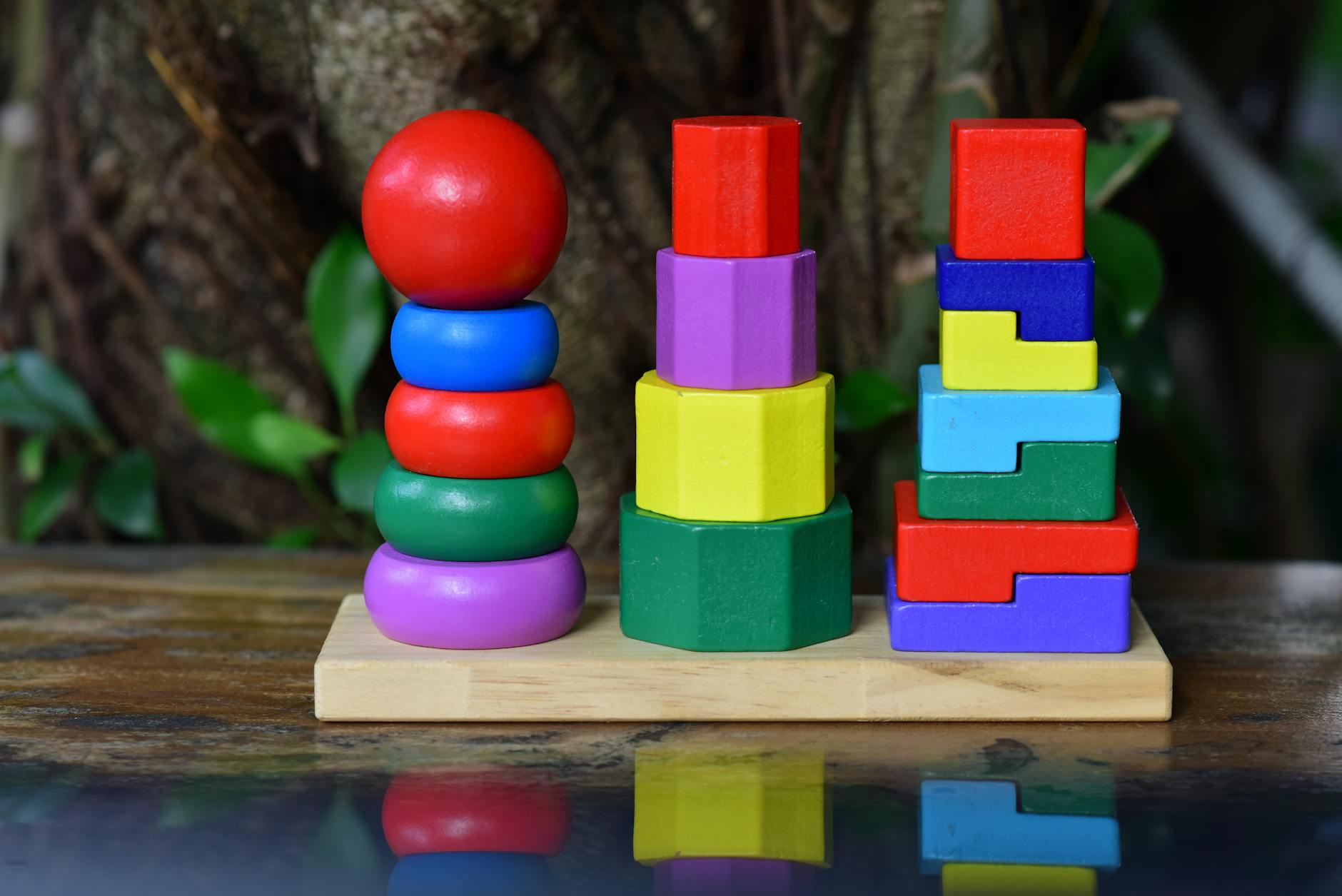
A: Look for toys that offer multiple levels of engagement. Building sets, for example, can be used for simple stacking at age three and then for complex structures and imaginative scenarios as they get older. Toys that are open-ended and adaptable to different play styles tend to have the longest lifespan.
Q: What safety considerations should I keep in mind when buying toys for a 3-year-old?
A: Always check for small parts that could be choking hazards (especially if younger siblings are around). Ensure materials are non-toxic, and look for sturdy construction to prevent breakage. For battery-operated toys, make sure the battery compartment is secure and requires a tool to open.
Q: How many educational toys does a 3-year-old boy really need?
A: Quality over quantity is crucial. A smaller selection of versatile, open-ended educational toys that encourage different types of play (building, imaginative, sensory) is often more beneficial than a large number of single-purpose toys. Rotate toys periodically to keep interest high.
Your Next Step Towards Smarter Play
Choosing the right educational toys for your three-year-old boy in 2026 isn’t just about buying something; it’s about investing in his development, fostering his natural curiosity, and providing tools that will genuinely engage him. Take a moment to review our top picks, consider what skills you want to prioritize, and remember that durability is just as important as educational value.
Now, take five minutes to pick one toy from this list that excites you and your child, and then add it to your cart.
