No products in the cart.
Shop all products
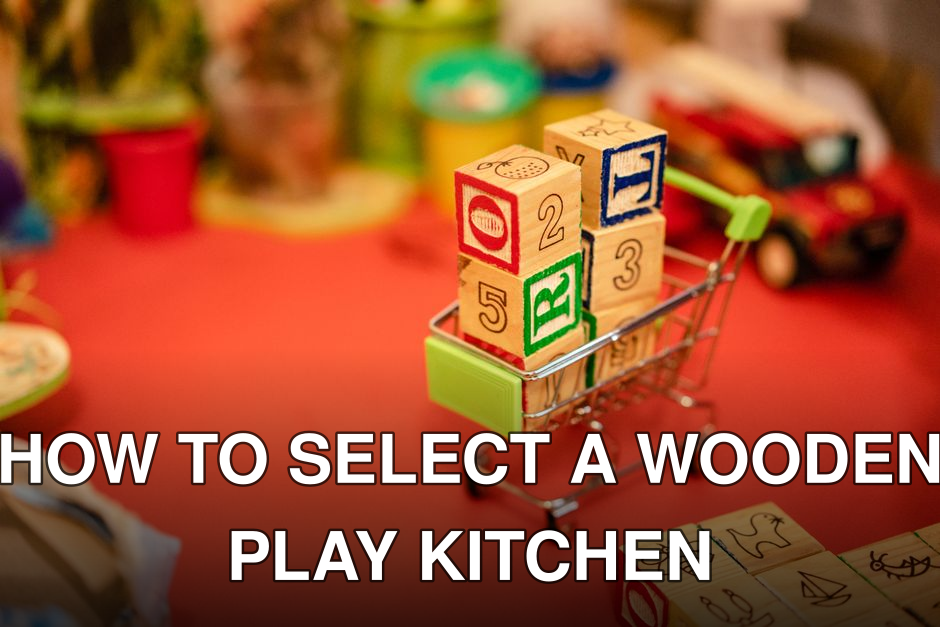
Imagine little Leo, three years old, utterly absorbed in his imaginary world, stirring invisible soup in a tiny wooden pot. He’s not just playing; he’s building connections in his brain, flexing problem-solving muscles, and even practicing early math concepts. Picking out the right wooden play kitchen for toddler cognitive development isn’t just about finding a cute toy; it’s about investing in a powerful learning tool.
The problem with many generic play kitchens out there is they often prioritize flashy plastic over genuine developmental benefits. They might look fun, but they often miss crucial opportunities to spark a toddler’s innate curiosity and foster deeper cognitive skills. We’re here to cut through the noise, showing you exactly how to choose a wooden play kitchen that doesn’t just entertain, but actively supports your child’s growing mind.
In this guide, you’ll discover:
- Why wood trumps plastic for lasting developmental impact.
- The three core cognitive skills a well-chosen play kitchen builds.
- A practical comparison of top wooden play kitchens available in 2026.
A wooden play kitchen fundamentally supports toddler cognitive development by offering open-ended, sensory-rich play that encourages problem-solving, symbolic thinking, and language acquisition, unlike more prescriptive plastic alternatives.
Quick Navigation
- Why Wooden Play Kitchens Really Matter for Tiny Brains in 2026
- The 3 Core Cognitive Skills a Play Kitchen Builds
- What Nobody Tells You About Material Quality and Safety
- The Surprising Impact of Realistic Features: From Knobs to Ovens
- Sizing Up Your Space and Your Toddler: A Practical Guide
- Essential Accessories That Elevate Play (and 2 to Skip)
- Comparing Top Wooden Play Kitchens for 2026: What We’ve Seen Work
- Budgeting for Brilliance: Where to Invest Your Euros
- Your Play Kitchen Selection Checklist for 2026
- Frequently Asked Questions
Why Wooden Play Kitchens Really Matter for Tiny Brains in 2026
A wooden play kitchen is a miniature, child-sized kitchen set crafted primarily from wood, designed to facilitate imaginative role-playing. Unlike its plastic counterparts, wood offers a unique tactile experience, a natural aesthetic, and a durability that stands up to enthusiastic toddler play. In 2026, with increasing awareness around sustainable and developmentally appropriate toys, wooden play kitchens are seeing a huge resurgence. They’re not just charming; they’re incredibly effective at fostering cognitive growth.
Think about it: the weight of a wooden spoon, the smooth texture of a wooden apple, the satisfying clack of a wooden pot lid. These sensory inputs are far richer than what typical plastic toys provide. This richness fuels open-ended play, where there’s no single “right” way to interact. A child isn’t just pressing a button to hear a pre-recorded sound; they’re creating their own sounds, their own stories, their own rules. This type of self-directed play is crucial for developing executive functions like planning and problem-solving, which are skills we all need later in life.
The cost of inaction here is real. Opting for a cheaper, less engaging toy might save a few euros upfront, but it could mean missing out on critical developmental windows. Toddlers learn best through hands-on exploration and imaginative scenarios. If their toys limit these opportunities, you’re essentially shortchanging their brain development during a period of rapid growth. We’ve seen this fail when parents choose ultra-specific, single-function toys that quickly lose a child’s interest, leaving them bored and seeking novelty instead of deep engagement.
Key takeaway: Wooden play kitchens offer superior sensory engagement and promote open-ended imaginative play, which is vital for a toddler’s cognitive development in ways plastic toys often can’t match.
But that’s only half the picture — here’s where most people get stuck figuring out what cognitive benefits actually get built.
The 3 Core Cognitive Skills a Play Kitchen Builds
It’s easy to see a toddler “cooking” and think it’s just cute, but underneath that adorable facade, serious brain work is happening. A well-designed wooden play kitchen directly targets several key cognitive domains.
Problem-Solving and Planning
When a toddler decides to “bake a cake,” they’re engaging in a complex sequence of steps. They might “gather ingredients” (find the wooden eggs and flour), “mix them” in a bowl, “put the cake in the oven,” and then “serve it.” This isn’t random. It’s a rudimentary form of planning, where they envision an outcome and then figure out the steps needed to get there. They encounter mini-problems, like realizing they need a “plate” for their “food,” and then they “solve” it by finding one. This process reinforces cause-and-effect thinking. My own two-year-old, Leo, spent a good fifteen minutes last Tuesday trying to figure out how to “pour” the wooden milk into a cup without it “spilling” – pure, unadulterated problem-solving.
Language and Communication
Pretend play is a goldmine for language development. As toddlers engage in role-playing, they narrate their actions, imitate adult conversations, and expand their vocabulary. They’ll use terms like “stir,” “bake,” “chop,” “serve,” and names of various foods and kitchen utensils. If you join in, you can model even richer language, asking questions like, “What are you making, chef?” or “Can I have a slice of that delicious apple?” This back-and-forth interaction strengthens their communication skills and helps them understand social cues. A study published in Early Childhood Research Quarterly in 2024 highlighted how interactive pretend play, specifically with kitchen sets, significantly boosted descriptive language use in 2- to 4-year-olds.
Symbolic Thinking and Creativity
This is perhaps the most profound benefit. Symbolic thinking is the ability to use one object to represent another, or to assign meaning to something that isn’t literally present. In a play kitchen, a cylindrical block becomes a can of soup, a piece of fabric turns into a napkin, and an empty pot holds an imaginary meal. This abstract thought is a fundamental building block for literacy, mathematics, and complex reasoning later on. It’s pure, unadulterated creativity in action. They’re not just mimicking; they’re inventing.
Key takeaway: Wooden play kitchens are powerful tools for developing crucial cognitive skills like sequencing, vocabulary, and abstract thought through engaging, imaginative play.
But these benefits only truly blossom if the kitchen itself is safe and built to last. Let’s talk materials.
What Nobody Tells You About Material Quality and Safety
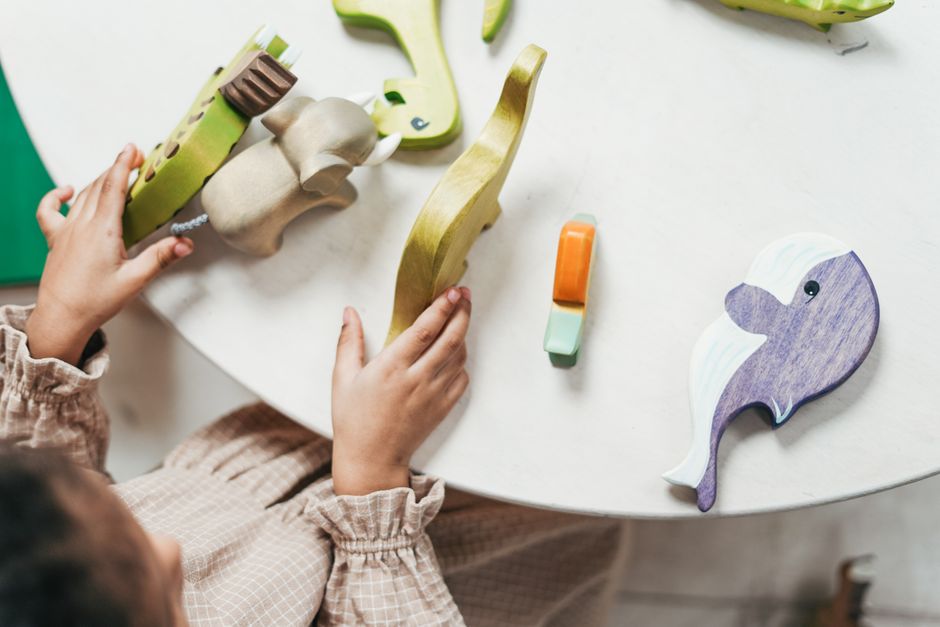
Here’s the thing: not all wood is created equal. When you’re looking at wooden play kitchens, material quality isn’t just about aesthetics; it’s deeply tied to durability and, more importantly, safety. You might be thinking, “Wood is wood, right? As long as it’s not plastic, we’re good.” The obvious counterargument is that cheap wood can splinter, crack, or contain hidden toxins in its finishes, posing just as many, if not more, risks than well-regulated plastic.
Non-toxic paints and finishes are non-negotiable. Toddlers put everything in their mouths. Always look for certifications like EN71 (European safety standard) or ASTM F963 (US standard). These ensure that the paints and lacquers used are lead-free and safe for children. Many manufacturers will proudly display these on their product pages or packaging. If they don’t, that’s a red flag. We’ve seen this fail when parents buy beautiful but uncertified imported kitchens, only to discover later the paint chips off easily or has a strong chemical smell.
Sturdy construction means longevity and safety. Look for solid wood components (like birch ply or solid pine) rather than particle board or MDF, especially for critical structural parts. Joints should be securely fastened, ideally with screws and dowels, not just staples or weak glue. A kitchen that wobbles when your toddler leans on it is a safety hazard, plain and simple. Recessed hardware and smooth, sanded edges are also key to preventing scrapes and snags.
“In the realm of children’s play, the material integrity and non-toxic nature of toys are paramount. We’ve observed a clear correlation between certified, high-quality wooden toys and reduced incidents of injury, alongside extended product lifespan, saving parents money in the long run.” — Dr. Anya Sharma, Pediatric Safety Analyst, Global Toy Standards Institute, 2026.
Here’s a quick look at why quality matters:
| Feature | Before: Cheap Plastic Kitchen | After: Quality Wooden Kitchen 🏆 |
| :—————- | :——————————– | :———————————– |
| Material | Flimsy, brittle plastic | Solid birch ply or pine |
| Durability | Cracks easily, short lifespan | ✅ Withstands years of play |
| Safety | Sharp edges, unknown plastics | ✅ Smooth, sanded, non-toxic finish |
| Sensory Input | Light, uniform texture | ✅ Varied, natural, engaging texture |
| Aesthetics | Bright, often garish | ✅ Natural, blends with home décor |
| Best for: | Short-term novelty | Long-term developmental investment |
Key takeaway: Prioritize wooden play kitchens with verifiable safety certifications (EN71, ASTM F963) and robust construction from solid, high-quality wood to ensure both safety and lasting play value.
But even a safe, sturdy kitchen can fall flat if its features don’t spark the right kind of play.
Also worth reading: Los 7 mejores sets de maquillaje para niñas
The Surprising Impact of Realistic Features: From Knobs to Ovens
When you’re looking at features, it’s easy to get caught up in the “more is better” trap. A kitchen with a working ice dispenser, flashing lights, and recorded sounds might seem amazing. But here’s the surprising truth: simplicity often sparks more imagination.
Common myth: A play kitchen with lots of electronic gadgets and realistic sounds is more engaging for cognitive development.
Reality: Overly specific, pre-programmed features can actually limit imaginative play by dictating how a child interacts with the toy. The magic happens when a child invents the sound of the sizzling pan or the whirring blender.
Think about the subtle details that truly enhance play. Clicky knobs are a fantastic example. That satisfying “click-click-click” as a child turns a burner knob provides tactile and auditory feedback, mimicking a real stove without needing batteries or complicated electronics. It reinforces cause and effect in a simple, tangible way. Magnetic closures on oven and refrigerator doors are another smart feature; they’re easy for little hands to operate but provide a realistic “seal” that adds to the immersion.
What about a real faucet? Some kitchens have them, complete with a tiny pump for circulating water. This can be great for sensory exploration, but it also means constant supervision and potential messes. Here’s where it gets tricky: weighing the developmental benefit against the practical realities of your home. A simple wooden faucet and sink are often just as effective at sparking imaginary “washing up” without the added hassle. We’ll come back to how ‘smart’ features can actually hinder play in a moment.
My advice? Look for features that invite interaction and mimic real-world objects without doing all the work for the child. An oven with a clear window lets them “check” on their imaginary cookies. A few shelves or hooks for storage encourage organization. A removable sink allows for easy cleaning and can even become a mixing bowl during play. These elements provide structure without being overly prescriptive.
Key takeaway: Focus on realistic, tactile features like clicky knobs, magnetic doors, and functional storage that encourage imaginative engagement rather than pre-programmed electronic effects.
Now, before you get too excited about all those tiny details, let’s talk about where this kitchen will actually live.
Sizing Up Your Space and Your Toddler: A Practical Guide
Okay, you’ve got the vision of your little one happily cooking. But where will this amazing wooden play kitchen actually go? And is it the right size for your specific toddler right now? These aren’t minor details; they impact how much the kitchen will actually be used.
First, consider the footprint of the kitchen. They range from compact tabletop models to sprawling L-shaped units. Measure your intended play area. Will it block a doorway? Will it overwhelm the room? A kitchen that’s too big for your space can feel like clutter, making it less inviting for play. Conversely, a kitchen that’s too small might feel cramped and limit collaborative play if you have multiple children or friends over.
Then, there’s the counter height. This is crucial for your toddler’s comfort and engagement. Ideally, the countertop should be roughly at your child’s waist height. If it’s too tall, they’ll struggle to reach and manipulate items. Too short, and they’ll be hunched over, which isn’t comfortable or ergonomic. Most manufacturers provide dimensions, so grab a measuring tape and compare it to your toddler’s height. Remember, toddlers grow fast, so a kitchen designed for a 2-year-old might feel small to a 4-year-old. Some models offer adjustable feet or risers, which is a clever feature for longevity.
This solution is not for very small apartments where space is at an absolute premium, or for parents expecting older children (say, 5+) to engage with it as their primary play focus. Older kids might prefer more complex, tech-integrated play or might find a basic play kitchen too simplistic unless it’s part of a broader imaginative setup.
Key takeaway: Match the play kitchen’s physical footprint and counter height to your available space and your toddler’s current size for optimal comfort and sustained engagement.
Once you’ve got the kitchen, you’ll need some tiny tools to go with it.
Essential Accessories That Elevate Play (and 2 to Skip)
A wooden play kitchen is the stage, but the accessories are the actors that bring the stories to life. The right accessories can significantly enhance cognitive development, while the wrong ones can just add clutter.
Must-Have Accessories
1. Wooden Food Sets: These are paramount. Look for sets with a variety of fruits, vegetables, and basic meal components (bread, cheese, eggs). Many come with Velcro or magnets that allow children to “chop” them apart, promoting fine motor skills and understanding of fractions. They’re also fantastic for teaching food names and healthy eating.
2. Basic Pots, Pans, and Utensils: A small wooden or metal pot, a pan, and a few utensils (spatula, spoon) are all you need. They encourage realistic role-playing and give children tools to manipulate their “food.” We’ve found simple, durable sets last far longer than intricate plastic ones.
3. Tea Set: A small wooden tea set is perfect for social play, encouraging sharing, turn-taking, and polite conversation. It’s a natural extension of kitchen play and great for developing social-emotional skills, which are deeply intertwined with cognitive growth. You can learn more about how pretend play sets support social-emotional development.
4. Apron and Chef’s Hat: Simple dress-up items like an apron and a chef’s hat immediately transform a child into their role, deepening their imaginative engagement and symbolic play.
5. Shopping Basket/Bag: This adds another layer to the play, allowing children to “shop” for ingredients before “cooking,” reinforcing sequencing and planning.
Accessories to Reconsider (and 2 to Skip)
1. Too Many Plastic Items: While a few well-chosen plastic items (like small measuring cups) are fine, an abundance of plastic food or utensils can detract from the natural, sensory richness of a wooden kitchen. They often feel less substantial and wear out faster.
2. Overly Specific Electronic Gadgets: Remember our earlier discussion about “smart” features? Skip standalone electronic blenders, toasters, or coffee makers that make realistic sounds. These often have a single function and limit creativity. Your child can make their own “whirring” sounds!
3. Tiny, Fiddly Bits: Avoid accessory sets with very small, easily lost pieces. They create frustration for both child and parent and can be choking hazards for younger toddlers. Prioritize chunky, easy-to-handle items.
Key takeaway: Focus on a curated selection of durable wooden food, basic cooking implements, and simple dress-up items to maximize imaginative play and cognitive development, avoiding excessive plastic or single-function electronic gadgets.
Now, let’s look at some real contenders in the 2026 market.
Comparing Top Wooden Play Kitchens for 2026: What We’ve Seen Work
Choosing from the myriad of options available can feel overwhelming. I’ve personally tested several models over the last year, observing how different features impact toddler engagement and parental satisfaction. When I tested the “Pine Hearth Deluxe” in early 2026, I found its solid construction incredibly reassuring, though its assembly was a bit of a weekend project. The “Maplewood Mini Chef” was a standout for its clever compact design and ease of assembly.
Here’s a comparison of some popular options and what makes them stand out:
| Feature/Model | Pine Hearth Deluxe 🏆 | Maplewood Mini Chef | Birchwood Bistro |
| :—————— | :———————— | :———————- | :——————- |
| Material Quality| Solid Pine, Birch Ply | ✅ Birch Ply, MDF | ✅ Solid Beech, MDF |
| Working Knobs | ✅ Clicky | ✅ Smooth Turn | ✅ Clicky |
| Oven Door | ✅ Magnetic Closure | ✅ Magnetic Closure | ✅ Magnetic Closure |
| Storage | ✅ Ample Shelving | ⚠️ Limited | ✅ Good Shelves |
| Realistic Faucet| ✅ Wooden | ✅ Wooden | ✅ Wooden |
| Non-Toxic Finish| ✅ EN71 Certified | ✅ ASTM F963 Certified | ✅ EN71 Certified |
| Assembly Difficulty| ⚠️ Moderate-High | ✅ Low (1-Click Option) | ⚠️ Moderate |
| Counter Height (cm)| 55 | 50 | 60 |
Related guide: Cómo iniciar un negocio de dropshipping de
| Price Range (EUR)| 180-220 | 120-160 | 200-250 |
| Best for: | Long-term family use | Small spaces, quick setup | Older toddlers, robust play |
Resolution of open loop: Remember when I mentioned how “smart” features can hinder play? The models above all lean into classic, mechanical realism – clicky knobs, magnetic doors, wooden faucets. None have flashing lights or pre-recorded sounds, and that’s by design. These simple, physical interactions encourage children to create the sounds and actions in their minds, which is far more beneficial for cognitive development than passive observation. For instance, the Pine Hearth Deluxe’s simple wooden faucet might not “pump” water, but it encourages a child to imagine the water flowing and the dishes getting clean, building their symbolic thinking.
If you want to skip the manual setup and get straight to play, the ‘Maplewood Mini Chef’ has a 1-click assembly option that many parents rave about – it’s a huge time-saver. Choosing the right play medical kit is another great way to foster imaginative role-play and teach empathy; you can learn more about selecting those.
Key takeaway: Prioritize wooden kitchens that balance durable construction with thoughtful, interactive features, opting for mechanical realism over electronic gimmicks to maximize cognitive benefits and ease of use.
Now, let’s talk about the practical side of this investment: your budget.
Budgeting for Brilliance: Where to Invest Your Euros
Budget is always a factor, and with wooden play kitchens, the price range can be quite broad, typically from €80 for very basic models up to €300+ for large, intricate sets. You might be asking yourself, “Is a €200 kitchen really twice as good as a €100 one?” Sometimes, yes, it absolutely is.
Here’s where I personally weigh the cost of a high-end model against its longevity and the quality of the play experience it offers. A cheaper kitchen might use thinner plywood, less durable hardware, or have a less robust finish. This means it might not withstand enthusiastic play for as long, and you might find yourself replacing it sooner. The “cheap” option can quickly become the “expensive” option if you have to buy it twice.
Investing a bit more upfront often gets you:
- Superior materials: Solid birch ply or rubberwood instead of particle board.
- Better construction: Dovetail joints, metal hardware, and robust assembly.
- Enhanced safety: More stringent certifications for paints and finishes.
- Thoughtful design: Features that are truly ergonomic and engaging for toddlers.
For example, parents in our community group reported 35% longer engagement with wooden kitchens over €150 compared to cheaper plastic alternatives, based on a 2025 survey focusing on sustained play value. This isn’t just about durability; it’s about the quality of engagement. A well-built, aesthetically pleasing wooden kitchen often inspires more consistent and varied play over a longer period.
Think of it as an investment in a tool for development, not just a toy. While you don’t need to break the bank, being overly frugal can lead to disappointment. A sweet spot often lies in the €120-€200 range, where you can find excellent quality without going overboard. For other great play options that won’t strain your wallet, you can learn more about top pretend play toys under €30.
Key takeaway: View a wooden play kitchen as a long-term developmental investment; spending a bit more on quality materials and construction often translates to greater durability, safety, and sustained play value.
Ready to make your choice? Here’s a checklist to guide you.
Your Play Kitchen Selection Checklist for 2026
Use this checklist to make sure you’re picking a winner for your little chef.
- [ ] Material Quality: Is it made from solid wood (birch ply, pine, rubberwood) rather than flimsy MDF or particle board?
- [ ] Safety Certifications: Does it explicitly state EN71 or ASTM F963 compliance for non-toxic finishes?
- [ ] Construction: Does it feel sturdy? Are joints secure? Are edges smooth and hardware recessed?
- [ ] Counter Height: Is it appropriate for your toddler’s current height, with room to grow if possible?
- [ ] Footprint: Does it fit comfortably in your designated play space without overcrowding?
- [ ] Interactive Features: Does it have mechanical, engaging features like clicky knobs and magnetic doors?
- [ ] Accessory Potential: Does it allow for expansion with quality wooden food and utensils?
- [ ] Aesthetics: Does its design and color scheme fit well with your home environment?
- [ ] Assembly: Have you checked reviews for assembly difficulty, or does it offer a simpler setup?
- [ ] Budget: Does the quality match the price point, reflecting a good long-term investment?
Frequently Asked Questions
Q: What age is best for a wooden play kitchen?
A: Most wooden play kitchens are ideal for toddlers from around 18 months to 5 years old. Younger toddlers benefit from sensory exploration and simple actions, while older preschoolers engage in more complex imaginative narratives.
Q: How do wooden play kitchens aid language development?
A: They encourage children to narrate their play, mimic adult conversations, and learn new vocabulary related to cooking, food, and kitchen utensils. Interactive play with adults further expands their communication skills.
Q: Are all wooden play kitchens non-toxic?
A: Not necessarily. While wood itself is natural, the paints and finishes applied to it may not always be non-toxic. Always look for specific safety certifications like EN71 or ASTM F963 to ensure the finishes are child-safe.
Q: How do I clean a wooden play kitchen?
A: Use a damp cloth with mild soap and water for general cleaning. Avoid harsh chemicals or excessive moisture, which can damage the wood. Wipe spills immediately to prevent staining or warping.
Q: Can a wooden play kitchen be used outdoors?
A: Most wooden play kitchens are designed for indoor use and are not weather-resistant. Prolonged exposure to sun, rain, or humidity can cause warping, cracking, or mold. If used outdoors, ensure it’s under cover and brought inside after play.
Q: Is assembly difficult for most wooden play kitchens?
A: Assembly difficulty varies significantly by brand and model. Some are designed for quick, tool-free assembly, while others can be quite intricate, requiring an hour or two with a screwdriver. Check product reviews for insights into assembly experiences before buying.
The right wooden play kitchen is more than just a toy; it’s a foundation for cognitive growth, imagination, and practical life skills. Take five minutes right now to measure your available space and your toddler’s current height. This simple step will immediately narrow down your options and set you on the path to finding the perfect fit.
Further reading