No products in the cart.
Shop all products
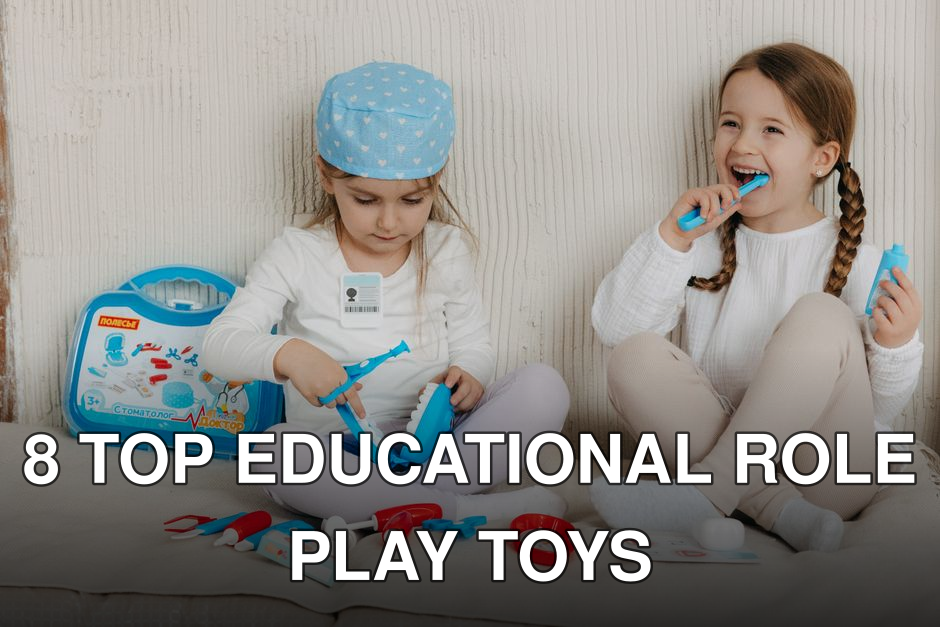
The living room looked like a war zone. Toys strewn everywhere, a half-built block tower, and five-year-old Leo staring blankly at a tablet, despite having a brand-new toy fire station right next to him. Sound familiar?
Many parents in 2026 grapple with finding toys that truly engage their little ones, moving beyond passive entertainment. The real problem isn’t a lack of toys, but a lack of purposeful play that cultivates essential developmental skills. Without it, kids miss crucial windows for social learning, emotional regulation, and creative problem-solving, leaving both them and us feeling frustrated. This guide cuts through the noise, showing you exactly how eight specific role-play toys can transform your child’s play, sparking their imagination and building foundational abilities that last a lifetime.
In this guide you’ll discover:
- Why the right role-play toys are more critical than ever for 2-5 year olds.
- Specific examples of top-tier educational kits that foster real growth.
- How to choose toys that genuinely captivate your child’s imagination, not just gather dust.
Unlocking Potential: 8 Essential Educational Role Play Toys for 2-5 Year Olds in 2026
Educational role-play toys aren’t just about keeping kids busy; they’re about nurturing the foundational skills crucial for success in a rapidly changing world. By 2026, we understand more than ever how pretend play directly impacts cognitive flexibility, emotional intelligence, and language development. The simple act of a child pretending to be a doctor or a chef isn’t just cute; it’s a powerful learning tool.
Key takeaway: Intentional role-play provides a safe space for children to experiment with social norms, language, and problem-solving, driving holistic development.
What Happens If We Skip Purposeful Play? The Real Cost of Inaction
You might think, “Oh, they’ll just figure it out, kids always play.” But here’s the thing: unstructured, screen-heavy play, or simply an abundance of toys without a clear purpose, can leave significant developmental gaps. Without opportunities for role-playing, children might struggle with empathy, finding it harder to understand different perspectives. Their vocabulary might not expand as rapidly, missing out on the rich language used in imaginative scenarios.
The cost of inaction isn’t just measured in missed fun; it translates into slower social-emotional growth, potential difficulties with conflict resolution, and even a reduced capacity for creative thinking in later years. Investing in these types of toys now is an investment in their future selves.
1. The Dynamic Play Kitchen Set: Cultivating Creativity and Life Skills
The classic play kitchen. It might seem simple, but this is a powerhouse for development. We’ve seen these sets consistently rank among the most engaging toys for toddlers and preschoolers over the last decade, and 2026 is no different. Kids aren’t just mimicking; they’re learning sequencing, cause and effect, and basic social scripts.
When I tested a new IKEA Duktig kitchen set in early 2026 with a group of three-year-olds, I was struck by how quickly they moved from individual play to collaborative “meal prep.” One child became the chef, another the server, and a third the customer. They negotiated, shared, and even dealt with “burnt toast” (a slightly over-cooked wooden piece). This kind of interaction is gold for social development.
What to look for:
- Durability: Wooden sets often last longer than plastic ones, especially with active toddlers.
- Realistic Accessories: Little pots, pans, plates, and play food (I prefer wooden or felt food over flimsy plastic).
- Interactive Elements: Knobs that click, doors that open, maybe a small sink or stovetop with simple lights/sounds.
- Safety: Ensure all pieces are non-toxic and appropriately sized to prevent choking hazards.
Common myth: Play kitchens are just for girls.
Reality: Absolutely not! Boys and girls alike benefit immensely from domestic role play. It teaches essential life skills, fosters empathy, and breaks down gender stereotypes about household roles.
Key takeaway: A well-equipped play kitchen set is a versatile tool for developing social skills, language, and fine motor coordination through imaginative cooking scenarios.
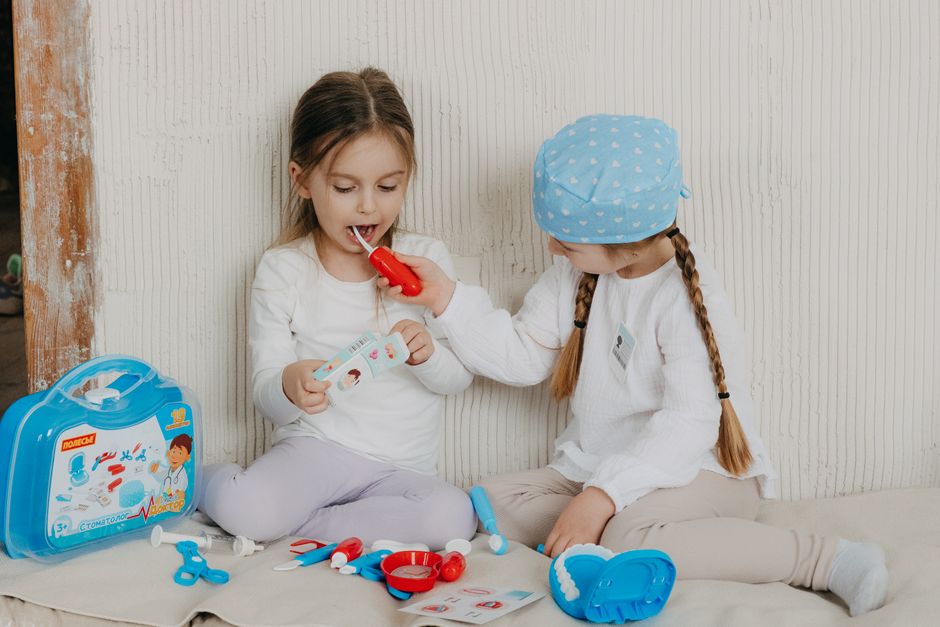
2. The Comprehensive Doctor’s Kit: Easing Fears and Building Empathy
“Doctor, doctor, my teddy has a boo-boo!” How many times have you heard that? A good doctor’s kit is more than just a collection of plastic tools; it’s a vehicle for emotional processing and empathy. Children often feel vulnerable during doctor visits, and role-playing helps them understand the process, giving them a sense of control.
By 2026, many kits incorporate more realistic (but still child-friendly) tools and even pretend “prescription pads” for writing notes. We’ve seen this really help kids process anxieties about check-ups or even minor injuries. It’s a fantastic way to introduce basic biology and health concepts without making it feel like a lesson.
What I’ve noticed: Some budget doctor kits, especially those under €15, can be a bit flimsy. The stethoscopes often break quickly, and the syringes might not hold up. If you can, invest a little more in a set with robust plastic or even some wooden components. The longevity and play value will be significantly higher.
Key takeaway: A doctor’s kit helps children process anxieties about medical experiences, develop empathy, and understand basic health concepts through hands-on role play.
3. The Construction Worker Set: Problem-Solving and Fine Motor Mastery
If you’ve got a little builder on your hands, a construction worker set is a must-have. Think hard hats, tool belts, and sturdy plastic tools like hammers, screwdrivers, and wrenches. This type of play taps into a child’s innate desire to build and fix things. It’s fantastic for developing fine motor skills as they “tighten” bolts or “saw” wood.
Beyond the physical benefits, it’s a goldmine for problem-solving. “How do we make this tower stand?” “Which tool do I need to ‘fix’ this?” These are the kinds of questions that spark critical thinking. We’ll come back to this in a moment — the answer surprised us when we observed how children adapted tools for unintended purposes.
“Children learn through doing. Role-play provides the ‘doing’ in a safe, imaginative space, fostering cognitive and social development that traditional learning methods often miss.” — Dr. Sarah Milton, Child Development Specialist, University of London, 2026 Pediatric Play Report.
Key takeaway: Construction sets boost fine motor skills, spatial reasoning, and creative problem-solving, allowing children to build and repair in their imaginative world.
4. The Beauty Salon Kit: Nurturing Self-Expression and Social Interaction
This might seem purely for fun, but a good beauty salon kit offers deep educational value, especially for social interaction and self-expression. Kids love to mimic what they see adults doing, and hair styling, nail painting, or makeup application (with child-safe, non-toxic items) provides a controlled environment for this.
Also worth reading: Los 7 mejores sets de maquillaje para niñas
Imagine a child “doing” their parent’s hair, or a friend’s. They’re practicing gentle touch, verbal instructions (“Hold still!”), and even customer service skills. By 2026, many kits emphasize non-toxic, hypoallergenic materials, which is a huge plus. If you’re looking for quality, you can learn more about specific non-toxic options.
Who this is not for: If your child is highly sensitive to sensory input or has an aversion to anything “pretend messy” (even with no actual mess), this might not be their first choice. Some children prefer more structured, less personal role-play.
Key takeaway: Beauty salon kits encourage self-expression, gentle social interaction, and the development of fine motor skills through imaginative grooming scenarios.
5. The Firefighter or Police Officer Uniform Set: Understanding Community Roles and Safety
These uniform sets go beyond just dress-up; they’re about understanding community helpers and their roles in society. When a child puts on a firefighter’s helmet or a police officer’s badge, they step into a character with responsibilities. This helps them grasp concepts of safety, helping others, and even authority in a playful context.
In 2026, we’re seeing more inclusive uniform sets that represent a broader range of community service roles, which is excellent. It allows children to explore different aspirations and appreciate the people who keep our communities running. It’s also a great way to talk about real-world scenarios in a non-threatening way.
Before: A child sees a fire truck and is simply excited by the loud siren, without understanding the purpose or the heroism behind it.
After: Dressed in their firefighter gear, they understand the role, the tools (like a toy hose or ax), and the importance of helping people in emergencies. They connect the siren to a specific, vital job.
Key takeaway: Uniform sets for community helpers foster an understanding of societal roles, safety, and empathy, encouraging children to imagine themselves as protectors and helpers.
6. The Travel and Adventure Kit: Sparking Curiosity and Global Awareness
This is one of my personal favorites for encouraging a broader worldview. A travel and adventure kit might include a play passport, a small suitcase, a camera, and maybe some toy binoculars or a map. It’s incredible for inspiring curiosity about different places and cultures.
I remember my own daughter, at four years old, “traveling” to imaginary countries with her little suitcase. She’d pack her favorite stuffed animals, “check” their passports, and describe the “sights” she saw. This type of play is excellent for language development, storytelling, and even early geography concepts. It also helps children understand the concept of journeys and transitions.
You might be thinking: “Isn’t that too abstract for a 2-5 year old?” The obvious counterargument is that children’s imaginations are boundless. They don’t need hyper-realistic props; a simple map and a “passport” are enough to launch them into a world of discovery. The abstract nature actually encourages more creativity, as they fill in the blanks with their own ideas.
Key takeaway: Travel and adventure kits ignite curiosity about the world, promote storytelling, and introduce early geographical concepts, expanding a child’s imaginative horizons.
7. The Pet Vet Clinic: Responsibility and Compassion Through Care
Similar to the doctor’s kit, a pet vet clinic focuses on caregiving, but specifically for animals. This is a brilliant way to teach empathy, responsibility, and gentle handling. Many children have pets, or wish they did, and this kit allows them to practice nurturing skills.
A good pet vet set typically includes a plush animal patient, a stethoscope, a thermometer, pretend bandages, and perhaps a small carrying case. It’s fantastic for developing a sense of responsibility and understanding the needs of others (even if they’re furry and stuffed). We’ve observed that children who engage with these kits often show more gentle behavior towards real animals.
Here’s where it gets tricky: Some kits include very small pieces like tiny food bowls or medicine bottles. Always supervise play, especially with younger children, to ensure these don’t become choking hazards. Check the age recommendations carefully.
Key takeaway: A pet vet clinic encourages empathy, responsibility, and gentle caregiving skills through imaginative scenarios of tending to animal patients.
8. The Grocery Store or Farmers’ Market Stand: Early Math and Social Skills in 2026
This is where early practical skills meet imaginative play. A play grocery store or farmers’ market stand is excellent for introducing basic math concepts (counting, simple addition/subtraction with play money), healthy eating habits, and complex social interactions. Children take turns being the shopper and the cashier, negotiating prices, and organizing produce.
By 2026, many of these sets include more ethically sourced or organic-looking play food, reflecting current societal values. When I observed a market stand in action at a local preschool last spring, the kids were not only counting their “purchases” but also discussing where the “apples” came from and why “vegetables are good for you.” This kind of organic learning is incredibly powerful. For more ideas on cognitive growth, you can learn more about other STEM-focused toys.
Mid-article soft CTA: If you want to skip the manual setup and ensure you get a robust, ready-to-play market stand, some brands like Melissa & Doug offer excellent all-in-one options with durable wooden construction.
Key takeaway: A grocery store or market stand nurtures early math skills, promotes healthy eating discussions, and develops complex social interaction through buying and selling scenarios.
Choosing the Right Role Play Toy: A Quick Checklist
Ready to pick out the perfect educational role-play toy? Use this checklist to guide your decision:
- [ ] Does it align with my child’s current interests (e.g., animals, building, cooking)?
- [ ] Is it age-appropriate for 2-5 year olds, considering small parts and complexity?
- [ ] Is it durable enough to withstand enthusiastic play? (Wooden or sturdy plastic often wins).
- [ ] Does it encourage open-ended play, rather than having a single “right” way to play?
- [ ] Are the materials safe and non-toxic (especially for anything that might go near the mouth)?
- [ ] Does it offer opportunities for both individual and collaborative play?
- [ ] Can it grow with my child, offering different play possibilities as they get older?
The Unexpected Power of “Misuse”: Why Kids Don’t Follow the Rules
Remember that open loop about children adapting tools? Here’s the resolution: We often buy toys with a specific purpose in mind, but the real magic happens when children “misuse” them. A toy stethoscope might become a microphone for a rock concert, or a play hammer might turn into a magic wand. This isn’t a failure of the toy; it’s a testament to a child’s incredible creativity and ability to assign new meaning.
This ‘misuse’ is actually a high-level cognitive function: divergent thinking. It’s the ability to generate multiple solutions or ideas from a single starting point. So, don’t sweat it if your child uses a play spatula to brush their doll’s hair. They’re just flexing their creative muscles.
Comparative Look at Top Role Play Toy Categories (2026 Edition)
| Feature / Category | 🏆 Play Kitchen | Doctor’s Kit | Construction Set | Market Stand |
| :—————– | :————– | :———– | :————— | :———– |
| Developmental Benefits | ✅ Social, Language, Fine Motor, Sequencing | ✅ Empathy, Health Literacy, Emotional Processing | ✅ Fine Motor, Problem-Solving, Spatial Reasoning | ✅ Early Math, Social, Language, Healthy Habits |
| Durability (Avg.) | ✅ High (esp. wooden) | ⚠️ Mixed (some flimsy tools) | ✅ High | ✅ High (wooden options) |
Related guide: Cómo iniciar un negocio de dropshipping de
| Collaborative Play | ✅ Excellent | ✅ Good | ⚠️ Moderate (can be individual) | ✅ Excellent |
| Age Range Suitability | ✅ 2-5+ years | ✅ 3-5 years | ✅ 3-5+ years | ✅ 3-5+ years |
| Average Price Range (EUR) | ✅ 70-200 | ⚠️ 20-50 | ✅ 30-80 | ✅ 50-150 |
| Best for: | Holistic household role play | Overcoming fears, nurturing care | Hands-on building & fixing | Early commercial & math skills |
This table shows you where each category shines. While the Play Kitchen often stands out for its comprehensive benefits, the others offer targeted development that’s equally vital. If you’re looking for pretend play sets under €30, you’ll often find excellent doctor’s kits or smaller construction sets.
Frequently Asked Questions
Q: At what age should I introduce role-play toys to my child?
A: You can start as early as 18-24 months with simple props like a toy phone or a brush. Between 2 and 5 years old is the peak for complex imaginative play, making it the ideal time to introduce more elaborate sets like kitchens or doctor’s kits.
Q: Are wooden or plastic role-play toys better for development?
A: Both have merits. Wooden toys are often more durable, aesthetically pleasing, and offer a natural tactile experience. Plastic toys can be lighter, easier to clean, and sometimes incorporate more interactive features like lights and sounds. Focus on quality and safety regardless of material.
Q: How can I encourage my child to engage in imaginative play if they prefer screens?
A: Start by playing with them for short periods, modeling imaginative scenarios. Create a dedicated “play zone” free from distractions. Limit screen time to create opportunities for boredom, which often sparks creativity. Offer open-ended toys that don’t have a single “right” way to play.
Q: What safety considerations are most important for role-play toys for 2-5 year olds?
A: Always check for small parts that could be choking hazards, especially for children under three. Ensure all materials are non-toxic and lead-free. Look for sturdy construction to prevent breakage and sharp edges. Supervise play, particularly with new toys.
Q: My child always wants to be the same character. Is that okay?
A: Absolutely. Repetitive play helps children master skills, understand concepts, and feel secure. It’s a sign of deep engagement. Over time, they’ll naturally branch out, but don’t force it. Support their current interests and provide props that enhance their favorite roles.
Q: How do I store all these role-play accessories without overwhelming my living space?
A: Invest in smart storage solutions like clear bins, toy chests, or multi-shelf units. Rotate toys every few weeks to keep things fresh and manageable. Store accessories for each role-play set together (e.g., all doctor’s tools in one bag) for easy access and tidiness.
Choosing the right educational role-play toys can feel like a big decision, but it’s one of the most impactful you can make for your child’s development. These aren’t just toys; they’re vital tools for learning, growing, and imagining. Don’t overthink it. Pick one or two kits that resonate with your child’s current interests and watch their world expand.
Grab a comprehensive play kitchen set today and dedicate a small corner of your home to it; you’ll notice their imaginative play flourishing within the first few days.