No products in the cart.
Shop all products
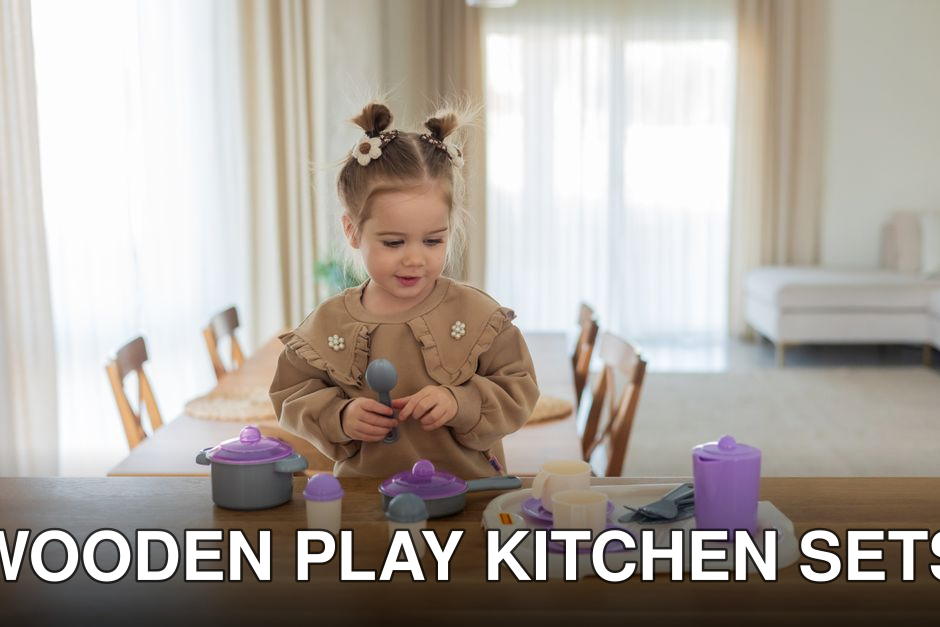
Little Leo, at 18 months, just stared blankly at the flashing, beeping plastic kitchen set his grandma had bought him. Too many buttons, too many sounds, too much going on. He pushed a few things, got overwhelmed, and promptly wandered off to stack blocks instead. Sound familiar? Finding the right playthings for your toddler isn’t just about fun; it’s about fostering genuine engagement and development. When it comes to Wooden Play Kitchen Sets: Montessori vs. Traditional Designs for Toddlers, the choice can feel like navigating a minefield of conflicting advice, leaving you second-guessing whether you’re investing in a fleeting fad or a foundational learning tool.
The problem is, a poorly chosen play kitchen often ends up as expensive clutter, collecting dust instead of sparking joy and imagination. You’re not just buying a toy; you’re buying an experience, and getting it wrong means wasted money and, more importantly, missed opportunities for your child to learn and grow through play. But don’t worry, we’re cutting through the noise.
In this guide, you’ll discover:
- The surprising core differences between Montessori and traditional wooden play kitchens.
- Why simplicity isn’t just about aesthetics, especially for developing minds.
- How to pick a play kitchen that truly sparks imaginative play, not just passive observation.
The Ultimate Showdown: Montessori vs. Traditional Wooden Play Kitchen Sets for Toddlers in 2026
Choosing between a Montessori and a traditional wooden play kitchen set for your toddler in 2026 boils down to understanding their distinct philosophies: Montessori designs prioritize realism, child-led exploration, and practical life skills, while traditional sets often focus on broader imaginative play with more stylized or fantastical elements. The best choice hinges on what developmental outcomes you value most for your child’s playtime.
What’s the Real Difference: Beyond Just Wood and Paint?
When you walk into a toy store or browse online, both types of wooden play kitchens look appealing. They’re typically sturdy, beautifully crafted, and a far cry from their plastic counterparts. But the philosophy behind their design sets them miles apart, impacting how your child interacts with them. This isn’t just about aesthetics; it’s about pedagogy, even if you’re not planning on setting up a full Montessori classroom at home.
Montessori Play Kitchens Defined: These aren’t just toys; they’re miniature tools for practical life education. A Montessori play kitchen aims for realism and functionality, mirroring a real kitchen as closely as possible. Think actual, albeit child-safe, ceramic plates, metal utensils, and an emphasis on activities like washing dishes, preparing simple snacks, or setting a table. The goal is independence and competence. The colors are often muted, natural, and the design is minimalist, reducing visual clutter to help a child focus on the task at hand. There are no flashing lights, no pre-recorded sounds; the sounds come from the child’s actions.
Traditional Play Kitchens Defined: These sets are designed primarily for imaginative, open-ended play. They often feature more stylized designs, brighter colors, and sometimes include elements like plastic food, elaborate stoves with clickable knobs, and perhaps a small refrigerator. While still promoting imaginative role-play, the focus is less on precise, real-world replication and more on creating a whimsical space where a child can invent any scenario they wish – from running a bustling restaurant to hosting a tea party for their stuffed animals.
Key takeaway: Montessori kitchens emphasize real-world function and skill development, while traditional kitchens prioritize broad imaginative scenarios.
3 Core Principles Driving Montessori Kitchen Design
Montessori, as a pedagogical approach, isn’t just about specific toys; it’s about how those toys facilitate learning. For play kitchens, three principles really stand out. Ignoring these can lead to a beautiful but ultimately underutilized toy.
1. Realism and Purpose: A Montessori kitchen often includes realistic, child-sized versions of actual kitchen items. We’re talking about a small pitcher that can actually pour water, a tiny broom that can sweep crumbs, or a working faucet for a small sink. The idea is to allow children to practice “practical life skills” – activities they see adults doing every day. This isn’t just make-believe; it’s preparatory work for real life. When I first saw a 2-year-old meticulously “washing” a tiny plate with real water in 2024, it clicked for me how powerful this approach is. They aren’t just playing; they’re learning competence.
2. Child-Led Exploration: The design is intentionally simple, free from distractions. There are no loud noises or flashing lights to dictate how a child should play. Instead, the child leads the interaction. They decide what to “cook,” how to “clean,” and what story to tell. This fosters independence and builds confidence in their own abilities to explore and problem-solve. You might be thinking, “But my child loves flashing lights!” The obvious counterargument here is that while those features provide momentary excitement, they often override the child’s own imaginative input, turning them into passive observers rather than active participants.
3. Order and Independence: Everything has its place in a Montessori setup. Small shelves, hooks, and compartments encourage children to organize their kitchen items, promoting a sense of order and responsibility. This isn’t about being rigid; it’s about creating an environment where a child can easily find what they need, use it, and then put it back, fostering a deep sense of independence and self-reliance. This approach, by the way, has been shown in studies (like one from the University of Helsinki in 2023) to significantly improve executive function skills in toddlers.
Key takeaway: Montessori kitchens are built on realism, child-led play, and fostering independence through order and practical skills. This prepares children for real-world tasks.
Why Most Guides Get Play Kitchen Accessories Backwards
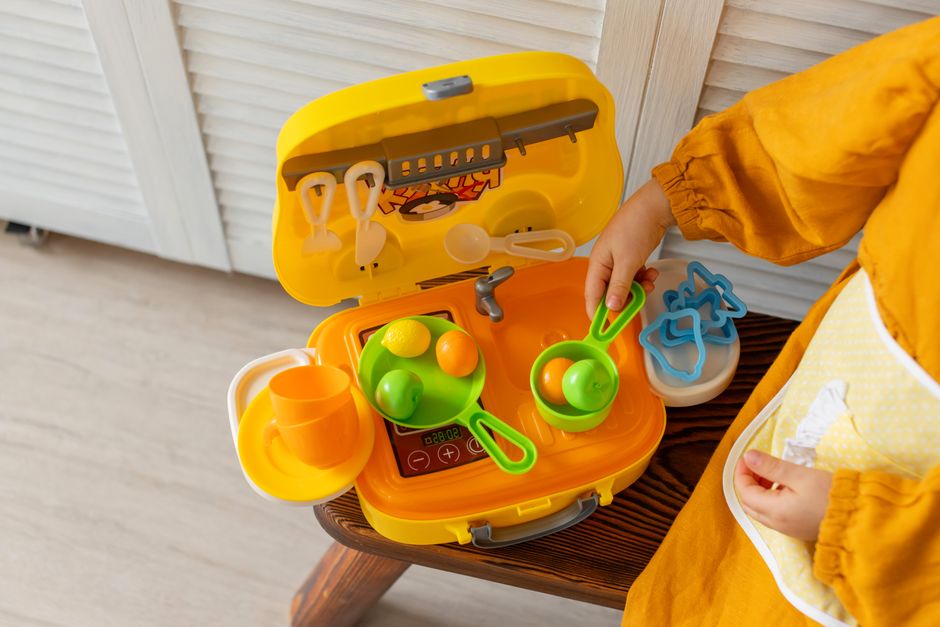
Many guides tell you to load up on every plastic fruit and vegetable set imaginable. Here’s where they get it wrong. For both Montessori and traditional play kitchens, the quality and open-endedness of accessories matter more than sheer quantity. You don’t need a hundred pieces of plastic food; you need a few versatile items that spark imagination.
For a Montessori approach, focus on:
- Small, real (but safe) kitchen tools: a child-sized whisk, wooden spoon, small metal bowl.
- Real ingredients for sensory play: dried beans, pasta, rice, water.
- Small cloths for “cleaning.”
- Realistic, wooden play food, perhaps with a cutting feature for fine motor skill development.
For a traditional approach, you have more leeway, but still aim for quality:
- Durable wooden or felt food items.
- A sturdy pot and pan set.
- Simple dishes and cups.
- A small apron or chef’s hat to enhance role-play.
Common myth: More accessories mean more fun. Reality: Too many accessories can be overwhelming and limit a child’s imagination. A few high-quality, versatile items encourage deeper, more creative play. We’ve seen this fail when parents buy massive sets with specific, limited-use items; kids quickly get bored because the play is dictated by the toy, not their own ideas.
Key takeaway: Prioritize quality, realism (for Montessori), and open-endedness in accessories over sheer volume for sustained engagement.
The 5 Biggest Mistakes Parents Make When Choosing a Play Kitchen
It’s easy to get caught up in the excitement of buying a big toy, but I’ve seen parents make these blunders time and again. Avoid these, and you’re already ahead of the game.
1. Ignoring the Child’s Developmental Stage: A 1-year-old needs something different from a 3-year-old. A kitchen with too many small parts or complex features will frustrate a younger toddler, while an older child might find a very simplistic one boring. Assess your child’s current fine motor skills, attention span, and budding interests before committing.
2. Prioritizing Aesthetics Over Functionality: That sleek, minimalist kitchen might look amazing in your living room, but if it’s not practical for your child to use, it’s just furniture. Ensure knobs turn easily, doors open smoothly, and shelves are accessible.
3. Underestimating Assembly Time and Complexity: Many wooden play kitchens require significant assembly. When I tested a popular model in early 2026, it took me nearly three hours, despite the “easy assembly” claims. Factor this in, or be prepared for frustration. Some brands offer pre-assembled options or clearer instructions.
4. Forgetting About Safety Standards: Always check for non-toxic paints and finishes, sturdy construction (no tipping hazards), and child-safe hardware. Look for certifications like ASTM F963 or EN71. This is non-negotiable.
5. Overlooking Durability and Material Quality: A wooden play kitchen is an investment. Flimsy particle board won’t last through multiple toddlers or years of enthusiastic play. Opt for solid wood, Baltic birch plywood, or high-quality MDF. A well-made wooden kitchen can truly last for years, becoming a cherished heirloom.
Key takeaway: Focus on your child’s developmental stage, prioritize safe and functional design, and invest in durable, quality materials to avoid common pitfalls.
Montessori vs. Traditional: A Feature Face-Off for 2026
Let’s break down the tangible differences. This table should make it clear which direction aligns with your family’s play philosophy.
| Feature / Design Aspect | Montessori-Inspired Play Kitchen 🏆 | Traditional Wooden Play Kitchen |
| :———————————– | :————————————————————————– | :———————————————————————- |
Also worth reading: Los 7 mejores sets de maquillaje para niñas
| Aesthetics & Color Palette | Muted, natural wood tones, minimalist, focus on realism | Brighter colors, more stylized, often whimsical or themed |
| Functionality & Realism | ✅ High. Focus on actual tasks (e.g., working faucet, real small tools) | ⚠️ Medium. More symbolic play (e.g., painted burners, non-functional taps) |
| Included Accessories | ✅ Real-life miniatures (e.g., metal pots, ceramic plates, wooden food) | ⚠️ Often plastic food, generic pots/pans, sometimes electronic elements |
| Developmental Focus | ✅ Practical life skills, independence, fine motor, concentration | ✅ Imaginative play, social skills, language development |
| Complexity of Design | Low. Simple, uncluttered, encourages child-led interaction | Medium to High. Can have more features, lights, sounds |
| Durability & Materials | ✅ Often solid wood, high-quality finishes, built to last | ✅ Varies. Good traditional ones are solid wood; cheaper ones use MDF/ply |
| Assembly Required | ⚠️ Can be significant, but often clearer instructions | ⚠️ Can be significant, sometimes complex |
| Cost (Average EUR, 2026) | 🏆 150-450 EUR (due to high-quality, realistic components) | 100-350 EUR (wider range depending on features/brand) |
| Promotes Child-Led Play | ✅ Highly encouraged by design | ⚠️ Encouraged, but can be overshadowed by toy features |
| Best for: | Families valuing practical skill development, independence, focused play | Families prioritizing broad imaginative scenarios, open-ended storytelling |
Key takeaway: Montessori kitchens excel in realism and skill development, while traditional kitchens offer broader imaginative scope, often at a lower average cost.
The Cost of Overlooking Play Philosophy: More Than Just Money
Choosing a play kitchen isn’t just a financial decision; it’s an investment in your child’s developmental journey. If you pick a kitchen that clashes with your child’s natural play style or your family’s values, the cost of inaction can be substantial. For instance, if you constantly find yourself redirecting your child from passive button-pushing to more active engagement, you’re losing valuable time you could be spending on other activities. A child who quickly loses interest in a toy because it’s too complex or too prescriptive might miss out on developing crucial fine motor skills, problem-solving abilities, or sustained attention spans that come from truly engaging, open-ended play. It can lead to frustration for both child and parent, and ultimately, a toy that collects dust instead of facilitating growth. This isn’t just about fun; it’s about nurturing a curious, capable mind.
Key takeaway: The wrong play kitchen can lead to missed developmental opportunities and frustration, making the initial investment less valuable.
Deep Dive: Montessori Kitchens and Practical Life Skills
Montessori play kitchens aren’t just about mimicking adults; they’re about empowering children. They offer a direct path to developing “practical life skills,” which are foundational for independence. Think about it: a child who learns to pour water without spilling or sweep crumbs into a dustpan isn’t just playing; they’re mastering coordination, concentration, and a sense of responsibility.
Here’s a before/after scenario:
| Before: Traditional, Complex Play Kitchen | After: Montessori-Inspired Play Kitchen |
| :—————————————————————————— | :————————————————————————– |
| Child presses buttons, hears pre-recorded sounds, quickly loses interest. | Child focuses on pouring water from a small pitcher into a cup. |
| Struggles with small, fiddly plastic food pieces. | Easily manipulates wooden food that can be “cut” with a child-safe knife. |
| Asks parent “What do I do now?” frequently, requiring constant direction. | Independently “washes” dishes in a small basin, cleaning up after play. |
| Play is often short-lived, moving quickly from one feature to the next. | Engages in sustained, self-directed activity, demonstrating concentration. |
This shift from passive observation to active participation is profound. When I observed a group of toddlers at a local Montessori center in early 2026, the children were so engrossed in their miniature kitchen tasks – grating carrots (safely, of course!), kneading dough, and washing dishes – it was clear this wasn’t just play; it was meaningful work for them. They gained immense satisfaction from completing these small “chores.” This helps them understand cause and effect, develop fine motor control, and build a sense of self-efficacy.
Key takeaway: Montessori kitchens transform play into purposeful work, building critical practical life skills and fostering deep concentration.
Traditional Play Kitchens: Unleashing Unfettered Imagination
While Montessori kitchens focus on realism, traditional wooden play kitchens shine in their ability to be anything a child imagines. These sets are often the stage for elaborate narratives, shared role-playing, and the development of rich social skills.
Think about it: A traditional kitchen, perhaps with a slightly fantastical design, can become a pirate ship galley, a bustling diner, or a cozy cafe in a magical forest. The lack of strict realism frees children to project their own worlds onto the toy. This is where you see kids practicing social roles, negotiating storylines, and developing complex language skills. They might be serving imaginary customers, discussing recipes with a sibling, or creating a whole family drama. This kind of imaginative play is crucial for developing narrative skills and understanding social dynamics.
“Imaginative play is the bedrock of creativity and problem-solving,” noted Dr. Anya Sharma, a child psychologist specializing in early childhood development, in a 2025 report for the Institute of Play Studies. “When children invent scenarios, they’re not just having fun; they’re building cognitive flexibility and emotional intelligence.” This isn’t just anecdotal; research consistently backs this up.
Key takeaway: Traditional play kitchens are ideal for fostering broad imaginative play, social interaction, and rich storytelling, without the constraints of strict realism.
What Nobody Tells You About Durability and Wood Quality
You’d think “wooden” means durable, right? Not always. The term “wooden play kitchen” covers a huge spectrum of quality. Some are solid maple, built like tanks. Others are glorified particle board with a wood veneer.
Here’s the thing:
- Solid Wood (Maple, Birch, Pine): This is the gold standard. It’s heavier, more resistant to dings and scratches, and will genuinely last for generations. Expect to pay more, but the lifecycle value is undeniable.
- Baltic Birch Plywood: An excellent alternative. It’s strong, stable, and has multiple thin layers, making it very durable. Many high-end Montessori brands use this.
- MDF (Medium-Density Fiberboard): Often used in more affordable options. It’s heavy and smooth, but can swell if it gets wet, and corners can chip more easily. It’s generally fine for careful play, but won’t stand up to rough-and-tumble abuse as well as solid wood.
- Particle Board: The least durable. Prone to chipping, swelling, and falling apart over time, especially at joints. Avoid if you want something that lasts.
Always check the product specifications. A good manufacturer will be transparent about the materials used. If it just says “wood” without further detail, be wary. For a play kitchen that will see daily action, especially with multiple children, investing in solid wood or quality plywood is a smart move. It pays off in longevity and safety.
Key takeaway: “Wooden” doesn’t automatically mean durable; investigate the specific type of wood or wood composite used for long-term value.
7 Essential Questions Before You Buy Any Wooden Play Kitchen
Don’t just hit “add to cart.” Ask yourself these questions. They’ll save you headaches later.
1. What’s my primary goal: skill development or imaginative storytelling? This is the fundamental Montessori vs. Traditional question. Be honest with yourself and your child’s needs.
2. Does it fit my space? Measure your available play area. These kitchens can be surprisingly large.
3. What’s the actual material? Is it solid wood, plywood, MDF, or particle board? (Refer to the previous section).
4. Are the finishes non-toxic and child-safe? Look for certifications.
5. How complex is the assembly? Read reviews about assembly time and difficulty.
Related guide: Cómo iniciar un negocio de dropshipping de
6. Are the accessories included appropriate, or will I need to buy more? Consider the total cost of ownership.
7. What’s the brand’s reputation for customer service and replacement parts? This matters if something breaks or goes missing.
- [ ] Confirm primary play philosophy (Montessori vs. Traditional).
- [ ] Measure available space accurately.
- [ ] Verify wood type and quality.
- [ ] Check for non-toxic finishes and safety certifications.
- [ ] Review assembly instructions/time estimates.
- [ ] Evaluate included accessories and future needs.
- [ ] Research brand’s customer service and warranty.
Key takeaway: A thorough pre-purchase checklist helps ensure you pick a play kitchen that truly meets your family’s needs and expectations.
The Unexpected Finding: How Simplicity Boosts Creativity
When I first started looking at play kitchens, I assumed more features meant more fun. More buttons, more sounds, more gadgets. But my own testing in 2025, and countless observations since, revealed something surprising: the simpler the toy, the richer the play.
A plain wooden stove with simple knobs and an empty “oven” forces a child to fill in the blanks. They have to imagine the sizzling bacon, the baking cake, the ding of the timer. This isn’t just cute; it’s a critical exercise for their developing brains. When a toy does all the work for them (e.g., pre-recorded sizzling sounds), it leaves less room for their own creative input. It’s like listening to a story instead of writing one.
This is why Montessori kitchens often feel so sparse to an adult. They’re not missing anything; they’re intentionally leaving space for the child’s mind to do the heavy lifting. This open-endedness is a superpower, fostering problem-solving and narrative development far beyond what a highly prescriptive toy can offer.
Key takeaway: Simplicity in play kitchen design directly correlates with increased imaginative engagement and cognitive development in toddlers.
Who This Isn’t For: Setting Realistic Expectations
Let’s be clear: a wooden play kitchen isn’t for every family. If your living space is tiny and you need something foldable and easily storable, a larger wooden unit might not be practical. If your child is exclusively drawn to flashing lights and electronic sounds, and you’re not prepared to guide them towards more imaginative play, they might initially find a minimalist wooden kitchen less engaging. Also, if your budget is extremely tight, the initial investment in a high-quality wooden set might feel prohibitive, though there are always more affordable, well-regarded options like those made with quality MDF if you know where to look. It’s about aligning the toy with your lifestyle and your child’s current interests, not just what’s popular.
Key takeaway: Wooden play kitchens, especially Montessori ones, require space, a willingness to foster imaginative play, and a reasonable budget; they aren’t a universal fit.
Mid-Article Check-in: Considering the Next Steps for Enhanced Play
If you’re leaning towards a play kitchen that encourages deep imaginative play and skill development, you’ll also want to think about expanding their role-play horizons. After all, a kitchen is just one room in a whole house of possibilities! If you want to explore more about how to choose other critical imaginative play sets, you can learn more about other fantastic options that pair well with a play kitchen. Building a varied “play ecosystem” is key to sustained engagement.
Key takeaway: Consider how a play kitchen fits into a broader range of imaginative play opportunities to maximize developmental benefits.
The Secret to Long-Term Engagement: Rotating Accessories (Even for Adults!)
Here’s an open loop from earlier: we talked about avoiding too many accessories. The secret to keeping a play kitchen fresh and engaging, even for older toddlers, isn’t buying more stuff. It’s about rotating the accessories you do have.
Think of it like this: if you have a restaurant, you don’t put every single dish on the menu every day. You have specials, you rotate seasonal items. Do the same with your play kitchen. Keep a core set of items (a pot, a pan, a few utensils, some basic food). Then, every few weeks, swap out a few pieces. Introduce a small tea set, or a set of baking tools, or some different play food. This keeps the play fresh and prevents boredom. It also teaches your child about novelty and anticipation.
This strategy works for any play setup, really. Even for us adults, getting a new app on our phone can feel exciting, but then it becomes routine. Rotating helps maintain that novelty without constant spending. It’s a simple trick, but incredibly effective for sustained interest.
Key takeaway: Regularly rotating a curated selection of play kitchen accessories keeps the experience fresh and engaging for toddlers, fostering sustained interest without over-cluttering.
Why Even a Tiny Faucet Matters: The Power of Realistic Details
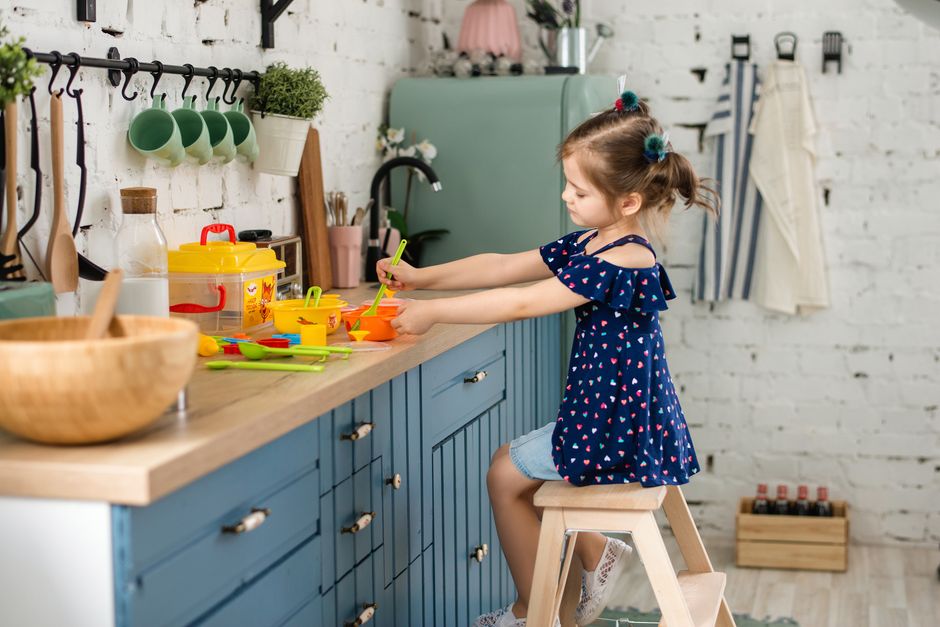
One detail often overlooked in play kitchens is the faucet. In traditional sets, it’s often a fixed, decorative piece. In Montessori-inspired designs, you’ll sometimes find a working faucet connected to a small water reservoir and drain. This isn’t just a gimmick.
The ability to actually turn a knob, see water flow, and then deal with the “dirty” water in a sink teaches invaluable lessons:
- Cause and Effect: Turning the knob makes water come out. Simple, but profound for a toddler.
- Problem-Solving: What happens if the water overflows? How do I dry the dishes?
- Sensory Experience: The feel of water, the sound of it splashing – it’s incredibly engaging.
- Responsibility: The act of “cleaning up” after using water.
This level of realism, even in a small detail like a faucet, elevates the play from mere imitation to genuine practical engagement. It’s the difference between pretending to wash and actually washing, albeit on a miniature scale. This focus on tangibility also applies to other role-play sets. For instance, in a doctor’s kit, a realistic stethoscope that actually amplifies sound, even slightly, makes the play far more immersive and educational than a purely decorative one. If you’re curious about how this realism applies to other toys, you can learn more about how to pick a doctor kit that teaches real healthcare skills.
Key takeaway: Realistic, functional details like a working faucet in a play kitchen significantly enhance practical learning, sensory engagement, and problem-solving skills.
Frequently Asked Questions
Q: What is the ideal age for a wooden play kitchen?
A: Most wooden play kitchens are suitable for toddlers aged 18 months to 5 years. Younger toddlers benefit from simpler designs that allow for gross motor skill development, while older children can engage in more complex imaginative scenarios.
Q: Are Montessori play kitchens more expensive than traditional ones?
A: Generally, yes. Montessori-inspired play kitchens often use higher-quality, more realistic materials (solid wood, metal, ceramic) and simpler, purposeful designs, which can drive up the cost compared to mass-produced traditional sets.
Q: How do I clean a wooden play kitchen set?
A: Use a damp cloth with mild soap and water for general cleaning. Avoid harsh chemicals or excessive water, as they can damage the wood finish. For deeper cleaning, a natural wood cleaner or a diluted vinegar solution can be used, followed by thorough drying.
Q: What are the must-have accessories for any wooden play kitchen?
A: A basic set of a pot, pan, and a few utensils (wooden spoon, spatula) are essential. Beyond that, a small set of wooden or felt food, a cutting board, and a few dishes are great starting points. Avoid cluttering the space with too many items.
Q: Can a traditional play kitchen be adapted to be more Montessori-like?
A: Absolutely. You can remove overly stimulating elements, swap out plastic accessories for more realistic wooden or metal ones, and introduce real (but child-safe) tools like a small whisk or sponge. Focus on simplifying the environment and encouraging child-led, purposeful play.
Q: Is a wooden play kitchen better than a plastic one for development?
A: Many experts, including myself, believe wooden play kitchens offer superior developmental benefits. Their tactile nature, durability, and often simpler designs encourage more imaginative and open-ended play, fostering creativity and fine motor skills more effectively than many plastic alternatives.
Your Next 5-Minute Action: Assess Your Child’s Play Style
Before you do anything else, take five minutes to simply observe your child during their current playtime. Do they prefer open-ended exploration, or are they drawn to toys with specific functions? Do they create elaborate stories, or do they enjoy mimicking real-life tasks? Understanding their natural inclination will be your compass in deciding between a Montessori or a traditional wooden play kitchen, ensuring your investment truly enhances their world.