No products in the cart.
Shop all products

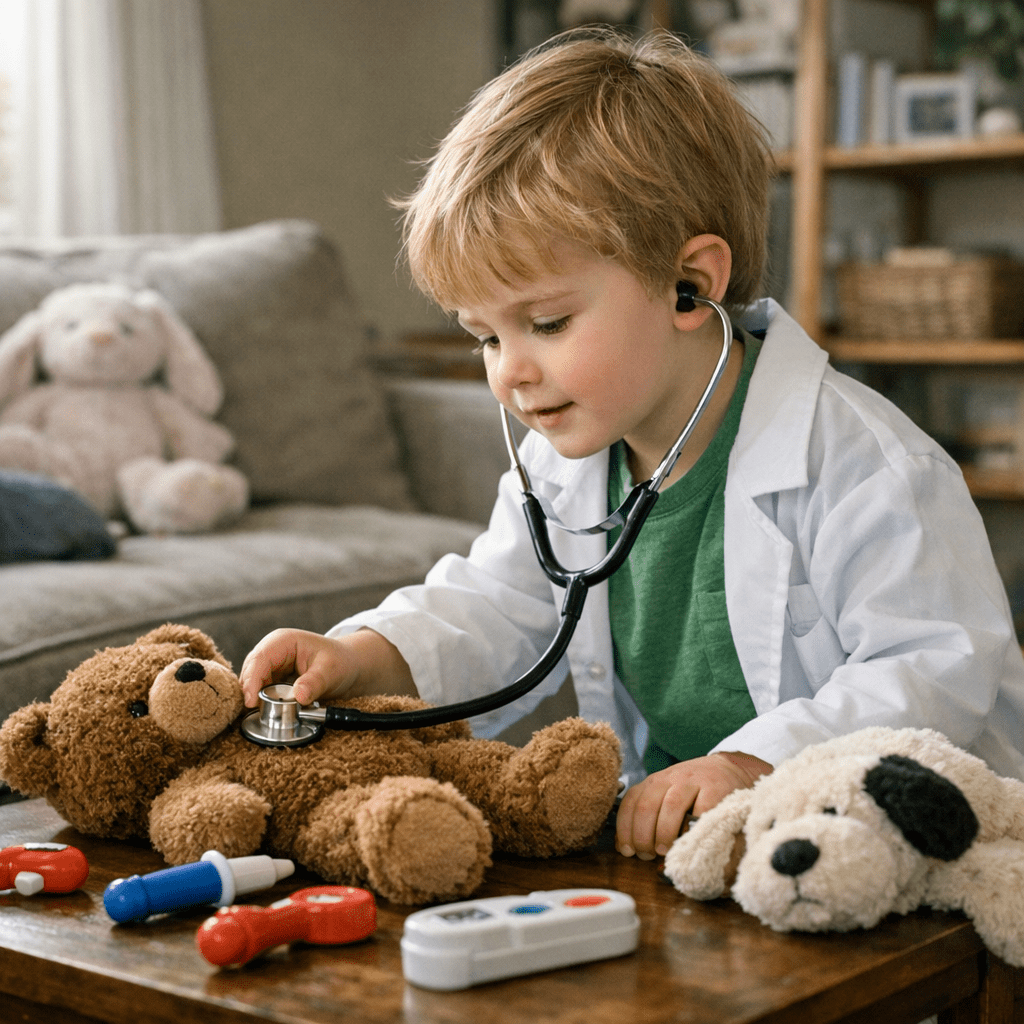
Picture this: your child is running around the house with a stethoscope dangling from their neck, announcing that your stuffed animals need “immediate care.” Sound familiar? Kids love pretending to be doctors, but finding the right doctor playset isn’t as simple as grabbing the first one you see online. It has to match their age, interests, and developmental stage. Get it wrong, and you’ll end up with a pile of unused toys gathering dust in the corner.
Here’s how to make sure you pick a winner—and avoid those regret-filled “why did I buy this?” moments.

The Importance of Matching Playsets to Age Groups
Let’s get one thing straight: not all doctor playsets are created equal. Some are packed with tiny pieces that will disappear faster than socks in a dryer if given to toddlers. Others have overly complex accessories that older kids might find boring. Picking the wrong set can lead to frustration (yours and theirs).
Kids engage differently with toys depending on their age group, so your choice should reflect where they’re at mentally and physically:
- Toddlers (1–3 years): They’re still figuring out how things work. Big, chunky pieces they can grab easily are ideal—think plastic thermometers or oversized bandages. Bonus points if it makes fun sounds!
- Preschoolers (4–6 years): Imagination is exploding here. These kids want realistic tools like reflex hammers and otoscopes—but keep it simple enough for them to understand.
- Older Kids (7+ years): At this stage, children crave authenticity. Sets with detailed equipment like syringes (not sharp!), clipboard charts, or even anatomy models hit the sweet spot for deeper role-play scenarios.
What Features Should You Look For?
Here’s where it gets interesting: not all “doctor kits” actually deliver what they promise. Some look great in pictures but turn out flimsy or incomplete when unboxed. Here are some specific features I always check before hitting “add to cart”:
1. Durability Matters
Kids aren’t gentle with toys—that’s just reality. If you’re buying for toddlers or preschoolers especially, pick sets made from sturdy plastic that won’t snap after one rough toss across the room.
2. Safety First
Avoid sets labeled “choking hazard” unless your child is old enough to handle small parts responsibly—and even then, double-check quality reviews from other parents online.
3. Educational Value
The best doctor kits teach kids while they play without feeling like schoolwork shoved into toy form. Anatomy charts or interactive elements can spark curiosity about health topics.
4. Portability
If everything fits neatly into a carrying case? That’s gold for parents who hate scrambling around looking for scattered pieces under couches.
Doctor Pretend Play Toy vs Kids Nurse Set: Which Makes a Better Gift?: Practical
5. Realistic Accessories
Older kids especially love sets that resemble actual medical tools—not just generic plastic blobs painted red or white.
—
Best Doctor Playsets by Age Group
To save you time (and headaches), here’s a breakdown of standout options based on specific age groups:
Toddlers (1–3 Years)
Melissa & Doug Examine & Treat Pet Vet Play Set
This set flips the script by combining animal care alongside basic medical tools—perfect for curious toddlers obsessed with furry friends! The oversized pieces like thermometer and syringe are easy for little hands to grip without frustration.
Fisher-Price Medical Kit
A classic choice featuring durable tools like a chunky stethoscope that lights up when touched—a guaranteed hit during pretend checkups!
—
Preschoolers (4–6 Years)
Battat Deluxe Doctor Kit
This 11-piece kit balances realism and simplicity brilliantly—small enough not to overwhelm younger kids but detailed enough for meaningful pretend play sessions.
Learning Resources Pretend & Play Doctor Set
What stands out here is its inclusion of role-play extras like dental mirrors plus an instruction card teaching basic health concepts—a subtle but valuable touch!
—
Los 7 mejores sets de maquillaje para niñas bajo $50 en 2024: guía práctica con
Older Kids (7+ Years)
Kidzlane Deluxe Medical Kit
Packed with nearly 20 items ranging from reflex hammers to pill bottles—it’s perfect for older children ready to mimic real-life medical scenarios accurately!
Anatomy Model Kits Combined With Role-Playing Tools
For budding anatomists who want more depth beyond band-aids alone—brands offering anatomy puzzles/models paired alongside traditional role-play gear create unbeatable immersion opportunities!
—
Tradeoffs To Consider Before Buying
Here’s where it gets tricky—you might think bigger sets automatically mean better value…but hold up! Larger doesn’t always mean smarter when choosing age-appropriate kits:
1️⃣ Space Constraints: Bigger playsets require storage space—which isn’t convenient inside smaller apartments/home setups compared versus compact alternatives offering portable designs instead 💡
2️⃣ Overwhelming Complexity Risks Especially Within Younger Demographics Potentially Causing Confusion Fatigue Resulting Unused Neglected Tendency Toys Left Forgotten Shelves Hidden Corners Eventually Frustrating Parents Constant Reminders Cleanup Required Effortful Maintenance Tasks Burdened Time Pressure Amidst Already Busy Schedule Routine Occurrences Overall
Related Links
10 Best Kids’ Beauty & Salon Sets with Washable Makeup for Ages 3-7: Practical Playbook with Real Examples - Crown Toys
[…] How to Choose the Perfect Doctor Playset for Your Child’s Age Group: Practical Playbook with R… […]
3-in-1 Princess Vanity Desk vs Little Chef’s Deluxe Kitchen: Which is the Better Gift?: Practical Playbook with Real Exa - Crown Toys
[…] learn more · learn more […]