
No products in the cart.
Shop all products

Let’s be honest—choosing a pretend play doctor kit for your kid can feel like walking into an endless aisle of toys you don’t understand. They all promise creativity, imaginative play, and “realistic” accessories, but half the time, what you get is a flimsy plastic stethoscope that falls apart by week two. I’ve been there.
The good news? There are some genuinely great options out there—kits that spark curiosity while actually holding up to enthusiastic little hands. But here’s the tricky part: not every kit labeled “realistic” lives up to its name. So, how do you spot the winners from the pile of duds? Stick with me—I’ll break it down step by step.

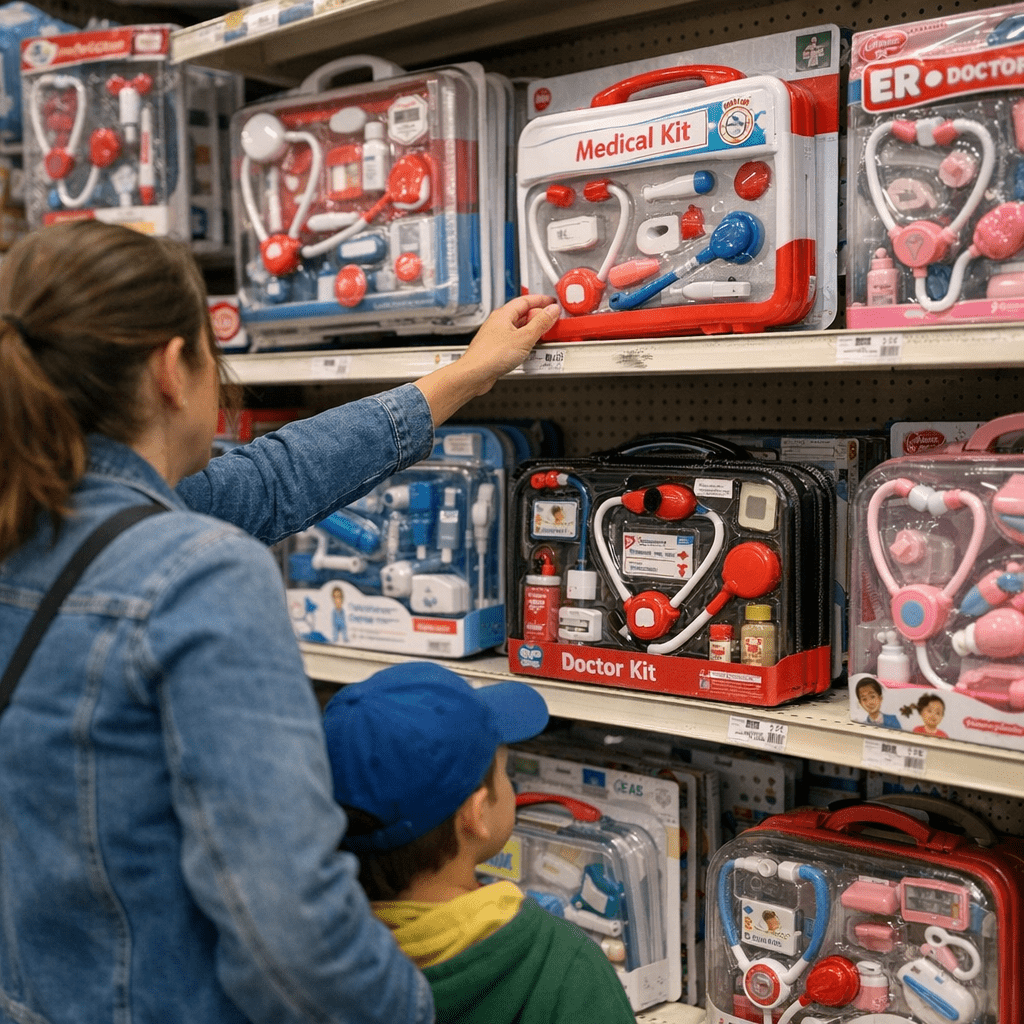
Why Pretend Play Doctor Kits Matter
If you’ve ever watched a kid with one of these kits, you know exactly why they’re so popular. It’s not just about playing doctor—it’s about role-playing as someone important and capable. They mimic grown-ups in ways that boost their confidence and teach empathy (you’d be surprised how much pretending to diagnose Mommy’s “tummy ache” teaches them). Plus, let’s face it: kids love anything involving tiny tools and gadgets they can poke around with.
In 2026, pretend play is bigger than ever because parents finally get it—it’s not just play; it’s learning disguised as fun. The right doctor set can teach basic anatomy, problem-solving skills, and even teamwork if siblings or friends join in on the act.
But here’s where things get tricky: some sets are pure fluff—overpriced collections of cheap plastic toys that add zero value beyond cluttering your living room floor. Others go above and beyond with thoughtful designs, durable materials, and genuinely useful accessories like working thermometers or light-up otoscopes. Let’s get into how to tell which is which—and what fits your kid best.
—
What Makes a Doctor Kit “Realistic”?
When we say “realistic,” we don’t mean medical-grade equipment (obviously). But here are three key things every solid pretend kit should nail:
1) Functional Accessories
I’m talking about items that do something. A stethoscope that makes heartbeat sounds when pressed against skin? Fantastic! A syringe with a spring-loaded mechanism for pretend injections? Even better! Compare this to cheap kits where everything looks cool but doesn’t actually work—it kills the excitement fast.
2) Durable Materials
Kids aren’t gentle creatures—they’re rough on toys in ways manufacturers never seem to expect (until parents complain). Look for kits made from sturdy plastics or rubber instead of thin materials that snap at the slightest bend. If there’s metal involved—for example, stainless steel scissors—bonus points for extra durability!
3-in-1 Princess Vanity Desk vs. Portable Interactive Kids Kitchen: Which is the
3) Educational Design
Great kits aren’t just fun; they sneak in learning moments too. Some include illustrated anatomy charts or flashcards explaining body parts (“What does your skeleton do?”). Others incorporate color-coded tools or simple instructions for pretend procedures like taking blood pressure or checking reflexes.
—
My Top Picks for 2026 Doctor Kits
After testing several sets myself (yes, I borrowed my niece for this), these stood out as real winners: functional accessories + durable build + educational value = worth your money.
### 1) KidzMed Deluxe Pretend Medical Set
This one impressed me right away—it comes with over 30 pieces including a working stethoscope (with heartbeat sounds!), a flashlight-style otoscope, bandages galore, and even patient charts kids can fill out themselves.
Pros:
- Real functionality: The stethoscope sound effect alone kept my niece entertained for hours.
- Durable build: No cheap-feeling parts here—the tools survived multiple drops without cracking.
- Bonus learning materials: Includes anatomy flashcards designed specifically for preschoolers.
Cons:
- Pricey at €49—but honestly worth it considering how long it lasts compared to cheaper alternatives.
—
2) Melissa & Doug Get Well Doctor Activity Center
Okay—I hesitated on whether this counts as a kit since it’s technically more of an all-in-one workstation than an accessory set…but wow does it deliver! This thing comes with examination tables, storage bins full of tools (bandages included), and even X-ray slides kids can explore under fake light panels.
Pros:
- Super immersive experience—it feels like running a mini doctor clinic!
- Tons of interactive features beyond basic tools.
- Built-in organization means fewer lost pieces scattered across your house.
Cons:
- Bulky setup—not ideal if space is tight.
- Costs around €139—definitely an investment piece rather than casual buy.
—
Los 7 mejores sets de maquillaje para niñas bajo $50 en 2024: guía práctica con
3) Fisher-Price Medical Kit Essentials Edition
If simplicity is more your speed—or budget—this affordable option gets the job done without going overboard on extras. You’ll find basics like a thermometer (non-digital but cute), blood pressure cuff (functional pump!), syringe toy…and not much else.
Pros:
- Compact design makes cleanup easy.
- Affordable price at €19—great starter kit if you’re testing waters before committing big bucks.
Cons:
- Lacks realism compared to higher-end sets—you won’t find any sound effects or advanced features here.
—
Not All Kits Are Created Equal
Here’s where parents often get stuck—deciding between overpriced mega sets versus affordable-but-underwhelming options…and sometimes neither feels quite right! That said:
1️⃣ Skip gimmicky sets: Anything relying too heavily on flashing lights/noises tends wear thin quickly unless backed by quality construction underneath those bells/whistles..
Related Links
How to Choose the Perfect 3-in-1 Princess Vanity Desk for Your Little Girl: Practical Playbook with Real Examples - Crown Toys
[…] How to Pick the Best Pretend Play Doctor Kits with Realistic Accessories […]