
No products in the cart.
Shop all products
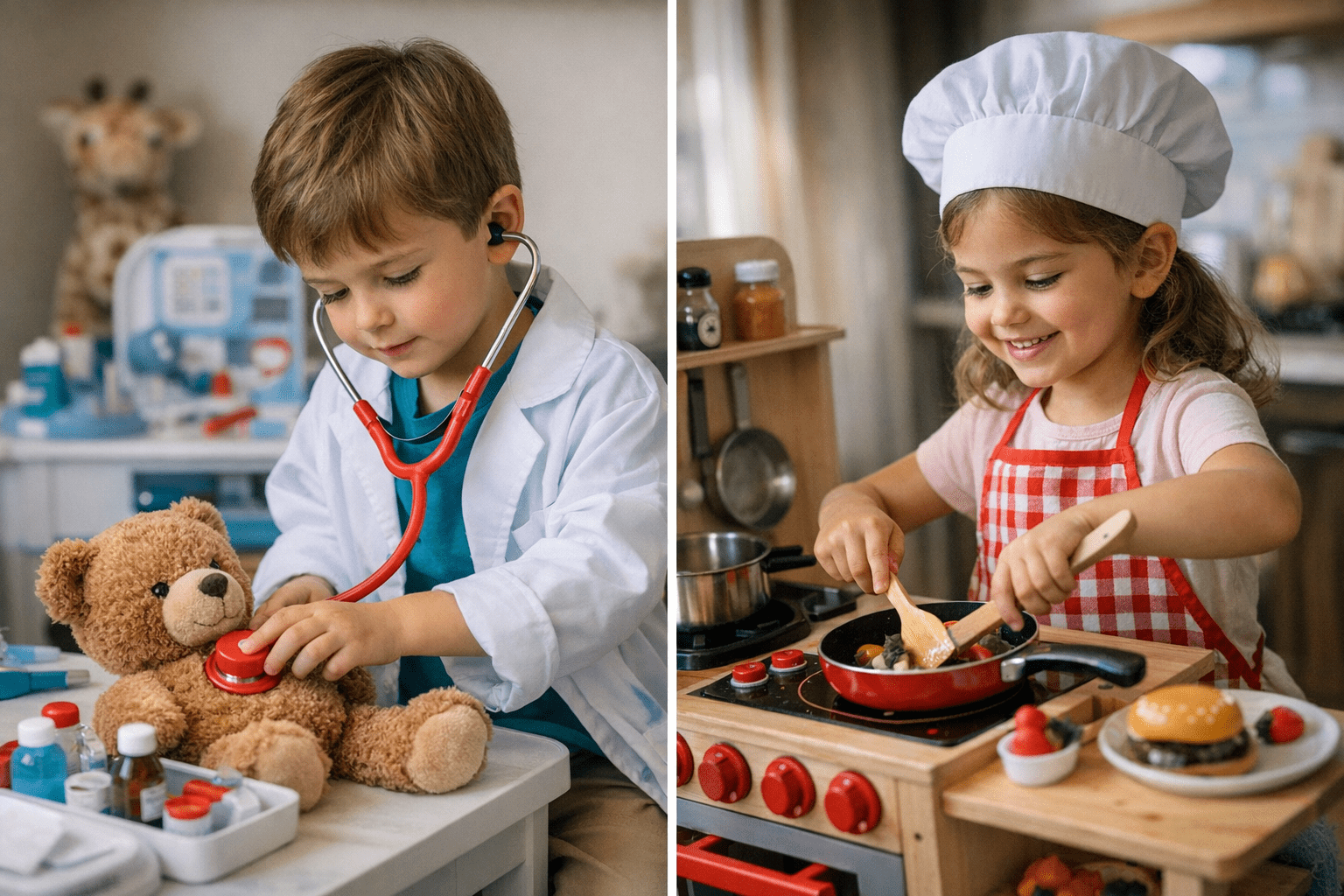
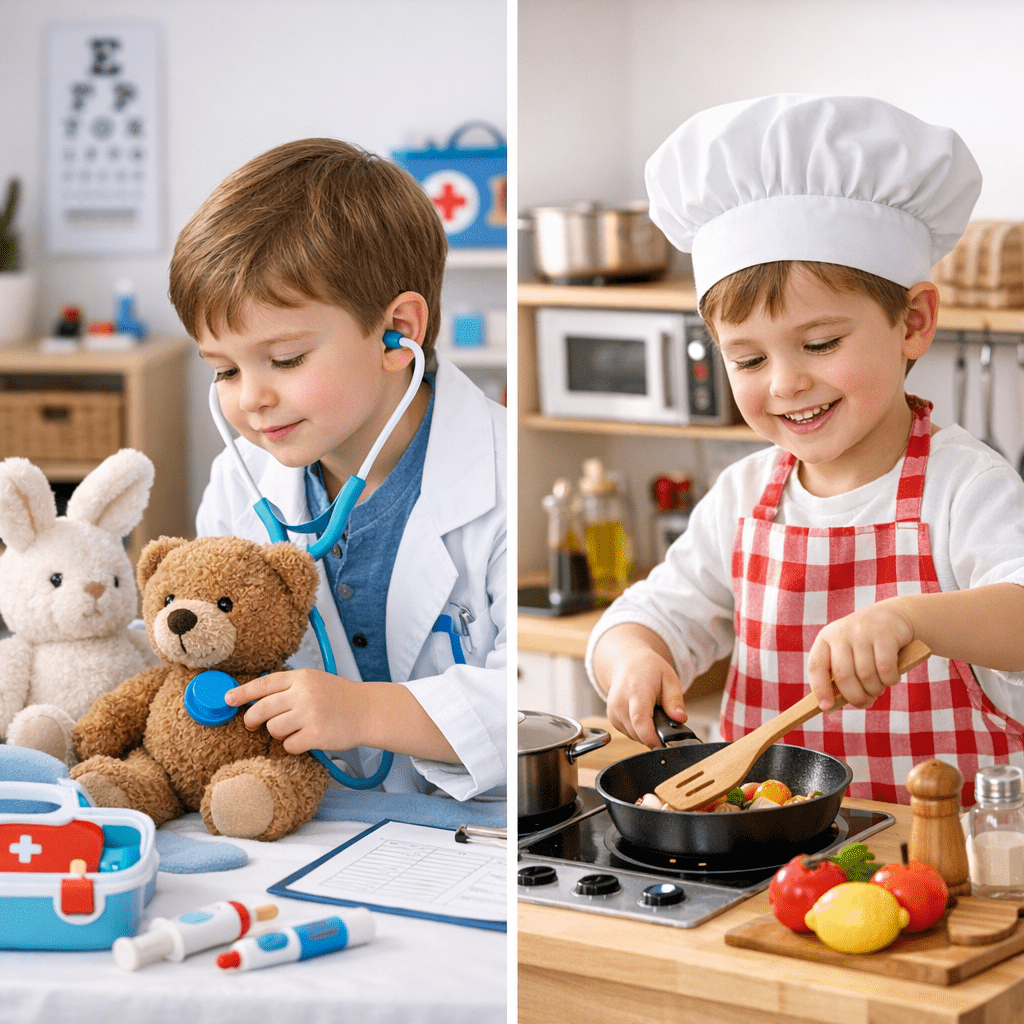
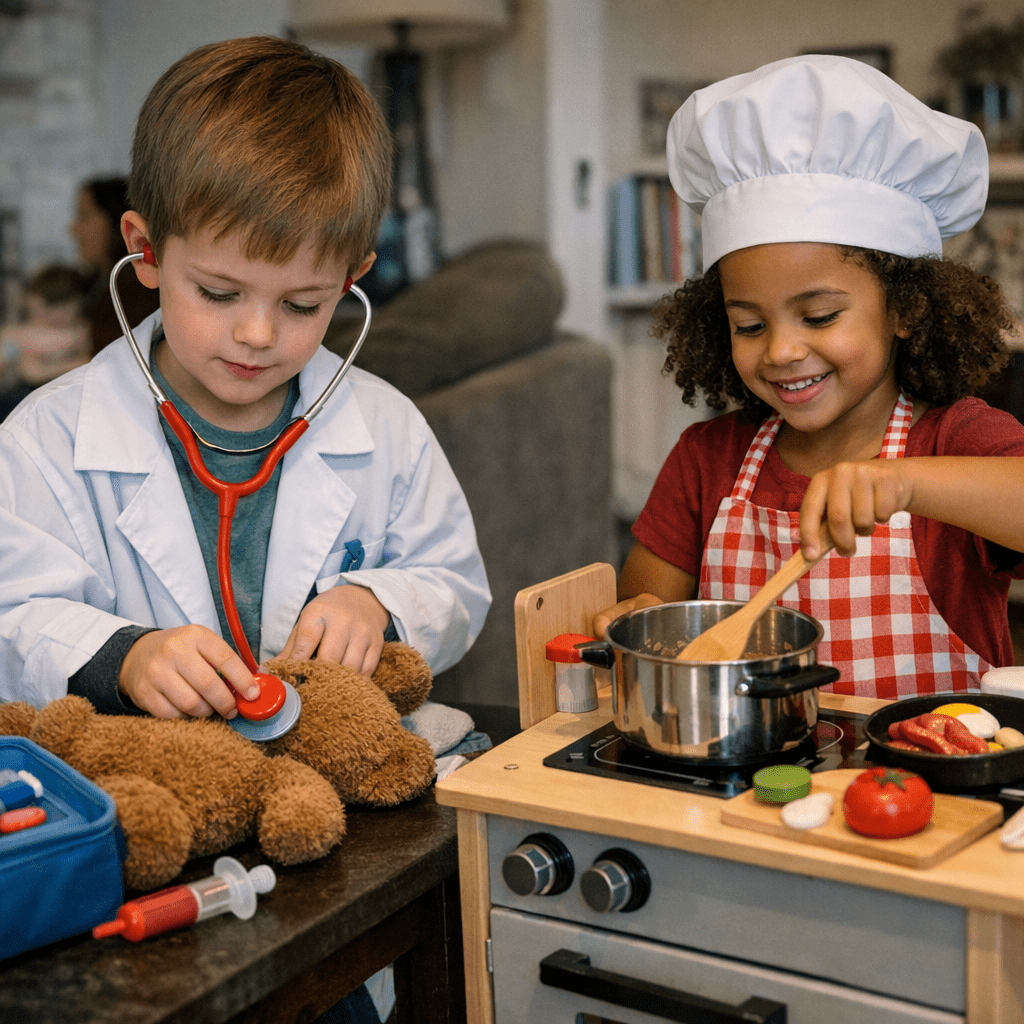
Picture this: your five-year-old is enthusiastically diagnosing their stuffed animals with a toy stethoscope, or maybe they’re “cooking” you a three-course meal in their pretend kitchen. Both scenarios are adorable, but which role-playing toy—a doctor pretend play set or a chef’s station playset—is the better pick for kids aged 3 to 7? The answer depends on more than just cuteness overload.
Let’s break this down by what these toys offer, how they benefit your child’s development, and the tradeoffs you’ll need to consider before choosing.
—
Why Role-Playing Toys Are Genius for This Age Group
First off, kids between 3 and 7 are little sponges when it comes to learning. Pretend play isn’t just fun; it’s how they process the world. By pretending to be doctors or chefs, they’re building critical social skills, practicing problem-solving, and even developing fine motor coordination. Plus, let’s be honest—role-playing toys keep them occupied long enough for you to drink your coffee while it’s still hot.
But here’s where it gets tricky: not all role-playing sets are created equal. Some lean heavily toward educational value; others focus more on creative expression. That tension is exactly what makes this comparison so interesting.
—
The Doctor Pretend Play Set: A Deep Dive
What It Includes
A typical doctor pretend play set comes loaded with tools like a stethoscope (sometimes one that actually beats!), a thermometer, syringes, an otoscope—you know, the basics of any world-class teddy bear hospital. Higher-end options might even feature toy X-ray machines or light-up medical devices.
Why It Shines
This set screams educational value. It introduces kids to basic medical concepts in a way that feels approachable rather than scary. Got a kid nervous about real-life doctor visits? These kits can help demystify the experience—and maybe even make it fun.
Doctor sets also excel at role reversal play. Kids love being in charge of “fixing” someone else (even if that someone is their dog). And let me tell you—watching them give grandma an imaginary flu shot is priceless.
For fine motor skills? Top-notch. They’ll need precision to use those tiny instruments properly. Plus, there’s an unexpected bonus here: emotional intelligence development. When kids “diagnose” boo-boos or ask how their patients feel, they’re practicing empathy without even realizing it.
Where It Falls Short
Here’s where I hesitate: doctor kits can feel repetitive after a while unless your child is deeply into medical scenarios. Once every stuffed animal has been bandaged up twice over, some kids might lose interest—or worse—start trying to inject imaginary medicine into your actual arm (true story).
Another downside? The smaller pieces tend to go missing faster than socks in the laundry.
—
The Chef’s Station Playset: A Closer Look
What It Includes
Chef stations vary widely but generally include things like plastic food items (think fried eggs and veggies), pots and pans, utensils, and sometimes appliances like microwaves or stovetops with sound effects. Bigger sets might even have functional water features or ovens with timers!
How to Start Dropshipping Pretend Play Medical Kits in the US Market: Practical
Why It Stands Out
Cooking is universal; everyone eats! Unlike doctor kits—which require specific knowledge—kids instinctively understand food prep because they see it daily in real life. This makes chef stations super intuitive and immediately engaging for most children.
The creativity factor here is off the charts too. Kids don’t just follow recipes—they make up absurd ones (banana soup with pizza toppings?) that fuel their imagination in hilarious ways. And if you’ve got siblings? A chef station encourages cooperative play as they work together to serve up plastic pancakes.
Fine motor skills also get plenty of exercise here as kids slice fake vegetables or stir invisible soup like Gordon Ramsay Jr., not to mention basic math concepts sneak in when measuring ingredients or counting out plates for dinner guests.
Potential Drawbacks
The clutter! If stepping on stray LEGO bricks hurts, wait until you’ve impaled yourself on a rogue wooden carrot at midnight. Chef stations can take over your living room fast if storage isn’t part of the plan (pro tip: invest in bins now).
Also worth mentioning: unlike doctor kits that pack neatly into small cases, these setups often require dedicated space—and not everyone has room for a mini restaurant next to their couch.
—
Side-by-Side Comparison Table
| Feature | Doctor Pretend Play Set | Chef’s Station Playset |
|————————|—————————————–|—————————————–|
| Educational Value | High—focuses on health & empathy | Moderate—math & teamwork through play |
| Creativity Factor | Medium—role-specific scenarios | High—limitless food combinations |
| Fine Motor Skills | Excellent—handling small instruments | Excellent—chopping/slicing/stirring |
| Space Needs | Minimal | Significant |
| Longevity | May wane after initial excitement | Longer-lasting due to versatility |
—
Los 7 mejores sets de maquillaje para niñas bajo $50 en 2024: guía práctica con
Real-World Scenarios
Here’s some perspective from my own parenting trenches:
1. My daughter went through her “doctor phase” at age four after watching Doc McStuffins episodes non-stop for months. Her doctor kit was perfect… until she started diagnosing me with rare diseases every morning before breakfast (“You have giraffe fever!”). By six years old? She’d moved on entirely.
2. On the flip side, our chef station has been going strong since Christmas two years ago—and survived two different kids’ obsessions with opening fake restaurants out of our basement corner (“Welcome to Café Chaos!”). Sure, I’ve stepped on dozens of plastic tomatoes along the way—but watching them collaborate on menus made up for it tenfold.
—
Choosing Based on Your Kid’s Personality
Some children naturally gravitate toward one type of imaginative play over another:
- For budding problem-solvers: Go with the doctor kit.
- For creative storytellers: The chef station wins hands down.
If space is tight or mess stresses you out? Stick with something compact like the doctor set—it packs away easily when not in use (and trust me—that matters).
That said… if collaboration among siblings sounds great—or if YOU secretly want an excuse to join them making fake pasta dishes—the chef station will win hearts across generations.
—
Final Takeaway
So which one’s better? Honestly—it depends on what kind of spark you want to ignite in your child right now: curiosity about helping others through medicine or pure culinary chaos fueled by creativity?
Either way—you can’t really lose when you’re investing in toys that bring both joy and developmental benefits into everyday life.
Need more tips about choosing toys tailored specifically for young imaginations? You can learn more about finding perfect picks for other pretend-play categories too!
Related Links
