
No products in the cart.
Shop all products
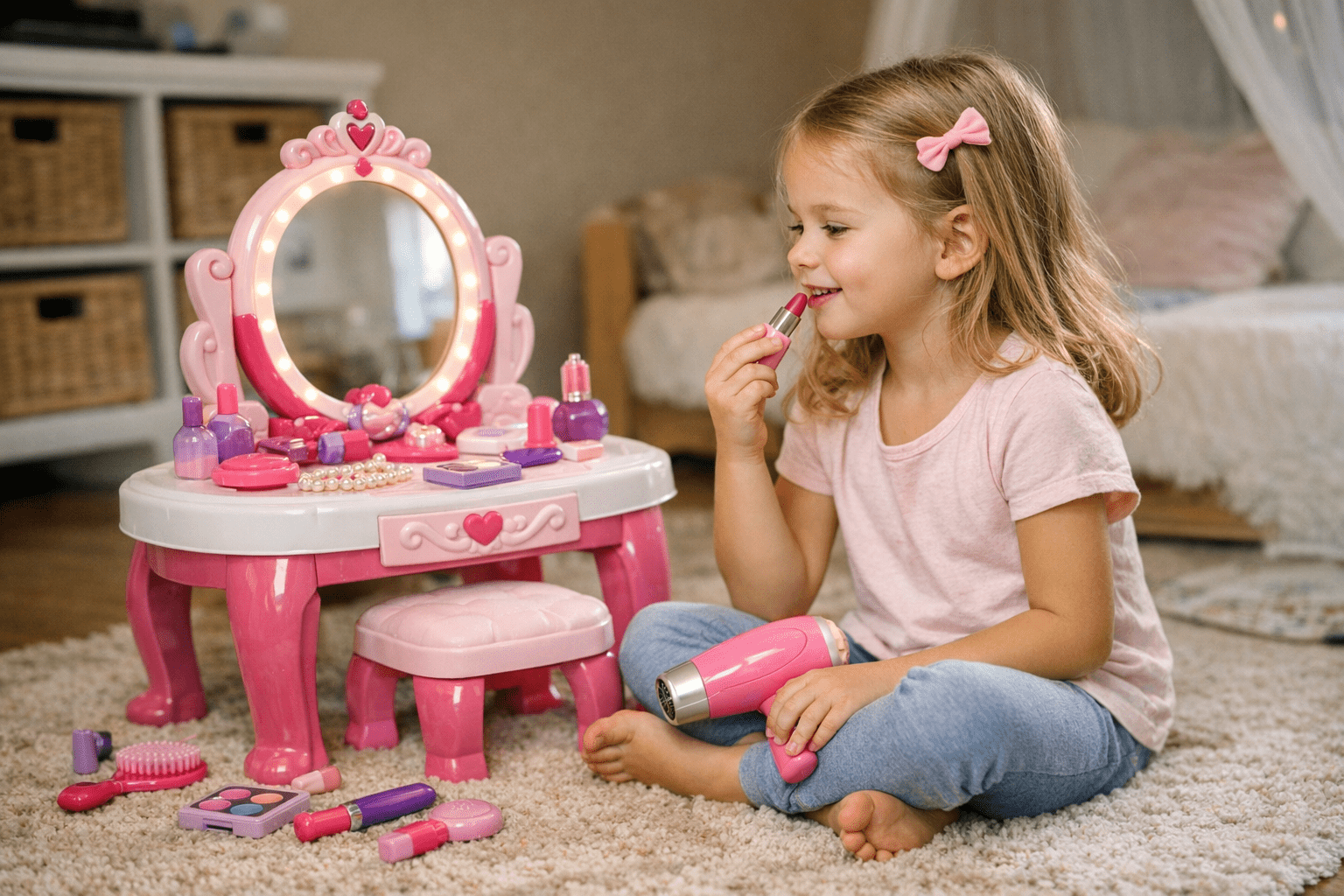
Picture this: your kid is sitting cross-legged on the floor, surrounded by plastic lipsticks, tiny combs, and a hair dryer that actually makes a soft whirring sound. They’re grinning ear-to-ear as they “style” their teddy bear’s fur or “apply” makeup to their own reflection in a pint-sized mirror. That’s the magic of pretend beauty vanity sets—they tap into creativity, foster role play, and give kids a space to explore self-expression. But not all sets are created equal.
If you’re shopping for one of these for a child aged 3-7, you’re probably overwhelmed by the sheer number of options. Plastic or wood? Lights or no lights? Tons of little pieces or something simpler? Let’s break it down so you can pick the best set without losing your mind (or stepping on another miniature brush).
—
Why Pretend Beauty Vanity Sets Are Great for This Age Group
Kids between 3 and 7 are all about imaginative play. They want to mimic what they see in the world around them—whether it’s mom putting on lipstick before work or their big sister brushing her hair in front of a mirror. A vanity set gives them an outlet for that curiosity while also helping with motor skills (all those tiny bottles and tools!) and social skills if they’re playing with siblings or friends.
At this age, it’s also important that toys grow with them. A good pretend vanity should feel magical to a three-year-old but still be engaging enough that a seven-year-old doesn’t roll their eyes at it after two weeks.
—
Key Features to Look For
Not every set will suit every kid—or every parent—so here are some practical things to consider:
1. Durability
Let’s be real: kids aren’t gentle with toys. If you buy something flimsy, you’ll probably end up gluing pieces back together within days (if they haven’t been lost under the couch). Wooden vanities tend to be sturdier than plastic ones but often come at a higher price point.
Example: The Melissa & Doug Vanity Set is made from solid materials that can take some rough handling. On the flip side, many budget-friendly plastic options like those from KidKraft are lightweight but more prone to cracks over time.
2. Size and Space
How much room do you actually have for this thing? Some vanities are compact enough to fit on top of an existing table while others come as full-on furniture pieces with chairs included.
Tip: If space is tight, look for portable tabletop sets like the Disney Princess Style Collection Travel Vanity Kit. These can be packed away when not in use.
3. Interactive Features
Lights and sounds can make these sets feel extra special—think mirrors that light up when touched or hair dryers that hum like actual appliances—but sometimes simple is better if your kid gets overstimulated easily.
Worth mentioning: Sets like the Teamson Kids Gisele Vanity offer LED-lit mirrors powered by AA batteries, while cheaper models might skip bells and whistles entirely.
4. Number (and Size) of Accessories
Some kids love having dozens of tiny accessories: lipstick tubes, nail polish bottles, brushes—you name it. Others just want one or two key items so they don’t have too much clutter during playtime.
Tradeoff: Consider how organized (or chaotic) your household tends to get…because inevitably half those little pieces may end up in odd places!
Los 7 mejores sets de maquillaje para niñas bajo $50 en 2024: guía práctica con
—
Comparison Table: Popular Kids’ Vanity Sets in 2026
Here’s how some top-rated options stack up across key categories:
| Model | Material | Features | Best For | Price (€) |
|———————————|——————-|——————————|—————————————|—————|
| Melissa & Doug Wooden Vanity | Wood | Mirror w/storage drawers | Parents who value durability | ~€80 |
| Disney Princess Travel Vanity | Plastic | Portable w/mirror + lights | Families short on space | ~€45 |
| Teamson Kids Gisele | Wood/Plastic Mix | LED-lit mirror + chair | Kids who love interactive features | ~€120 |
| KidKraft Deluxe Beauty Set | Plastic | Basic accessories included | Budget-conscious shoppers | ~€35 |
—
Common Tradeoffs When Choosing
No toy is perfect—even if it feels like magic when unwrapped! Here’s where most parents tend to hit decision paralysis:
1. Wood vs Plastic
- Wooden vanities look nicer (and last longer), but they’re heavier and usually more expensive.
- Plastic models are lighter and easier for young kids to move around themselves but may lack durability.
2. Accessories vs Simplicity
- More accessories mean more ways to play…but also more ways for small parts to get lost.
- Simpler sets focus attention on pretending rather than managing clutter.
3. Price vs Features
- Budget-friendly options often skip extras like lights or sturdier construction.
- Higher-end models deliver interactive elements but might feel over-the-top if your child isn’t super into pretend beauty play yet.
—
Cómo iniciar un negocio de dropshipping de juguetes desde cero: guía práctica co
Real-World Scenarios: What Works Best?
1. For Tiny Spaces:
If you live in an apartment where floor space is at a premium, go with something compact like this travel vanity set. Bonus points if it folds up neatly when not in use!
2. For Rough-and-Tumble Play:
Got younger kids who are still learning how NOT to slam drawers shut? Opt for wooden sets—they’ll survive far more abuse than lightweight plastic ones.
3. For Sibling Sharing:
Pick something larger with multiple accessories so there’s plenty for everyone involved—no fighting over who gets which brush!
—
Practical Tips Before You Buy
- Double-check dimensions: Pictures online can be deceiving! Make sure whatever set you buy fits wherever you plan on putting it.
- Assembly required?: Some larger vanities come unassembled—be prepared for an IKEA-like afternoon.
- Test safety features: Small parts should meet safety standards; check reviews if unsure about choking hazards.
One last thing: if you’re stuck between two options, think about longevity over “wow factor.” A simple sturdy vanity might seem boring now but could outlast trendier plastic alternatives—and save money long-term!
For more inspiration on great pretend play gifts beyond vanities—like doctor kits or even mini kitchens—learn more here.
—
Final Thoughts
Choosing the right pretend beauty vanity set isn’t rocket science—it just takes balancing your kid’s personality with practical considerations like space and durability. Whether you go all-out with LED mirrors or keep things low-key with a basic wooden design, remember: at this age, it’s less about perfection and more about sparking joy through playtime creativity.
Need help deciding between different types of pretend play toys altogether? Check out this rundown comparing multi-functional gift ideas here. Whatever you choose, happy shopping—and watch out for stray combs underfoot!
Related Links
What to Look for When Buying a 3-in-1 Princess Vanity Desk with Washable Makeup: Practical Playbook with Real Examples - Crown Toys
[…] How to Choose the Best Pretend Beauty Vanity Set for Kids Ages 3-7: Practical Playbook with Real Exa… […]