
No products in the cart.
Shop all products

Pretend doctor kits are a staple in imaginative play. They’re fun, educational, and a sneaky way to get your kids more comfortable with real doctor visits. But let’s be honest—there are so many options out there, it can feel like you’re diagnosing your own headache just trying to pick one. Some kits are too basic; others come with so many tiny pieces they’ll disappear into the couch after five minutes. So, how do you choose the best one? Here’s what really matters when selecting a pretend doctor kit for kids aged 3–7.
—
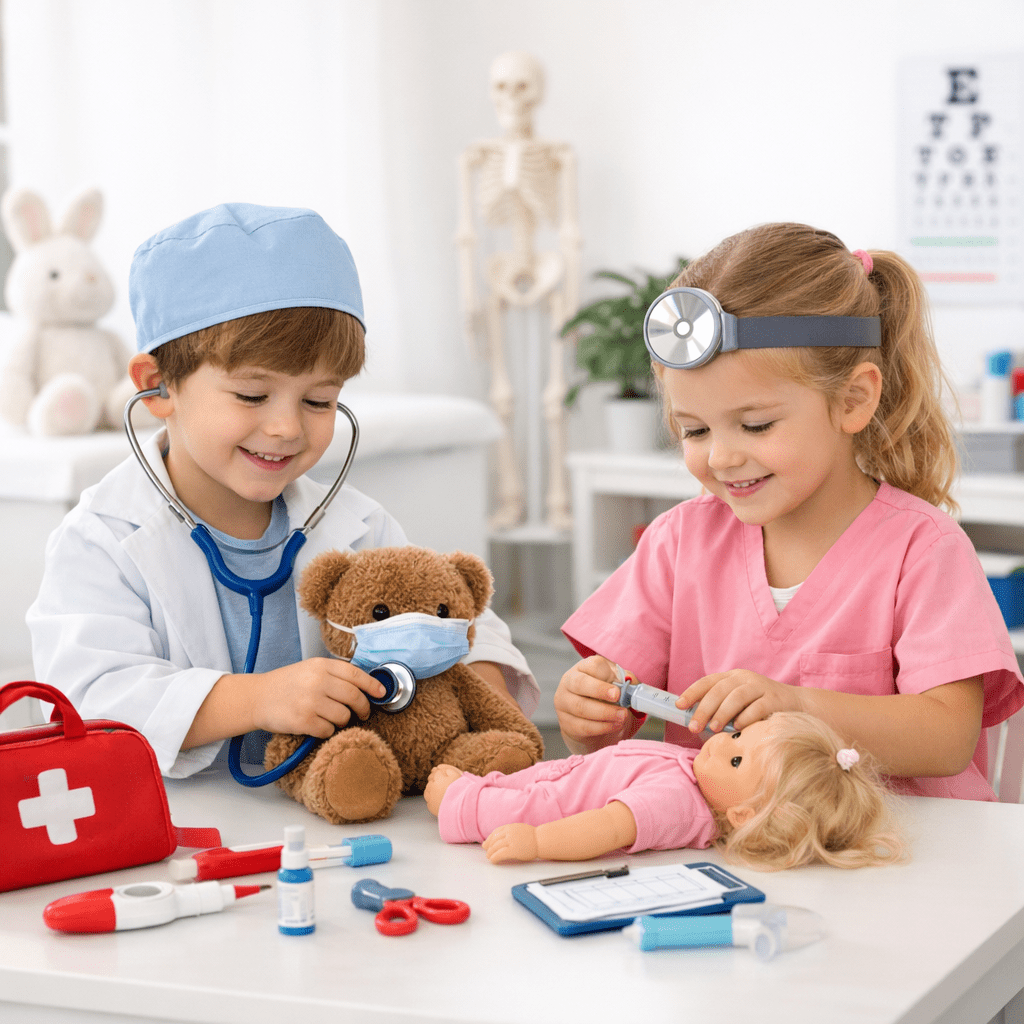

Step One: Understand What Kids Actually Care About
Let me say this upfront: kids don’t care about brand names or whether the box says “educational.” They care about cool stuff. A kit that has a toy stethoscope that actually lights up or makes heart sounds? Instant winner. A pretend syringe they can push? Gold. It’s all about interactive features—things they can fiddle with and make work themselves.
For younger kids (ages 3–4), simplicity is key because their motor skills aren’t fully developed yet. Look for larger pieces like chunky thermometers or easy-to-grip bandages that won’t frustrate them. For older ones (5–7), adding more detailed tools—like an otoscope with a tiny “ear” piece—can keep them engaged longer.
Here’s where things get tricky: not every feature-packed kit is durable or safe. We’ve seen some kits loaded with flashy gadgets but made of flimsy plastic that cracks within days or poses choking hazards for small parts. That balance between fun features and reliability is what separates the winners from the junk.
—
Feature Breakdown: What Makes a Kit Worth Buying?
There are four main criteria I swear by when picking pretend doctor kits:
1. Safety: Are all pieces large enough to avoid choking risks? Is the material non-toxic and well-made?
2. Durability: Will these toys survive an afternoon of rough play without breaking into bits?
3. Interactive Features: Does it have working buttons, lights, sound effects, or moving parts?
4. Realism vs Playfulness: Does it look enough like real doctor tools while still being fun for kids?
Quick Comparison Table
Here’s how some popular kits stack up based on these criteria:
Los 7 mejores sets de maquillaje para niñas bajo $50 en 2024: guía práctica con
| Kit Name | Safety Rating | Durability | Interactive Features | Realism/Playfulness Balance |
|—————————–|——————|—————-|————————–|———————————|
| KidzDoc Deluxe Kit | ⭐⭐⭐⭐⭐ | ⭐⭐⭐⭐ | Heartbeat stethoscope + light-up thermometer | Strong realism with bright colors for fun |
| Doctor FunTime Set | ⭐⭐⭐⭐ | ⭐⭐ | Basic tools (no lights/sounds) | Very playful but lacks realism |
| Mini Medics Pro Kit | ⭐⭐⭐⭐⭐ | ⭐⭐⭐⭐⭐ | Fully interactive (syringe pump + otoscope w/ light) | Perfect mix of real tools + playful design |
—
Age-Specific Recommendations
For Preschoolers (Ages 3–4): Keep It Simple
At this age, kids are still exploring motor skills and coordination, so smaller details might frustrate them rather than entertain them. Look for sets with fewer pieces but chunkier designs—things they can grab easily without needing precise hand movements.
Example Scenario: The Toy Stethoscope Test
I tested two different stethoscopes on my niece last summer—a cheap one from a random set at a discount store versus one from KidzDoc Deluxe Kit (the heartbeat model). She couldn’t figure out how to use the cheap one because it had no interactive elements—it was just plastic tubing! But she was obsessed with pressing the button on KidzDoc’s stethoscope to hear fake heartbeats over and over again.
If you want something similar, check out this guide where we discuss more toddler-friendly toys.
—
For Big Kids (Ages 5–7): Add Real Detail
Older kids love “real” gadgets—the kind that look like professional tools doctors use but scaled down for playtime purposes. At this age, kits with extras like medical charts or pretend prescriptions will add depth to their roleplay experience.
Cómo iniciar un negocio de dropshipping de juguetes desde cero: guía práctica co
Example Scenario: Roleplay Gone Advanced
My son recently got his hands on Mini Medics Pro Kit at his friend’s birthday party in early 2026—and let me tell you—it wasn’t long before he was pretending to diagnose imaginary patients… including our poor dog! He loved using the light-up otoscope and asking everyone “What hurts?” Older kids thrive on role-specific props like white coats or name badges too.
For dropshipping advice on similar products aimed at this age group’s preferences, learn more here.
—
Tradeoffs You Should Consider Before Buying
Here’s where things can get messy—and I mean literally messy if your kit comes with too many loose parts! While larger sets may seem appealing because they include everything under the sun (charts, bandages, syringes), remember that storage becomes an issue fast if you don’t plan ahead.
Also worth mentioning: not every extra gadget adds value! I once bought a fancy-looking set containing over 50 items thinking “more is better,” but half those accessories were either irrelevant or poorly designed—tiny stickers that ripped instantly or flimsy band-aid replicas nobody wanted to touch.
—
Practical Takeaway: Start With Functionality Over Flashiness
Before diving headfirst into buying whatever has the most bells and whistles on Amazon today, think about how often your child will use it—and honestly assess whether they’d enjoy simple tools more than overly complicated gimmicks they’ll ignore after day one.
If you’re still unsure which route to go down after reading this guide—or need help choosing similar themed toys—I highly recommend checking out this resource. It dives deeper into picking versatile playsets across categories tailored specifically toward early childhood development needs!
Related Links
10 Best Kitchen Playsets with Realistic Features for Kids Ages 3–7: Practical Playbook with Real Examples - Crown Toys
[…] How to Choose the Best Pretend Doctor Kits for Boys and Girls Ages 3–7: Practical Playbook with Re… […]
How to Create a Successful Dropshipping Store for Kids Supermarket Play Sets in the US: Practical Playbook with Real Exa - Crown Toys
[…] How to Choose the Best Pretend Doctor Kits for Boys and Girls Ages 3–7: Practical Playbook with Re… […]