No products in the cart.
Shop all products
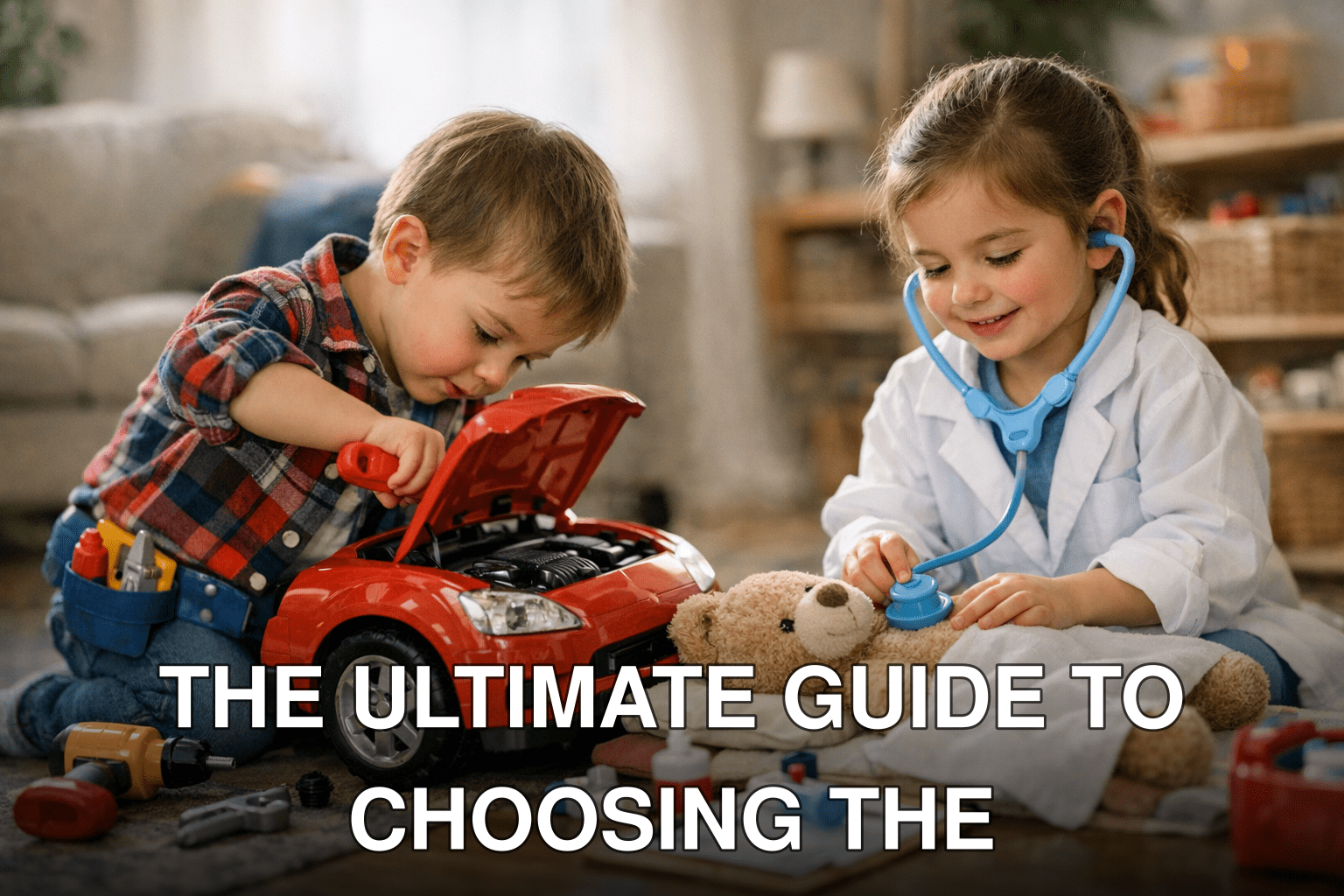
Ever watch a toddler attempt to “fix” their toy car with a plastic wrench or see a preschooler pretend to be a doctor using teddy bears as patients? It’s adorable, sure—but it’s also serious business when it comes to child development. Role-playing toys aren’t just about fun; they’re tools for creativity, problem-solving, and emotional growth.
The problem? Not all role-playing toys are created equal. Some are too complicated for younger kids, while others might bore older ones in minutes. Worse, choosing the wrong toy can mean wasted money and missed opportunities for learning.
But here’s the good news: You don’t need to guess your way through this decision. In this guide, you’ll discover:
- How different types of role-playing toys benefit children at specific ages.
- Common mistakes parents make when choosing these toys (and how to avoid them).
- The exact steps to match a toy with your child’s developmental stage—and personality!
Let’s dive into it. Or better yet—let’s dig out that imaginary toolkit and start building smarter choices!
Why Age Matters More Than You Think
Here’s something most parents overlook: A role-playing toy that’s perfect for a three-year-old can completely miss the mark for an eight-year-old. Kids develop at lightning speed—and their interests shift just as fast. If you want a toy that holds their attention and boosts their skills, you’ve got to think age first.
Here’s how different stages stack up:
Toddlers (1–3 years): Sensory Exploration Comes First
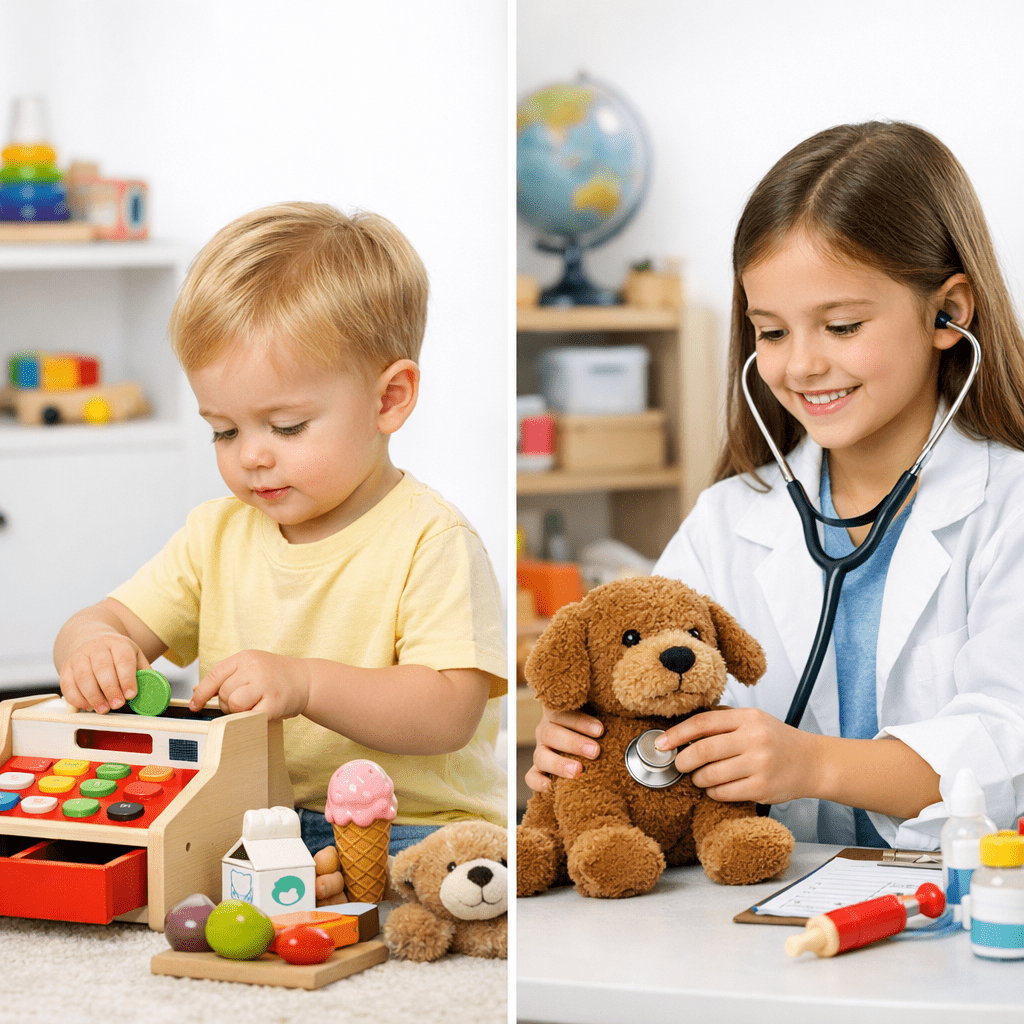
Toddlers don’t need elaborate setups or complex accessories—they’re still figuring out how objects work and what their hands can do. At this age, simple is king: think chunky plastic tools, oversized kitchen sets with colorful food pieces, or basic doctor kits with stethoscopes that actually make sounds.
Common myth: Big toys = big engagement.
Reality: Toddlers prefer fewer pieces they can easily hold and manipulate without frustration.
Cost of inaction: Skip sensory-friendly options now, and you risk delaying fine motor skill development later on.
Key takeaway: Stick to durable toys that emphasize textures, colors, and sound effects—they’re safe bets for toddlers who are still exploring the world one touch at a time.
Preschoolers (3–5 years): Imagination Takes Center Stage
This is where things get really creative! Preschoolers love pretending they’re grown-ups—whether it’s running their own pretend supermarket or operating on stuffed animals as “Dr.” So-and-so. Toys with interchangeable parts like grocery playsets or medical kits shine here because they allow kids to create stories while practicing problem-solving.
Learn more about picking realistic grocery playsets here. Spoiler alert: Look out for accessories like barcode scanners!
You might be thinking: “Won’t my kid just lose all those tiny parts?”
Also worth reading: Los 7 mejores sets de maquillaje para niñas
Yes… unless you store small accessories in bags or bins right after playtime—it saves sanity and keeps toys intact longer.
Best tip: Go interactive! Toys like cash registers with buttons or makeup kits with washable components keep preschoolers engaged far longer than static sets.
Early Elementary (6–8 years): The Need for Challenge
By now, kids crave complexity—and they notice quality more than ever before. Cheap plastic sets won’t cut it anymore; they want realistic role-playing scenarios that mimic adult life closer than ever. Think science lab kits that let them mix harmless chemicals or DIY construction sets where they can actually assemble mini structures.
This is also the age where themed sets matter most—kids latch onto favorites like veterinarian playsets if they’re animal lovers or beauty salon kits if they’re into aesthetics.
Find out how beauty salon toys can become educational tools—and yes, even nail polish has its moments!
Preteens (9–12 years): Mastery Over Play
For older kids, role-playing shifts toward skill-building rather than pure imagination. They love experimenting and mastering things adults do—from cooking real meals (kid-safe knives included) to coding robots or crafting jewelry from starter kits.
But here’s where it gets tricky: Preteens will reject anything that feels too babyish—or even slightly boring—so choose wisely! Kits labeled 8+ often strike the perfect balance between challenge and fun at this stage.
Before/After Example:
Without engaging STEM-based toys (Before:), preteens tend to drift toward screen time only (After:). With hands-on projects like robotics kits, they’ll stay engaged offline far longer while learning actual skills.
7 Mistakes Parents Make When Picking Role-Playing Toys
Let’s switch gears for a moment—because knowing what not to do is often half the battle when shopping smartly for your kids:
1. Ignoring age ranges on packaging: If it’s marked “4+” but you’re buying it for your two-year-old… good luck explaining why half those parts end up under the couch unused.
2. Choosing looks over durability: Flashy designs rarely survive toddlers—or clumsy preschool siblings!
3. Skipping interactive features altogether: Especially critical during ages 3–7 when cause-and-effect fascinates growing minds.
4. Buying sets without storage solutions: Those pieces WILL disappear faster than socks in a dryer without proper containers.
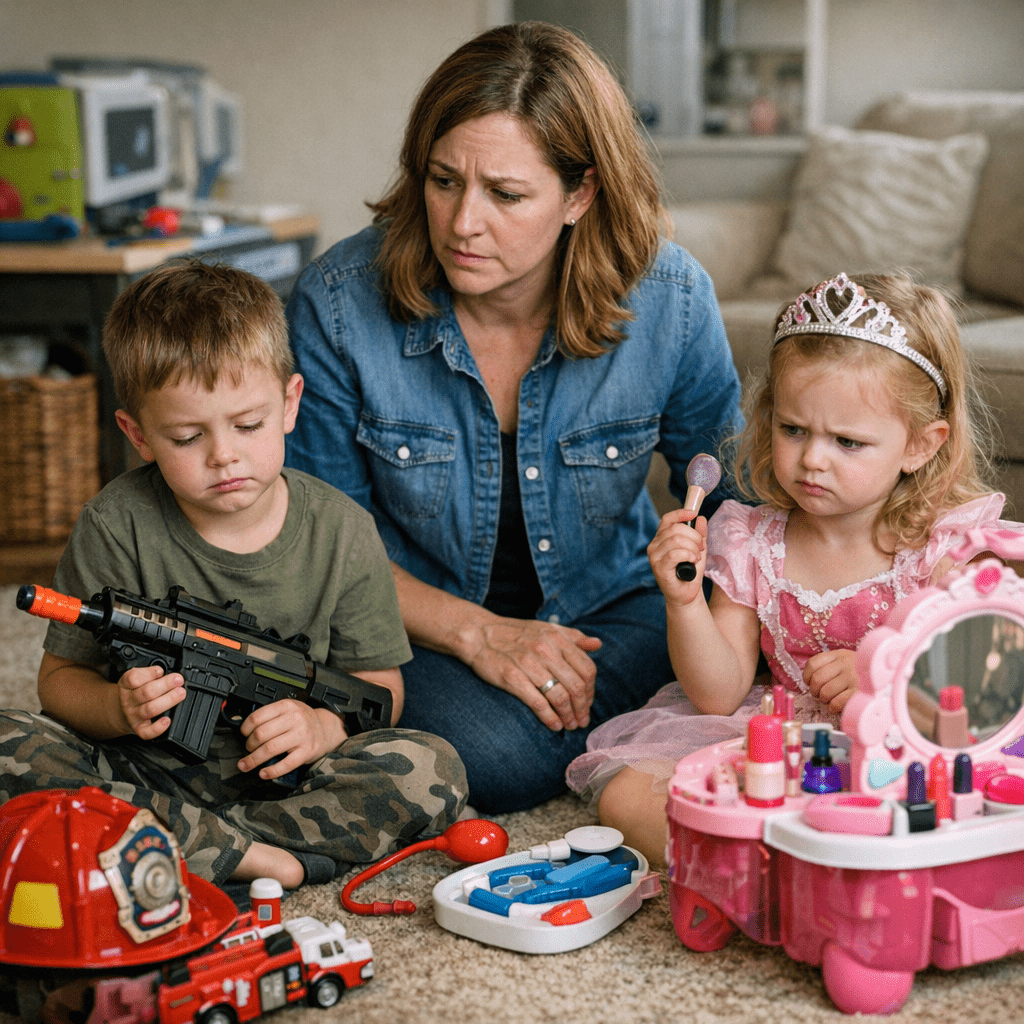
5. Focusing only on gender stereotypes: Boys love pretending doctors too; girls enjoy tools just as much as dollhouses.
6. Ignoring long-term replay value: Kids grow fast; invest in modular designs that evolve alongside them.
7. Underestimating safety risks with cheap materials: Always check certifications—even branded items occasionally fail tests in 2026 due to rushed overseas production cycles.
Related guide: Cómo iniciar un negocio de dropshipping de
A Checklist Before You Buy
Not sure where—or how—to start? Try this quick self-assessment before hitting “add-to-cart”:
- [ ] Does this match my child’s current developmental stage?
- [ ] Are there enough interactive elements?
- [ ] Is storage easy—or included?
- [ ] Are materials safe (non-toxic paint/plastic)?
- [ ] Will my child use this beyond one month?
If you checked every box above—you’re ready!
Myth-Busting Moment
Common myth: All expensive role-playing toys are worth it because they’re “premium.”
Reality: Price ≠ engagement longevity—focus on functionality instead of branding hype!
Frequently Asked Questions
Q: What should I avoid when buying role-playing toys online?
Avoid generic listings without detailed descriptions—especially photos showing flimsy accessories prone to breaking quickly under regular play conditions.
Q: Can role-playing toys help shy kids interact socially?
Absolutely! Pretend scenarios teach communication skills naturally—for example working together in “stores” encourages sharing dialogue organically between peers during cooperative gameplay sessions!
Q: What’s better—kits targeting single themes versus mixed ones combining several activities simultaneously instead?
Single-theme enriches focus deeper skill mastery whereas mixed broadens exposure introducing multiple concepts together suitable exploring variety preferences gradually overtime these preferences refine clearer inclinations emerge eventually narrowing refined interests future decisions easier compare beforehand
10 Best Role-Playing Toys for Kids That Encourage Creative Pretend Play: Practical Playbook with Real Examples - Crown Toys
[…] The Ultimate Guide to Choosing the Right Role-Playing Toy for Your Child’s Development by Age […]