No products in the cart.
Shop all products

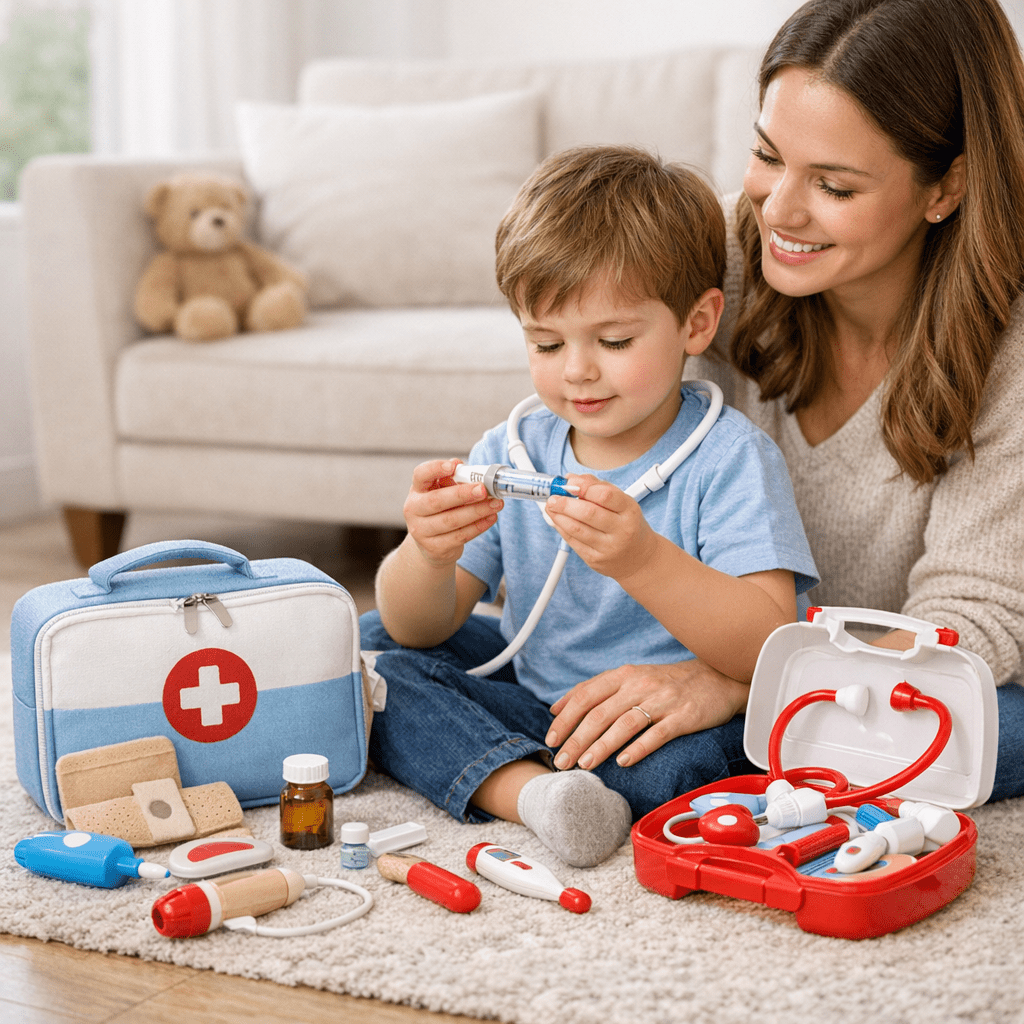
Your toddler just walked into the living room with a toy stethoscope draped around their neck, diagnosing the family dog with “too much barking.” It’s adorable, right? But here’s the thing: not all doctor play kits are as safe or enriching as they should be. And that matters when you’ve got a curious two-year-old (or an imaginative five-year-old) putting everything in their mouth or pretending to give shots to the nearest wall.
Doctor play kits can help kids explore empathy, role-play real-world scenarios, and even make those dreaded pediatrician visits less scary. But pick the wrong one, and you’re dealing with choking hazards, flimsy materials, or toys that break after one enthusiastic “surgery.” No parent has time for that.
In this guide, you’ll discover:
1. What makes a doctor play kit truly safe for toddlers.
2. The key features that separate fun sets from boring ones.
3. Real recommendations and what to avoid in 2026.
Let’s get into it.
Why Choosing the Right Doctor Kit Matters More Than You Think
Imagine this: You buy a cheap doctor set online because it has 50 pieces and looks like great value. A week later, half of those pieces are missing under the couch, one broke in half during “emergency surgery,” and your toddler is more frustrated than entertained. Sound familiar?
Here’s the cost of inaction: settling for a poorly designed kit means wasted money and missed learning opportunities. A well-made set keeps your child engaged while also teaching them about cooperation, communication, and self-care—skills they’ll actually use forever. In short? Picking the right kit isn’t just about avoiding junk; it’s about giving your kid tools to grow.
Also worth reading: Los 7 mejores sets de maquillaje para niñas
Quick Checklist: What to Look for in a Toddler-Friendly Doctor Kit
Before we dive into specific features (and why they matter), here’s a quick checklist parents can use when shopping:
- [ ] Non-toxic materials: BPA-free plastic or wood only.
- [ ] Chunky parts: No small pieces that could become choking hazards.
- [ ] Durability: Can it survive being stepped on or thrown across the room?
- [ ] Engaging features: Lights? Sounds? Moving parts?
- [ ] Realistic tools: Stethoscopes that work (even if just pretend).
Sound reasonable? Good. Now let’s talk tradeoffs—and yes, there are tradeoffs.
Safety First: The Non-Negotiables
1. Check for Choking Hazards
This is obvious but worth repeating: toddlers love putting things in their mouths. Anything smaller than two inches is risky territory for kids under three. If you’re buying a doctor kit marketed as “for all ages,” double-check its age rating anyway—it might not be toddler-safe despite what packaging claims.
Pro tip: Use an empty toilet paper roll as your DIY size checker—if any piece fits through it, skip the set.
2. Skip Cheap Plastics
Ever notice how some toys smell funky out of the box? That chemical scent often comes from low-grade plastics made with BPA or phthalates—materials linked to health risks like hormone disruption. Look for labels like “BPA-free” or certifications like ASTM F963 (a standard for toy safety).
And if you’re considering wooden doctor kits instead of plastic ones? Great move! They’re usually free from harmful chemicals and last longer—but beware of splinters on poorly finished products.
Key takeaway: Prioritize high-quality materials over flashy extras like stickers or unnecessary accessories.
Features That Make Kids Actually Want to Play
Safety aside (because that part should always come first), let’s talk fun factor! A good doctor kit doesn’t just sit in its box; it begs kids to play with it again and again.
Realistic Yet Kid-Friendly Tools
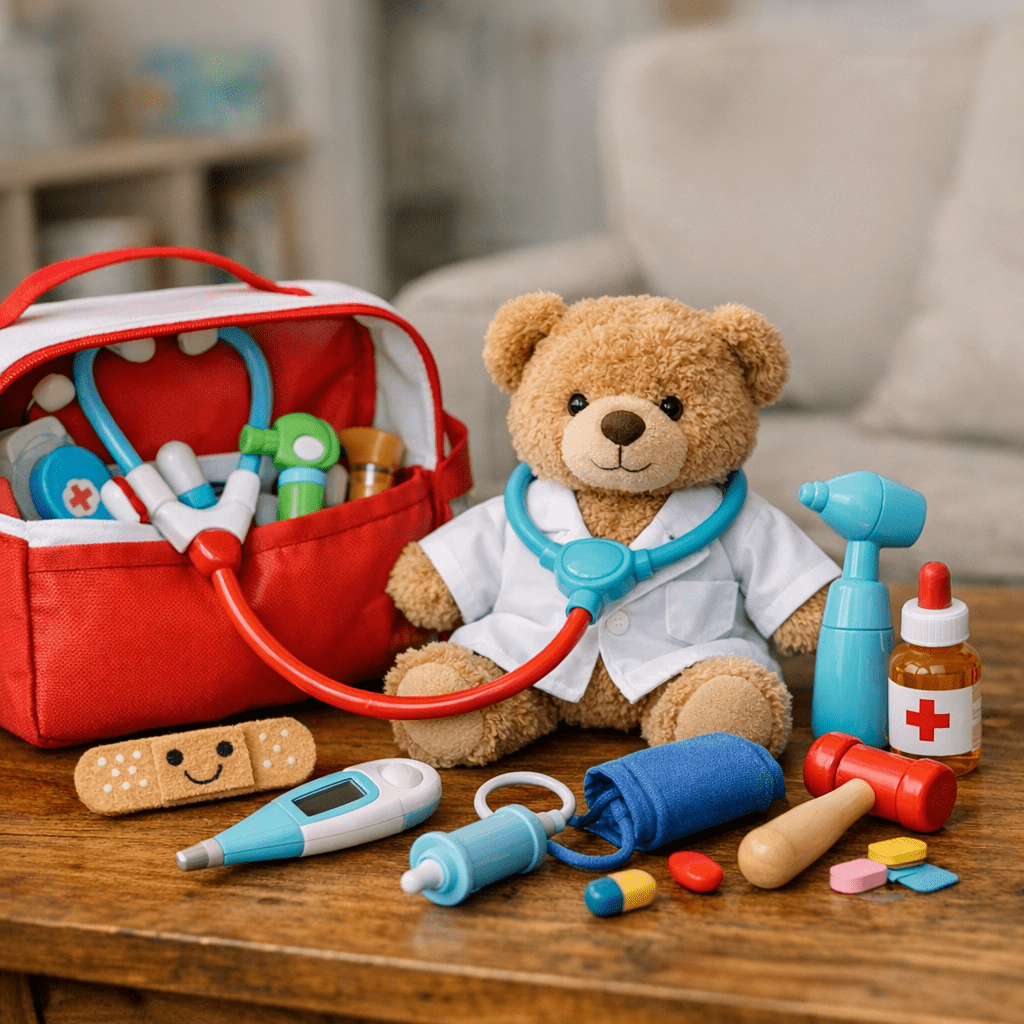
The best sets include mini versions of stethoscopes, thermometers, otoscopes (those ear-looking things doctors use), syringes—even pretend medicine bottles! Bonus points if they’re colorful but still recognizable enough so kids can connect them with real-life experiences at check-ups.
For example:
- Some stethoscopes actually amplify sound when pressed against someone’s chest.
- Digital thermometers light up when pressed against skin.
These little touches make all the difference between bored kiddos tossing toys aside versus diving headfirst into hours-long pretend play sessions where you become Patient Zero!
Related guide: Cómo iniciar un negocio de dropshipping de
Interactive Add-ons = Hours of Engagement
Lights flashing on an otoscope? Cool! Syringes that click when you push them down? Even better! Kids love gadgets that mimic reality without being overly complex—or frustratingly fake (“Why doesn’t this shot thing work?!”).
Also keep an eye out for themed extras like patient charts or wearable lab coats. In my experience buying these kits over years raising three kids—and running countless birthday party gift gauntlets—the accessories often seal whether something becomes the favorite toy versus forgotten clutter gathering dust after Week One.
Key takeaway: Engaging tools keep toddlers coming back…but don’t overpay just because something lights up once per battery swap either!
Tradeoffs Parents Can Expect When Choosing
You might be thinking: “Can’t I just grab whatever looks decent on Amazon?” Technically yes—but here’s where most parents get stuck:
1. Bigger Sets Aren’t Always Better
A 35-piece set sounds exciting until you realize half those items are filler junk—think random band-aid stickers nobody uses more than twice—or fragile tweezers breaking mid-play session within days flat…
Instead focus quality-over-count by narrowing onto smaller curated collections built-to-last long-term abuse inside chaotic toddler life environments!