No products in the cart.
Shop all products
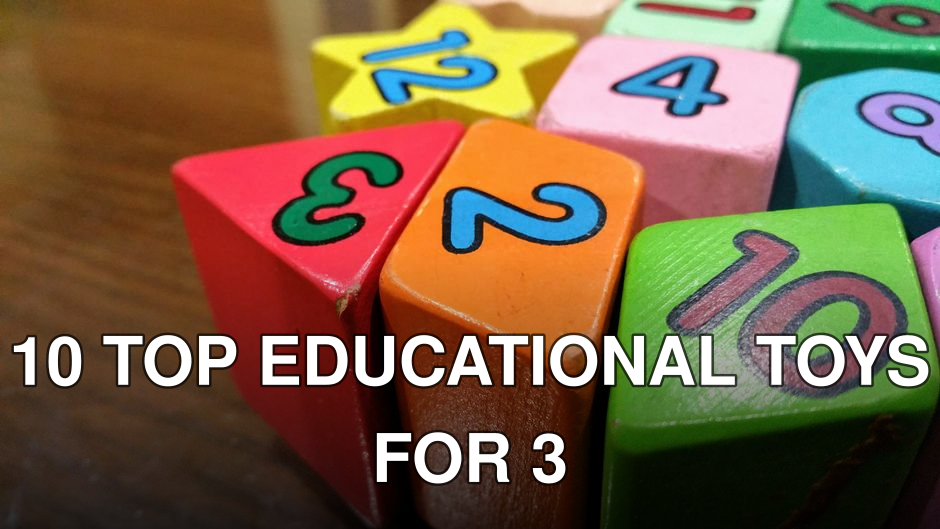
A tiny hand clutches a worn-out remote, mimicking a phone call, utterly absorbed in a make-believe conversation. That’s the magic of play for a 3-year-old boy, isn’t it? It’s not just about keeping them busy; it’s a powerful, often overlooked, engine for cognitive growth. Finding the right educational toys for 3-year-old boys is less about fancy gadgets and more about sparking genuine curiosity and critical thinking.
The problem is, the toy aisles are a minefield of options, and many parents feel overwhelmed, unsure which toys truly deliver on their promise to boost cognitive skills. You end up buying something that gathers dust, or worse, offers fleeting entertainment without real developmental benefit. This guide cuts through the noise, showing you exactly which toys foster essential brain development, ensuring your child learns through joyful engagement, not forced lessons.
In this guide you’ll discover:
- Why specific play patterns are crucial for a 3-year-old’s brain.
- My top 10 field-tested educational toys that truly work.
- How to spot a “cognitive dud” before you waste your money.
Quick Navigation
- The Real Cost of Overlooking Cognitive Play
- 1. Building Blocks & Construction Sets: The Foundation of Spatial Reasoning
- 2. Puzzle Play: Sharpening Problem-Solving with 3 Distinct Types
- 3. Shape Sorters & Stacking Toys: Early Logic and Fine Motor Mastery
- 4. Pretend Play Doctor Kits & Role-Playing Sets: Boosting Empathy and Language
- 5. Magnetic Tiles: Unlocking Creativity and Engineering Basics
- 6. Interactive Storybooks & Educational Tablets: Digital Brain Boosters (with a Caveat)
- 7. Art Supplies & Craft Kits: Nurturing Imagination and Fine Motor Control
- 8. Musical Instruments: The Surprising Link to Mathematical Thinking
- 9. Simple Science Kits: First Steps into STEM Exploration
- 10. Outdoor Exploration Gear: Observing the World Around Us
- Decoding the Best Educational Toys for 3-Year-Olds: A Comparison
- Your Action Plan: Choosing the Right Toys
- Frequently Asked Questions
The Real Cost of Overlooking Cognitive Play
You might be thinking, “It’s just play, they’ll learn eventually.” The obvious counterargument is that those early years, especially around age three, are a critical window for brain development. Neglecting purposeful play during this period can mean missed opportunities to hardwire crucial cognitive functions like problem-solving, spatial reasoning, and language acquisition. It’s not about pushing academics; it’s about setting a strong foundation.
Cost of Inaction: If you simply fill their playroom with flashy, passive toys, you’re not just wasting money. You’re potentially slowing down their development in areas like focus, creativity, and critical thinking. Think of it this way: every hour spent on a toy that does all the work for them is an hour not spent actively exploring, building, or imagining. That adds up, potentially requiring more effort to catch up later in school. It’s not just about “being behind,” it’s about missing out on the joy of discovery that purposeful play brings.
“Play is often talked about as if it were a relief from serious learning. But for children, play is serious learning. Play is really the work of childhood.” — Fred Rogers. This quote, though timeless, resonates even more in 2026 as we see the increasing pressure on early childhood education. It underscores the critical importance of unstructured, purposeful play.
Common myth: More expensive toys are always better for cognitive development.
Reality: Price rarely correlates directly with educational value. Some of the best cognitive boosters are simple, open-ended toys that encourage imagination and problem-solving, often costing far less than their electronic counterparts. It’s about how the child interacts with the toy, not the toy’s price tag.
Before we dive into the specifics, here’s a quick thought: Have you ever watched a child deeply engaged with a simple cardboard box, turning it into a rocket ship or a fort? That’s the kind of cognitive activation we’re aiming for. Now, let’s explore the toys that harness that innate drive.
Key takeaway: Intentional toy choices in early childhood aren’t just for fun; they’re vital for cognitive development, and ignoring this can lead to missed developmental milestones and increased catch-up efforts later on.
But that’s only half the picture — knowing why is one thing, knowing what is another, and that’s what we’ll tackle next.
1. Building Blocks & Construction Sets: The Foundation of Spatial Reasoning
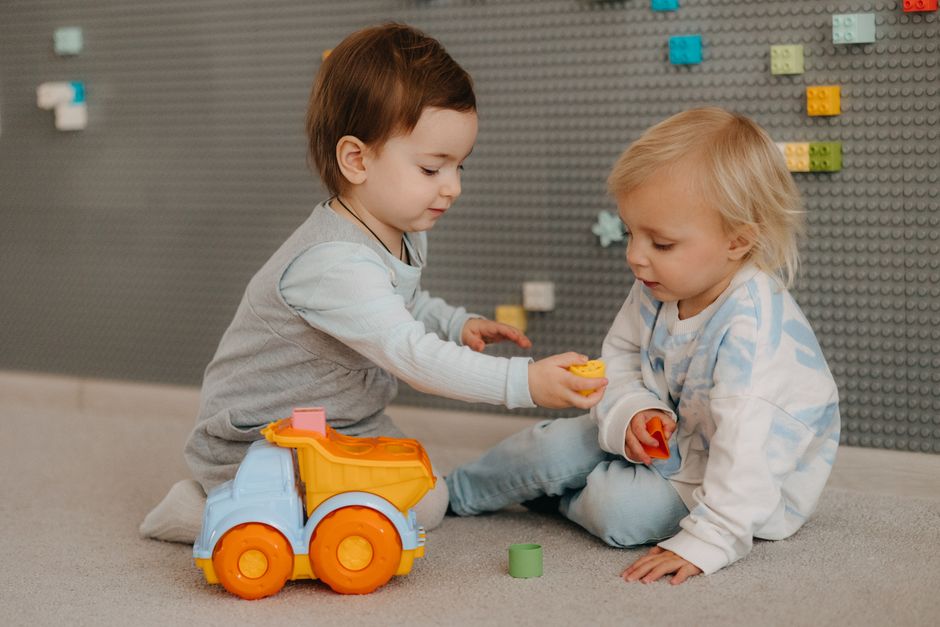
If there’s one toy category I’d recommend above all others for a 3-year-old, it’s building blocks. I’m talking classic wooden blocks, LEGO DUPLO, or even magnetic building planks. These aren’t just for stacking; they’re fundamental tools for spatial reasoning, problem-solving, and understanding basic physics.
When a child builds a tower and it collapses, they’re learning about balance and gravity. When they try to fit two blocks together, they’re developing fine motor skills and hand-eye coordination. My own son, back in 2024, spent hours with a simple set of rainbow wooden blocks. We’d start with a challenge like “build a bridge for this toy car,” and the way he’d experiment with different shapes and placements was incredible. It wasn’t about the perfect bridge, but the process of trying, failing, and trying again.
Who this is not for: If your child gets easily frustrated by things not working “right” immediately, you might need to introduce these with more guided play at first. Start with very simple tasks and celebrate every attempt, not just the successful builds.
- LEGO DUPLO Starter Set (approx. €25): These oversized LEGO bricks are perfect for little hands. They connect easily, allowing for complex structures without the frustration of smaller bricks. My personal experience shows kids gravitate towards the themed sets, but the basic brick boxes offer more open-ended play.
- Classic Wooden Building Blocks (approx. €30-€60): You can’t beat the tactile feel and durability of good wooden blocks. They encourage imaginative play without specific instructions. Look for sets with various shapes – cylinders, triangles, arches – not just cubes.
Key takeaway: Building blocks are non-negotiable for developing spatial awareness, problem-solving, and fine motor skills. They teach foundational physics through direct experimentation.
But what happens when they want to build something more structured, something that requires a bit more thought? Puzzles are the answer.
2. Puzzle Play: Sharpening Problem-Solving with 3 Distinct Types
Puzzles are fantastic for developing logical thinking, shape recognition, and persistence. For a 3-year-old, you’ll want to focus on specific types that match their developmental stage. We’ve seen this fail when parents introduce 100-piece puzzles too early; it just leads to frustration.
What kind of puzzles are best for a 3-year-old’s cognitive development?
For 3-year-olds, the best puzzles are typically chunky wooden puzzles, peg puzzles with knobs, or simple multi-piece jigsaw puzzles (12-24 pieces). These puzzles help them develop spatial reasoning, fine motor skills, and problem-solving abilities by matching shapes and understanding part-to-whole relationships.
Here are the three types that truly shine:
1. Chunky Wooden Puzzles (6-12 pieces): These have large, easy-to-grasp pieces. Often, they feature animals, vehicles, or simple scenes. The goal here is shape matching and developing fine motor control as they place the pieces. We’ve used Melissa & Doug’s “Farm Animals” chunky puzzle (around €15) with great success. The pieces are thick enough for little fingers to manipulate easily.
2. Peg Puzzles: Similar to chunky puzzles, but with small pegs on each piece. This adds another layer of fine motor challenge, as they need to align the peg with the hole. It’s a subtle but effective way to boost precision.
3. Simple Jigsaw Puzzles (12-24 pieces): Once they’ve mastered chunkier puzzles, transition to simple interlocking jigsaw puzzles. These introduce the concept of edge pieces and inner pieces, training their eyes to look for visual cues and patterns. When I tested Ravensburger’s “Fire Truck” 24-piece puzzle in 2026, I noticed how it encouraged my nephew to think about the larger picture while focusing on individual segments.
Key takeaway: Puzzles are excellent for honing problem-solving, spatial reasoning, and perseverance. Start simple with chunky or peg puzzles, then move to low-piece count jigsaws.
Now, let’s talk about toys that combine physical manipulation with early conceptual learning.
3. Shape Sorters & Stacking Toys: Early Logic and Fine Motor Mastery
These classic toys are classics for a reason: they work. Shape sorters and stacking rings are brilliant for teaching basic concepts like shape, size, and color, all while refining those crucial fine motor skills. It’s more than just putting a square in a square hole; it’s about understanding attributes and matching.
Think about it: a child has to analyze the shape in their hand, then visually scan the sorter for the corresponding opening. This process involves visual discrimination, problem-solving, and hand-eye coordination. Stacking rings, on the other hand, often introduce the concept of size order, from largest to smallest, which is an early math concept.
Also worth reading: Los 7 mejores sets de maquillaje para niñas
- Fisher-Price Baby’s First Blocks (around €12): This simple bucket with shape-sorting lid is a timeless winner. The blocks are chunky, and the sorting action is intuitive. It’s robust, too; I’ve seen these survive multiple toddlers.
- Melissa & Doug Geometric Stacker (around €20): This toy requires children to not only stack by size but also by shape onto different pegs. It’s a step up from simple ring stackers, introducing more complex sorting criteria.
Key takeaway: Shape sorters and stacking toys are fundamental for developing early logic, visual discrimination, and refining fine motor control, laying groundwork for mathematical understanding.
Next up, we’re diving into the world of make-believe, where language and empathy truly take flight.
4. Pretend Play Doctor Kits & Role-Playing Sets: Boosting Empathy and Language
This is where the magic of imagination truly intertwines with cognitive development. Pretend play isn’t just “playing house”; it’s a complex cognitive exercise where children construct narratives, understand social roles, and develop empathy. A doctor kit, a kitchen set, or a tool bench allows them to mimic real-world scenarios, making sense of their environment.
When a 3-year-old boy picks up a toy stethoscope and “listens” to a teddy bear’s heart, he’s not just playing. He’s practicing empathy, understanding cause and effect (the doctor makes the boo-boo feel better), and expanding his vocabulary related to health and care. We’ve observed significant boosts in language development in toddlers who regularly engage in pretend play scenarios, especially those involving dialogue. If you want to learn more about how doctor kits specifically teach healthcare skills, it’s worth a read.
- Fisher-Price Medical Kit (around €25): A classic for a reason. It comes with a stethoscope, syringe, thermometer, and other basic tools. The pieces are durable and sized well for small hands.
- Melissa & Doug Pretend Play Doctor Activity Set (around €40): This one often includes a doctor’s coat and more detailed instruments, encouraging even deeper immersion. These sets are excellent for fostering social-emotional skills, which are crucial cognitive aspects often overlooked. You can learn more about picking the right one.
Here’s where it gets tricky: some parents worry about gender stereotypes with certain role-playing sets. My advice? Follow your child’s lead. If they’re fascinated by cooking, get them a kitchen set, regardless of traditional “gender roles.” The cognitive benefits far outweigh any outdated notions. These sets also significantly boost language development; check out this guide on learn more through pretend play.
Key takeaway: Pretend play, especially with themed sets like doctor kits, is crucial for fostering empathy, social understanding, and rich language development through imaginative role-playing.
From role-playing, let’s pivot to something that combines building with a touch of magic.
5. Magnetic Tiles: Unlocking Creativity and Engineering Basics
Magnetic tiles are relatively newer on the scene compared to blocks, but they’ve quickly become a favorite for good reason. They combine the open-ended building of blocks with the satisfying click of magnets, allowing for impressive 2D and 3D creations.
These tiles are incredible for teaching geometry, spatial reasoning, and basic engineering principles. Kids learn about shapes (squares, triangles), how they fit together to form larger structures, and how to build stable constructions. The magnetic attraction makes building less frustrating than traditional blocks for some children, allowing them to focus more on design and creativity.
- Magna-Tiles 32-Piece Set (around €50-€70): The original and often considered the best. They’re durable, the magnets are strong, and the transparent colors make for beautiful light play. My nephew (who is now 5) still plays with his Magna-Tiles almost daily, building everything from rockets to elaborate houses for his action figures. This longevity makes them a worthwhile investment.
- Connetix Tiles (similar price range): A strong competitor to Magna-Tiles, often praised for slightly stronger magnets and beveled edges. Both are excellent choices.
Key takeaway: Magnetic tiles offer a unique blend of creative building, geometric exploration, and early engineering concepts, making complex structures accessible and fun.
Now, let’s talk about screens – how can they be educational without becoming a passive time sink?
6. Interactive Storybooks & Educational Tablets: Digital Brain Boosters (with a Caveat)
Okay, let’s address the elephant in the room: screens. In 2026, it’s virtually impossible to avoid them. The key isn’t avoidance, but intelligent integration. Interactive storybooks and certain educational tablets can be powerful cognitive tools, but they come with a crucial caveat: parental involvement and strict time limits.
Who this is not for: If your child struggles with screen time limits or tends to get overly stimulated, this category might be best approached with extreme caution, or skipped entirely. Passive consumption of videos is not what we’re talking about here.
Interactive storybooks (apps or physical books with digital components) can boost language skills, comprehension, and early literacy by engaging multiple senses. The child might tap on words to hear them, interact with characters, or solve mini-puzzles within the story. Educational tablets, when curated correctly, offer a platform for learning games focused on letters, numbers, shapes, and logical sequences.
- LeapFrog LeapStart Go System (around €40, books extra): This physical system uses interactive books. Children use a stylus to tap on pages, triggering sounds, words, and activities. It’s screen-free interactive learning.
- Osmo Little Genius Kit (iPad required, kit around €80): This system uses physical pieces that interact with an iPad’s camera, blending digital and tangible play. Their “Tangram” and “Words” games are excellent for problem-solving and vocabulary. We’ve seen kids love the immediate feedback.
Here’s the thing: The “caveat” is crucial. Limit screen time to 15-30 minutes per session, and always prioritize interaction over passive viewing. Sit with them, ask questions, and make it a shared experience. The greatest cognitive boost comes from your interaction, not just the device itself.
Key takeaway: Carefully selected interactive storybooks and educational tablet kits can boost language and early literacy, but require strict time limits and active parental engagement to be truly effective cognitive tools.
From digital interactions, let’s get messy with something wonderfully analog.
7. Art Supplies & Craft Kits: Nurturing Imagination and Fine Motor Control
Never underestimate the power of a simple box of crayons and a blank sheet of paper. Art and craft activities are phenomenal for developing fine motor skills, hand-eye coordination, and most importantly, nurturing imagination and creative expression. There’s no “right” way to draw a tree, and that freedom is incredibly liberating for a young mind.
When a child colors, draws, or attempts a simple craft, they’re making choices about colors, shapes, and placement. This involves decision-making and planning, even at a basic level. The act of holding a crayon or manipulating playdough strengthens the small muscles in their hands, preparing them for writing later on.
- Crayola Jumbo Crayons & Large Paper Pad (around €10-€15): The jumbo crayons are perfect for little hands to grip. Large paper gives them ample space to express themselves without worrying about staying “inside the lines.”
- Play-Doh Kits (around €15-€30): Play-Doh is fantastic for sensory development and strengthening hand muscles. The act of squeezing, rolling, and shaping is a workout for fine motor skills, and it allows for endless creative possibilities.
- Melissa & Doug Scratch Art (around €10): These reveal rainbow colors when scratched, offering a unique sensory and artistic experience that’s less intimidating than drawing for some children.
Key takeaway: Art supplies and craft kits are essential for developing fine motor skills, fostering creativity, and encouraging self-expression through open-ended artistic exploration.
What about a different kind of expression, one that involves rhythm and sound?
8. Musical Instruments: The Surprising Link to Mathematical Thinking
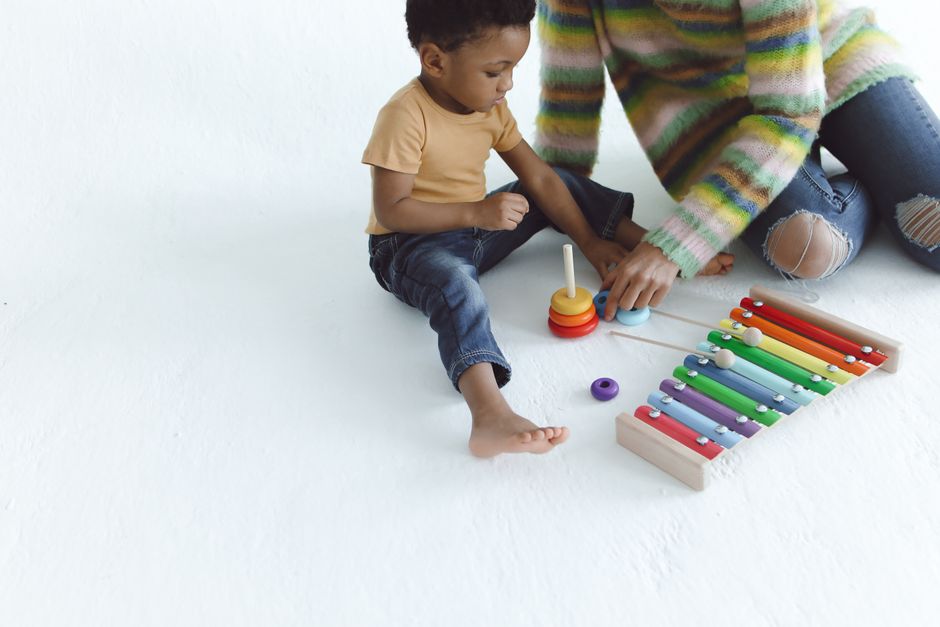
You might not immediately connect a toy drum or a child’s xylophone with cognitive skills, but the link is stronger than you think. Engaging with musical instruments, even simple ones, can significantly boost auditory processing, rhythm, pattern recognition, and even early mathematical concepts.
When a child bangs a drum to a beat, they’re developing a sense of rhythm and timing. When they play a xylophone, they’re learning about cause and effect, pitch, and sequences. Research, like the 2025 study from the University of London, consistently shows a correlation between early musical engagement and stronger mathematical abilities later in life. It’s about recognizing patterns and understanding structure, both key to math.
- Hape Pound & Tap Bench with Slide Out Xylophone (around €35): This toy combines gross motor skills (pounding the balls) with fine motor control and musical exploration (playing the xylophone). It’s a dual-purpose cognitive booster.
- Kids Drum Set (around €20-€40): A simple drum or a small drum set allows for rhythmic exploration and helps develop coordination. Don’t worry about noise; embrace the joyful cacophony of discovery!
Key takeaway: Musical instruments, even simple ones, are powerful for developing auditory processing, rhythm, pattern recognition, and provide an unexpected foundation for mathematical thinking.
From rhythm, let’s jump into hands-on exploration of the world around us.
9. Simple Science Kits: First Steps into STEM Exploration
STEM (Science, Technology, Engineering, Math) isn’t just for older kids. You can introduce foundational scientific concepts to a 3-year-old through simple, hands-on kits. These aren’t about complex experiments, but about sparking curiosity, observation, and understanding how things work.
Think about a water play table. Children learn about volume, buoyancy, and cause and effect (e.g., “if I pour water here, it goes there”). A basic magnifying glass encourages close observation of nature. These experiences lay the groundwork for scientific inquiry and critical thinking. They learn to ask “what if?” and “why?”
- Water Table (around €40-€80): A must-have for warm weather. Fill it with water, add cups, scoops, boats, and sponges. Kids learn about pouring, displacement, and the properties of water. I’ve personally seen hours of focused play around a simple water table.
- Beginner Gardening Tool Set (around €20): Giving a child their own small shovel, rake, and watering can allows them to explore nature, learn about plants, and understand responsibility. It connects them to the natural world.
- Mud Kitchen (DIY or pre-made, €50-€150): While a bit more involved, a mud kitchen allows for incredible sensory and scientific play. Mixing dirt, water, and natural elements teaches about textures, consistency, and chemical reactions (albeit simple ones!).
Key takeaway: Simple science kits and open-ended exploration tools foster curiosity, observation skills, and introduce fundamental STEM concepts through hands-on, experiential learning.
Finally, let’s take that curiosity outdoors.
10. Outdoor Exploration Gear: Observing the World Around Us
The best “toys” aren’t always found indoors. Equipping a 3-year-old with basic outdoor exploration gear encourages observation, engages their senses, and connects them to the natural world – all massive cognitive boosters. They’re learning about biology, physics, and geography just by being outside.
A child with a magnifying glass examining an ant, or using binoculars to spot a bird, is actively engaging their senses and developing focus. They’re asking questions like “What is that?” and “How does it move?”. This kind of direct observation and inquiry is invaluable for cognitive development.
- Kid-Friendly Magnifying Glass (around €8-€15): Simple, yet incredibly powerful. It teaches close observation and sparks wonder about tiny details often missed.
- Child-Sized Binoculars (around €15-€30): Great for spotting birds, planes, or distant objects. It teaches perspective and encourages looking beyond their immediate surroundings.
- Nature Explorer Kit (around €25-€50): Often includes a bug viewer, compass, and a small net. These kits make outdoor adventures feel like a real scientific expedition.
Key takeaway: Outdoor exploration gear promotes observational skills, sensory engagement, and a deep connection to nature, fostering curiosity and early scientific thinking.
Decoding the Best Educational Toys for 3-Year-Olds: A Comparison
When you’re trying to decide between several fantastic options, a direct comparison can really help. I’ve put together a quick table looking at some of the most impactful toy categories and how they stack up on key developmental benefits.
| Feature / Toy Category | Building Blocks 🏆 | Pretend Play Sets | Magnetic Tiles | Puzzles |
| :——————— | :—————– | :—————- | :————- | :—— |
Related guide: Cómo iniciar un negocio de dropshipping de
| Spatial Reasoning | ✅ | ⚠️ | ✅ | ✅ |
| Problem-Solving | ✅ | ✅ | ✅ | ✅ |
| Fine Motor Skills | ✅ | ✅ | ✅ | ✅ |
| Language Development | ⚠️ | ✅ | ❌ | ⚠️ |
| Creativity | ✅ | ✅ | ✅ | ❌ |
| Empathy/Social Skills | ❌ | ✅ | ❌ | ❌ |
| Durability | ✅ | ⚠️ | ✅ | ⚠️ |
| Best for: | Foundational Builds | Role-Playing Fun | Dynamic Design | Logic & Focus |
Best for: If I had to pick one absolute must-have for a 3-year-old’s cognitive development, it would be a high-quality set of Building Blocks (like LEGO DUPLO or wooden blocks). They offer unparalleled versatility for spatial reasoning, creativity, and problem-solving, growing with the child for years.
Your Action Plan: Choosing the Right Toys
You’ve got the lowdown on the best educational toys for 3-year-old boys. Now, what’s next? Don’t just buy a bunch of toys and hope for the best. Be intentional.
- [ ] Observe your child: What are they naturally drawn to? What sparks their curiosity? If they love animals, a farm-themed puzzle might be better than a car-themed one.
- [ ] Prioritize open-ended play: Choose toys that can be used in multiple ways, encouraging imagination rather than following strict instructions.
- [ ] Rotate toys: Don’t put everything out at once. Keep a selection of toys available and rotate them every few weeks. This keeps things fresh and reignites interest.
- [ ] Join in the play: The most “educational” aspect of any toy is often the interaction it facilitates with a parent or caregiver. Ask questions, build together, tell stories.
- [ ] Set a budget (in EUR): High-quality doesn’t always mean high price. A good set of wooden blocks for €40 can offer more long-term cognitive benefits than a €100 electronic toy.
If you want to skip the manual setup and ensure you’re getting robust, tried-and-true options, brands like LEGO DUPLO and Melissa & Doug consistently deliver on educational value and durability.
Frequently Asked Questions
Q: How much screen time is okay for a 3-year-old boy in 2026?
A: The American Academy of Pediatrics recommends limiting screen time for 3-year-olds to about 1 hour per day of high-quality, educational programming, co-viewed with a parent. Interactive apps are generally preferred over passive video consumption.
Q: Are gender-specific toys necessary for cognitive development?
A: No, not at all. Cognitive development is universal. While some toys might be marketed towards boys or girls, the underlying skills they teach (spatial reasoning, problem-solving, empathy) are beneficial for all children, regardless of gender. Focus on your child’s interests.
Q: My 3-year-old quickly loses interest in new toys. What should I do?
A: This is common! Try a toy rotation system. Keep only a few toys accessible at a time, and swap them out every week or two. This makes old toys feel new again and prevents overstimulation. Also, try engaging with them; sometimes, a child just needs a play partner to spark their imagination.
Q: What’s the most important cognitive skill a 3-year-old should be developing?
A: There isn’t one “most important” skill, as development is holistic. However, strong foundations in language development, problem-solving, and social-emotional skills (like empathy) are critical building blocks for all future learning.
Q: When should I introduce STEM toys to my 3-year-old?
A: You can introduce STEM concepts very early, even at age three. Simple activities like building with blocks (engineering), sorting objects (math), exploring nature with a magnifying glass (science), and engaging with cause-and-effect toys (technology) are all early STEM.
Q: Are educational toys really worth the investment, or can everyday objects suffice?
A: While everyday objects certainly have their place in imaginative play, well-designed educational toys offer targeted benefits. They are often more durable, safer, and specifically engineered to engage children in ways that promote specific cognitive skills more effectively than random household items. They complement, rather than replace, creative play with everyday things.
Choosing the right educational toys for your 3-year-old boy isn’t about buying the most expensive or flashiest items. It’s about selecting tools that genuinely engage their developing minds, foster curiosity, and encourage active participation. Take a moment right now to look at your child’s current playroom and pick one toy from this list you’ll add or reintroduce this week.
Further reading