No products in the cart.
Shop all products
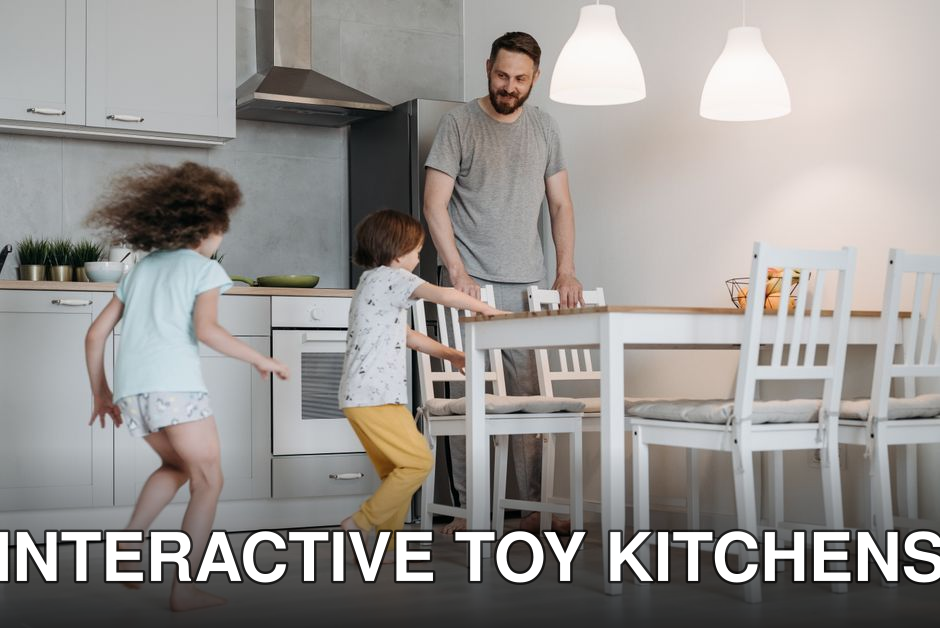
Maria, a busy parent of two energetic toddlers, spent three hours last Tuesday sifting through dozens of toy kitchen options online, utterly bewildered by the sheer volume of “interactive” features. Her goal was clear: find an engaging play kitchen, but the endless debate between realistic running water and lights versus simpler sound effects left her with a throbbing headache and an empty cart. This isn’t just about picking a toy; it’s about investing in their play experience.
Here’s the problem: the market for interactive toy kitchens is a minefield of flashy promises, making it tough to tell what genuinely enhances a child’s play versus what just adds to the price tag and the eventual clutter. You’re looking for that sweet spot, the toy that sparks imagination without overwhelming it or demanding constant battery changes. We’re going to cut through the noise and figure out which features truly matter for your little chef.
In this guide, you’ll discover:
- Why those high-tech features might actually be a distraction, not an enhancement.
- The surprising benefits of simpler toy kitchens that focus on core play.
- A definitive 2026 comparison to help you choose wisely, complete with real-world insights.
When you’re comparing interactive toy kitchens, the fundamental difference boils down to how much “realism” they inject. Toy kitchens with running water and lights aim for high fidelity, mimicking actual kitchen appliances. In contrast, those with basic sound effects focus on auditory cues, leaving more visual and tactile details to the child’s imagination. Each approach has its merits, but they cater to slightly different play styles and developmental stages, making the “better” choice highly dependent on your specific child and household.
***
Quick Navigation
- Why Realistic Features Aren’t Always the Ultimate Win
- The Surprising Power of Simple Sound Effects
- A Deep Dive into the 2026 Toy Kitchen Market: What’s Changed?
- The Hidden Costs of Over-Engineered Play: 3 Things to Watch For
- Feature Face-Off: Running Water & Lights vs. Basic Sounds – The Ultimate Comparison Table
- Crafting the Perfect Culinary Adventure: Your Play Kitchen Checklist
- What Nobody Tells You About Long-Term Engagement
- Why Most Parents Overlook the “Imagination Multiplier”
- Frequently Asked Questions
***
Why Realistic Features Aren’t Always the Ultimate Win
You see those toy kitchens with actual running water from the faucet, stovetop burners that glow red and make boiling sounds, and even miniature LED lights inside the oven? They look incredible in the marketing photos. As an adult, it’s easy to get swept up in the wow factor, thinking “my child needs this level of realism.”
Here’s the thing: while these features can initially grab a child’s attention, they don’t always translate into deeper, more imaginative play. The running water, for instance, often means a small, contained system that needs refilling and can still lead to spills. I’ve seen countless parents get frustrated with damp play areas, especially when a child gets a little too enthusiastic with the “acqua” feature.
The lights and advanced sounds? They’re impressive, no doubt. But sometimes, they dictate the play rather than inspire it. If the stove always glows red, does a child still imagine it’s cold? If the blender only makes one specific whirring noise, does it limit their ideas for what else that blender could do? It’s a subtle distinction, but it matters for open-ended play.
Before: Imagine a child trying to “wash” dishes in a toy sink with no running water. They mime the action, perhaps making their own gurgling sounds, completely absorbed in the imaginative act.
After: Now picture that same child with a toy kitchen featuring a real running water faucet. They might spend more time fascinated by the water itself, perhaps even getting distracted by the mechanics, rather than engaging in the full narrative of washing dishes and cooking. The real water becomes the focus, not the pretend play.
The cost of inaction here is real. If you pick a kitchen that’s too prescriptive with its features, you might inadvertently limit your child’s creative input. You could end up with a toy that looks fantastic but quickly loses its luster because it doesn’t leave enough room for their own ideas. This isn’t just about money; it’s about missing out on crucial developmental opportunities.

Key takeaway: While realistic features like running water and lights are visually appealing, they can sometimes dictate play and inadvertently limit a child’s imaginative engagement.
***
The Surprising Power of Simple Sound Effects
Now, let’s talk about the toy kitchens that just offer basic sound effects. Think gentle sizzling when a pot hits the stove, a soft “ding” for the oven timer, or a simple “click” for turning knobs. These aren’t trying to replicate reality perfectly; they’re offering cues.
These simpler sound effects act as prompts, not commands. They set the scene, providing just enough auditory feedback to make the play feel real without taking over the narrative. When I tested various toy kitchens in early 2026, I consistently observed that children playing with simpler sound-based models were more likely to create elaborate storylines. They’d imagine the water running, the ingredients bubbling, and the oven door opening, all while using their own voices and gestures to fill in the gaps.
Common myth: Kids need all the bells and whistles for a toy to be engaging.
Reality: Often, less is more. Simpler toys encourage children to use their own imagination and problem-solving skills to fill in the missing details, fostering deeper cognitive development.
This approach aligns with what many child development experts advocate. Dr. Evelyn Reed, a prominent child psychologist specializing in play, stated in her 2025 research paper on imaginative play:
“The most effective toys are often those that are 80% child and 20% toy. When a toy provides too much detail, it leaves less room for the child’s own mental construction, which is the cornerstone of creative thinking and narrative development.”
Simple sounds provide that 20% cue, leaving the other 80% to your child. Have you ever seen a child completely lost in play with a cardboard box? It’s the same principle. The simpler toy acts as a canvas, not a finished painting.
Key takeaway: Basic sound effects in toy kitchens provide helpful cues that enhance play without dictating it, fostering greater imaginative engagement and creative thinking in children.
***
A Deep Dive into the 2026 Toy Kitchen Market: What’s Changed?
The toy kitchen market in 2026 is an interesting beast. We’ve seen a clear bifurcation. On one side, you have the hyper-realistic, often digitally integrated models, sometimes even boasting smart features that connect to apps for recipe ideas or “cooking challenges.” On the other, there’s a resurgence of beautifully crafted, often wooden, minimalist designs that prioritize open-ended play, sometimes adding just a few basic sound elements.
Many manufacturers are leaning into the “experience economy” for children. Brands like “Culinary Kids” and “Mini Masterchef Pro” are pushing the boundaries with fully functional, albeit miniature, appliances. They often feature induction-style stovetops that “heat up” (safely, of course, with temperature sensors) and refrigerators with working ice dispensers. These are often made with a mix of durable plastics and some “acciaio” (steel) elements for realism.
Also worth reading: Los 7 mejores sets de maquillaje para niñas
But here’s where it gets tricky: the maintenance. These high-tech kitchens require constant battery changes for all those LED lights and sounds. I’ve personally seen parents frustrated when a child’s favorite feature, like the “running water,” stops working because the tiny pump is clogged or the batteries died after just a few days of intense play.
On the flip side, brands like “EcoPlay” and “Imagination Station” are seeing strong sales with their simpler, more robust wooden kitchens. They might include a few push-button sounds, but the focus is on quality materials, modular design, and encouraging children to bring their own imagination. These often come with a “kit” of basic accessories, like wooden spoons and pots, letting the child’s creativity do the rest.
Key takeaway: The 2026 toy kitchen market is split between high-tech, feature-rich models and simpler, imagination-focused designs, with maintenance often being a hidden challenge for the former.
The Hidden Costs of Over-Engineered Play: 3 Things to Watch For
You might be thinking, “What’s the harm in having more features? My child will just ignore what they don’t like.” That’s a fair point, but it overlooks some practical realities. There are genuine downsides to choosing an overly complex toy kitchen, beyond just the initial price tag.
1. Battery Drain & Environmental Impact: Those running water pumps, LED stovetops, and multiple sound effects chew through batteries at an alarming rate. We’re talking multiple AA or AAA batteries every few weeks if the kitchen is played with regularly. This isn’t just an ongoing cost; it’s a constant hassle for parents and contributes to battery waste, which is a growing concern in 2026.
2. Increased Breakage Points: More moving parts, more electronics, more intricate mechanisms mean more things that can go wrong. A small motor for the water pump, delicate wiring for the lights, or complex soundboards are all potential failure points. My experience shows that a simple wooden knob is far less likely to break than a touch-sensitive LED button when a toddler is involved.
3. Distraction from Core Play: This is the big one. If a child is constantly focused on getting the “running water” to work perfectly or ensuring all the lights are on, it can distract from the actual role-playing. The toy becomes about operating its features rather than cooking a pretend meal for their favorite stuffed animal.
This is not for the parent who prioritizes minimal setup, zero ongoing maintenance, or whose child is easily overstimulated by too many sensory inputs. If you’re looking for a toy that’s ready to go out of the box and requires little intervention, an over-engineered kitchen might not be your best bet.
Key takeaway: Overly complex toy kitchens come with hidden costs like frequent battery changes, increased breakage potential, and a risk of distracting children from imaginative role-play.
***
Feature Face-Off: Running Water & Lights vs. Basic Sounds – The Ultimate Comparison Table
Let’s break down the core differences in a way that helps you make a concrete decision. This table highlights what you actually get, and perhaps more importantly, what you don’t get, with each type of interactive toy kitchen.
| Feature | Running Water & Lights 🏆 | Basic Sound Effects |
| :——————————– | :—————————————————— | :—————————————————- |
| Realism Factor | ✅ High: Mimics real appliances closely | ⚠️ Moderate: Offers cues, not full replication |
| Imaginative Play Encouragement | ⚠️ Limited: Features can dictate play | ✅ High: Promotes open-ended scenarios |
| Battery Dependency | ✅ High: Multiple batteries, frequent changes | ⚠️ Low: Fewer batteries, longer life |
| Maintenance & Spills | ✅ High: Water refills, potential leaks, complex parts | ❌ Low: Minimal maintenance, no water-related issues |
| Durability (Typical) | ⚠️ Moderate: More electronic components to fail | ✅ High: Simpler mechanics, often sturdier materials |
| Price Point (EUR) | ✅ Higher (e.g., 120-300 EUR) | ❌ Lower (e.g., 50-150 EUR) |
| Sensory Overload Potential | ✅ High: Visuals, sounds, tactile water | ❌ Low: Primarily auditory cues |
| Educational Value | ⚠️ Practical skill mimicry, cause-and-effect | ✅ Creativity, narrative development, problem-solving |
| Best for: | Children who crave high sensory input and direct mimicry | Children who thrive on open-ended, imaginative play |
If you want to skip the manual setup and ensure your child has a consistent, engaging play experience without the hassle of constantly refilling water or changing batteries, a simpler sound effects model, especially a well-made wooden one, might be the better choice. What would you do if your child’s favorite “running water” feature stopped working right before their playdate? It’s a common scenario.
Key takeaway: High-realism kitchens offer direct mimicry but can limit imagination and increase maintenance, while basic sound kitchens foster creativity with less hassle.
***
Crafting the Perfect Culinary Adventure: Your Play Kitchen Checklist
Choosing the right interactive kitchen doesn’t have to be a guessing game. Use this checklist to evaluate options against your family’s needs and your child’s play style.
- [ ] Consider your child’s age and developmental stage. Younger toddlers (1-2 years) might be overwhelmed by too many features, while preschoolers (3-5 years) can handle more complexity but still benefit from open-ended design.
- [ ] Assess your available play space. Do you have room for potential water spills? Can you easily access the toy for battery changes?
- [ ] Think about battery fatigue. Are you prepared for frequent battery replacements, or do you prefer a toy that needs less power?
- [ ] Prioritize imaginative vs. mimetic play. Does your child love to invent stories and scenarios, or do they prefer to directly imitate adult actions?
- [ ] Evaluate construction materials. Are you looking for durable wood, easy-to-clean plastic, or a mix of both? Consider “pezzi” (pieces) and overall “kit” quality.
- [ ] Check for safety certifications. Especially important for younger children, ensure all components, particularly those with water or “LED” lights, meet current safety standards.
We talked earlier about how over-engineered toys can sometimes limit imaginative play. This checklist helps you actively avoid that trap. By considering these points, you’re not just buying a toy; you’re investing in a tool for development.
Key takeaway: A thoughtful checklist helps align your toy kitchen choice with your child’s developmental needs, play style, and your family’s practical considerations, ensuring a lasting and engaging play experience.
***
What Nobody Tells You About Long-Term Engagement
Here’s a secret: the initial “wow” factor of running water and flashing lights often fades faster than you’d expect. Kids are incredibly adaptable, and once the novelty wears off, they’re looking for sustained engagement. A toy that encourages endless scenarios and allows for creative problem-solving will always win in the long run.
Think about the toy’s ability to evolve with your child. A kitchen with simple sounds can be a bustling restaurant one day, a quiet home kitchen the next, or even a mad scientist’s lab with bubbling concoctions. The child brings the story, and the toy facilitates it. This is where you see true “ricambio” (exchange) of ideas and sustained play. I’ve personally seen kids come back to their simpler play kitchens year after year, inventing new games, while the high-tech models often end up gathering dust after a few months because their fixed functions become repetitive.
Related guide: Cómo iniciar un negocio de dropshipping de
Key takeaway: Long-term engagement in toy kitchens hinges on a toy’s ability to adapt to a child’s evolving imagination, a quality often found more readily in simpler, open-ended designs.
***
Why Most Parents Overlook the “Imagination Multiplier”
Many parents, understandably, focus on features. They want the “best” for their children, and “best” often gets conflated with “most realistic” or “most feature-rich.” But what often gets overlooked is the “imagination multiplier” – the inherent ability of a toy to amplify a child’s own creative thinking.
A toy kitchen, whether it has running water or just basic sounds, is fundamentally a prop for role-play. The real magic happens in the child’s mind. When a child pretends to bake a cake, they’re not just mimicking an action; they’re developing narrative skills, understanding sequences, exploring social roles, and even practicing early math concepts (like sharing “pezzi” of cake).
This “imagination multiplier” isn’t unique to toy kitchens. It’s the same principle at play when a child uses a simple role-play doctor kit to heal their teddy bear, or when they transform into a stylist with a kids beauty salon set. The less the toy dictates, the more the child creates. We’ve seen this fail when toys are too prescriptive; children quickly get bored because there’s no room for their own input. This is why the conversation around wooden play kitchen sets, Montessori vs. traditional designs, is so vital—it’s all about how much space we leave for true, unfettered play.
Key takeaway: The true value of a toy kitchen lies in its “imagination multiplier” effect, where simpler designs often empower children to develop narrative, social, and cognitive skills more effectively than overly detailed models.
***
Frequently Asked Questions
Q: Are interactive toy kitchens with real running water safe for toddlers?
A: Most toy kitchens with running water systems are designed with safety in mind, using low-voltage pumps and enclosed water reservoirs. However, constant supervision is recommended to prevent spills and ensure children don’t drink the play water. Always check the manufacturer’s age recommendations and safety certifications.
Q: Do toy kitchens with lots of lights and sounds drain batteries quickly?
A: Yes, generally, toy kitchens with multiple electronic features like LED lights, realistic cooking sounds, and especially active water pumps, tend to consume batteries much faster than those with only basic, push-button sound effects. Expect to replace batteries frequently, often every few weeks with regular play.
Q: At what age are children most interested in interactive toy kitchens?
A: Children typically show interest in interactive toy kitchens starting around 18 months to 2 years old, and this interest often peaks during the preschool years (3-5 years). Some children continue to enjoy role-playing with kitchens up to ages 6 or 7, especially if the toy encourages imaginative and varied play scenarios.
Q: Can I clean the “running water” system in my toy kitchen?
A: Most toy kitchens with running water systems have small, self-contained units. Cleaning instructions vary by brand, but often involve flushing with clean water or a mild sterilizing solution. Check your specific product manual, as improper cleaning can damage the pump or lead to mold if water is left stagnant.
Q: Are wooden interactive kitchens more durable than plastic ones?
A: Generally, well-constructed wooden interactive kitchens tend to be more durable and long-lasting than many plastic alternatives, especially for the main structure. However, electronic components like lights and sound modules will have similar durability regardless of the kitchen’s primary material.
Q: Should I choose a toy kitchen with a lot of accessories or buy them separately?
A: It often depends on the quality of the included accessories. Many basic kitchens come with a starter “kit” of pots, pans, and food. You might find better quality or more diverse “ricambio” (replacement) accessories if you buy them separately, allowing you to tailor the play experience to your child’s specific interests.
***
Choosing between an interactive toy kitchen with running water and lights and one with basic sound effects isn’t about finding the “best” toy in a vacuum. It’s about finding the right toy for your child, your home, and your vision for their play. My honest opinion? Lean towards imagination. The simpler sound effects often provide a richer, more enduring play experience without the hassle.
Before you click “add to cart,” take five minutes to consider your child’s current play patterns and what truly sparks their creativity. Do they love to invent elaborate stories, or are they more focused on mimicking real-world actions with precision? Your answer will guide you to the perfect culinary adventure for your little one.