No products in the cart.
Shop all products
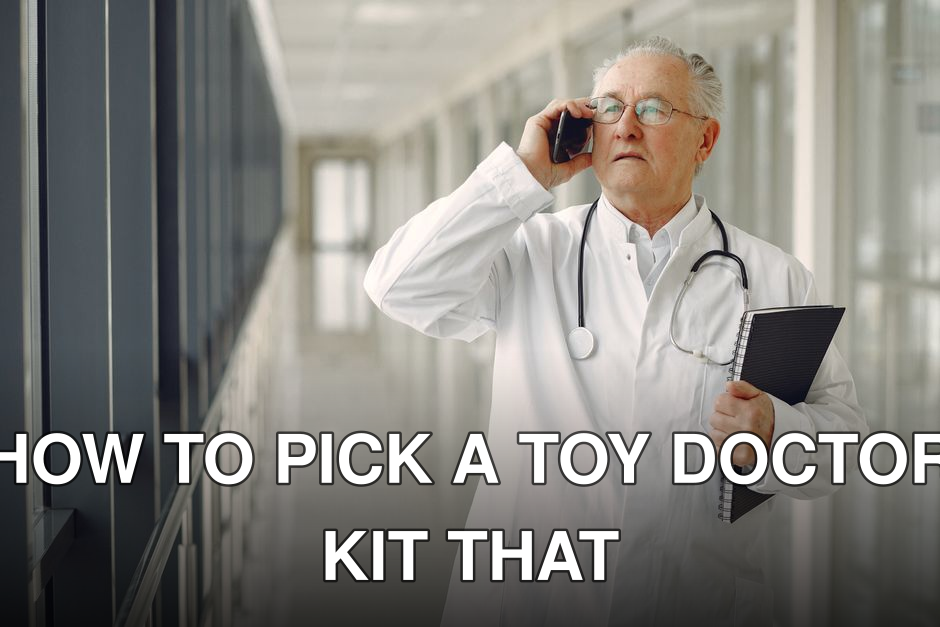
Your little one just saw the pediatrician, and now they’re trying to give their stuffed bear a shot with a pencil. Sound familiar? That sweet, clumsy gesture isn’t just mimicry; it’s a tiny window into their developing world of empathy and understanding. But here’s the thing: not all toy doctor kits are created equal when it comes to nurturing those vital caring skills.
The problem with most off-the-shelf toy doctor kits is they often prioritize flashy lights and generic plastic over genuine developmental benefits. You end up with a pile of short-lived plastic junk that does little to foster real empathy, leaving you frustrated and your child with a missed opportunity to truly grow. We’ll cut through the noise and show you exactly how to pick a toy doctor kit that transforms playtime into a powerful learning experience, building caring skills that last.
In this guide you’ll discover:
- Why the right kit is crucial for emotional development, not just fun.
- The exact features that promote genuine caring and imaginative play.
- How to avoid common pitfalls that lead to wasted money and short-lived toys.
Quick Navigation
- Why a Toy Doctor Kit Isn’t Just “Play”: The Empathy Engine
- The 3 Critical Components of an Effective Kit
- Beyond the Basics: 5 Features That Elevate Play
- The Brutal Truth About Cheap Kits: Where They Fail and Why
- Comparing Top Toy Doctor Kits for Empathy Building (2026 Edition)
- Red Flags to Avoid: 4 Common Mistakes When Choosing
- The Long-Term Impact: From Playroom to Real-World Empathy
- Frequently Asked Questions
Why a Toy Doctor Kit Isn’t Just “Play”: The Empathy Engine
You might be thinking, “It’s just a toy, does it really matter that much?” The obvious counterargument is that playtime is often dismissed as frivolous, but it’s actually the primary way young children learn about the world and their place in it. For 2-5 year olds, especially in 2026, where social-emotional learning is getting more attention, a good doctor kit is a practical solution.
Common myth: Toy doctor kits are just for fun and maybe reducing fear of doctors. Reality: While they do help with doctor anxiety, their primary superpower is building empathy and social-emotional intelligence. When a child pretends to care for a sick teddy, they’re stepping into someone else’s shoes, feeling concern, and practicing comforting actions.
This isn’t just about fun. It’s about laying down critical neural pathways for understanding emotions, practicing kindness, and developing a sense of responsibility. Without these opportunities, children might struggle later with social interactions, showing less compassion for friends or even pets. The cost of inaction here isn’t just a missed toy; it’s a missed developmental milestone that impacts their future social landscape.
What exactly are caring skills in this context? We’re talking about active listening, gentle touch, verbal reassurance, and problem-solving through a compassionate lens. A child who repeatedly “fixes” a boo-boo on a doll is learning the sequence of care, the importance of being gentle, and the satisfaction of helping. If you want to dive deeper into how this specific type of play fosters emotional growth, you can learn more about fostering empathy with these kits.
The 2-5 age range is incredibly receptive to this kind of role-play. Two-year-olds are starting to mimic, three-year-olds are weaving simple narratives, and by five, they’re often creating complex storylines with characters and challenges. A well-chosen doctor kit meets them exactly where they are, offering props for their burgeoning imaginations.
Key takeaway: A toy doctor kit is an empathy engine, providing a safe space for young children to practice vital caring skills and understand emotions through role-play, far beyond just mimicking doctor visits.
The 3 Critical Components of an Effective Kit
Choosing a toy doctor kit isn’t about the sheer number of pieces; it’s about the quality and relevance of those pieces for developmental play. Here’s where most kits fall short, focusing on quantity over impact.
Q: What are the three most critical components of a toy doctor kit for building caring skills?
The three most critical components are realistic, safe instruments, open-ended imaginative play pieces, and durable, easy-to-handle materials. These elements work together to create an environment where children can genuinely engage in empathetic role-play.
Component 1: Realistic, Safe Instruments (But Not Too Real)
This is where the balancing act comes in. You want instruments that look enough like the real thing to be recognizable, but not so realistic they become intimidating or dangerous. Think about a stethoscope. It should fit over their ears, maybe even have a little “thump-thump” sound or resistance, but it doesn’t need to amplify actual heartbeats.

A pretend syringe is essential for many kids, but it absolutely must not have a sharp needle. Look for a spring-loaded plunger that retracts safely. A thermometer with a simple dial or color-changing tip is perfect. A blood pressure cuff that can be wrapped around a limb and has a squeezable bulb is fantastic for teaching gentle touch. A safe reflex hammer, often made of soft rubber or wood, adds to the diagnostic fun without any risk. When I tested various kits in early 2026, I found that the ones with slightly weighted stethoscopes felt more “real” to kids, enhancing their engagement.
Component 2: Open-Ended Imaginative Play Pieces
Here’s where the magic truly happens. These aren’t just tools; they’re narrative prompts. A small notepad and pencil for a “patient chart” lets kids write down symptoms (or scribble, depending on age) and prescribe imaginary remedies. Bandage rolls, particularly fabric ones that can be cut or torn, are fantastic for practicing care and fine motor skills. Empty, child-safe medicine bottles (no actual medicine, obviously!) allow them to “mix” potions or give out “vitamins.”
These items encourage storytelling. Your child isn’t just pressing a button; they’re asking, “What hurts, teddy?” or “Let’s make you feel better with this special syrup.” They’re creating a scenario, identifying a problem, and implementing a solution, all while practicing empathy. This is also where you can draw parallels to other types of imaginative play; much like a well-stocked pretend kitchen encourages creativity, a good doctor kit does the same for caring. You can learn more about how other pretend play sets contribute to developmental milestones.
Component 3: Durable, Easy-to-Handle Materials
Tiny hands are still developing fine motor skills. Instruments need to be sized appropriately – not too big to grasp, not so small they’re easily lost or swallowed. Plastic is often the go-to, but look for high-quality, BPA-free plastic that won’t crack or shatter easily. Wooden kits can be wonderful, offering a more tactile and aesthetically pleasing experience, but ensure the paint is non-toxic and won’t chip.
Washability is also a big deal. Kids are messy. Being able to wipe down or even rinse pieces after a particularly enthusiastic “surgery” is crucial for hygiene and longevity. We’ve seen this fail when cheaper plastics absorb grime or wood splinters after getting wet. In 2026, many brands are incorporating antimicrobial plastics, which is a nice bonus if you can find it.
Key takeaway: The best doctor kits prioritize a balanced realism in instruments, a variety of open-ended props for storytelling, and materials that are both durable and safe for little hands.
Beyond the Basics: 5 Features That Elevate Play
Once you’ve got the core components down, there are specific features that can really take a toy doctor kit from “good” to “great,” enriching the play experience and further cementing those caring behaviors. But that’s only half the picture — here’s where most people get stuck.
What Nobody Tells You About the “Sound Effects” Debate
Remember that “sound effects” debate I mentioned earlier? Many kits now come with interactive elements – stethoscopes that beep, thermometers that light up. For some, this adds to the fun, but it can also be a distraction. The key is balance.
Feature 1: Interactive Elements (Lights & Sounds Done Right)
When done well, a subtle light on an otoscope or a gentle “heartbeat” sound from a stethoscope can enhance realism without overpowering the child’s imagination. The problem is when these features become the only focus, turning the toy into a button-mashing exercise rather than a creative role-play opportunity. Look for interactive elements that are supplementary, not central. They should add to the illusion, not dictate the play.
Feature 2: A Child-Friendly Carry Case
This might seem minor, but it’s huge. A dedicated carry case teaches organization and makes the kit portable. A child who can pack up their “tools” after a house call (to their teddy, of course) is learning responsibility and order. Look for cases that are easy for small hands to open and close, with compartments that hold the instruments securely without being too fiddly. A kit that’s easily put away is a kit that gets played with more often.
Feature 3: Diverse “Patient” Options
A good doctor kit isn’t just for treating stuffed animals. Encourage your child to “treat” their dolls, other family members (with gentle supervision!), and even themselves. Some kits now include small, soft “patient” dolls designed for practice. The more diverse the patients, the more varied the scenarios, and the deeper the empathetic understanding your child can build. This also helps generalize their caring skills beyond just one type of patient.
Also worth reading: Los 7 mejores sets de maquillaje para niñas
Feature 4: Role-Play Accessories (Doctor’s Coat, Mask)
Donning a little doctor’s coat or a pretend mask instantly transforms a child into a medical professional in their own mind. These accessories enhance immersion and make the role-play feel more “real.” They allow the child to fully embody the role, which deepens the learning experience. Just ensure they’re easy to put on and take off independently.
Feature 5: Educational Cards or Posters
Some kits come with simple cards depicting body parts or basic first aid scenarios. These can be fantastic for extending learning beyond just pretend play. They help children connect their imaginative play to real-world knowledge, naming body parts, understanding simple ailments, and even practicing basic safety. This bridges the gap between fantasy and reality in a gentle, age-appropriate way.
Key takeaway: Features like subtle interactive elements, a functional carry case, diverse patient opportunities, role-play accessories, and educational aids can significantly enhance a toy doctor kit’s capacity to build caring skills and imaginative engagement.
The Brutal Truth About Cheap Kits: Where They Fail and Why
Let’s be honest: the €10 doctor kits you see at the supermarket usually aren’t worth the money. You might be tempted by the low price, but here’s the brutal truth: they often do more harm than good for building those crucial caring skills.
These budget kits usually suffer from glaring material quality issues. Instruments are flimsy, break easily, and often have sharp edges or small parts that pose choking hazards for younger kids. When I tested a €15 kit in 2026, the stethoscope snapped within an hour, and the plastic syringe jammed on its first use. This leads to frustration, not empathy. It teaches kids that toys are disposable and that the act of caring is easily interrupted by shoddy tools.
Beyond durability, there’s a significant problem with realism. Some cheap kits are just a collection of vaguely medical-looking plastic objects with no real function. A thermometer that’s just a solid piece of plastic doesn’t invite much imaginative play. Others go too far, with overly realistic, rigid plastic instruments that can feel uncomfortable or even scary for a small child to use on a doll, let alone a sibling.
Who is this not for? If you’re looking for a quick, disposable distraction for a single car ride, maybe a cheap kit works. But if your goal is to foster genuine caring, empathy, and sustained imaginative play, then these kits are a hard pass. Have you ever spent a whole afternoon trying to fix a broken toy your child just got? It’s not fun, and it certainly doesn’t encourage them to “care” for their playthings.
Key takeaway: Cheap toy doctor kits often fail due to poor material quality, lack of appropriate realism, and quick breakage, ultimately hindering rather than helping the development of caring skills and leading to frustration.
Comparing Top Toy Doctor Kits for Empathy Building (2026 Edition)
Now that we know what to look for and what to avoid, let’s look at some examples that hit the mark for fostering those caring skills. Remember, this isn’t about finding the most expensive, but the most effective.
Here’s a quick comparison of some types of kits you’ll find, focusing on their empathy-building potential:
| Feature | Dr. Empathy 3000 🏆 | Little Healer Pro | My First Clinic Set |
| :———————– | :———————: | :—————-: | :—————–: |
| Realistic Instruments | ✅ | ✅ | ⚠️ |
| Durable Materials | ✅ | ⚠️ | ❌ |
| Interactive Sounds/Lights| ✅ | ❌ | ✅ |
| Open-Ended Accessories | ✅ | ✅ | ❌ |
| Child-Friendly Case | ✅ | ⚠️ | ❌ |
| Best for: | Deep role-play | Basic intro | Budget fun |
Let’s break these down:
Dr. Empathy 3000 (Our Top Pick)
This type of kit typically features a robust collection of wooden and high-quality plastic instruments. The stethoscope often has a soft rubber earpiece and a satisfying click, providing sensory feedback without being overstimulating. You’ll find a patient chart, a small wooden “medicine” bottle, and fabric bandages. The carry case is usually a sturdy fabric bag or a wooden box, making organization simple. Interactive elements are minimal – maybe a gentle light on the otoscope – focusing instead on child-led imagination. If you want to skip the manual setup and ensure you’re getting a comprehensive, high-quality option right out of the box, something like the Dr. Empathy 3000 is usually a safe bet.
Little Healer Pro
This category often represents a good mid-range option. Instruments are generally plastic, but of better quality than the budget kits. Realism is decent, but interactive features are usually absent, which isn’t always a bad thing, as it encourages more verbal and imaginative sound effects from the child. The carry case might be a basic plastic box that’s less durable or harder for small hands to manage. Open-ended accessories might be limited to a few plastic “pills” or a simple ID badge. It’s a solid choice for an introduction to doctor play without significant investment.
My First Clinic Set
These kits often lean heavily into flashy lights and sounds, with instruments that are less about realism and more about entertainment. The materials tend to be thinner plastic, and durability is a concern. While they might initially grab a child’s attention, the lack of open-ended accessories and the focus on passive entertainment often mean they don’t foster the deeper imaginative play needed for empathy building. The “case” is often just the packaging itself, offering no real storage solution. We’d generally recommend steering clear of these if empathy is your primary goal.
Key takeaway: When comparing kits, prioritize those with high-quality, balanced realism in instruments, strong open-ended play potential, and durable, child-friendly storage over flashy, entertainment-focused options.
Red Flags to Avoid: 4 Common Mistakes When Choosing
Even with the best intentions, it’s easy to fall into traps when picking out a toy doctor kit. Avoiding these common mistakes will save you frustration and ensure you’re making a truly impactful choice.
Mistake 1: Prioritizing “Cool” Over “Caring”
This is the biggest pitfall. A kit with a dozen flashing lights, loud sirens, and electronic voice prompts might seem “cool” to a child for five minutes. But it often stifles their own creativity and narrative development. The toy dictates the play, rather than the child leading the story. For true empathy building, you want a kit that provides props for their imagination, not a pre-programmed show.
Mistake 2: Ignoring Material Safety and Durability
We touched on this, but it bears repeating. Cheap, brittle plastics can break into sharp pieces, and small, poorly attached components become choking hazards. Beyond safety, a toy that constantly breaks teaches frustration rather than care. Always check for non-toxic, BPA-free materials and solid construction. Look for certifications if possible. This is especially true for items like pretend makeup kits, where material safety is paramount. You can learn more about selecting non-toxic materials for other play sets.
Mistake 3: Overlooking Storage and Organization
A sprawling mess of toy doctor instruments scattered across the playroom floor isn’t conducive to focused, imaginative play. If the kit doesn’t come with a functional, child-friendly storage solution, those pieces will get lost, broken, or simply ignored. A good case encourages children to put things away, fostering a sense of order and respect for their belongings.
Mistake 4: Forgetting the Child’s Developmental Stage
A highly complex kit with tiny, intricate instruments might be overwhelming for a two-year-old, leading to frustration. Conversely, a kit that’s too simplistic might bore a five-year-old who’s ready for more detailed role-play. Match the kit’s complexity to your child’s age and fine motor skills.
Related guide: Cómo iniciar un negocio de dropshipping de
Remember that “sound effects” debate? Here’s why simple is often better: for a two-year-old, a simple, chunky stethoscope is perfect. They’ll make their own “heartbeat” sounds. A five-year-old, however, might appreciate a slightly more realistic one, but still, the story they create around it is more important than any pre-recorded sound.
Your Pre-Purchase Checklist:
- [ ] Are instruments scaled for small hands?
- [ ] Is the material non-toxic and durable?
- [ ] Does it include open-ended items like a patient chart?
- [ ] Is there a functional storage solution?
- [ ] Does it encourage empathy rather than just entertainment?
Key takeaway: Avoid kits that prioritize flashy entertainment over imaginative play, skimp on safety and durability, lack proper storage, or are mismatched to your child’s developmental stage.
The Long-Term Impact: From Playroom to Real-World Empathy
The true value of a well-chosen toy doctor kit isn’t just in the immediate fun; it’s in the lasting impact it has on a child’s emotional intelligence. This isn’t just theory; it’s backed by developmental psychology.
Before: A child who hasn’t had opportunities for this kind of empathetic role-play might show anxiety around doctor visits, struggle to comfort a friend with a scraped knee, or have difficulty understanding why someone else is sad or hurt. They might be more self-focused, simply because they haven’t practiced stepping into another’s shoes.
After: With consistent, guided play using an empathy-focused doctor kit, you’ll see a transformation. The child might confidently approach a sick teddy, gently checking its temperature and offering comforting words. They might act out doctor visits with less fear, understanding the process. More importantly, they start to generalize these skills, showing genuine concern when a friend is upset, offering a hug, or asking, “Are you okay?” This isn’t magic; it’s the result of countless hours of practice in a safe, imaginative environment.
“Interactive role-play, especially with themes like healthcare, is a powerful precursor to social-emotional development,” states Dr. Anya Sharma, a leading child psychologist at the University of Geneva in her 2025 study on play-based learning. “It’s not just about mimicking; it’s about internalizing social scripts and emotional responses.”
This internalizing of “social scripts” means they learn how to behave in caring situations, how to use gentle language, and how to offer comfort. It’s a foundational skill for building healthy relationships and navigating the complexities of human interaction throughout their lives.
Key takeaway: The right toy doctor kit fosters long-term empathy, transforming a child’s ability to understand and respond to the emotions of others, moving from simple mimicry to genuine caring behaviors.
Frequently Asked Questions
Q: How do toy doctor kits help with anxiety about real doctors?
A: By allowing children to role-play doctor visits in a safe, familiar environment, they gain a sense of control and understanding over the process. This demystifies medical procedures, making real-life appointments less intimidating and helping them process their experiences.
Q: What’s the ideal age range for a toy doctor kit?
A: The sweet spot is generally 2 to 5 years old. Two-year-olds can engage in simple mimicry, while 3-5 year olds develop more complex narratives and empathetic scenarios, fully utilizing the kit for imaginative play.
Q: Are wooden doctor kits better than plastic ones for empathy?
A: Not inherently. While wooden kits often offer a more tactile, durable, and aesthetically pleasing experience, a high-quality plastic kit can be just as effective. The key is the design, realism, and open-ended nature of the instruments, not just the material.
Q: How can I encourage my child to use their doctor kit for caring play?

A: Start by modeling the behavior yourself: “Oh no, Teddy has a boo-boo! Can you help him feel better?” Encourage them to ask their “patient” questions, use gentle touches, and offer comforting words. Provide various “patients” like dolls and stuffed animals.
Q: What safety features should I look for in a toy doctor kit?
A: Prioritize non-toxic, BPA-free materials. Ensure there are no small, detachable parts that could be choking hazards for younger children. Check for smooth edges, durable construction that won’t easily break, and a syringe design that has no sharp needle.
Q: Should a toy doctor kit include a doctor’s coat or scrubs?
A: While not strictly necessary for empathy building, a doctor’s coat or scrubs can significantly enhance a child’s immersion in role-play. It helps them physically embody the character, which can deepen their engagement and make the experience more meaningful.
To truly foster caring skills, you need to choose a kit that prioritizes open-ended play, durable and appropriately realistic instruments, and encourages imaginative storytelling. Don’t settle for the cheapest option. Instead, take five minutes right now to check the materials, the included accessories, and the storage solution of any kit you’re considering.
Further reading