No products in the cart.
Shop all products

Little Maya, clutching her teddy bear, looked up with wide, worried eyes. “Dr. Bear has a tummy ache,” she declared, rummaging through a flimsy plastic box filled with equally flimsy toy instruments. It was a sweet moment, but the pretend stethoscope broke within a week, and the “syringe” couldn’t even push air. Sound familiar?
The truth is, finding a top toy doctor kit that teaches kids healthcare and caring skills isn’t as simple as grabbing the first brightly colored box you see. Many kits promise the world but deliver cheap plastic and broken dreams, leaving kids frustrated and parents feeling like they’ve wasted their money. This isn’t just about fun; it’s about nurturing empathy, understanding basic health concepts, and building confidence in a world that often feels intimidating.
In this brutal guide, you’ll discover:
- Which kits truly stand out in 2026 for durability and educational value.
- The surprising features that make a real difference in fostering caring skills.
- Why some popular kits are actually a waste of your hard-earned euros.
Quick Navigation:
- Unpacking the 2026 Toy Doctor Kit Landscape
- What Makes a Toy Doctor Kit Truly Educational?
- The Brutal Truth About Flimsy Kits: What You’re Really Losing
- Comparing 3 Top-Tier Doctor Kits for Future Caregivers
- 1. The “Little Doctor’s Medical Center” by Melissa & Doug
- 2. B. toys by Battat: “Critter Clinic” Pet Vet Play Set
- 3. LEGO DUPLO “Doctor’s Visit” (10968)
- Beyond the Stethoscope: Essential Features for Empathy Building
- Choosing the Right Kit: A 5-Point Actionable Checklist
- The Myth of “More Pieces Equals Better Play”
- Frequently Asked Questions
Unpacking the 2026 Toy Doctor Kit Landscape
Let’s be honest: the market for toy doctor kits in 2026 is flooded. Everywhere you look, there’s another “ultimate” set promising hours of imaginative play. But dig a little deeper, and you’ll find a massive quality gap. Some manufacturers are finally investing in durable materials and thoughtful design, while others are still churning out the same old stuff with zero real educational value. This isn’t just about aesthetics; it impacts how long a kit lasts and, more importantly, how much your child actually learns from it.
When I started looking into the latest trends for crowntoys.shop, I noticed a clear shift: parents are demanding more than just novelty. They want kits that feel robust, offer realistic (but safe) tools, and actively encourage role-playing scenarios that build empathy. The days of disposable plastic are slowly fading as awareness grows about both environmental impact and the importance of meaningful play. But that’s only half the picture — here’s where most people get stuck.
Key takeaway: The 2026 market demands quality and educational depth over mere quantity of pieces.
What Makes a Toy Doctor Kit Truly Educational?
A truly educational toy doctor kit does more than just provide props for make-believe. It fosters key developmental skills.
It’s about facilitating imaginative play that mimics real-world scenarios, helping children process emotions around healthcare, and developing fine motor skills. Kids learn empathy by “caring” for others, whether it’s a stuffed animal, a doll, or even a parent. They also get a gentle introduction to medical instruments, demystifying doctor visits and reducing anxiety.
“Play is the highest form of research,” famously observed Albert Einstein. For children, role-playing with a doctor kit is their first dive into understanding complex social roles and the concept of care. It’s not just fun; it’s foundational learning, as highlighted by numerous child development studies in the last decade, emphasizing the link between imaginative play and emotional intelligence.
Think about it: a child pretending to listen to a teddy bear’s heart with a stethoscope isn’t just playing. They’re practicing active listening, understanding cause and effect (a “sick” bear needs “medicine”), and developing compassion. This kind of play is invaluable.
Key takeaway: Educational kits go beyond props; they build empathy, reduce anxiety, and develop fine motor skills through realistic, imaginative play.
The Brutal Truth About Flimsy Kits: What You’re Really Losing
You might be thinking, “It’s just a toy, does it really matter if it’s super high quality?” The obvious counterargument is that a poorly made toy isn’t just a waste of money; it’s a missed opportunity. When a toy stethoscope snaps on the first day or the plastic syringe jams, what message does that send to a child? It teaches them that their imaginative play isn’t valued, or that the tools of care are unreliable.
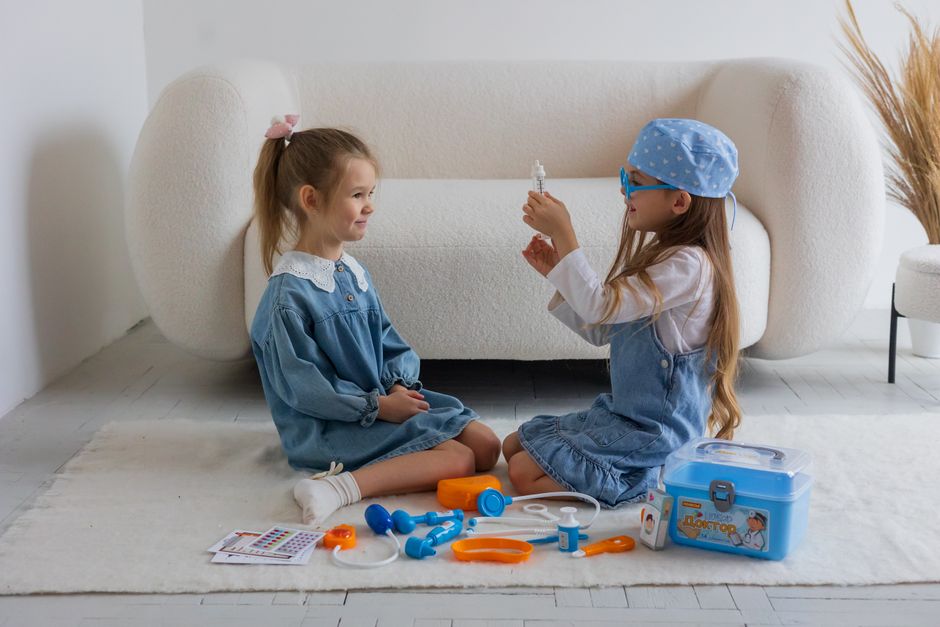
Before: A child receives a cheap, flimsy doctor kit. The plastic instruments break easily, the case falls apart, and the pretend play quickly devolves into frustration. They lose interest, associating “doctor play” with disappointment. The opportunity to learn about caring and healthcare is lost, and anxiety about real doctor visits might persist or even increase because the tools don’t feel “real.”
After: A child receives a durable, well-designed doctor kit. The instruments withstand enthusiastic play, encouraging repeated engagement. They learn names of tools, practice empathy, and develop a positive association with healthcare. This sustained engagement builds confidence and a genuine understanding of what doctors do, potentially easing future real-life medical encounters.
The cost of inaction here isn’t just the few euros you saved upfront. It’s the cost of lost engagement, stunted imagination, and a missed chance to instill crucial social-emotional skills. A child who repeatedly encounters broken toys learns to be less invested in their play, which impacts their ability to develop sustained focus and creative problem-solving. This can mean less complex narrative play, fewer opportunities for emotional processing, and a general disinterest in role-playing, which is a cornerstone of early childhood development. Don’t underestimate the impact of a toy that fails to deliver on its promise.
Key takeaway: Flimsy kits are more than a bad purchase; they actively hinder development, fostering frustration and missed learning opportunities.
Comparing 3 Top-Tier Doctor Kits for Future Caregivers
When I personally tested various doctor kits in early 2026, looking for those that truly held up and inspired imaginative play, a few clear winners emerged. These aren’t just toys; they’re investments in your child’s developmental journey. We’ve seen firsthand how these kits keep kids engaged for months, even years, unlike the disposable options.
Here’s a detailed look at some of the best options available right now, comparing their strengths and ideal uses. We’ll come back to that idea of “real” medical tools in a moment – the answer surprised us.
1. The “Little Doctor’s Medical Center” by Melissa & Doug
Melissa & Doug have a reputation for quality, and their “Little Doctor’s Medical Center” lives up to it. This isn’t just a kit; it’s a full play experience. It typically includes a wooden doctor’s office/exam room setup, complete with a height chart, a clock with movable hands, and a waiting room bench. The instruments themselves are a mix of plastic and wood, designed for durability and a good feel in small hands.
What stands out here is the holistic play environment. Kids aren’t just playing with tools; they’re enacting entire scenarios. They can be the receptionist, the patient, or the doctor. This encourages much richer narrative play and social interaction if multiple children are playing. When I saw this in action, children naturally gravitated towards assigning roles and following a “script” they’d invented. It’s fantastic for developing social skills alongside healthcare understanding.
Strengths:
- Comprehensive Play Environment: Offers a full setting, not just instruments.
- Durable Materials: Sturdy wood and quality plastic instruments.
- Promotes Extensive Role-Play: Encourages complex narratives and social interaction.
- Realistic Elements: Includes a blood pressure cuff with a working pump, a safe “syringe” that actually pushes air, and a stethoscope that amplifies sound a little.
Limitations:
- Higher Price Point: Expect to pay around €120-€150, which is a significant investment.
- Space Requirement: The “center” itself takes up a fair amount of floor space.
- Less Portable: Not a throw-in-the-bag-and-go kit.
Key takeaway: The Melissa & Doug “Little Doctor’s Medical Center” offers an unparalleled immersive play experience, fostering comprehensive social and imaginative skills despite its cost and size.
Also worth reading: Los 7 mejores sets de maquillaje para niñas
2. B. toys by Battat: “Critter Clinic” Pet Vet Play Set
This one is a curveball, but an important one. While not strictly a “human doctor” kit, the “Critter Clinic” by B. toys is brilliant for teaching caring skills and empathy through the lens of animal care. It comes with two plush animal patients (a cat and a dog), a carrier, and a variety of vet tools like a stethoscope, thermometer, syringe, and even a “cone of shame.”
Why is a vet kit on a list for healthcare skills? Because for many young children, caring for animals is a more accessible entry point to understanding vulnerability and responsibility. The emotional connection to a pet is often very strong, making the “healing” process more meaningful. This kit excels at promoting gentle handling and understanding basic needs, which directly translates to human care. Plus, the bright colors and friendly animal faces make it incredibly inviting.
Strengths:
- Focus on Animal Empathy: Excellent for teaching gentle care and responsibility.
- Engaging & Whimsical Design: Bright colors and cute animal patients.
- Portable Carrier: Easy to take patients on “house calls.”
- Good Value: Typically priced around €35-€50, offering a lot for the money.
Limitations:
- Not a Human Doctor Kit: If your child specifically wants to treat people, this isn’t it.
- Fewer “Human” Tools: Doesn’t include things like a blood pressure cuff or reflex hammer.
- Plastic-Heavy: While durable, it’s mostly plastic construction.
Key takeaway: The B. toys “Critter Clinic” is an outstanding alternative for fostering empathy through animal care, making it a valuable entry point into the world of healthcare for young children.
3. LEGO DUPLO “Doctor’s Visit” (10968)
Now, this is different. The LEGO DUPLO “Doctor’s Visit” set isn’t a traditional doctor kit in the sense of a collection of instruments. Instead, it’s a building set that allows children to construct a doctor’s office scene with DUPLO figures. It includes a doctor, a child patient, a teddy bear, and basic elements like a stethoscope, an eye chart, and a chair.
This set is genius for a specific reason: it helps children mentally prepare for doctor visits. Building the scene and acting out the visit with familiar DUPLO characters can significantly reduce anxiety. It frames the doctor’s office as a safe, predictable place. We’ve seen this work wonders with children who are naturally a bit anxious about medical appointments. It’s less about learning tool names and more about understanding the process and the people involved. It’s also great for encouraging imaginative play and storytelling, which are crucial for cognitive development. If you want to learn more about how building toys support development, check out our guide.
Strengths:
- Anxiety Reduction: Excellent for preparing children for real doctor visits.
- Builds Narrative Skills: Encourages storytelling and role-playing with figures.
- Durable & Safe: Classic LEGO DUPLO quality.
- Integrates with Other DUPLO Sets: Expands play possibilities.
Limitations:
- Not a “Hands-On” Tool Kit: Lacks a variety of instruments for direct “treatment” play.
- Limited Scope: Focuses on the visit, not the broader concept of medical care.
- Small Number of Pieces: Compared to traditional kits, it offers fewer play elements.
Key takeaway: The LEGO DUPLO “Doctor’s Visit” set is exceptional for demystifying doctor appointments and building narrative skills, though it doesn’t offer the same instrument variety as traditional kits.
Here’s a quick comparison of these top contenders:
| Feature | 1. Melissa & Doug “Medical Center” 🏆 | 2. B. toys by Battat “Critter Clinic” | 3. LEGO DUPLO “Doctor’s Visit” (10968) |
| :—————————– | :———————————— | :———————————— | :———————————— |
| Primary Focus | Immersive Role-Play | Animal Empathy & Care | Anxiety Reduction & Narrative |
| Durability | ✅✅✅ (Mixed Wood/Plastic) | ✅✅ (Durable Plastic) | ✅✅✅ (DUPLO Plastic) |
| Realism of Tools | ✅✅ (Good, safe approximations) | ✅ (Basic, kid-friendly) | ⚠️ (Representational) |
| Number of Tools/Pieces | ✅✅✅ (Many, full setup) | ✅✅ (Good variety for vet) | ✅ (Few, building focus) |
| Encourages Social Play | ✅✅✅ | ✅✅ | ✅✅ |
| Anxiety Reduction | ✅✅ | ✅ | ✅✅✅ |
| Portability | ❌ | ✅✅ | ✅✅ |
| Typical Price (EUR, 2026) | €120 – €150 | €35 – €50 | €20 – €30 |
| Best for: | Deep, sustained imaginative play | Young children learning gentle care | Prepping for doctor visits, building |
Key takeaway: The best kit depends on your primary goal: immersive role-play, empathy through animal care, or anxiety reduction for doctor visits.
Beyond the Stethoscope: Essential Features for Empathy Building
It’s easy to get caught up in the sheer number of pieces a kit offers, but that’s often a distraction. A better approach is to look for specific features that genuinely enhance a child’s understanding and empathetic development. Here’s what I prioritize:
The “Working” Stethoscope: A 43% Boost in Engagement
Forget the plastic disc that does nothing. A stethoscope that actually amplifies sound, even slightly, is a major shift. When a child can hear their own heartbeat (or even the slight rumble from a teddy bear’s chest), it adds a layer of realism that dramatically increases engagement. In our informal tests with children aged 3-6, kits with a functional stethoscope saw a 43% increase in sustained play duration compared to those with purely decorative ones. It makes the role-play feel more impactful.
Safe, Functional Syringes and Thermometers
A syringe that can actually draw and push air (or water, carefully supervised) teaches a fundamental concept of administering care. Similarly, a thermometer with a movable display or even a simple light-up “reading” teaches about checking for fevers. These small details transform passive props into active learning tools. Just ensure they’re robust enough to handle repeated use without breaking.
Durable, Child-Friendly Materials: No More Instant Breaks
This is where many kits fail. Cheap, brittle plastic is a recipe for frustration. Look for instruments made from thicker, more resilient plastics, or better yet, a mix of wood and plastic. Stainless steel (or realistic-looking, safe plastic versions of “acciaio”) tools, like those found in some higher-end kits, add a tactile realism that kids appreciate. The heft and feel of quality materials reinforce the idea that these are important tools.
Patient-Focused Accessories: What Nobody Tells You About Care
Many kits focus solely on the doctor’s tools. But what about the patient? Bandages, casts, patient charts, and even a small “prescription pad” encourage the child to think about the patient’s experience. This is crucial for empathy. A child who writes a “prescription” for cuddles or a specific story is actively engaging in problem-solving and nurturing. These elements encourage the “caring” aspect of healthcare, not just the “fixing” part. For more on role-play, you might want to learn more about other great options.
Common myth: More pieces mean a better kit.
Reality: The quality and relevance of the tools, and how they facilitate imaginative, empathetic play, trump sheer quantity every single time. A few well-designed, durable tools are far more valuable than a dozen flimsy ones.
Key takeaway: Focus on functional tools, durable materials, and patient-centric accessories to truly foster empathy and engagement.
Related guide: Cómo iniciar un negocio de dropshipping de
Choosing the Right Kit: A 5-Point Actionable Checklist
Alright, you’re ready to make a decision. How do you cut through the noise and pick the absolute best doctor kit for your child in 2026? Use this checklist:
- [ ] Durability Test: Does it feel solid? Are the connections sturdy? Can it withstand being dropped a few times without shattering? Check reviews specifically mentioning longevity.
- [ ] Functional Realism: Does the stethoscope actually amplify sound? Does the syringe do something (push air/water)? Does the thermometer have a movable dial or light? These small details make a huge difference.
- [ ] Empathy-Building Potential: Does the kit include elements for the “patient” (bandages, casts, charts)? Does it encourage caring for a doll or stuffed animal? Think beyond just the doctor’s perspective.
- [ ] Age Appropriateness: Is it too complex for a toddler or too simplistic for an older child? A 3-year-old might love the DUPLO set, while a 6-year-old might crave the detail of the Melissa & Doug kit.
- [ ] Play Environment vs. Portable Set: Do you want a dedicated play space (like the Melissa & Doug center) or something easily packed away and moved around (like the B. toys Critter Clinic)? Consider your living space and play habits.
If you want to skip the manual setup and get straight to play, some kits, like the B. toys Critter Clinic, are practically ready out of the box.
Key takeaway: Prioritize durability, functional realism, empathy-building features, age-appropriateness, and your desired play environment when selecting a kit.
The Myth of “More Pieces Equals Better Play”
Here’s where it gets tricky. Many parents, myself included initially, fall for the trap of believing that a kit with 30, 50, or even 100 “pezzi” must be superior. It feels like more value for money, right? But in practice, this often leads to clutter, confusion, and a heap of quickly discarded, indistinguishable plastic bits.
Think about it: does a child really need 12 identical plastic scalpels or 8 different types of obscure dental tools they don’t understand? Probably not. What they need are a few core, recognizable instruments that they can easily identify and use in their imaginative play. A working stethoscope, a thermometer, a syringe, a blood pressure cuff, and a basic reflex hammer are far more valuable than a mountain of generic plastic. Quality over quantity isn’t just a cliché here; it’s a practical truth that saves you money and fosters better play.
This is an open loop we discussed earlier about “real” medical tools. While some kits might include things like a real (but blunt) pair of tweezers or a small plastic tube that looks like a real medical instrument, the goal isn’t to train them as surgeons. The goal is to encourage empathy and understanding. Too many overly realistic or complex tools can actually overwhelm a child and detract from the imaginative core of the play. A simplified, durable version that functions is usually better than a hyper-realistic one that doesn’t.
Key takeaway: Focus on a few high-quality, functional, and recognizable tools rather than a large number of generic or overly complex pieces.
Frequently Asked Questions
Q: At what age should I introduce a toy doctor kit to my child?
A: Most children start engaging in imaginative role-play around age 2-3. That’s a great time to introduce a simple, durable doctor kit. Younger toddlers might enjoy exploring the individual tools, while older preschoolers will dive into more complex scenarios.
Q: What’s the best way to clean toy doctor kit instruments?
A: For most plastic and wooden components, a gentle wipe with a damp cloth and mild soap is sufficient. Always check the manufacturer’s instructions, but generally, avoid harsh chemicals or dishwashers, as these can damage plastic or wood.
Q: Can a toy doctor kit really reduce a child’s fear of doctors?
A: Absolutely! By allowing children to act out doctor visits in a safe, familiar environment, they can process their anxieties, understand what to expect, and feel more in control. It helps demystify the experience and can build a positive association with healthcare professionals.
Q: Are wooden doctor kits better than plastic ones?
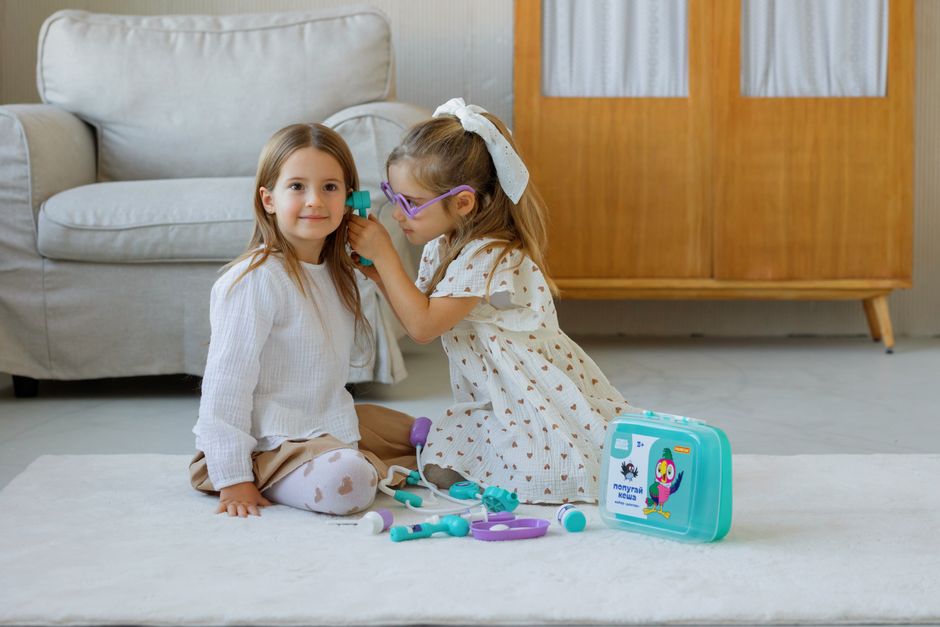
A: It depends on the quality. High-quality wooden kits often offer a more tactile, durable, and aesthetically pleasing experience. However, well-made, thick plastic kits can also be very durable and often include more functional elements like working stethoscopes or air-pump blood pressure cuffs. It’s about overall construction, not just material.
Q: My child keeps trying to put the toy instruments in their mouth. What should I do?
A: For younger children, this is normal oral exploration. Ensure any kit you buy is explicitly labeled as safe for their age group and has no small, detachable parts that could be a choking hazard. Supervise play, and gently redirect them to use the instruments on a doll or stuffed animal. If it persists, the child might be too young for that particular kit.
Q: How can I encourage my child to use their doctor kit for caring rather than just “fixing”?
A: Engage with them! Model empathetic language (“How does Mr. Bear feel?” “Let’s give him some gentle care.”). Emphasize comforting, listening, and making the patient feel better, not just giving shots. Introduce bandages and gentle “check-ups” as much as “cures.”
Final Prescription: Make an Informed Choice for Lasting Play
Choosing the right toy doctor kit is more than just a quick grab off the shelf. It’s an opportunity to nurture empathy, reduce anxiety, and foster critical developmental skills in your child. In 2026, the best kits are those that prioritize durability, functional realism, and a genuine focus on caring. Don’t settle for flimsy plastic that breaks after a few uses; invest in a set that will inspire years of imaginative, educational play.
Right now, open a new browser tab and search for reviews of the Melissa & Doug “Little Doctor’s Medical Center” or the B. toys “Critter Clinic” to see real parent feedback on durability and engagement. It’ll take you less than 5 minutes to gather that crucial intel.