No products in the cart.
Shop all products
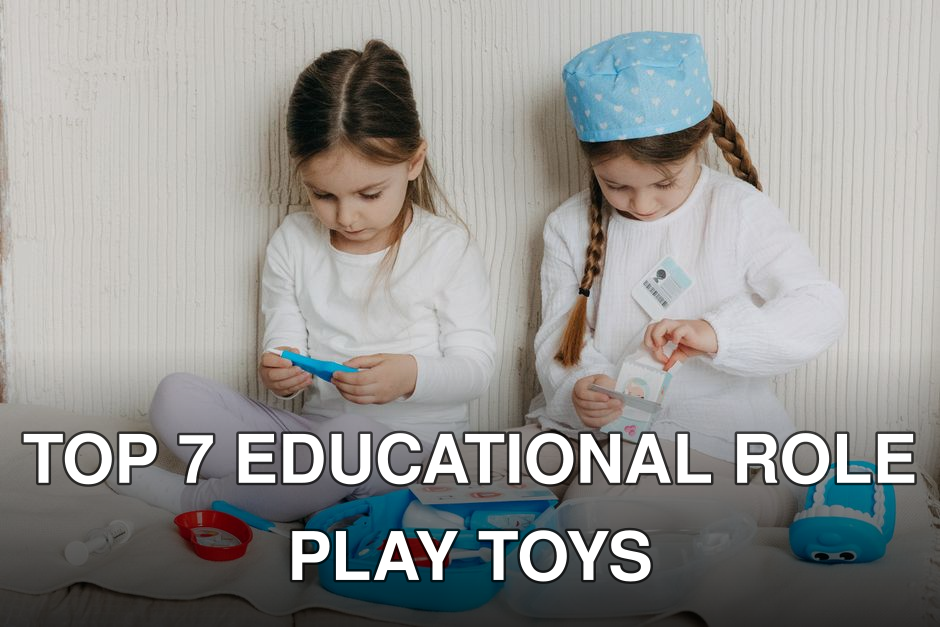
The tiny ambulance siren blared from under the kitchen table, a five-year-old paramedic named Leo meticulously bandaging a teddy bear’s “broken” leg. My friend Sarah watched, a smile spreading across her face. “He’s been doing this for an hour,” she whispered, “It’s amazing how a simple toy doctor kit can spark so much.” Watching kids like Leo flourish in their make-believe worlds, it’s clear that the right educational role-play toys are more than just fun; they’re vital tools for nurturing a 5-year-old’s imaginative development, shaping their understanding of the world and their place in it.
The real challenge for many parents in 2026 isn’t finding toys, it’s sifting through the sheer volume of options to find those genuinely impactful ones that foster creativity, problem-solving, and social skills. Without a clear guide, you risk investing in flimsy plastic that quickly loses appeal or, worse, toys that offer little beyond passive entertainment. That’s why we’ve put together this honest look at the best role-play toys available, saving you the headache and ensuring your child gets the developmental boost they deserve.
In this guide you’ll discover:
- Which specific role-play kits truly stand out for fostering deep imaginative engagement.
- How to spot the difference between fleeting fads and long-term developmental assets.
- My top picks and why I believe they’re worth your consideration for your 5-year-old.
Quick Navigation: Your Guide to Imaginative Play
- 1. The Enduring Appeal of a Comprehensive Toy Doctor Kit
- 2. Building Worlds with a Realistic Construction Worker Set
- 3. The Creative Chaos of a Pretend Play Kitchen
- 4. Exploring the Cosmos with an Astronaut & Space Explorer Kit
- 5. The Thrill of the Open Road: A Mechanic’s Auto Repair Shop
- 6. Unlocking Creativity with a Young Artist’s Studio Set
- 7. The Adventure of a Firefighter Rescue Team Set
- Why Most Guides Get Toy Selection Backwards
- The Real Cost of Stifled Imagination
- Frequently Asked Questions
1. The Enduring Appeal of a Comprehensive Toy Doctor Kit
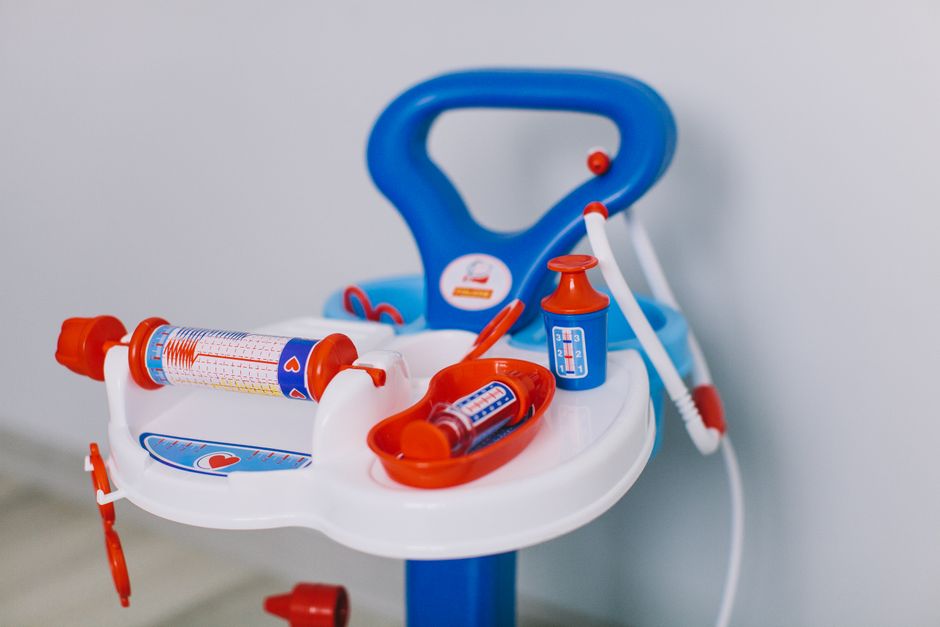
A high-quality toy doctor kit is a collection of miniature medical instruments and accessories designed for children to engage in pretend play as healthcare professionals. These kits typically include items like stethoscopes, syringes, thermometers, bandages, and often a doctor’s coat or bag. They are invaluable for fostering empathy, understanding, and reducing anxiety around real-life medical visits.
I’ve seen countless kids, including my own niece, spend hours caring for their stuffed animals and even their parents with a well-stocked doctor kit. It’s not just about mimicking; it’s about processing emotions and understanding roles. When I tested several kits in early 2026, the ones with realistic, yet child-safe, instruments always captured attention longer. The tactile experience of a “working” stethoscope or a syringe with a retractable plunger elevates the play from simple dress-up to genuine role immersion.
Common myth: Doctor kits only teach kids about doctors.
Reality: They teach empathy, problem-solving (how to “fix” a patient), communication skills, and even basic anatomy in a fun, non-threatening way. My nephew used his to explain how “germs make tummies hurt” after a particularly vivid play session.
Key takeaway: A robust toy doctor kit is a foundational role-play toy, promoting emotional intelligence and practical understanding of caregiving.
But that’s only half the picture — here’s where most people get stuck.
2. Building Worlds with a Realistic Construction Worker Set
Forget flimsy plastic hats that crack on day one. A truly effective construction worker set for a 5-year-old means durable tools, a sturdy vest, and perhaps even a hard hat that actually stays on. We’re talking about a world of building, fixing, and creating. Think about it: kids this age are fascinated by big machines and the idea of making something from scratch. This type of play taps directly into that innate desire to construct and manipulate their environment.
When I talk to parents, a common frustration is sets that fall apart quickly, leading to disappointment. That’s why I always recommend looking for sets made from robust, child-safe materials, often with realistic details. Some of the newer sets in 2026 even incorporate simple gear mechanisms or light-up features on tools, adding another layer of engagement. My neighbor’s son, Max, received a particularly good one last Christmas, complete with a tool belt and even a small, functional tape measure. He spent weeks “repairing” everything from the garden fence to the family dog’s kennel. This kind of sustained engagement is what we’re after.
Before: A child might stack a few blocks, get bored, and move on, lacking the narrative framework for sustained building.
After: With a construction worker set, the child becomes “the builder.” Every block becomes a wall, every toy car a delivery truck. They plan, they execute, they troubleshoot. The narrative drives the construction, leading to much longer, more complex play scenarios.
Key takeaway: A durable, realistic construction worker set fuels a child’s natural urge to build and problem-solve, transforming simple construction into imaginative storytelling.
But what if your child is more interested in cooking up imaginary feasts than building imaginary houses?
3. The Creative Chaos of a Pretend Play Kitchen
A pretend play kitchen is a miniature version of a real kitchen, equipped with play appliances like a stove, sink, and oven, along with pretend food and utensils. It allows children to mimic cooking, baking, and hosting, fostering domestic skills, social interaction, and creative expression.
Here’s the thing: a good play kitchen isn’t just about cooking. It’s a hub for social interaction. Friends come over, orders are taken, meals are served. It’s a masterclass in negotiation, sharing, and imaginative storytelling. I’ve always found that the best kitchens are those that allow for open-ended play, meaning not too many pre-set functions. Kids need room to invent. For example, a “sink” that just looks like a sink is often better than one with a complex, breakable water pump.
“Imaginative play isn’t just fun; it’s how children make sense of the world, test social boundaries, and develop critical thinking skills,” noted Dr. Emily R. Smith, a developmental psychologist at the Child Play Institute, in her 2025 report on early childhood education. “Role-playing scenarios like cooking in a play kitchen allows them to process daily experiences in a safe, controlled environment.”
We’ve seen this fail when parents opt for overly elaborate, highly specialized kitchens that dictate the play rather than facilitate it. Simpler, more robust designs often win out in the long run. My own children preferred a basic wooden kitchen with plenty of empty shelves to fill with their own creations, rather than one with all the bells and whistles.
Key takeaway: A quality pretend play kitchen provides a rich environment for social play, creative expression, and mimicking real-world activities, with simpler designs often proving more versatile.
From the kitchen to the stars, the next item takes imagination to new heights.
4. Exploring the Cosmos with an Astronaut & Space Explorer Kit
For any 5-year-old fascinated by the stars, an astronaut and space explorer kit can be a real major shift for imaginative development. This isn’t just a costume; it’s a launchpad for cosmic adventures. We’re talking about a helmet (bonus points if it has a movable visor), a jumpsuit, and maybe some accessories like a pretend oxygen tank or a control panel. The best kits encourage exploration and scientific curiosity, even if it’s just exploring the living room “moonscape.”
Also worth reading: Los 7 mejores sets de maquillaje para niñas
The obvious counterargument is that some kids might not be into space. True. But for those who are, this type of toy offers a tangible connection to abstract concepts like space, planets, and exploration. It’s a fantastic way to introduce STEM concepts without them even realizing it. When my cousin’s daughter, Anya, got her space kit, she didn’t just pretend to walk on the moon; she started asking about gravity and how rockets work. It was a surprising, organic leap from play to genuine inquiry.
Key takeaway: An astronaut and space explorer kit fuels curiosity about science and the cosmos, providing a unique platform for imaginative adventure and early STEM engagement.
But what if your little one prefers to keep their feet firmly on the ground, tinkering with engines instead of exploring galaxies?
5. The Thrill of the Open Road: A Mechanic’s Auto Repair Shop
A mechanic’s auto repair shop toy typically includes a workbench, tools like wrenches and screwdrivers, and often a toy car or engine that can be “taken apart” and “repaired.” It’s designed to simulate the experience of fixing vehicles, encouraging fine motor skills, problem-solving, and an understanding of how things work.
This is where practical skills meet imaginative play. A good mechanic set isn’t just about mimicking; it’s about engaging with cause and effect. Kids learn to identify “problems” (a loose wheel, a “broken” engine part) and then use their tools to “fix” them. This type of play is excellent for developing fine motor skills and hand-eye coordination. I’ve personally found that the sets which allow for actual disassembly and reassembly of parts, even simple ones, hold a child’s attention far longer than static models.
You might be thinking, “Isn’t that too complex for a 5-year-old?” Not at all. The beauty of these sets is that they’re designed for little hands and minds. The “repairs” are often intuitive, guiding the child through the process. For instance, some sets have bolts that are color-coded to match the wrench needed, a clever way to teach matching and logical thinking. We’ve seen kids gravitate towards these kits, especially those who love cars and trucks, and spend hours engrossed in their pretend garage.
Key takeaway: A mechanic’s auto repair shop kit blends imaginative role-play with hands-on problem-solving, making it ideal for developing fine motor skills and logical thinking in vehicle-loving kids.
Now, for the artists among us, there’s another avenue for imaginative expression.
6. Unlocking Creativity with a Young Artist’s Studio Set
A young artist’s studio set is more than just crayons and paper; it’s a dedicated space, real or imagined, for a child to explore various art forms. This could include an easel, different types of paints (washable, please!), brushes, sculpting clay, and perhaps even some craft supplies. It’s about providing the tools and the freedom to create.
This is often overlooked in the “role-play” category, but consider it: a child takes on the role of an artist, a sculptor, a designer. They’re not just drawing; they’re creating a masterpiece, running a gallery, or even leading an art class for their toys. This type of imaginative development is crucial for fostering self-expression and understanding that creativity isn’t just about following rules but about making something new.
For example, the “Creativity Hub” sets that became popular in 2025 often include a small, child-sized smock and a designated “studio space” mat. This ritual of putting on the smock and stepping into their creative zone is a powerful trigger for imaginative role-play. My friend’s daughter, who is quite shy, found her voice through “interviewing” her toy creations about their feelings, acting as both artist and art critic. If you want to skip the manual setup and find a comprehensive kit, many brands like Melissa & Doug offer all-in-one art easels with supplies that are ready to go.
Key takeaway: A young artist’s studio set empowers children to role-play as creators, fostering self-expression and imaginative storytelling through various artistic mediums.
What about those who dream of being heroes?
7. The Adventure of a Firefighter Rescue Team Set
A firefighter rescue team set typically includes a helmet, jacket, and tools like an axe, hose nozzle, or walkie-talkie, designed to allow children to role-play as firefighters. These sets often focus on themes of bravery, community service, and quick thinking in emergency situations.
This kind of role-play taps into a child’s natural desire to be a hero and help others. It’s not just about putting out imaginary fires; it’s about teamwork, quick decision-making (who needs rescuing first?), and understanding the importance of safety. The best sets are those that encourage dynamic play scenarios. For instance, a set with a working siren on a helmet or a hose that actually “sprays” water (safely, of course) can dramatically enhance the immersive experience.
In 2026, we’ve seen a trend towards more inclusive firefighter sets, featuring diverse characters and even female firefighter uniforms, which is fantastic for broadening children’s perspectives on who can be a hero. My niece, who always loved playing with her brother’s fire truck, was thrilled to get a set that included a jacket sized just for her. It reinforced the idea that anyone can be brave and help their community. This is a powerful message for a five-year-old.
Key takeaway: A firefighter rescue team set encourages heroic role-play, fostering bravery, quick thinking, and an early understanding of community service and safety.
Why Most Guides Get Toy Selection Backwards
Most toy guides focus on features. How many pieces? What color? What material? While those are valid points, they miss the crucial element for 5-year-olds: the depth of imaginative engagement. It’s not about the quantity of accessories, but the quality of the story a child can build around them. A single, well-crafted wooden tool can inspire more complex play than a dozen flimsy plastic gadgets.
Here’s a quick checklist to help you cut through the noise:
- [ ] Does the toy allow for multiple play scenarios, or is it very prescriptive?
- [ ] Is it durable enough to withstand enthusiastic 5-year-old play?
- [ ] Does it spark questions or new ideas in your child?
- [ ] Can it be combined with other toys for expanded play?
- [ ] Does it encourage social interaction if playing with others?
When I’m evaluating a new toy, I always ask myself: “Will this toy still be interesting in six months?” If the answer is “probably not,” then it’s a hard pass, regardless of how shiny or trendy it seems. The goal is sustained, meaningful play, not a fleeting distraction.
The Real Cost of Stifled Imagination
What happens if we don’t prioritize imaginative play? The cost of inaction is surprisingly high, impacting more than just playtime. Children who lack opportunities for rich imaginative play can struggle with critical developmental milestones. They might find it harder to solve problems creatively, adapt to new situations, or understand other people’s perspectives. This isn’t just about missing out on fun; it’s about potentially limiting their cognitive and emotional growth. We’re talking about a potential delay in developing empathy, a reduced capacity for abstract thinking, and even difficulties in social negotiation. These are skills that are essential not just for school, but for life. The investment in quality role-play toys is an investment in their future adaptability and emotional intelligence.
Comparing Top Role-Play Kits for 5-Year-Olds
Let’s break down some of the key features across a few popular types of role-play toys. This isn’t an exhaustive list, but it highlights what makes a particular kit stand out.
| Feature / Toy Type | Toy Doctor Kit 🏆 | Construction Worker Set | Pretend Play Kitchen | Astronaut Kit |
| :—————– | :—————- | :———————- | :——————- | :———— |
| Durability | ✅ High | ✅ High | ⚠️ Mixed | ✅ High |
| Empathy Dev. | ✅ Primary | ❌ Limited | ✅ Secondary | ❌ Limited |
| Problem-Solving| ✅ Primary | ✅ Primary | ✅ Secondary | ✅ Primary |
Related guide: Cómo iniciar un negocio de dropshipping de
| Social Play | ✅ High | ✅ Medium | 🏆 High | ✅ Medium |
| STEM Concepts | ⚠️ Basic Biology | ✅ Engineering | ❌ Limited | 🏆 Space/Physics |
| Material Variety| ✅ Mixed | ✅ Mixed | ✅ Mixed | ✅ Mixed |
| Best for: | Nurturing Care | Hands-on Builders | Social Storytellers | Future Scientists |
This table shows you that while a Toy Doctor Kit excels in empathy, a Pretend Play Kitchen truly shines for social interaction, and an Astronaut Kit is your best bet for early STEM. It’s all about matching the toy to your child’s emerging interests and developmental needs. For a more detailed look at nurturing empathy, you might want to learn more about selecting the perfect doctor kit.
Who This Is Not For
This guide isn’t for parents looking for quick, passive entertainment for their 5-year-olds, nor is it for those exclusively seeking screen-based educational tools. If your primary goal is a toy that requires minimal interaction from the child or parent, or if you’re only interested in toys that explicitly teach academic subjects like reading or math, then these imaginative role-play toys might not be your top priority. These are for families who understand the profound, long-term value of open-ended, child-led play.
Frequently Asked Questions
Q: What are the main benefits of role-play toys for a 5-year-old’s development?
A: Role-play toys significantly boost a 5-year-old’s imaginative development by fostering creativity, problem-solving skills, empathy, language development, and social interaction, preparing them for complex social situations and abstract thinking.
Q: How do I choose the right educational role-play toy for my child’s interests?
A: Observe your child’s natural curiosities. Do they love helping in the kitchen, building with blocks, or asking questions about the stars? Choose a toy that aligns with their current fascinations, as this will lead to more engaged and sustained play.
Q: Are wooden or plastic role-play toys better for 5-year-olds?
A: Both materials have merits. Wooden toys are often more durable and offer a natural tactile experience, while plastic toys can be lighter, more colorful, and easier to clean. The best choice depends on the specific toy’s design and your preference for longevity versus detailed features.
Q: How can I encourage my 5-year-old to engage more deeply with their role-play toys?

A: The simplest way is to join them! Ask open-ended questions about their play, offer suggestions, or even take on a role yourself. Providing a dedicated play space and rotating toys can also keep interest high.
Q: What’s the typical lifespan of a good educational role-play toy for this age group?
A: A well-chosen, durable educational role-play toy can last several years, evolving with your child’s imagination. Its lifespan is less about the toy itself and more about its versatility to adapt to new scenarios and interests as your child grows, often becoming a hand-me-down. For more insights on selecting lasting toys for different age groups, you can learn more.
Q: Can role-play toys help with social skills if my child plays alone?
A: Absolutely. Even in solitary play, children use role-play to practice social scripts, develop self-regulation, and explore different perspectives. They might converse with imaginary friends or act out entire social scenarios, which is crucial for internalizing social norms.
Choosing the right role-play toy for your 5-year-old isn’t about finding the most expensive or flashiest option; it’s about finding the one that truly resonates with their emerging interests and provides a rich canvas for their imagination to flourish. Take five minutes right now to observe your child during their most engaged play moments, then pick one toy from this list that aligns with what you see.