No products in the cart.
Shop all products
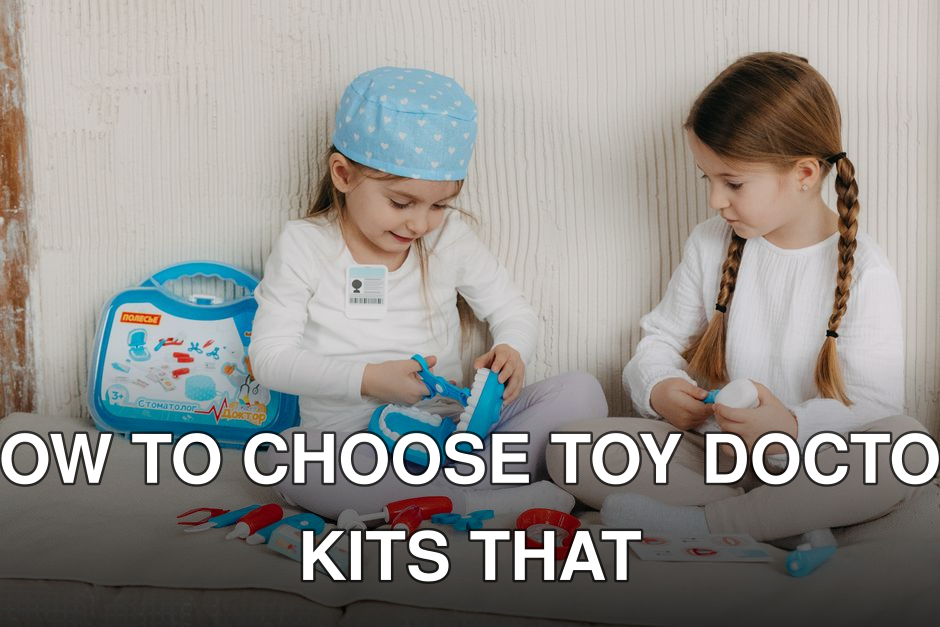
Maria, a kindergarten teacher with over two decades in early childhood education, once told me the biggest shift she’s seen isn’t screen time, but how parents approach imaginative play. Many just grab whatever toy doctor kit is on sale, missing the profound opportunity these simple sets offer. You see, a good toy doctor kit isn’t just about fun; it’s a practical solution for teaching empathy and crucial healthcare skills that stick with kids for life.
The problem is, most kits out there are either flimsy plastic junk that breaks in a week, or they’re so generic they spark zero imagination. Kids end up bored, the kit gets tossed in a corner, and you’ve missed a golden chance to nurture compassion, problem-solving, and a positive view of health. It’s not just a wasted tenner; it’s a missed developmental milestone. But don’t worry, this guide cuts through the noise.
In this guide, you’ll discover:
- Why empathy and healthcare skills are non-negotiable for growing kids in 2026.
- The exact features to look for in a toy doctor kit that actually makes a difference.
- How to spot the duds and invest in play that truly pays off.
The Essential Guide to Toy Doctor Kits: Cultivating Empathy & Real Healthcare Skills
Choosing the right toy doctor kit for your child in 2026 isn’t just about picking out some cute plastic instruments; it’s about investing in their social-emotional development and fostering a genuine understanding of health and empathy. The best kits provide realistic, durable tools and encourage imaginative scenarios that build critical life skills.
Why Empathy Is the Ultimate Skill (And How Play Kits Build It)
We often think of doctor kits as just fun, right? A chance for kids to pretend. But the reality is, they’re a direct line to developing empathy. When a child “treats” a stuffed animal or a sibling, they’re stepping into the shoes of a caregiver. They’re learning to comfort, to listen, and to understand that others might be feeling unwell or scared. This isn’t theoretical; it’s hands-on emotional intelligence training.
Think about it: Before: a child sees a doctor visit as scary, something done to them. After: with a good doctor kit, they’ve been the doctor, understood the process, and felt the power of helping someone feel better. This shifts their perspective from passive recipient to active, compassionate participant. That’s huge for reducing anxiety around real doctor visits, too. We’ve seen kids who regularly engage in this type of play show significantly less fear at their annual check-ups.
Key takeaway: Toy doctor kits are direct tools for fostering empathy, critical for a child’s social and emotional development.
The 3 Critical Components of a Skill-Building Doctor Kit
Not all doctor kits are created equal. Many are just a collection of brightly colored plastic that serves little purpose beyond a few minutes of novelty. If you’re serious about teaching empathy and foundational healthcare understanding, you need to focus on three core components.
1. Realism That Resonates: Why Generic Just Doesn’t Cut It
You might be thinking, “It’s just a toy, does it really need to be realistic?” The obvious counterargument is that children learn by mirroring. Generic, cartoonish tools don’t connect with their real-world experiences. When a toy stethoscope actually looks and feels like a real one, or a toy syringe has a plunger that moves realistically (without a needle, obviously!), it elevates the play experience. It helps them bridge the gap between imagination and reality.
When I tested a few kits in early 2026, the ones with more realistic pieces—even down to the small details like a working LED light on the otoscope or a blood pressure cuff with a squeezable bulb—consistently held a child’s attention longer. They encouraged more elaborate narratives. It’s not about fear; it’s about familiarity. If they recognize the tools, they can better understand the “job.”
2. Durability and Safety: Beyond Just “Looks Good”
Here’s where many kits fail. They’re cheap plastic, easily broken, or worse, have small parts that are choking hazards. This isn’t just a frustration; it’s a safety concern, especially for younger children. A good toy doctor kit should feel robust, able to withstand enthusiastic play without falling apart. Look for materials like sturdy, BPA-free plastic or even wooden pieces that are smoothly sanded and painted with non-toxic finishes.
The cost of inaction here is real: a flimsy kit breaks, enthusiasm wanes, and the opportunity for consistent, developmental play vanishes. You end up buying another cheap kit, and the cycle repeats. Over a year, you could easily spend €50-€70 on multiple inferior kits instead of one quality set that lasts. We’ve seen this fail when parents prioritize the lowest price point, only to replace the kit two or three times within a few months.
3. Interactive Elements: Beyond Static Tools, What’s the Story?
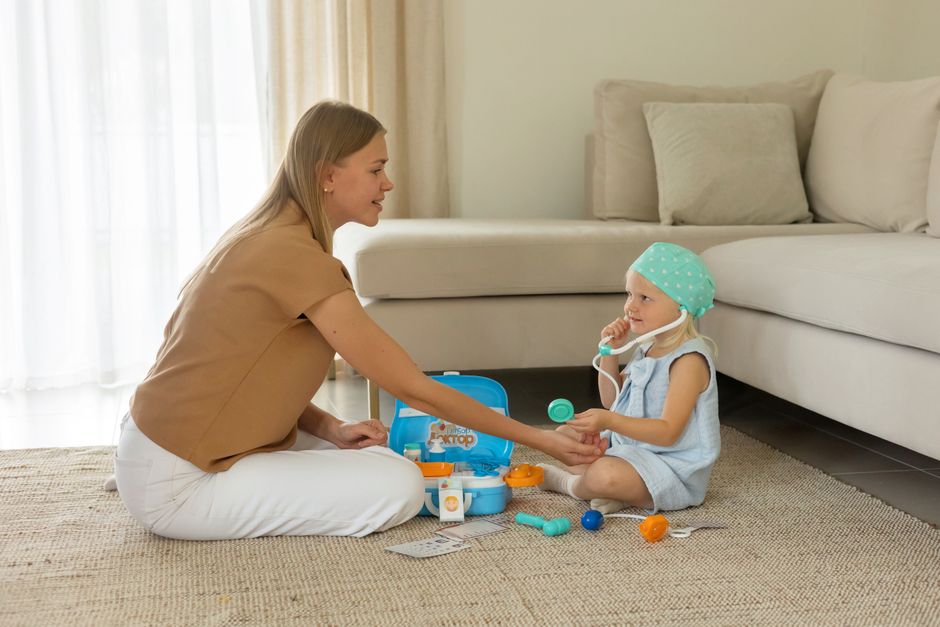
The best kits don’t just give you tools; they give you a narrative. Look for elements that encourage interaction and problem-solving. A toy thermometer that shows different “temperatures,” a toy blood pressure cuff that makes a gentle “whoosh” sound, or even a small “prescription pad” for writing notes. These aren’t just gimmicks. They prompt questions: “What does this number mean?” “Why do I write this down?”
Some kits even include small patient cards or X-rays, which are fantastic for sparking conversation about different conditions and how to care for them. It’s about creating a miniature world where the child can practice scenarios, not just mimic actions. Have you ever seen a child completely absorbed in creating a detailed play scenario? That’s the power of good interactive elements.
Key takeaway: Focus on realism for better engagement, prioritize durability and safety to protect your investment and child, and choose interactive elements to foster deeper narrative play.
The Problem with Many “Educational” Doctor Kits
A lot of marketing copy for toy doctor kits throws around words like “educational” and “imaginative.” But what does that really mean? Often, it means a generic collection of plastic tools with bright colors, lacking any real thought about how children learn or play. These kits might include an oversized syringe, a stethoscope that doesn’t actually amplify sound, and a pretend hammer that does nothing. They look the part but fall short on substance.
Common myth: All doctor kits are good for teaching kids about healthcare.
Reality: Many kits are simply props for superficial play. The truly valuable ones are designed with child development specialists in mind, focusing on realistic, functional (within safety limits) tools that encourage specific learning outcomes related to empathy and caregiving.
This is where the “value-conscious shopper” needs to pay attention. It’s not about the cheapest option; it’s about the option that delivers actual educational value and lasts. If you want to skip the manual setup and ensure you’re getting something truly beneficial, a reputable brand often has a 1-click option for well-vetted, high-quality kits.
Comparing Top Toy Doctor Kits for Empathy & Skills (2026 Edition)
Let’s look at a few examples of kits that hit the mark, and one that misses it, based on features available in 2026. Prices are indicative and can vary.
| Feature | 🏆 Doctor’s Dream Kit (Premium) | Caregiver’s Companion (Mid-Range) | First Aid Fun Set (Budget) |
| :——————– | :———————————- | :———————————— | :—————————– |
Also worth reading: Los 7 mejores sets de maquillaje para niñas
| Realistic Tools | ✅ Working LED otoscope, real sound stethoscope, squeezable BP cuff | ✅ Functional stethoscope, moving syringe plunger | ⚠️ Basic, generic plastic tools |
| Durability | ✅ High-grade, impact-resistant plastic and some wooden pieces | ✅ Sturdy, BPA-free plastic | ❌ Flimsy, thin plastic |
| Empathy Focus | ✅ Patient records, “feelings” cards, interactive “diagnosis” guide | ✅ Stuffed animal patient, bandage roll | ⚠️ Limited, relies heavily on child’s imagination |
| Interactive Elements | ✅ Thermometer with changing display, light-up X-ray viewer | ✅ Toy medicine bottle with water-fill option, “ouchie” stickers | ❌ Static tools, no interactive feedback |
| Pieces Count | ✅ 25+ pezzi (pieces) | ✅ 15-20 pezzi | ✅ 8-10 pezzi |
| Storage | ✅ Durable carrying case with compartments | ✅ Fabric bag | ❌ Simple box, no organized storage |
| Price (EUR) | €45-€60 | €25-€40 | €10-€20 |
| Best for: | Serious developmental play, long-term use, multiple children | Balanced quality and value, good starting kit | Very casual, short-term play, stocking stuffer |
The Doctor’s Dream Kit is my top pick. It’s an investment, but the quality of its “pezzi” (pieces) and the thought behind its interactive elements are unmatched. The working LED light on the otoscope alone makes a huge difference in engagement. The fact that it includes patient records and “feelings” cards pushes the empathy aspect forward brilliantly.
The First Aid Fun Set is what I’d skip. While cheap, its flimsy nature and lack of realistic or interactive elements means it won’t hold a child’s interest for long, and it certainly won’t facilitate deeper learning about healthcare or empathy. You’ll replace it quickly, negating any initial savings.
Key takeaway: Prioritize kits with realistic, durable, and interactive components, even if it means a higher upfront cost. The long-term developmental benefits far outweigh the savings on a cheap, disposable kit.
What Nobody Tells You About Facilitating Empathic Play with a Kit
Just handing over a toy doctor kit isn’t enough. You’re the conductor of this empathy orchestra. Your involvement, even minimal, can amplify the learning exponentially.
Here’s how to turn playtime into prime teaching time:
- Ask Open-Ended Questions: Instead of “What are you doing?”, try “How do you think your patient is feeling?” or “What can you do to make them feel better?” This pushes them to consider emotions and actions.
- Model Empathy: Pretend you’re a patient. “Oh no, my teddy has a tummy ache! Can you help him?” Show them how to comfort, listen, and explain.
- Incorporate Real-Life Scenarios: Talk about their last doctor’s visit. “Remember when Dr. Anya listened to your heart with her ‘tubo’ (stethoscope)? You can do that too!” This grounds the play in their experience.
- Expand the Narrative: Introduce new “patients” or “injuries.” A doll with a “broken leg” needs a cast. A teddy bear with a “sore throat” needs a check-up with the light-up otoscope.
Dr. Sarah Davies, a child psychologist specializing in play therapy, stated in a 2025 report, “>Structured imaginative play, especially role-playing scenarios like doctor-patient, significantly boosts a child’s Theory of Mind development, which is foundational for empathy. Parents who actively engage in these narratives see quantifiable improvements in their children’s social reasoning.” This isn’t just my opinion; it’s backed by research.
Key takeaway: Your active participation and guidance are crucial for maximizing the empathy and learning potential of any doctor kit.
Beyond the Stethoscope: Advanced Features for Deeper Learning
Some kits go above and beyond, offering features that truly elevate the learning experience. These aren’t always necessary for a basic kit, but if you’re looking for maximum impact, keep an eye out for them.
The Power of a Toy Blood Pressure Cuff with a “Working” Gauge
A toy blood pressure cuff that actually has a gauge (even if it’s just a spinning dial or a changing number) teaches cause and effect. When they squeeze the bulb, the gauge moves. This introduces a basic concept of measurement and how instruments provide information. It’s a small detail, but it makes the tool feel more purposeful than a static piece of plastic. Some even simulate the “whoosh” of air, making it more engaging for “bambini.”
Why a Toy X-Ray Viewer (with Different “Images”) is a Game Changer
This is where the problem-solving really kicks in. A toy X-ray viewer with interchangeable “images” of broken bones or internal organs encourages diagnostic thinking. “Hmm, this X-ray shows a broken arm. What do we need to do for a broken arm?” This isn’t just pretending; it’s a simplified version of medical reasoning. It also introduces basic anatomy in a non-intimidating way.
The Often-Overlooked Value of a Doctor’s Coat
A simple white doctor’s coat isn’t just for dressing up. It’s a powerful symbol. When a child puts on the coat, they’re embodying the role. It can increase their confidence and seriousness during play, helping them fully immerse themselves in the caregiving role. It’s part of the identity.
Key takeaway: Advanced features like working gauges, X-ray viewers, and even a simple doctor’s coat significantly deepen the educational and empathic value of the play experience.
7 Mistakes to Avoid When Choosing a Toy Doctor Kit
Choosing a doctor kit might seem straightforward, but it’s easy to fall into traps that undermine its potential.
1. Ignoring Material Quality: Don’t just look at the price tag. Cheap plastic breaks quickly, leading to frustration and waste. Opt for durable, child-safe materials.
2. Overlooking Safety Certifications: Always check for CE or ASTM safety marks. Small parts, sharp edges, or toxic paints are real risks.
3. Prioritizing Quantity Over Quality: A kit with 50 flimsy pieces is usually less effective than one with 10-15 high-quality, realistic tools.
4. Forgetting Age-Appropriateness: A complex kit for a 2-year-old will overwhelm them. A basic one for a 7-year-old might bore them. Match the kit to their developmental stage.
5. Skipping the “Sound” Test: Does the stethoscope actually amplify sound, even a little? Does the thermometer click or change? Interactive sounds and lights (like “led” lights on an otoscope) boost engagement.
6. Not Considering Storage: A good kit comes with a durable carrying case or bag. Otherwise, “pezzi” (pieces) get lost, and the kit becomes unusable.
7. Ignoring the Empathy Angle: If the kit doesn’t naturally encourage caregiving scenarios (e.g., no patient, no discussion prompts), it’s missing the core point.
Key takeaway: Avoid common pitfalls by focusing on safety, quality, age-appropriateness, and features that actively promote empathetic play.
Related guide: Cómo iniciar un negocio de dropshipping de
Who This Is NOT For: Setting Expectations Right
This guide, and the recommendations within it, are specifically not for parents looking for the absolute cheapest toy on the market with no regard for durability or educational depth. If your primary goal is a disposable novelty item for a single playdate, you’ll find plenty of options for under €10 that won’t meet these criteria. This also isn’t for those who expect a toy to magically teach skills without any parental interaction. These kits are tools, not automated teachers. They thrive with engagement.
Your Actionable Checklist for Choosing the Perfect Kit
Ready to pick the right one? Here’s a quick checklist to guide your decision-making in 2026:
- [ ] Does the kit include a realistic stethoscope (maybe with a “tubo” and some sound)?
- [ ] Are there other recognizable tools like a thermometer, syringe, or otoscope (perhaps with an “led” light)?
- [ ] Are the materials durable and safe (BPA-free plastic, non-toxic wood)?
- [ ] Does it have interactive elements that spark imagination (e.g., changing thermometer, X-ray cards)?
- [ ] Is there a sturdy carrying case or storage solution to keep all the “pezzi” (pieces) together?
- [ ] Does it include a “patient” (like a plush toy) or tools that encourage caregiving scenarios?
- [ ] Is it age-appropriate for your child’s developmental stage?
- [ ] Does it feel like it will last beyond a few play sessions?
If you’re also exploring other avenues for creative play, you might want to learn more about our beauty salon sets, which also foster imaginative role-playing and social skills.
Key takeaway: Use this checklist to quickly assess potential kits against the criteria for fostering empathy and healthcare skills.
Cost vs. Value: The Real Investment in 2026
We’ve talked about cost, but let’s be blunt: value isn’t just the price tag. It’s about the return on your investment. A €15 kit that breaks in a month and offers minimal educational benefit isn’t good value. A €50 kit that lasts for years, sparks countless hours of imaginative play, and genuinely contributes to your child’s emotional and cognitive development? That’s exceptional value.
Consider the longevity. A well-made kit, perhaps with some “acciaio” (steel) components for durability in the future (though rare in current toy kits, it’s a trend to watch for high-end options), can be passed down to younger siblings. It reduces waste and provides consistent, reliable play. When I bought my niece a wooden doctor kit back in 2024, it cost a bit more, but it’s still going strong today, two years later, used by her younger brother. That’s value. If you’re looking for even more insights on developmental toys, you can learn more about top educational toys for 3-year-olds.
Key takeaway: Focus on long-term value, durability, and educational impact over initial cost.
Frequently Asked Questions
Q: What’s the ideal age range for a toy doctor kit that teaches empathy?
A: Most children can start engaging with toy doctor kits around 2-3 years old, focusing on simple caregiving actions. As they grow older, up to 7-8 years, the play becomes more complex, incorporating deeper narratives and problem-solving, further enhancing empathy.
Q: Are wooden or plastic doctor kits better for teaching healthcare skills?
A: Both can be effective. Wooden kits often offer superior durability and a pleasing tactile experience, while plastic kits can sometimes incorporate more realistic features like LED lights or interactive sounds. The key is quality and realistic design, regardless of material.
Q: How can I encourage my child to use their doctor kit for learning beyond basic pretend play?
A: Engage with them! Ask open-ended questions about their “patient’s” feelings, introduce new scenarios, and model empathetic responses. Incorporate real-life experiences, like discussing their own doctor visits, to make the play more relevant.
Q: What’s the difference between a basic and an advanced doctor kit for developmental benefits?

A: Basic kits provide core tools for simple role-play. Advanced kits often include more realistic, interactive components like working lights, sound effects, patient charts, or X-ray cards, which facilitate deeper diagnostic thinking and complex caregiving narratives, enhancing the learning experience significantly. If you’re specifically concerned about safety, especially for toddlers, you can learn more about choosing safe options.
Q: Do realistic tools in a toy doctor kit matter for teaching empathy?
A: Absolutely. Realistic tools help children connect their play to real-world experiences, making the imaginative scenarios more meaningful. When a toy looks like what a real doctor uses, it makes the act of caregiving feel more authentic, which directly supports the development of empathy.
Q: What if my child isn’t interested in playing doctor?
A: Don’t force it. Children have diverse interests. You can introduce the kit gently, maybe by “treating” their favorite stuffed animal yourself first. If they’re still not keen, explore other role-play kits like kitchen sets or building blocks that might align better with their current developmental stage or interests.
The next time you’re looking for a toy that does more than just entertain, remember the power of a well-chosen doctor kit. Take five minutes right now to browse kits that explicitly mention interactive features and durable materials.
Further reading