No products in the cart.
Shop all products
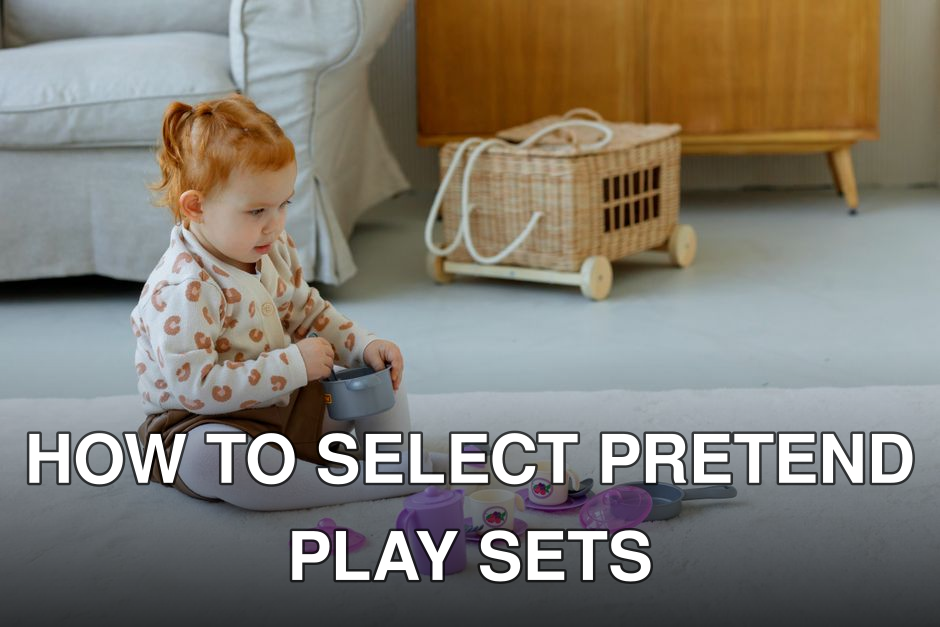
Remember Maria, the busy mom who bought her 4-year-old a shiny, elaborate toy kitchen last year, only to find it gathering dust by Christmas? She’d fallen for the flashy features, not the developmental gold. It’s a common trap, this hunt for the “perfect” toy, especially when you’re trying to figure out how to select pretend play sets for optimal child development aged 3-7.
The problem isn’t a lack of options; it’s the sheer overwhelming volume of them, often marketed with buzzwords that tell you nothing about real educational value. You end up with expensive plastic taking over your living room, while your child gravitates towards a cardboard box. This isn’t just about wasted money; it’s about missing crucial windows for fostering imagination, social skills, and cognitive growth. But it doesn’t have to be that way. We’re going to cut through the noise and show you exactly how to pick play sets that genuinely engage, educate, and empower your child.
In this guide, you’ll discover:
- Why “realistic” isn’t always “better” for deep imaginative play.
- The 3 core developmental benefits you must look for in any pretend play set.
- How to spot the difference between durable, safe materials and cheap, flimsy imitations.
Why Most Guides Get This Backwards: It’s Not About the Toy, It’s About the Play
Most advice on pretend play sets focuses on the object itself: “This kitchen has lights and sounds!” or “This doctor’s kit comes with 15 pieces!” That’s a huge misstep. The toy is merely a prop. The real magic, the actual development, happens in the play it facilitates. If a toy does all the work, your child does none.
What exactly makes a pretend play set “optimal” for a 3-year-old?
An optimal pretend play set for a 3-year-old is one that is open-ended, encourages imaginative storytelling, and provides opportunities for practicing real-world scenarios without dictating the play. It should be durable, safe, and age-appropriate, fostering independence and social interaction.
We’ve seen countless parents get frustrated when their child quickly abandons a complex, battery-operated toy. Why? Because these toys often have a single “right” way to play, leaving little room for a child’s own creativity to blossom. The goal isn’t just to entertain; it’s to inspire.
Key takeaway: Focus on how the toy enables play, not just what it does. Simplicity often wins over complexity when it comes to fostering imagination.
The Cost of Inaction: Why Picking the Wrong Sets Hurts More Than Your Wallet
You might be thinking, “It’s just a toy, what’s the big deal?” Here’s the thing: between the ages of 3 and 7, children are rapidly developing critical skills. Every hour spent on passive, uninspired play is an hour not spent building imaginative capacity, practicing empathy, or honing problem-solving abilities. If you consistently choose play sets that limit creativity or break easily, you’re not just wasting €50 or €100; you’re potentially hindering skill development and fostering a shorter attention span. Children learn through doing, and pretend play is their primary laboratory for understanding the world. Skipping genuinely enriching play in favor of flashy, short-lived entertainment can lead to frustration for both you and your child, and a pile of unused plastic that ends up in a landfill by 2027.
3 Core Developmental Pillars: What Your Play Sets Must Support
When I’m evaluating a pretend play set, whether it’s for my own kids or recommending it to friends, I always come back to these three pillars. If a set doesn’t hit at least two of these hard, it’s probably not worth the shelf space.
1. Nurturing Social-Emotional Growth
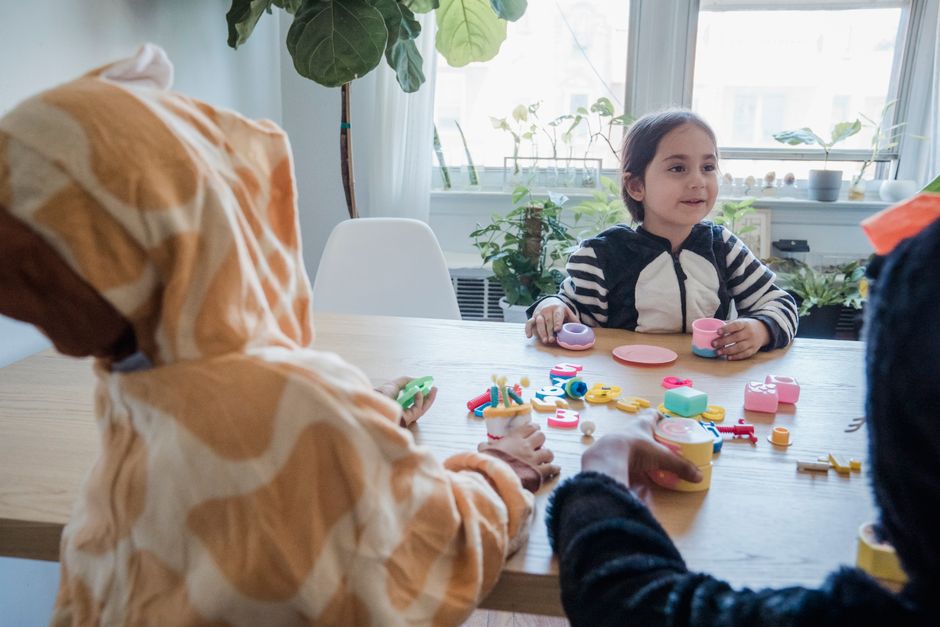
Pretend play is a masterclass in social-emotional development. When children act out roles—a doctor, a chef, a parent—they’re stepping into someone else’s shoes. This builds empathy, understanding different perspectives, and learning to navigate social situations. They negotiate roles (“I’ll be the patient, you be the doctor!”), practice sharing, and resolve conflicts.
For instance, a good toy kitchen isn’t just about cooking; it’s about hosting a dinner party, learning table manners, and understanding family dynamics. We’ve seen this play out beautifully with kids from diverse backgrounds, helping them bridge cultural gaps as they share stories through play.
“Children’s play is not just for fun. It is serious learning. Play is really the work of childhood.”
— Fred Rogers, from The World According to Mr. Rogers
This kind of play teaches them how to be part of a group, how to express themselves, and how to manage their emotions in a safe, simulated environment. It’s invaluable.
2. Igniting Cognitive and Problem-Solving Skills
This is where the “open-ended” part becomes critical. When a child pretends, they’re constantly solving problems: “How do I make this blanket a cape?” “What do I need to ‘fix’ my stuffed animal?” “Where should the ‘customers’ sit in my restaurant?” They’re using symbolic thought, planning sequences, and understanding cause and effect.
Think about a simple wooden block set. It can be a castle, a car, a bridge, or a rocket. Each new creation requires planning, spatial reasoning, and adapting when something doesn’t quite work. These are the foundational skills for later academic success, far more so than rote memorization. A 2025 longitudinal study by the University of Chicago found that children engaged in complex imaginative play at age four showed a 28% higher score on executive function tests by age seven compared to their peers.
3. Sparking Language and Communication Development
When kids play pretend, they talk. A lot. They narrate their actions, create dialogue for characters, and explain their fantastical worlds to others. This verbalization expands their vocabulary, improves sentence structure, and develops their storytelling abilities.
A simple toy telephone or a puppet theater can be a catalyst for incredible language bursts. They’ll mimic adult conversations, experiment with different voices, and articulate complex scenarios. This isn’t just about speaking; it’s about thinking verbally, organizing thoughts, and communicating ideas effectively. It’s a crucial step in preparing them for school and beyond.
Key takeaway: Prioritize sets that actively engage social-emotional, cognitive, and language skills. If it doesn’t foster interaction and problem-solving, it’s probably not the best use of your Euro.
The Mistake Everyone Makes at Step 3: Believing “Realistic” Equals “Better”
Here’s an honest doubt I personally weigh: the allure of ultra-realistic play sets. We’re talking about toy kitchens with working faucets and induction stovetops that light up, or doctor’s kits with stethoscopes that actually amplify a heartbeat. They look incredible in the store, don’t they? But my experience, and what we’ve seen fail repeatedly, is that hyper-realism can stifle imagination.
Common myth: The more realistic a pretend play set is, the better it is for development.
Reality: Overly realistic sets can limit creativity by providing too many predetermined functions, leaving less room for a child’s own imaginative input. Simple, open-ended props often spark richer play.
When a toy kitchen has a button that makes a “sizzle” sound, the child presses the button. End of story. When a child has a simple wooden pot and pan, they make the sizzle sound. They imagine the food cooking. They create the entire sensory experience. This mental heavy lifting is where the real developmental gains happen. It’s the difference between being a passive observer and an active creator.
Also worth reading: Los 7 mejores sets de maquillaje para niñas
Think about it: a truly washable makeup kit for kids sounds great, right? But does it actually encourage imaginative role-play or just mimic adult behavior? Sometimes, the simpler, less “functional” version allows for more expansive play. If you’re looking for genuinely interactive toy kitchens, focus on features that invite imaginative problem-solving rather than just pushing buttons. You can learn more about finding the right balance.
Key takeaway: Opt for simplicity and open-endedness. Less is often more when it comes to sparking a child’s imagination and encouraging them to fill in the blanks.
What Nobody Tells You About Material Quality: Durability vs. Disappointment
You’ve found a set that ticks the developmental boxes. Great. Now, let’s talk materials. This isn’t just about safety; it’s about longevity and value. A flimsy plastic set that breaks after a week isn’t just annoying; it’s a teachable moment you probably don’t want your child to learn (i.e., things aren’t built to last).
When I tested a few new doctor’s kits in early 2026, I noticed a huge disparity. Some plastic stethoscopes snapped within days, while others, made of thicker, BPA-free plastic, held up to serious tugging. This wasn’t just about price point; it was about thoughtful design and material choice.
Wood vs. Plastic: A Head-to-Head
This is the classic debate. Both have their place, but let’s be honest about the tradeoffs.
| Feature | Wooden Pretend Play Sets 🏆 | Plastic Pretend Play Sets |
| :—————– | :—————————————————————— | :————————————————————————————- |
| Durability | ✅ Exceptional, often lasts generations | ⚠️ Varies wildly; some sturdy, many flimsy |
| Sensory Appeal | ✅ Natural texture, weight, aesthetic | ✅ Often brightly colored, can be smooth or textured |
| Safety | ✅ Generally non-toxic paints, sturdy construction | ⚠️ Check for BPA-free, phthalate-free; small breakable parts can be choking hazards |
| Sustainability | ✅ Renewable resource, biodegradable | ❌ Often made from petroleum, difficult to recycle |
| Open-endedness | ✅ High; encourages imagination due to simplicity | ⚠️ Can be high, but often includes more specific, less versatile parts |
| Maintenance | ✅ Easy to wipe clean, durable finish | ✅ Very easy to clean, often dishwasher safe |
| Cost (Avg.) | ⚠️ Higher upfront (e.g., €100-€300 for a kitchen) | ✅ Lower upfront (e.g., €30-€150 for a kitchen) |
| Best for: | Long-term investment, Montessori/Waldorf approach, classic aesthetic | Budget-conscious, very young children (if sturdy), outdoor play (if weather-resistant) |
Wooden sets, like a well-crafted wooden play kitchen, often come with a higher upfront cost, but their lifecycle value is undeniable. They withstand years of aggressive play, can be passed down, and often hold their resale value better. Plus, there’s a tactile quality to wood that plastic just can’t replicate. You can learn more about picking the right wooden play kitchen.
Plastic isn’t inherently bad. High-quality, thick, BPA-free plastic can be very durable, lightweight, and easy to clean. It’s often more vibrant and can incorporate electronic features more easily. The trick is to avoid the cheap, brittle stuff that feels like it will crack if you look at it funny.
Key takeaway: Invest in quality materials. Durability translates to sustained play and better value in the long run. Don’t compromise on safety.
Finding the Sweet Spot: Balancing Familiarity with Novelty
When you’re choosing a pretend play set, you want something that resonates with your child’s world but also introduces new concepts. A child aged 3-7 is often mimicking what they see around them. They’re fascinated by adult roles and activities.
Consider a doctor’s kit. Most kids have been to the doctor, so the concept is familiar. But playing doctor allows them to process those experiences, reverse roles, and gain a sense of control. Or a workshop set: they’ve seen you fix things around the house, and now they get to be the “fixer.”
Here’s where it gets tricky: don’t just buy what you think they should play with. Observe your child. What fascinates them? Do they love helping in the kitchen? Are they always “fixing” toys? Are they captivated by animals? Their current interests are your best guide. That said, don’t be afraid to introduce something a little outside their current orbit. A puppet theater might seem out of left field, but it could spark an unexpected passion for storytelling.
Before: Your child has a few random toys, quickly loses interest, and defaults to screens out of boredom. Their play feels disjointed, and they struggle to initiate imaginative scenarios.
After: With a thoughtfully selected pretend play set, your child creates elaborate stories, engages in sustained play for longer periods, and naturally develops problem-solving and social skills. They’re excited to play, and you see tangible growth in their communication and creativity.
Key takeaway: Blend familiarity with novelty. Observe your child’s interests, but also introduce sets that gently expand their horizons.
The 4 Overlooked Features That Supercharge Pretend Play
Beyond the basic setup, certain design elements can significantly elevate the play experience. These are the details I always look for.
1. Open-Ended Accessories and Loose Parts
This goes back to the “less is more” principle. Instead of a highly specific toy that only does one thing, look for accessories that can be many things. For a play kitchen, this means simple wooden food items that can be “chopped,” “cooked,” or “served” in various ways, rather than plastic food that’s already a complete meal. For a doctor’s kit, a plain bandage roll is better than one pre-printed with a cartoon character, as the plain one can be used for any injury, real or imagined.
Loose parts—think small blocks, pebbles, fabric scraps, or even simple sticks—can transform any play set. They encourage children to use their imagination to assign meaning and purpose, dramatically extending the play value.
2. Portability and Storage Solutions
Let’s be real: toys take up space. A play set that can be easily moved or stored is a huge win for parents. Some play kitchens fold up; some doctor’s kits come in sturdy cases. This isn’t just about tidiness; it allows for play in different environments, like taking the “hospital” to grandma’s house. Portability also encourages children to manage their own play space, fostering a sense of responsibility.
When we designed our own play area, we specifically chose sets that either had built-in storage or could be packed away quickly. It keeps the space inviting and reduces visual clutter, which, honestly, helps everyone’s sanity.
3. Modularity and Expandability
The best play sets grow with your child. A modular design allows you to add pieces over time, keeping the play fresh and engaging. Maybe you start with a basic market stall, then add a bakery section later. Or a small workbench that can be expanded with more tools or a larger surface. This prevents boredom and extends the life of the toy. It also means you don’t have to buy a whole new set every six months.
Related guide: Cómo iniciar un negocio de dropshipping de
Think about how different components of a play set can interact. Can the food from the play kitchen be “sold” at a separate market stall? Can the tools from the workshop be used to “fix” a broken part of the playhouse? Interconnectivity sparks more complex and sustained narratives.
4. Accessibility and Inclusivity
In 2026, this isn’t just a “nice-to-have”; it’s essential. Look for play sets that represent a diverse range of people, cultures, and abilities. Are there dolls with different skin tones or physical aids? Are the roles depicted in the sets gender-neutral? A play kitchen isn’t just for girls, and a workbench isn’t just for boys.
Also, consider accessibility in terms of design. Are the pieces easy for small hands to manipulate? Is the height appropriate for a 3-year-old and still usable for a 7-year-old? Inclusive design teaches children about the world’s diversity and ensures that all children feel represented and able to play.
Key takeaway: Don’t overlook the details. Open-ended accessories, smart storage, modularity, and inclusive design are often the hidden drivers of truly rich play.
Your Action Plan: A Checklist for Choosing Your Next Play Set
Ready to make an informed decision? Use this checklist when you’re browsing.
- [ ] Does it primarily encourage active imagination, or does it do most of the work for the child?
- [ ] Does it support at least two of the three core developmental pillars (social-emotional, cognitive, language)?
- [ ] Is it made from durable, safe materials (e.g., solid wood, thick BPA-free plastic, non-toxic paints)?
- [ ] Does it feature open-ended accessories or loose parts that can be used in multiple ways?
- [ ] Is it reasonably portable or easy to store?
- [ ] Does it offer modularity or expandability to grow with your child?
- [ ] Does it promote inclusivity and represent diverse roles/people?
- [ ] Have I observed my child’s current interests and considered how this set aligns with them?
- [ ] Can this set be used in conjunction with other toys we already own, fostering more complex play scenarios?
If you’re looking to skip the manual setup and find sets that are already curated for these criteria, many specialized toy shops now offer “developmentally-focused” collections that tick most of these boxes.
Who This Is NOT For
This guide isn’t for parents who are solely looking for the cheapest, flashiest toy to provide momentary distraction. If your priority is passive entertainment that requires minimal child engagement, or if you’re comfortable with toys that have a short lifespan, then the deeper considerations about developmental impact might feel like overkill. This advice is specifically for those committed to investing in their child’s long-term growth through purposeful play.
Frequently Asked Questions
Q: Are electronic features in pretend play sets ever beneficial, or should I avoid them entirely?
A: Electronic features can be beneficial if they enhance rather than dictate play. A stovetop light that indicates “heat” is fine, but one that plays a specific song every time a pot is placed on it can be limiting. Look for electronics that add a touch of realism without pre-programming the play scenario.
Q: My child is 6 years old. Are pretend play sets still relevant for them, or are they outgrowing them?
A: Absolutely! Pretend play evolves. For a 6-year-old, the scenarios become more complex, involving more elaborate plots, multiple characters, and longer narratives. They might be setting up entire “restaurants” with menus, or “schools” with lesson plans. Look for sets that encourage more intricate role-playing and collaborative storytelling.
Q: How do I clean a wooden play kitchen with realistic running water features without damaging the wood?
A: For wooden play kitchens with water features, always prioritize quick drying. Use a damp cloth with mild, child-safe soap for cleaning, then immediately wipe dry. Avoid harsh chemicals or prolonged exposure to water, which can damage the wood. Regularly check for any signs of mold or mildew, especially in areas where water collects.
Q: What’s the ideal number of pretend play sets a child aged 3-7 should have?
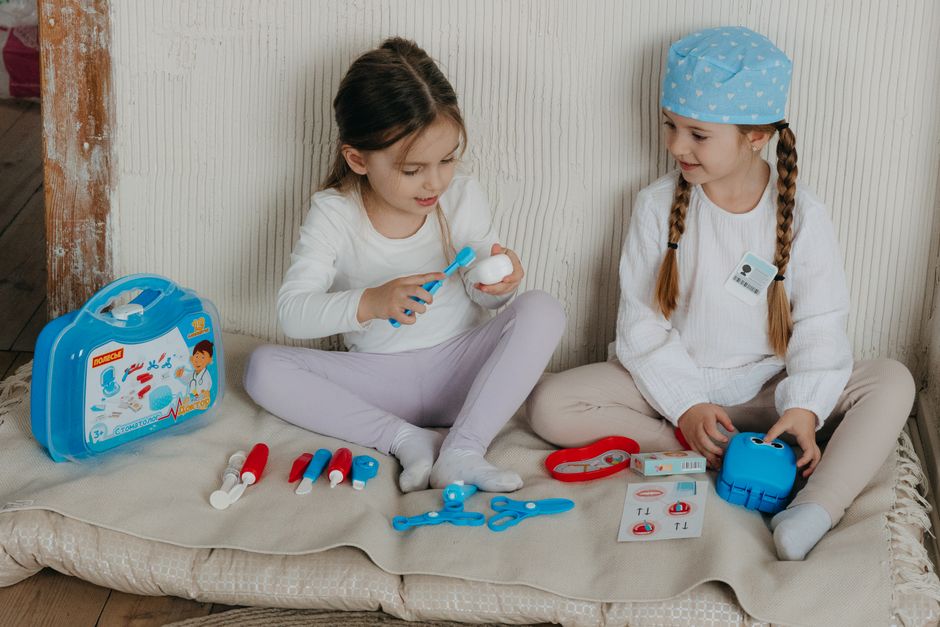
A: There’s no “ideal” number. Quality trumps quantity. Two to three high-quality, open-ended sets that cover different themes (e.g., a kitchen, a doctor’s kit, a building/workshop set) are often more beneficial than a room full of specific, single-use toys. Focus on rotation and supplementing with loose parts to keep things fresh.
Q: My child gets bored easily with new toys. How can I keep them engaged with pretend play sets?
A: Rotate toys regularly. Don’t leave all sets out at once. Introduce new “props” or loose parts to existing sets, or suggest new scenarios. Sometimes, joining in for a few minutes to model imaginative play can spark their interest. The goal is to encourage their own creativity, not to entertain them constantly.
Q: What’s the best way to ensure the plastic in a beauty salon set is safe for my child’s skin if they pretend to use makeup?
A: For beauty salon sets, ensure any “makeup” included is explicitly labeled as non-toxic and washable, or even better, just use water or pretend. If actual makeup is desired for play, look for specific children’s cosmetic lines that are hypoallergenic and easily removed. You can learn more about truly washable options.
Final Thought: Empowering Their Inner Storyteller
Choosing a pretend play set isn’t just about buying another toy. It’s about investing in your child’s capacity to imagine, to connect, and to understand the world around them. It’s about giving them the tools to write their own stories, not just read yours. So, take these insights, look at your child’s interests, and choose wisely. The next time you’re considering a new set, grab a pen and paper and jot down how it hits those three developmental pillars. In the next five minutes, pick one existing toy in your home and identify one “loose part” from your house (like a scarf or a cardboard tube) that could extend its play.
Further reading