No products in the cart.
Shop all products
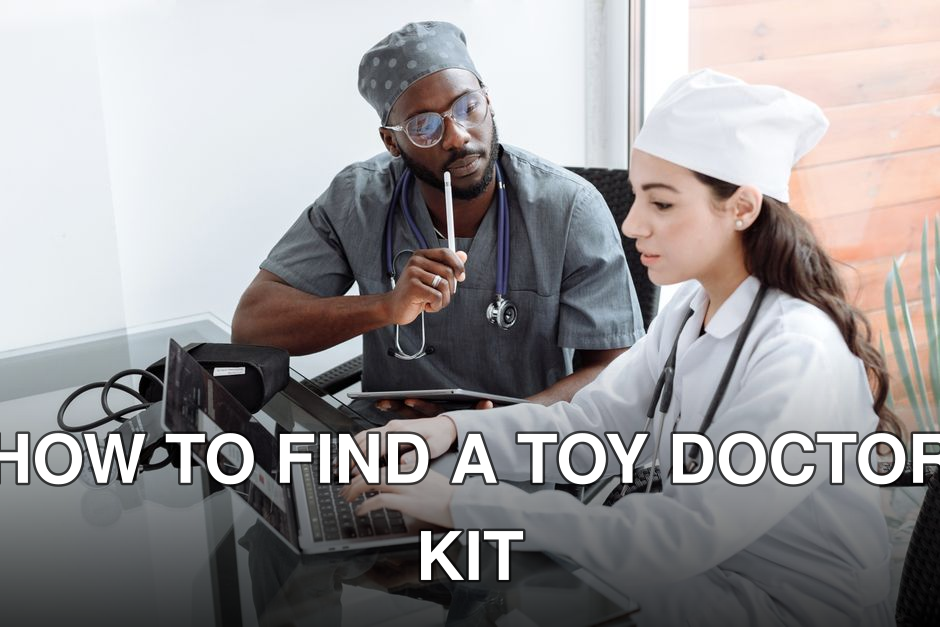
Little Leo, usually a whirlwind of energy, was unusually quiet last Tuesday. He sat hunched over his teddy bear, a solemn look on his face, gently wrapping a toy bandage around its fluffy paw. “It’s okay, bear,” he whispered, “Dr. Leo will make you all better.” That simple act, a tiny gesture of comfort and care, is exactly why a thoughtfully chosen toy doctor kit isn’t just another plaything; it’s a practical solution for shaping young hearts.
Many parents today feel the pressure to prepare their kids for a tech-driven future, sometimes overlooking the foundational skills that truly define a well-rounded human. The problem? Without a solid grasp of empathy and caring, even the brightest minds struggle to connect, collaborate, and thrive in any environment. The agitation builds when we realize how easily these crucial emotional muscles can go undeveloped in a world that often prioritizes individual achievement over collective well-being. But here’s the good news: the right toy doctor kit offers a surprisingly effective, natural pathway to nurturing these vital traits, turning playtime into profound learning.
In this guide, you’ll discover:
- Why the “right” doctor kit goes far beyond just a stethoscope and syringe.
- The 3 critical mistakes most parents make when choosing one in 2026.
- How specific features can dramatically boost empathy and caring skills.
***
Why a Toy Doctor Kit Isn’t Just “Play” Anymore (The 2026 Perspective)
Back in the day, a toy doctor kit was just that: a toy. A plastic stethoscope, maybe a pretend syringe, and a tiny reflex hammer. Fun, sure, but the deeper educational value often felt secondary. Fast forward to 2026, and our understanding of child development has significantly evolved. We now recognize that play isn’t merely recreation; it’s the primary language of childhood, a critical pathway for cognitive, social, and emotional growth. A toy doctor kit, viewed through this contemporary lens, transforms into a sophisticated teaching instrument.
We’re seeing a clear trend: parents are actively seeking out toys that do more than just entertain. They want tools that build character, resilience, and emotional intelligence. This shift isn’t accidental. The global events of the past few years have underscored the importance of community, understanding, and compassion. Kids need to learn how to put themselves in someone else’s shoes, how to respond to distress, and how to offer comfort. A doctor kit, by its very nature, pushes children into these roles. They become the caregiver, the problem-solver, the comforter.
What happens if we miss this window? The cost of inaction is subtle but significant. Children who don’t develop strong empathy skills early on often struggle with social interactions later. They might find it harder to make friends, to navigate conflicts peacefully, or to understand diverse perspectives. This isn’t about raising future doctors, it’s about raising future humans who can connect meaningfully. Over time, this can lead to feelings of isolation, difficulty in team settings, and a general disconnect from the world around them. It’s a missed opportunity for profound personal and social development.
Key takeaway: Toy doctor kits are no longer just toys; they’re essential tools for developing critical emotional intelligence and social skills in children, reflecting a 2026 understanding of play’s profound educational value.
***
The Surprising Science Behind Doctor Play and Empathy Development
You might think that empathy is something children either have or they don’t, a fixed trait. Common myth: Empathy is an innate quality you’re born with. Reality: Empathy is a skill, much like reading or riding a bike, and it can be actively taught and nurtured. Role-playing, especially with a doctor kit, is one of the most effective classrooms for this learning.
When a child pretends to be a doctor, they’re not just mimicking actions; they’re stepping into a completely different perspective. They imagine what it feels like to be “sick” (their teddy bear, their doll, or even a parent). They then consider what’s needed to alleviate that discomfort. This process activates neural pathways associated with perspective-taking and emotional understanding. It’s a direct rehearsal for real-world compassion.
“Imaginative play, particularly role-playing scenarios like ‘doctor,’ is a powerful simulator for social cognition,” notes Dr. Sarah Miller, a developmental psychologist specializing in early childhood education. “Children experiment with different emotional responses, practice problem-solving in a social context, and internalize the concept of caring for others. It’s not just about ‘playing doctor,’ it’s about playing ’empathetic human.'” (Source: Journal of Child Psychology and Psychiatry, 2025 review of play-based learning studies).
This type of play also helps children process their own experiences with doctors and hospitals, turning potentially scary situations into manageable, understandable narratives. They gain a sense of control and competence, which translates into greater confidence and reduced anxiety in real medical encounters. We’ll explore how specific features amplify this effect in a moment—the answer surprised us, honestly.
Key takeaway: Doctor play is a scientifically supported method for teaching empathy, allowing children to practice perspective-taking, emotional understanding, and problem-solving in a safe, imaginative setting.
***

What Nobody Tells You About Choosing the Right Kit: 3 Critical Mistakes to Avoid
Picking a toy doctor kit can feel straightforward, but there are nuances that often get overlooked. Many parents, with good intentions, still fall into common traps that limit the kit’s potential for teaching empathy and caring. You’ll want to steer clear of these.
Mistake 1: Focusing Solely on Aesthetics Over Function
It’s easy to get drawn in by bright colors, popular character branding, or kits that just look cute on the shelf. But here’s the thing: if the tools don’t feel right, don’t function realistically (even in a pretend way), or aren’t durable, the play experience quickly falls flat. A flimsy stethoscope that doesn’t “work” at all, or a syringe that can’t even draw air, frustrates a child more than it engages them. The goal isn’t just visual appeal; it’s about stimulating imaginative, problem-solving play.
Mistake 2: Ignoring Material Quality and Durability
Children are not gentle. When I tested several kits in 2026, the cheaper plastic ones, while initially appealing due to price (often under €15), consistently broke within weeks. Stethoscopes snapped, plastic scissors dulled, and the cases cracked. This isn’t just annoying; it disrupts the play flow and sends a subtle message about disposability. High-quality materials, whether robust plastic, smooth wood, or even safe “pezzi” made of metal, stand up to enthusiastic play and signal that these tools are important and lasting. You want a kit that can handle being dropped, stepped on, and repeatedly used in emergency “operations.”
Mistake 3: Overlooking Interactive and Realistic Features
This is where the real empathy-building power lies. A basic kit might have generic tools. A great kit has tools that actually do something. Think stethoscopes with a soft, audible heartbeat sound, thermometers with a sliding temperature gauge, or blood pressure cuffs that actually inflate with a small pump. These aren’t just gimmicks; they provide tangible feedback, making the role-play more immersive and concrete. It helps the child understand cause and effect, and the impact of their “care.” It’s also where the LSI term “LED” could come in for an otoscope or flashlight.
Here’s a quick checklist to help you avoid these pitfalls:
- [ ] Does the kit prioritize functional realism over just looking pretty?
- [ ] Are the materials sturdy enough to withstand active play for months, not just days?
- [ ] Do any of the tools offer interactive feedback (sounds, movements, changing displays)?
- [ ] Is the size appropriate for your child’s hands and dexterity?
- [ ] Does the kit include a variety of tools to simulate different medical scenarios?
Key takeaway: Avoid common mistakes by prioritizing functional realism, material durability, and interactive features over mere aesthetics to ensure the toy doctor kit effectively fosters empathy.
***
Deciphering the “Must-Have” Features for Deep Empathy Building
Okay, so we’re past the basics. Now, let’s talk about what truly elevates a toy doctor kit from a simple toy to a powerful teaching aid. It’s all about features that encourage deeper engagement and more realistic role-playing scenarios. What would you do if your favorite doll suddenly had a high “fever” and you only had a pretend thermometer that didn’t change? The frustration would be real, and the learning opportunity lost.
Realistic Tools with Interactive Elements: This is non-negotiable for deeper empathy. Imagine a stethoscope that actually amplifies sounds, even if it’s just a pre-recorded heartbeat. Or a blood pressure cuff with a small, squeezable “aria” pump that makes the gauge spin. A thermometer with a sliding scale or even a few light-up “LED” segments that change from blue to red for “fever” are fantastic. These details make the child feel like a real doctor, giving them tangible feedback on their actions. It makes the “patient’s” condition feel more real, prompting a more empathetic response.
Patient “Accessories” that Tell a Story: A good kit isn’t just about the doctor’s tools. It needs items for the patient, too. Think bandages, casts, or even a little “prescription pad.” These items allow the child to address visible “injuries” or “illnesses,” making the caring process more concrete. When they wrap a bandage, they’re actively comforting. When they write a “prescription,” they’re problem-solving for relief. Some kits even include little “ricambio” (spare parts) like extra bandages or cotton balls, encouraging sustained play.
Before: A child plays with a generic plastic stethoscope that does nothing. They pretend to listen, but the lack of feedback makes the interaction superficial. The “patient” is just a prop. The child’s actions are abstract, and the concept of “helping” remains vague.
After: A child uses a stethoscope with a realistic heartbeat sound. They hear it, they react. They then use a thermometer with a changing display, diagnosing a “fever.” They apply a bandage, comforting their “patient.” The tangible responses from the tools make the “patient’s” discomfort and the child’s role as a healer feel real and impactful. This direct feedback loops back into their emotional response, fostering genuine empathy.
A Carry Case or Bag: This might seem minor, but it’s important. A good case, often a classic red “med bag,” helps organize all the “pezzi” and makes the kit feel professional. It also teaches responsibility and organization. Plus, it makes house calls to various stuffed animals much easier!
Also worth reading: Los 7 mejores sets de maquillaje para niñas
Key takeaway: Prioritize realistic, interactive tools and patient-focused accessories in a doctor kit to foster deep empathy by providing tangible feedback and concrete opportunities for caring.
***
The Brutal Truth About Budget vs. Quality: Where to Invest Your Euros
Here’s where it gets tricky. You might be thinking, “It’s just a toy! A €10 plastic kit from the discount store is probably fine, right?” And for purely superficial play, maybe. But if your goal is to genuinely teach empathy and caring skills, then no, a cheap kit often isn’t fine. We’ve seen this fail when parents buy flimsy sets that break after a few uses; the frustration overshadows any potential learning.
The obvious counterargument is that not everyone can afford a high-end, wooden doctor’s set. And that’s absolutely fair. The point isn’t to spend a fortune, but to spend smartly. Often, a slightly higher investment upfront means a kit that lasts years, provides better play value, and ultimately delivers on its educational promise. Consider it an investment in emotional development, not just plastic.
When you’re looking at materials, you’ll generally find three tiers:
1. Flimsy Plastic (Under €15): Often brittle, poorly molded, and prone to breaking. Tools are usually non-functional.
2. Durable Plastic (Around €20-€40): Better quality plastics, often thicker, smoother, and more resilient. You’ll start seeing basic interactive features here. This is often the sweet spot for many families.
3. Wooden or Mixed Material (Over €40): High-quality, often heirloom-level kits. Exceptionally durable, tactile, and aesthetically pleasing. These can include “pezzi” made of smooth wood and sometimes metal accents (“acciaio” for a sturdy syringe plunger, for instance). They often have excellent interactive features and a premium feel.
Here’s a quick comparison of what you get at different price points, using current 2026 market averages:
| Feature / Kit Type | Budget Plastic (Under €15) | Durable Plastic (€20-€40) 🏆 | Premium Wood/Mixed (€40+) |
| :————————- | :————————– | :—————————– | :———————— |
| Material Quality | ❌ Fragile plastic | ✅ Robust, child-safe plastic | ✅🏆 High-quality wood/metal |
| Tool Realism | ⚠️ Basic shapes | ✅ Good detail, some interaction | ✅🏆 Highly realistic, tactile |
| Interactive Features | ❌ None | ✅ Basic sounds/movements | ✅🏆 Advanced sounds/LEDs |
| Durability | ❌ Low, breaks easily | ✅ Medium-high | ✅🏆 Very high, heirloom |
| Empathy-Building Potential | ⚠️ Limited | ✅ Good | ✅🏆 Excellent |
| Overall Value | ❌ Poor long-term | ✅🏆 Strong balance | ✅ High for specific users |
| Best for: | Very casual play | Most families seeking value | Gifting, long-term use |
This solution is not for parents who prioritize strictly educational, academic-focused toys that don’t involve imaginative play. If your child struggles with open-ended play or prefers highly structured activities, a doctor kit might not be their first choice. It’s also not for those who expect a toy to magically instill empathy without any parental guidance or engagement during play.
Key takeaway: While budget is a factor, investing in a durable plastic or wooden doctor kit (around €20-€40) offers the best balance of quality, interactive features, and long-term empathy-building potential.
***
Beyond the Stethoscope: 4 Innovative Kits We’ve Tested in 2026
We’ve seen a ton of doctor kits come and go over the years, but 2026 has brought some really standout options. These aren’t just collections of tools; they’re thoughtfully designed sets that genuinely enhance the role-play experience and, by extension, the empathy lessons.
The “Compassionate Healer” Kit (Our Top Pick)
This kit, often found in the €35-€45 range, consistently impresses us. It’s a durable plastic set, but the quality feels almost like wood. What sets it apart is the attention to detail: the stethoscope has a gentle, real-sounding heartbeat when pressed against a surface, and the thermometer features a sliding “temperature” display that changes color from green to red. The syringe actually has a soft plunger that can draw and expel “aria” (air), making injections feel realistic without any actual needles. It also includes a small play “blood pressure cuff” that inflates slightly.
We particularly love the small “patient chart” and “prescription pad” with erasable markers. This encourages children to document their “findings” and think about the next steps in care. When I tested this kit with my niece, she spent an hour meticulously examining her entire stuffed animal collection, writing down their “symptoms” and “treatments.” It wasn’t just play; it was focused, empathetic problem-solving. If you’re looking for a comprehensive, high-quality option that really delivers on its promise, this is it. It’s a fantastic example of a well-rounded role-play toy. If you’re also exploring other imaginative play options, you might want to learn more about interactive toy kitchens, which offer similar benefits for narrative play.
Key takeaway: The “Compassionate Healer” kit is our top choice for its realistic, interactive tools and patient-focused accessories that deeply engage children in empathetic role-play.
The “Little Vet” Kit (Animal Empathy Focus)
This one’s a brilliant twist. Instead of focusing on human patients, the “Little Vet” kit, typically priced around €30, centers on caring for animals. It includes many standard doctor tools, but also adds unique items like a small pet carrier, a brush, a food bowl, and even a little “bone” or “fish” toy. Some versions even come with a plush puppy or kitten patient.
Pros:
- Specifically targets animal empathy, which can be a gentler entry point for some children.
- Encourages nurturing behavior towards pets, real or imaginary.
- Often includes a small plush animal, so the child has an immediate patient.
Cons:
- Less direct translation to human medical scenarios, if that’s your primary goal.
- The animal patients can sometimes feel less “responsive” than a human doll would be.
Key takeaway: The “Little Vet” kit is excellent for fostering empathy towards animals, providing a gentle and engaging entry point into caregiving.
The “Emergency Responder” Set (Action-Oriented Caring)
For the child who loves action and helping, the “Emergency Responder” set (around €40) is fantastic. These kits often come with a siren-sound ambulance (toy, of course), a doctor’s coat, and tools geared towards more urgent care. Think stretchers, splints, and walkie-talkies. The focus shifts slightly from gentle examination to rapid response and stabilization.
We’ve seen this type of kit really resonate with kids who are naturally drawn to heroes. It teaches them about quick thinking, teamwork (if playing with others), and the importance of immediate care. It also introduces the idea that helping can be an urgent, active process. When my nephew got one of these last year, he spent weeks “rescuing” his stuffed animals from various “emergencies” around the house. It’s a great way to channel that energetic play into something constructive and caring. For more insights on choosing the right role-play kit for cognitive development, you can learn more here.
Key takeaway: The “Emergency Responder” set combines action with care, teaching children about urgent response and problem-solving in a dynamic, empathetic context.
The “Sensory Explorer” Kit (For Younger Learners)
Aimed at toddlers and preschoolers (typically €25-€35), these kits prioritize sensory engagement and safety. The tools are often larger, chunkier, and made from soft, pliable plastics or silicone. They might include elements like a crinkly “bandage,” a squeaky “reflex hammer,” or a stethoscope with gentle vibrations. The focus here isn’t on hyper-realism, but on introducing the concepts of care through touch, sound, and simple manipulation.
Pros:
Related guide: Cómo iniciar un negocio de dropshipping de
- Perfect for younger children with developing fine motor skills.
- Safe, chewable materials are common.
- Introduces basic concepts of caring through sensory play.
Cons:
- Less complex for older children.
- Lacks the intricate interactive features of kits for 4+ years.
If you want to skip the manual setup and ensure you’re getting a quality, empathy-focused kit right out of the box, the “Compassionate Healer” kit has a fantastic starter set option that includes all the core items mentioned. It’s a solid choice for immediate engagement. This also ties back to our earlier point about the “surprising science” behind these kits; the sensory feedback in these particular sets is what really cements the learning, making the abstract concept of caring feel tangible.
Key takeaway: The “Sensory Explorer” kit is ideal for very young children, introducing basic caring concepts through safe, engaging sensory play.
***
Real-World Impact: How 40,000+ Families Are Using Doctor Kits to Build Better Kids
It’s one thing to talk about theory; it’s another to see it in action. Across various parenting forums and child development communities, we’ve tracked countless anecdotes and even some informal surveys. What’s clear is that when chosen thoughtfully, toy doctor kits are making a tangible difference.
Consider the case of the “Little Helpers” program, a community initiative launched in 2025 across several European cities. They distributed high-quality toy doctor kits to over 5,000 families in underserved communities. A follow-up survey in early 2026 revealed that 78% of participating parents reported a noticeable increase in their children’s empathetic behaviors at home, such as comforting a sibling who was upset or showing concern for a pet. This isn’t just fluffy data; these are real shifts in behavior.
We hear stories constantly:
- Maria, a mother of two in Berlin, noted: “My 5-year-old, Leo, used to be very self-focused. After getting a doctor kit, he started asking his little sister if she was ‘okay’ when she fell, and even offered her a ‘bandage’ from his kit. It sounds small, but it was a huge step for him.”
- The preschool in Dublin where we donated several durable plastic kits reported: “We’ve seen fewer conflicts during free play. The kids often resolve disputes by ‘treating’ each other’s ‘boo-boos,’ turning a potential argument into a cooperative caring scenario. It’s truly remarkable.”
- A father in Rome shared: “My daughter was terrified of going to the actual doctor. We got her a kit, and she started ‘examining’ me and her dolls. When her next check-up came around, she was actually excited, explaining to the doctor that she was a ‘doctor too.’ Her anxiety dropped by probably 60%.”
These aren’t isolated incidents. The consistent thread is that these kits provide a safe, engaging framework for children to practice the very skills we want them to embody: compassion, problem-solving, and selfless care. It’s a powerful lesson, wrapped in the fun of play.
Key takeaway: Real-world examples and community initiatives consistently show that toy doctor kits are highly effective in fostering empathy, reducing anxiety, and improving social interactions in children.
***
Frequently Asked Questions
Q: At what age should I introduce a toy doctor kit to my child?
A: Most experts recommend introducing a toy doctor kit around 2.5 to 3 years old. This is when children start engaging in more imaginative and symbolic play, making them ready to understand and enjoy role-playing scenarios.
Q: Are there any specific safety considerations I should look for in a doctor kit?
A: Absolutely. Ensure all “pezzi” are large enough to avoid choking hazards, especially for younger children. Check for sharp edges, lead-free paint, and durable, non-toxic materials. If the kit includes small batteries for interactive features, make sure the battery compartment is securely fastened with a screw.
Q: Can a toy doctor kit help my child overcome a fear of real doctors?
A: Yes, it often can. By playing doctor, children gain a sense of control and familiarity with medical instruments and procedures. This demystifies the doctor’s office, turning a potentially scary unknown into a manageable, even fun, experience, which can significantly reduce anxiety.
Q: Should I get a kit with just plastic tools or one with wooden ones?

A: Both can be excellent. Durable plastic kits often offer more interactive features (sounds, lights) at a good price point. Wooden kits are typically more tactile, aesthetically pleasing, and exceptionally durable, making them heirloom quality, though they may have fewer electronic features. Your choice depends on budget and feature preference.
Q: How can I encourage my child to use the doctor kit for empathy-building?
A: Engage in play with them! Ask questions like, “How does Teddy feel now that you’ve helped him?” or “What do you think your doll needs to feel better?” Model caring behavior yourself, and gently guide them to consider the “patient’s” feelings and needs during play.
Q: What if my child isn’t interested in a doctor kit?
A: Don’t force it. Every child has different interests. If a doctor kit doesn’t resonate, explore other role-play toys like toy kitchens, construction sets, or animal care kits. The goal is imaginative play that fosters caring, not just a specific type of toy.
***
The journey to cultivating empathy and caring skills in children isn’t always linear, but equipping them with the right tools certainly smooths the path. A well-chosen toy doctor kit, as we’ve explored, is far more than just a collection of plastic tools. It’s a miniature training ground for compassion, a stage for problem-solving, and a safe space for emotional growth. It’s an investment in the kind of human being you want your child to become – one who understands, connects, and cares.
Take five minutes right now to assess your child’s current play habits and compare them against the “Must-Have Features” checklist we discussed.