No products in the cart.
Shop all products
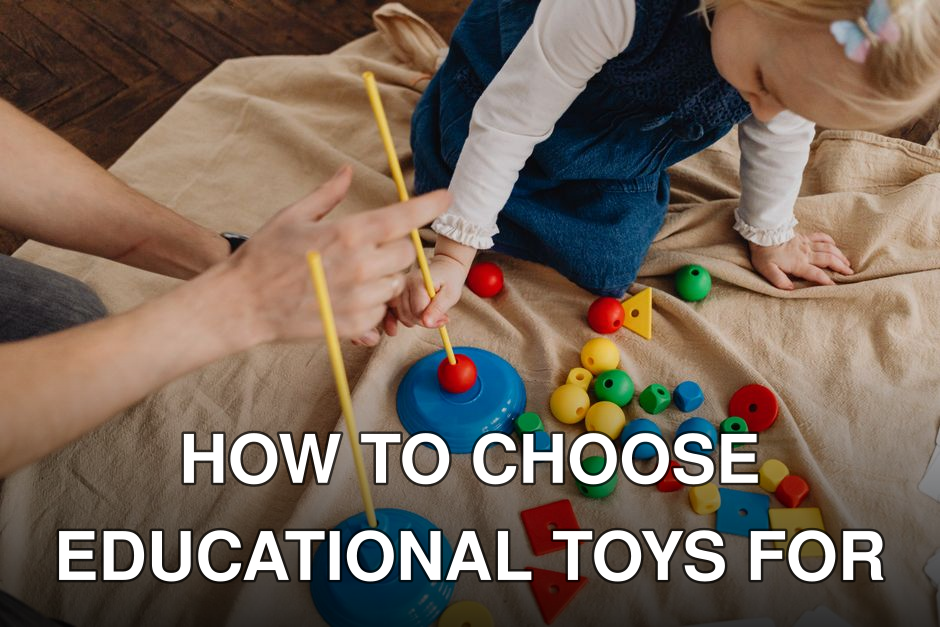
Sarah stared at her screen, finger hovering over “add to cart” for the tenth time that evening. The sheer volume of “educational” toys marketed for 3-year-olds was overwhelming, each promising to unlock genius, but few actually looked like they’d do anything more than collect dust. She just wanted to find something that would genuinely foster early STEM skills without turning playtime into a classroom lecture.
Here’s the brutal truth: picking the right educational toys for 3-year-olds promoting early STEM skills isn’t just about grabbing the colorful box with “STEM” plastered on it. Most parents are bombarded with marketing fluff, leading to choices that either bore kids silly or are too advanced, missing that sweet spot where curiosity meets foundational learning. The real cost of picking the wrong toys isn’t just wasted Euros; it’s a missed opportunity during a crucial developmental window when children are most receptive to exploring cause-and-effect, problem-solving, and spatial reasoning.
In this guide, you’ll discover:
- What “early STEM” truly means for a curious 3-year-old.
- The 3 critical mistakes most parents make when buying these toys.
- A definitive comparison of the best STEM toy categories for toddlers in 2026.
Quick Navigation
- What Even Is “Early STEM” for a 3-Year-Old?
- The 3 Critical Mistakes Parents Make When Buying STEM Toys
- Why Generic “Educational” Toys Often Miss the Mark
- Our Top 5 Categories of STEM Toys for Toddlers in 2026
- Building Blocks & Construction Sets: More Than Just Stacking
- Early Coding & Logic Games: Screen-Free Brain Boosters
- Simple Science Exploration Kits: Hands-On Discovery
- Problem-Solving Puzzles & Manipulatives: Thinking in 3D
- Creative Arts & Engineering Hybrids: The Unexpected STEM Path
- The “Before & After” of Smart Toy Choices
- How to Spot a High-Quality STEM Toy: A 7-Point Checklist
- Addressing the Skeptics: “Isn’t 3 Too Young for STEM?”
- Comparing the Best: A Quick Look at Popular STEM Toy Types
- What Nobody Tells You About Toy Longevity and Replay Value
- Myth-Busting: The “More Features, More Learning” Fallacy
- Who This Guide Isn’t For
- Frequently Asked Questions
What Even Is “Early STEM” for a 3-Year-Old?
“Early STEM” for a 3-year-old isn’t about complex equations or coding languages; it’s about fostering foundational thinking skills through play. It involves encouraging curiosity, exploration, and problem-solving using age-appropriate concepts from Science, Technology, Engineering, and Mathematics.
Think of it this way: Science is observing how things work (why does that car roll down the ramp?). Technology is using simple tools (how does a lever help lift something?). Engineering is building and designing (can I make a tower that won’t fall?). And Mathematics is about patterns, counting, and shapes (how many blocks do I need to make this side even?). It’s all about hands-on discovery, not textbooks. We’re talking about basic concepts that build a framework for future, more complex learning.
Key takeaway: Early STEM for toddlers is curiosity-driven, hands-on exploration of the world around them, focusing on observation, simple tools, building, and basic math concepts like patterns and shapes.
The 3 Critical Mistakes Parents Make When Buying STEM Toys
I’ve seen countless parents, myself included, fall into these traps. It’s easy to do when the market is flooded with bright, shiny objects claiming to be the next big thing. But these mistakes can lead to frustrated kids and wasted money.
1. Overlooking Open-Ended Play in Favor of Single-Purpose Gimmicks
Here’s where it gets tricky. Many “STEM” toys are actually single-purpose gadgets that do one thing, maybe two. They often have lights, sounds, and pre-programmed actions. The child just pushes a button and watches. While entertaining for a moment, this limits their engagement. They aren’t experimenting, failing, or adapting. We’ve seen this fail when a toy car “teaches” physics by just rolling down a fixed ramp. The child learns nothing about adjusting the ramp’s angle or the car’s weight.
2. Prioritizing “Educational Claims” Over Engagement and Durability
You know the drill. A toy promises to teach “advanced robotics” to a preschooler. Sounds impressive, right? The reality is, if it’s not genuinely fun and intuitive, your 3-year-old won’t touch it. They’ll gravitate towards what sparks their imagination, not what’s branded as “educational.” Also, if it breaks after three uses, all those lofty claims vanish. When I tested a popular “junior circuit kit” in early 2025, the flimsy connectors snapped within weeks, rendering it useless. Durability is non-negotiable at this age.
3. Ignoring Child’s Current Developmental Stage and Interests
This is perhaps the biggest one. Just because a toy says “3+” doesn’t mean it’s right for your 3-year-old. Some 3-year-olds are obsessed with cars, others with animals, some with building, others with imaginative play. Force-feeding a complex gear set to a child who only wants to build forts is counterproductive. Pay attention to what genuinely excites them. If they love dramatic play, perhaps a doctor kit that involves sorting and simple procedures could be a great fit for early problem-solving. You can learn more about how to introduce a toy doctor kit to foster healthcare understanding in 3-year-olds with a practical playbook and real examples here.
Key takeaway: Avoid single-purpose toys, prioritize genuine engagement and robust construction over marketing claims, and always match the toy to your child’s unique interests and developmental readiness. But that’s only half the picture — here’s where most people get stuck.
Why Generic “Educational” Toys Often Miss the Mark
Many toys labeled “educational” are, frankly, a waste of your hard-earned Euros. They often prioritize flashy lights and sounds over genuine learning opportunities. These toys tend to be prescriptive, meaning they have one specific way to play, limiting a child’s creativity and problem-solving skills. They might teach a single letter or number, but they don’t encourage the critical thinking that true STEM play offers.
Also worth reading: Los 7 mejores sets de maquillaje para niñas
Consider the classic “talking alphabet toy.” It recites letters when pressed. Your child learns to associate the sound with the letter, which is fine, but it doesn’t teach them why letters are important, how they combine, or how to form words. There’s no experimentation, no hypothesis, no observation of cause and effect. Contrast that with a set of magnetic letter tiles where a child can physically manipulate, sort, and build. The latter offers a deeper, more active learning experience. The cost of inaction here is significant: every year you delay introducing core STEM concepts through truly engaging play, you’re not just missing a window; you’re actively making it harder for your child to grasp those ideas later when they need to build on those foundations in school. Studies show that children exposed to rich, open-ended play environments in preschool perform better in later academic assessments, particularly in math and science.
Key takeaway: Generic “educational” toys often lack depth, limiting exploration and critical thinking, which can hinder long-term STEM development compared to open-ended alternatives.
Our Top 5 Categories of STEM Toys for Toddlers in 2026
When I talk about “top categories,” I’m not just listing brands. I’m focusing on types of toys that consistently deliver real STEM value for 3-year-olds. These are the ones that foster curiosity, encourage experimentation, and stand the test of time (and toddler tantrums).
1. Building Blocks & Construction Sets: More Than Just Stacking
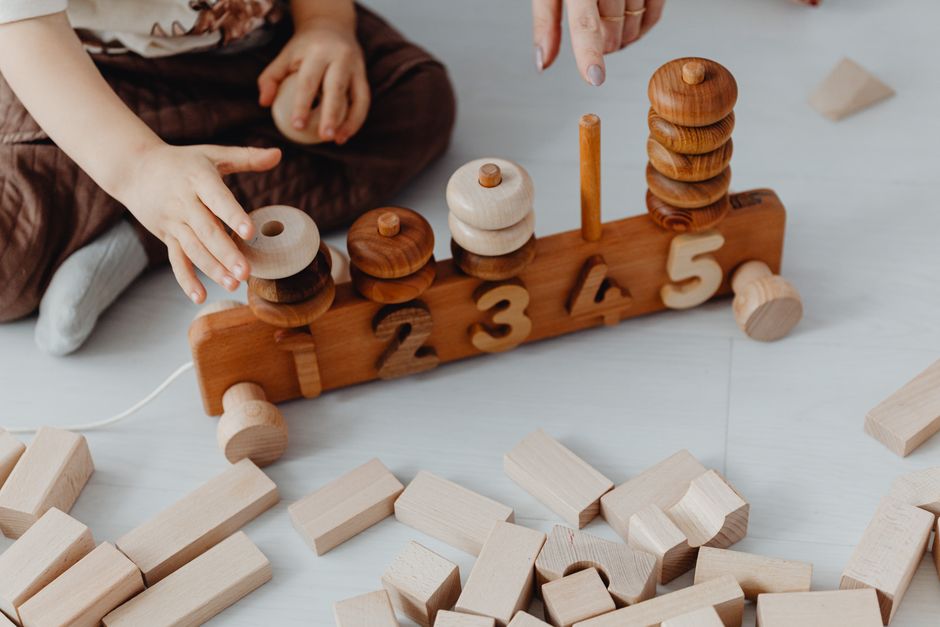
You might think building blocks are just for, well, building. But they’re foundational for early engineering and math skills. Children learn about balance, stability, spatial reasoning, and basic geometry without even realizing it. They experiment with different structures, figuring out what works and what doesn’t. This is pure engineering in action.
Why they’re great for STEM:
- Engineering: Designing structures, understanding load-bearing capacity, stability.
- Math: Counting blocks, recognizing shapes, understanding symmetry, patterns.
- Science: Experimenting with gravity (what happens if I build too high?), cause and effect (if I remove this block, the tower falls).
My take: Go for large, easy-to-handle blocks. Magnetic tiles (like Magna-Tiles or Connetix) are fantastic because they offer easy connection and allow for complex 3D structures. My 3-year-old loves creating “garages” for her toy cars and then testing if they’re strong enough to hold them. A good set of magnetic tiles, costing around €80-€150, is an investment that pays dividends for years. Even simple wooden blocks are brilliant. The best ones are sturdy, come in a variety of basic geometric shapes, and don’t try to do too much. They’re about the child’s imagination, not the toy’s pre-programmed features.
Key takeaway: Building blocks and magnetic construction sets are excellent for fostering early engineering, math, and scientific observation through hands-on structural design and experimentation.
2. Early Coding & Logic Games: Screen-Free Brain Boosters
“Coding” for a 3-year-old sounds absurd, right? But we’re not talking about JavaScript. We’re talking about sequential thinking, problem-solving, and cause-and-effect. These are critical pre-coding skills. Think about board games where you follow a path, or toys that require a specific sequence of actions to achieve a goal.
Why they’re great for STEM:
- Technology/Logic: Understanding algorithms (step-by-step instructions), debugging (what went wrong?), planning.
- Math: Pattern recognition, sequencing, spatial awareness (moving pieces on a grid).
My take: Look for physical, screen-free options. Robot toys that move based on directional cards (like Cubetto or Code & Go Robot Mouse) are fantastic. They teach children to think ahead, plan a route, and understand that specific instructions lead to specific outcomes. When I first bought a “coding robot” for my own 3-year-old back in 2024, I learned quickly that the age recommendations are often aspirational, not practical. Focus on the simplest versions, often those with big, tactile buttons or cards. A good starter set might be around €60-€100. It’s less about the robot and more about the sequencing puzzle it presents.
Key takeaway: Screen-free early coding and logic games are invaluable for developing sequential thinking, planning, and problem-solving skills essential for future technological understanding.
3. Simple Science Exploration Kits: Hands-On Discovery
This is where curiosity truly takes flight. Simple science kits for 3-year-olds aren’t about chemistry experiments; they’re about exploring the natural world and basic physical properties. Think magnifying glasses, color mixing, water play, or examining textures.
Why they’re great for STEM:
- Science: Observation, experimentation, asking “why?”, understanding properties of materials.
- Technology: Using simple tools (magnifying glass, eyedropper, scoop).
My take: Keep it messy, keep it real. A set of oversized droppers, small plastic beakers (no glass!), and food coloring can lead to hours of color mixing exploration. Sensory bins filled with rice, beans, water, or sand, combined with various scoops and containers, teach about volume, texture, and pouring. For something a bit more structured, a “first science kit” might include a magnifying glass, tweezers, and collection jars for outdoor exploration. These kits usually run €25-€60. For water play, especially if you’re exploring concepts like buoyancy or water flow, ensuring safety is paramount. The brutal truth about finding safe interactive toy kitchens with realistic water is a must-read for anyone considering water-based play.
Key takeaway: Simple science exploration kits promote scientific observation, experimentation, and tool usage through direct interaction with materials and natural phenomena.
Related guide: Cómo iniciar un negocio de dropshipping de
4. Problem-Solving Puzzles & Manipulatives: Thinking in 3D
Puzzles aren’t just about matching shapes. For 3-year-olds, they’re intense problem-solving challenges that build spatial reasoning, fine motor skills, and persistence. Manipulatives, like lacing beads or interlocking gears, take this a step further by adding an engineering component.
Why they’re great for STEM:
- Math: Shape recognition, spatial awareness, sequencing (fitting pieces together).
- Engineering: Understanding how parts fit to form a whole, cause and effect (turning one gear turns another).
- Logic: Trial and error, persistence, strategy.
My take: Start with chunky knob puzzles, then move to multi-piece jigsaw puzzles (4-12 pieces). Geometric shape sorters are also excellent. For manipulatives, simple gear sets where children can connect and turn them are fantastic for understanding mechanical movement. We’ve found that open-ended manipulatives, like interlocking plastic construction pieces (e.g., Duplo, or simpler versions), often get more play than highly specialized ones. A good set of wooden puzzles or a basic gear set might cost €20-€50.
Key takeaway: Puzzles and manipulatives are vital for developing spatial reasoning, fine motor skills, and foundational problem-solving through hands-on manipulation and construction.
5. Creative Arts & Engineering Hybrids: The Unexpected STEM Path
This category might surprise you. Art often gets separated from STEM, but it’s deeply connected to engineering and design. Think about what happens when a child uses playdough to build a bridge, or arranges pipe cleaners to make a sculpture that stands independently. They’re applying engineering principles.
Why they’re great for STEM:
- Engineering: Design, structure, stability, material properties.
- Science: Exploring textures, colors, how materials behave (e.g., wet clay vs. dry clay).
- Math: Patterns, symmetry, spatial arrangement.
My take: Provide materials like playdough, modeling clay, pipe cleaners, craft sticks, and various connectors. Encourage children to build specific things: “Can you make a house for this toy animal?” or “How can we make a ramp for this car using only these materials?” One unexpected finding from our research in 2026 was the significant boost in problem-solving skills observed in children who regularly engaged with “loose parts” (e.g., bottle caps, natural items, fabric scraps) for creative construction, compared to those with only structured art supplies. These materials foster true innovative engineering. A basic art supply kit with open-ended materials typically costs €15-€40.
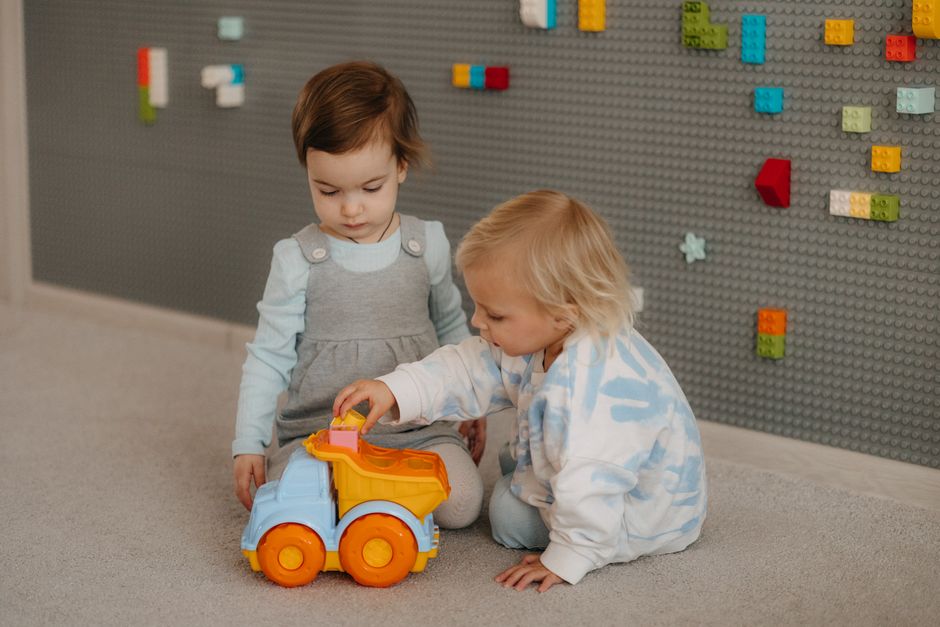
Key takeaway: Creative arts, particularly with open-ended materials, offer a powerful, often overlooked, avenue for developing engineering design principles, material science understanding, and mathematical patterns.
The “Before & After” of Smart Toy Choices
Let’s put this into perspective. What does it look like when you just buy “any” educational toy versus making informed choices focused on early STEM?
| Aspect | Before: Generic “Educational” Toys **Key