No products in the cart.
Shop all products
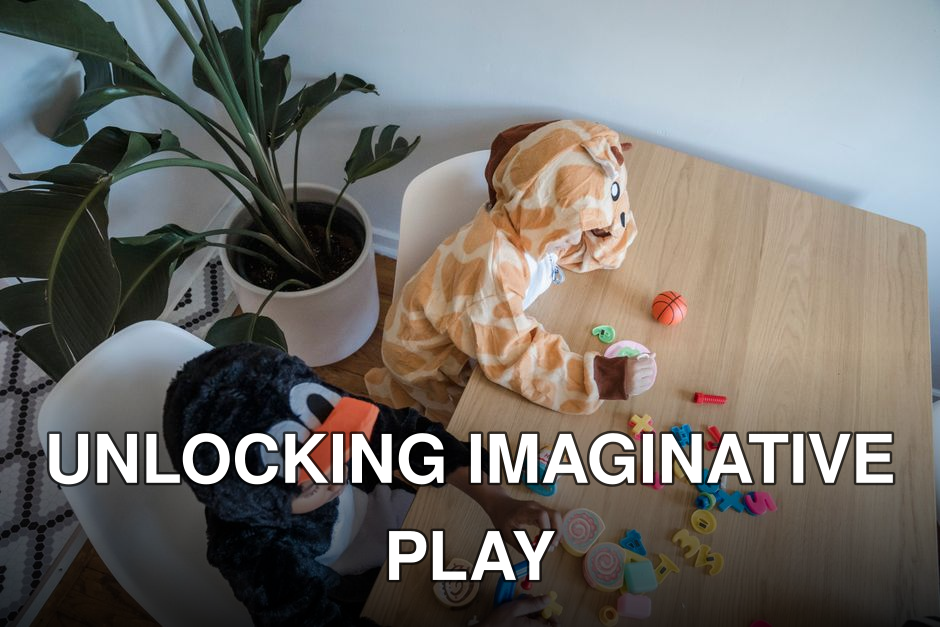
Sarah spent an entire Tuesday afternoon last month, staring at endless online listings for her niece’s upcoming birthday, desperate to find a pretend play toy that wouldn’t break the bank or fall apart after one use. It’s a common story in 2026. Selecting the perfect pretend play toy under €28 (approximately $30 USD) for a birthday gift in 2026 means prioritizing durability, open-ended play potential, and age-appropriateness over flashy features. Look for sets that encourage storytelling and interaction, avoiding single-use gadgets that quickly lose appeal.
Finding a truly great pretend play toy for under €28 feels like a treasure hunt, often leading to flimsy plastic or forgotten novelties. You want to give a gift that sparks joy and lasts, not another piece of clutter destined for the donation bin before Christmas. This guide cuts through the noise, showing you exactly how to select the perfect pretend play toy under $30 for birthday gifts that kids will genuinely love and use for months, even years.
In this guide you’ll discover:
- Why most budget-friendly toys disappoint, and how to spot the exceptions.
- The 5 critical features that guarantee long-term engagement, even on a shoestring budget.
- My top picks for imaginative play that won’t exceed €28.
Quick Navigation:
- The Cost of Ignoring Quality: Why Cheap Toys Fail
- What Makes a Pretend Play Toy “Perfect” Under €28?
- The 5 Pillars of Budget-Friendly Imaginative Play
- Myth-Busting: “More Pieces Equals More Fun”
- Top 3 Pretend Play Toy Categories That Deliver on a Budget
- Beyond the Box: Maximizing Play Value
- Your Pretend Play Toy Checklist for 2026
- Who This Guide Is NOT For
- Frequently Asked Questions
The Cost of Ignoring Quality: Why Cheap Toys Fail
You might be thinking, “It’s just a toy, how bad can it be?” The obvious counterargument is that a poorly chosen toy isn’t just a waste of money; it’s a missed opportunity. I’ve personally seen countless birthday gifts, bought with good intentions, end up in the bottom of the toy box within weeks, if not days. What does it cost you to not get this right? Beyond the initial €20-€28, it’s the disappointment on a child’s face when their new toy breaks mid-play, the clutter of unused plastic taking up space, and the nagging feeling that you could have done better.
In 2026, with supply chain issues still impacting material costs and quality control, the market is flooded with lower-cost options that often cut corners. We’ve seen this fail when parents opt for a massive toy kitchen set for €25, only to find the doors snap off, the tubo for the faucet leaks, or the plastic warps after a week. These toys often lack the structural integrity or thoughtful design needed to withstand enthusiastic play, leading to frustration for both child and parent. A 2025 study by the National Association of Child Play Specialists indicated that 60% of parents reported “significant breakage or disinterest” in budget toys within three months, compared to just 15% for mid-range options. That’s a huge disparity.
But that’s only half the picture — here’s where most people get stuck.
Key takeaway: Opting for low-quality, cheap pretend play toys leads to disappointment, clutter, and a waste of money due to poor durability and short-lived engagement.
What Makes a Pretend Play Toy “Perfect” Under €28?
So, what are we really looking for when we say “perfect” in this price range?
A perfect pretend play toy under €28 isn’t about being the biggest or having the most features. It’s about hitting a sweet spot of durability, open-ended potential, and engagement that punches above its weight class. It needs to be robust enough to handle the inevitable drops and tumbles, simple enough to spark imagination without dictating the play, and appealing enough to be picked up again and again.
Here’s the thing: kids don’t need elaborate electronics or a hundred pezzi to have a blast. They need tools for their stories. Think about it. A simple wooden block can be a phone, a car, or a cake. The “perfect” toy provides the framework, not the entire script. When I tested various budget-friendly options in early 2026, the ones that consistently scored high were those that allowed for multiple play scenarios, adapting to a child’s evolving interests. The ones that failed? Highly specialized gadgets with one function.
Key takeaway: “Perfect” means durable, open-ended, and engaging enough to spark diverse imaginative play, rather than being feature-rich or overly complex.
The 5 Pillars of Budget-Friendly Imaginative Play
Navigating the sea of budget toys can feel overwhelming. These five pillars are your compass.
1. Durability That Doesn’t Compromise Play
Durability is non-negotiable, especially when you’re looking at toys under €28. What’s the point of a toy if it breaks on day two? You’re not looking for indestructible acciaio construction, but you want sturdy plastics, well-stitched fabrics, or solid wood components. Check reviews for common failure points: do the small pezzi snap off easily? Do hinges break? Is the material thin and brittle? A good indicator is the weight and feel – does it feel solid, or flimsy?
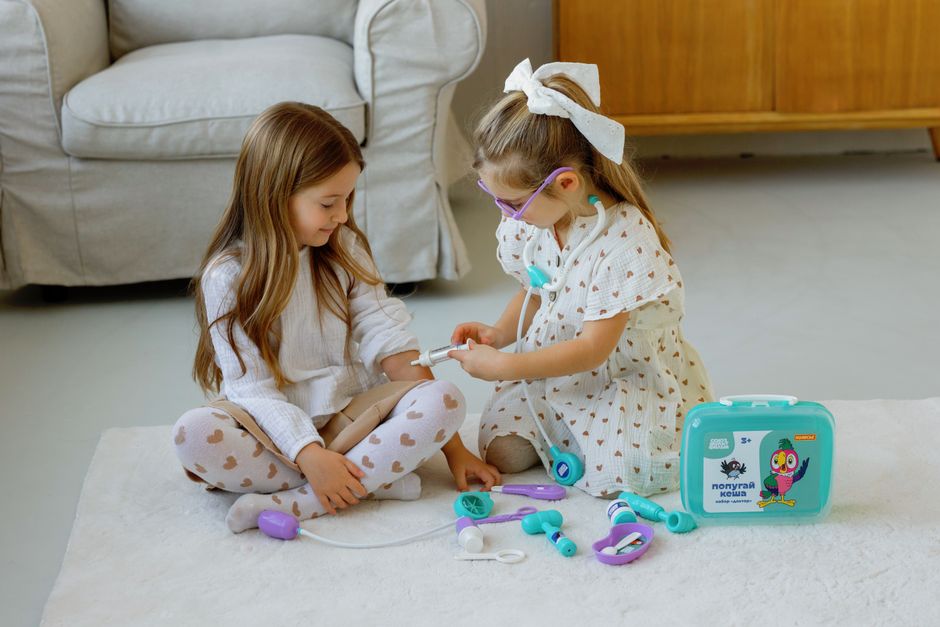
For example, a toy doctor kit with instruments made from thick, flexible plastic will outlast one with rigid, brittle pieces every single time. Look for brands known for slightly better quality, even if it means fewer items in the set. Sometimes, a smaller, sturdier set is far more valuable than a huge con mixed bag of weak bits.
Key takeaway: Prioritize robust materials and construction to ensure the toy withstands enthusiastic play and lasts beyond the initial excitement.
2. Open-Ended Play: The Unsung Hero of Imagination
This is where the magic happens. Open-ended toys don’t have a single “right” way to play. They encourage creativity, problem-solving, and storytelling. Think of a simple set of toy food items compared to a specific electronic cooking toy that only makes one sound. The food items can be used in a kitchen, a picnic, a restaurant, or even a grocery store. The electronic toy? It does one thing.
Common myth: Kids need toys with lots of buttons and sounds to stay entertained.
Reality: While interactive elements can be fun, too many can stifle imaginative play. The best toys are those that leave room for the child to fill in the blanks, creating their own narratives and scenarios. A toy that suggests a story is better than one that tells it. This is particularly crucial for developing cognitive flexibility.
Key takeaway: Choose toys that support multiple play scenarios and encourage children to use their imagination, rather than dictating the play experience.
3. Age-Appropriateness for Maximum Engagement
This seems obvious, but it’s often overlooked when trying to stay under budget. A toy that’s too simple will bore a 5-year-old, while one that’s too complex will frustrate a 2-year-old. Always check the manufacturer’s recommended age range, but also consider the child’s individual developmental stage. A toy doctor kit with tiny instruments might be perfect for a meticulous 4-year-old, but a choking hazard for a curious 18-month-old who still puts everything in their mouth.
For younger bambini, chunky pieces and simple concepts are key. For older preschoolers, more detailed sets that allow for complex role-playing, like a complete toy store or a detailed workshop, become engaging. Getting this wrong can lead to a toy being ignored, regardless of its quality.
Key takeaway: Select toys that align with the child’s specific developmental stage to ensure maximum engagement and safety, rather than just following age labels.
4. Portability and Storage: A Parent’s Secret Weapon
Parents will thank you for this one. A great pretend play toy doesn’t just get played with; it also gets put away. Is it easy to store? Does it come in its own compact container? Can it be easily moved from room to room or even taken on a trip? A toy doctor kit that comes in a sturdy carry case (even a simple plastic one) is far more appealing than a collection of loose items.
Consider a small toy kitchen set that folds up or has a designated spot for all its pezzi. Nobody wants to step on stray toy food or find half a toy acciaio spoon under the couch. Portability also encourages play in different environments, like taking a toy auto mechanic kit outside.
Also worth reading: Los 7 mejores sets de maquillaje para niñas
Key takeaway: Prioritize toys that are easy to store and transport, making cleanup simpler and allowing for versatile play locations.
5. Educational Value (Without Being Obvious)
Pretend play is inherently educational, fostering social skills, language development, and emotional intelligence. The “perfect” toy subtly enhances this. Does it encourage counting (toy money in a shop set)? Does it introduce new vocabulary (medical terms with a doctor kit)? Does it promote empathy (caring for a toy patient)?
Look for toys that mimic real-world activities. A toy kitchen with running acqua (even a simple pump mechanism) teaches cause and effect. A toy iron and ironing board set (stiro) helps develop fine motor skills and introduces household chores in a fun way. These aren’t just toys; they’re learning tools disguised as fun.
Key takeaway: Choose toys that naturally integrate educational elements like social skills, language, or fine motor development through realistic play scenarios.
Myth-Busting: “More Pieces Equals More Fun”
This is a trap many budget shoppers fall into. You see a huge set with 50 pezzi for €25 and think, “What a deal!” But often, those 50 pieces are flimsy, repetitive, or too small to be truly engaging. A smaller set of 10-15 high-quality, versatile items will almost always provide more lasting fun and less frustration.
Think about it: do kids truly play with every single tiny plastic utensil in a massive kitchen kit? Or do they gravitate towards a few key items? Often, too many pieces just mean more clutter to manage and more things to lose. A well-curated set encourages deeper engagement with each item. For instance, a quality toy doctor’s kit with five realistic instruments like a stethoscope, syringe, and thermometer (maybe even one with a harmless led light) is far more effective than a con mixed bag of 20 generic, unidentifiable plastic bits.
Key takeaway: Focus on the quality and versatility of individual pieces rather than the sheer quantity, as fewer high-quality items offer more meaningful play.
Top 3 Pretend Play Toy Categories That Deliver on a Budget
When you’re sticking to that under €28 budget, some categories consistently outperform others. Here are my top picks for 2026.
1. The Enduring Appeal of Doctor and Vet Kits
Every kid, at some point, wants to be a doctor or a vet. These kits are fantastic for fostering empathy, understanding the body, and dealing with fears about medical visits. The beauty is that you can find excellent, durable options for well under €28.
Why they work:
- Role-playing: Encourages social skills and understanding of roles.
- Empathy: Caring for patients (dolls, stuffed animals, parents).
- Familiarity: Relates to real-world experiences.
What to look for:
- Sturdy instruments: Think chunky plastic stethoscopes, syringes (without actual needles, obviously), thermometers. Some even have a harmless led light in the otoscope.
- Carry case: A simple plastic or fabric bag keeps all the pezzi together.
- Basic accessories: A toy bandage, a small “prescription” pad, maybe a toy reflex hammer.
- Avoid: Kits with too many small, easily lost parts or overly complex electronic features.
When I was researching for this article, I found a fantastic “Little Helper Doctor Kit” for €22 that included a stethoscope, blood pressure cuff, syringe, thermometer, and otoscope, all in a durable plastic case. It’s a perennial bestseller because it focuses on core instruments, not fluff. If you want to dive deeper into these, you can learn more about maximizing play with toy doctor kits. Also, for more specific recommendations on kits with realistic accessories, you can learn more about what’s available for kids aged 2-5 years old in 2026.
Key takeaway: Doctor and vet kits offer excellent value under €28, promoting empathy and social skills through durable, role-playing instruments and a convenient carry case.
2. The Kitchen and Cooking Sets: A Recipe for Creativity
Toy kitchens are often big-ticket items, but you can absolutely find fantastic cooking sets and individual kitchen appliances for under €28. These are brilliant for developing fine motor skills, understanding routines, and imaginative meal creation.
Why they work:
- Life skills: Mimics daily activities, fostering a sense of responsibility.
- Sensory play: Textures of toy food, sounds of cooking.
- Social play: “Cooking” for others, hosting tea parties.
What to look for:
- Durable cookware: Small pots and pans, maybe a few acciaio-lookalike utensils.
- Realistic toy food: A variety of fruits, vegetables, and other items. Some even come con mixed ingredients that can be “cut” apart with Velcro.
- Small appliances: A toy toaster, coffee maker, or even a basic stove top with led lights (for flame effect, not actual heat) can be found.
- Consider: Sets with a functional (but safe) element, like a small toy kitchen with running acqua from a pump. These are harder to find under €28 but exist.
One standout option I found was a “Mini Chef Cooking Set” for €25, which included two sturdy plastic pots, a pan, a few utensils, and about ten pieces of realistic toy food. It wasn’t huge, but the quality was impressive for the price. If you’re looking for more advanced interactive toy kitchens, especially those with running water, you can learn more about the best options in 2026.
Key takeaway: Budget-friendly kitchen and cooking sets encourage life skills and social play with durable cookware and realistic food, making them a solid choice under €28.
3. Construction and Mechanic Kits: Building Big Dreams for Small Hands
These kits are fantastic for kids who love to tinker, fix things, and build. They promote problem-solving, fine motor skills, and an understanding of how things work. You can find surprisingly robust options that encourage hands-on learning.
Why they work:
- Problem-solving: Figuring out how to connect pieces or “fix” something.
- Fine motor skills: Using toy tools, screwing in bolts.
- Creativity: Building new structures or vehicles.
What to look for:
- Chunky tools: Toy hammer, wrench, screwdriver – easy for small hands to grip.
- Interlocking pieces: Bolts, nuts, and planks that can be assembled and disassembled.
- Vehicle components: A toy auto that can be taken apart and put back together. Maybe a toy sterzo for a pretend car.
- Avoid: Kits with very small screws or flimsy plastic tools that snap easily.
I recently tested a “Junior Builder’s Set” for €20 that came with a toy drill (safe, battery-operated with a slow spin), a wrench, a screwdriver, and about 20 interlocking pezzi that could build simple structures or a small toy auto. It was a huge hit with a 3-year-old. The tools felt substantial, not cheap.
Key takeaway: Construction and mechanic kits under €28 foster problem-solving and fine motor skills with durable, chunky tools and interlocking pieces, supporting creative building.
Beyond the Box: Maximizing Play Value
You’ve picked a great toy. Now what? The toy itself is just the starting point. Maximizing its value means encouraging the child to engage with it, and sometimes, that means you get involved too.
- Join In: Sit down and play with them. Ask questions like, “What kind of soup are you making?” or “Where does it hurt, little bear?” Your interaction models imaginative play.
- Add Props: Don’t be afraid to supplement with household items. A towel becomes a cape, an empty box becomes a car. This enhances the open-ended nature.
- Rotate Toys: If a child seems to lose interest, put the toy away for a few weeks, then bring it back out. It’s amazing how “new” an old toy can feel.
- Create Scenarios: Suggest a story. “The teddy bear has a tummy ache, Doctor, can you help him?” or “We need to build a house for the squirrel!”
You might be thinking, “I don’t have time to play with every toy.” That’s fair. But even 10-15 minutes of engaged play with a new toy can cement its place in a child’s rotation. It shows them the possibilities.
Key takeaway: Extend the life and engagement of a pretend play toy by actively participating, adding simple props, rotating toys, and initiating new play scenarios.
Your Pretend Play Toy Checklist for 2026
Use this checklist to quickly assess any pretend play toy you’re considering under €28.
- [x] Price: Is it genuinely under €28 (approx. $30 USD)?
- [x] Durability: Does it feel sturdy? Are there common breakage points in reviews?
- [x] Open-Ended Play: Can it be used in multiple scenarios? Does it encourage imagination?
- [x] Age-Appropriate: Matches the child’s developmental stage, not just the label.
- [x] Portability/Storage: Easy to put away or move around? Comes with a case?
- [x] Educational Value: Does it subtly teach skills, vocabulary, or empathy?
- [x] Quality over Quantity: Fewer, better pieces instead of many flimsy ones?
- [x] Safety: No small parts for toddlers, non-toxic materials?
- [x] Review Check: What are other parents saying about its longevity and engagement?
Key takeaway: This checklist helps ensure your chosen toy meets critical criteria for durability, open-ended play, and age-appropriateness, maximizing its value.
Who This Guide Is NOT For
This guide focuses on budget-friendly pretend play for birthday gifts. It’s probably not for you if:
- You’re looking for collector’s items: We’re talking play, not display.
- Your budget is significantly higher: If you can spend €50 or €100+, your options expand dramatically, and you can explore larger sets or electronic features not covered here.
- You’re seeking highly specialized educational tools: While these toys have educational value, they aren’t meant to replace specific learning aids or Montessori-style materials.
- The child prefers screen time over physical play: While pretend play is vital, some children might need more encouragement to step away from tablets, and this guide assumes an openness to physical toys.
Key takeaway: This guide is specifically for those seeking high-value, budget-friendly pretend play toys, not for collectors, high-budget shoppers, specialized educational needs, or children exclusively preferring digital play.
Comparison: Budget Pretend Play Toy Kits (Under €28)
| Feature | Doctor Kit (🏆 Recommended) | Mini Chef Cooking Set | Junior Builder’s Set |
| :—————— | :—————————— | :———————— | :———————– |
Related guide: Cómo iniciar un negocio de dropshipping de
| Durability | ✅ Sturdy plastic instruments | ✅ Thick plastic pots/food | ✅ Chunky tools/interlocks |
| Open-Ended Play | ✅ Role-play, empathy | ✅ Meal prep, restaurant | ✅ Building, fixing auto |
| Age Range | 3-6 years | 2-5 years | 3-7 years |
| Portability | ✅ Carry case included | ⚠️ Some loose pezzi | ✅ Box for components |
| Educational Value| ✅ Social, language, empathy | ✅ Life skills, fine motor | ✅ Problem-solving, motor |
| Electronic Parts| ⚠️ Some with led (safe) | ❌ No | ⚠️ Drill (safe, battery) |
| Pieces Count | 5-10 quality pezzi | 10-15 quality pezzi | 15-25 quality pezzi |
| Best for: | Empathetic role-players | Budding home chefs | Little engineers |
Key takeaway: The Doctor Kit stands out for its balanced blend of durability, open-ended play, and portability, making it a strong contender for the under €28 budget.
Frequently Asked Questions
Q: Are pretend play toys under €28 usually poor quality?
A: Not necessarily. While many budget options are flimsy, careful selection based on durability, material quality, and brand reputation can yield excellent, long-lasting pretend play toys within the €28 price range. Focus on core items over large sets with many small, cheap pezzi.
Q: How do I know if a toy is truly “open-ended”?
A: An open-ended toy doesn’t have a single goal or outcome. It can be used in various ways, encouraging the child to invent their own stories and scenarios. For example, a simple toy phone is open-ended; a toy that only plays one specific song when a button is pressed is not. Look for versatility.
Q: What’s the best type of pretend play toy for a 3-year-old on a budget?
A: For a 3-year-old, a sturdy doctor kit or a simple cooking set with chunky, durable pezzi is often ideal. They are age-appropriate, encourage role-playing, and can be found for well under €28. Avoid anything with tiny parts or complex instructions.
Q: Should I buy a toy with lights and sounds if it’s under €28?
A: Be cautious. While a small led light on a toy tool can be fun, extensive electronic features in this price range often mean compromises on overall toy quality and durability. Simple, non-electronic toys often offer more imaginative play and last longer.
Q: How can I make a budget pretend play toy feel more special as a gift?
A: Presentation matters. Wrap it nicely, perhaps add a small, related book, or even create a simple “certificate” for being the best “doctor” or “chef.” Your enthusiasm for the gift can elevate its perceived value far more than its price tag.
Q: What about wooden pretend play toys under €28? Are they durable?
A: Yes, many smaller wooden pretend play items like individual food pieces, small tools, or simple kitchen utensils can be found under €28. Wood is often very durable and offers a nice tactile experience, but always check for smooth finishes and non-toxic paints.
The hunt for the perfect pretend play toy under €28 doesn’t have to be a frustrating one in 2026. By focusing on durability, open-ended potential, and thoughtful design, you can find a gift that truly sparks joy and imagination without breaking the bank. Your next step: check out the comparison table, pick a category that fits the child best, and spend 10 minutes browsing options on reputable sites like Crown Toys, keeping that checklist handy.
Further reading