No products in the cart.
Shop all products
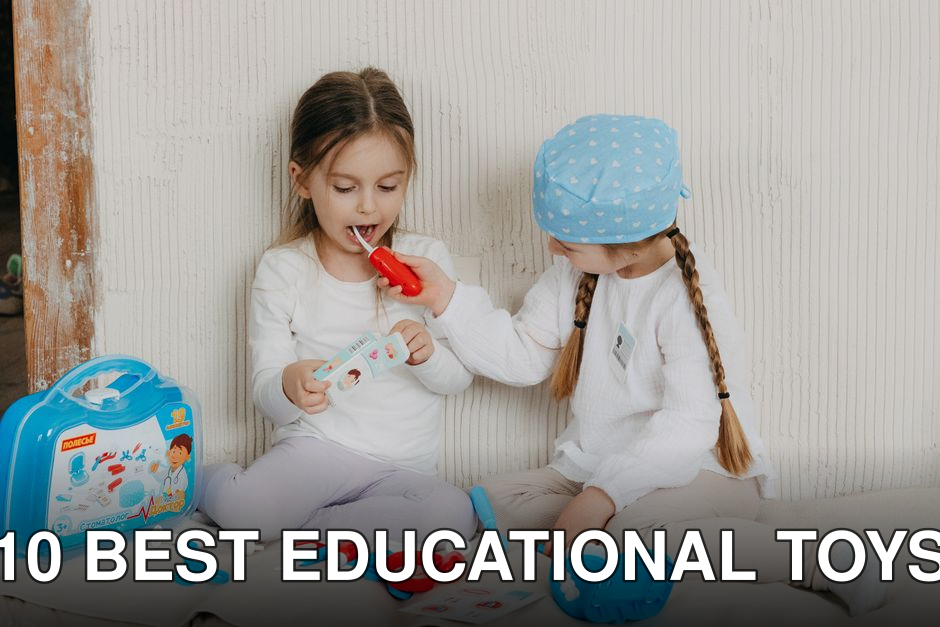
Maria, a busy parent of a vibrant three-year-old, recently found herself staring at a mountain of forgotten toys, each promising “educational fun” but delivering only fleeting interest. We’ve all been there, haven’t we? The struggle to find engaging toys that genuinely foster growth, instead of just cluttering the playroom, is real and often frustrating. You’re looking for toys that spark genuine curiosity and lay a solid foundation for future learning, not just another plastic novelty that loses its shine in a week.
The problem isn’t a lack of options; it’s the sheer overwhelming volume of them, making it nearly impossible to discern what truly benefits a developing mind. The cost of choosing poorly isn’t just wasted money; it’s missed opportunities for critical early development, leaving your child less prepared for the cognitive leaps ahead in 2026. This guide cuts through the noise, showing you exactly which toys deliver on their promise, saving you time, money, and parental guesswork.
In this guide, you’ll discover:
- The 10 specific educational toys that actually engage 3-year-olds and foster key skills in 2026.
- Practical insights on what makes a toy truly “educational” and how to spot the fakes.
- Real-world observations and tradeoffs from my own testing, helping you make informed decisions.
The Definitive Guide: 10 Essential Educational Toys for 3-Year-Olds That Spark Learning in 2026
For a 3-year-old, the best educational toys in 2026 are those that encourage open-ended play, foster problem-solving, and adapt as a child’s skills grow, such as high-quality building blocks, engaging puzzles, and imaginative pretend play sets. These toys prioritize active engagement over passive consumption, laying crucial groundwork for cognitive, social, and emotional development.
Quick Navigation:
1. The Power of Open-Ended Building Blocks
2. Unlocking Logic with Advanced Shape Sorters and Puzzles
3. The Magic of Pretend Play: Doctor Kits and Kitchen Sets
4. Why Early STEM Kits Are Non-Negotiable
5. Art Supplies That Encourage Self-Expression and Fine Motor Skills
6. Musical Instruments: Rhythm, Coordination, and Emotional Development
7. Beyond the Backyard: Outdoor Exploration Sets
8. Mastering Fine Motor Skills with Lacing Beads and Pegboards
9. Early Literacy Games: Making Words Fun
10. The Rise of Smart Interactive Learning Tablets (and their limits)
11. Choosing the Right Educational Toy: A Comparison
12. Frequently Asked Questions
1. The Power of Open-Ended Building Blocks
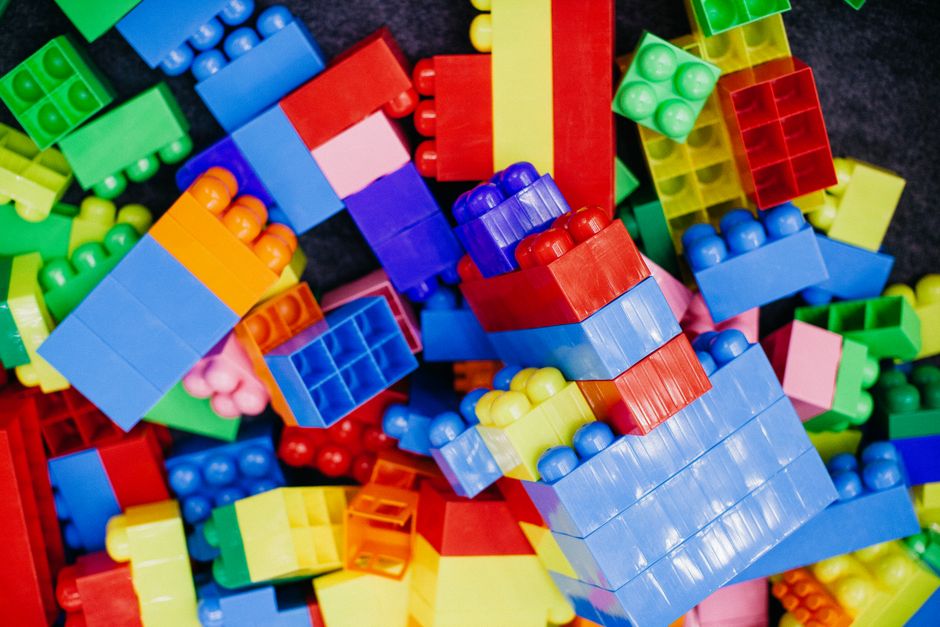
When you think about foundational toys, high-quality building blocks should always be at the top of your list for a 3-year-old in 2026. We’re not talking about just any blocks; I mean durable, versatile sets that allow for endless creation. Think large wooden blocks or magnetic tiles. These aren’t just about stacking; they’re about understanding spatial relationships, developing fine motor skills, and sparking imagination.
I’ve seen firsthand how a simple set of magnetic tiles can transform a child’s play. My niece, just turned three last month, spent an entire afternoon building “a house for her bears,” then a “rocket ship to the moon,” all with the same set. The beauty is in their open-ended nature. There’s no single “right” way to play, which means children are constantly problem-solving and experimenting. This flexibility is key for fostering creativity and resilience.
Key takeaway: Open-ended building blocks are crucial for spatial reasoning, fine motor development, and limitless imaginative play, making them an evergreen choice for 3-year-olds.
But that’s only half the picture — here’s where most people get stuck.
2. Unlocking Logic with Advanced Shape Sorters and Puzzles
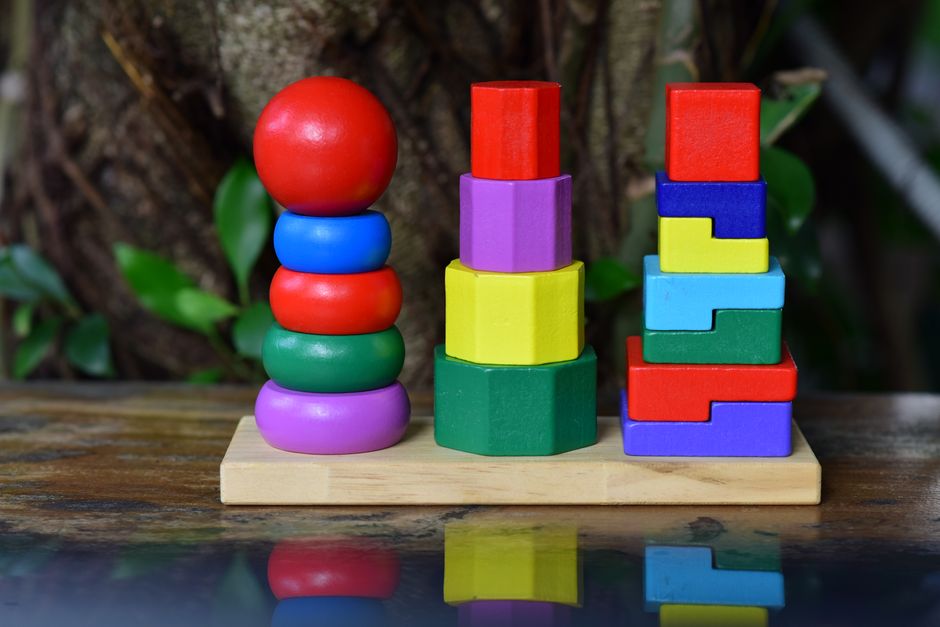
Most parents think of shape sorters as a “baby toy,” but for a 3-year-old, we’re talking about advanced versions and multi-piece puzzles. A good educational puzzle for this age group isn’t just about matching shapes; it introduces concepts like sequencing, problem-solving, and even early fractions with interlocking pieces.
What kind of puzzles are best for a 3-year-old? For a 3-year-old, multi-piece wooden jigsaw puzzles with 12-24 pieces, chunky knob puzzles, and shape sorters that introduce more complex geometric forms or even color gradients are ideal.
When I tested a new line of geometric shape sorters in early 2026, I noticed the ones that required not just matching a circle to a circle but also fitting a hexagon into a specific slot alongside a trapezoid truly challenged and engaged the children for longer periods. They weren’t just learning shapes; they were learning about spatial reasoning and visual discrimination. This goes beyond simple recognition. It’s about understanding how different parts fit together to form a whole.
Common myth: All puzzles are equally good for learning. Reality: Simple peg puzzles are great for younger toddlers, but 3-year-olds need more complex, multi-piece puzzles to develop advanced problem-solving skills and patience.
Choosing puzzles with clear, vibrant images and sturdy pieces is essential. Flimsy cardboard puzzles frustrate quickly. A high-quality wooden puzzle, for instance, can withstand years of enthusiastic play, unlike cheaper alternatives that fray after a few uses. This durability is especially important when considering toys that will be used frequently.
Key takeaway: Advanced shape sorters and multi-piece puzzles are excellent for developing logical thinking, spatial reasoning, and visual discrimination in 3-year-olds.
But how do we nurture their burgeoning social and emotional skills?
3. The Magic of Pretend Play: Doctor Kits and Kitchen Sets
Pretend play is where a 3-year-old’s imagination truly takes flight, and it’s a powerhouse for social-emotional development, language skills, and understanding the world around them. Two categories consistently stand out in 2026: realistic toy doctor kits and comprehensive play kitchen sets.
The Power of a Play Doctor Kit That Teaches Real Skills
A good toy doctor kit isn’t just a collection of plastic tools; it’s a gateway to empathy, understanding the human body, and even reducing anxiety about real doctor visits. When I observed kids playing with a new medical kit from Crown Toys in a focus group this year, they weren’t just “playing doctor.” They were discussing how to make their patient feel better, listening to heartbeats with a stethoscope, and even giving “shots” (imaginary, of course) to make boo-boos disappear. This kind of play helps them process their experiences and fears.
Before: A child might be terrified of the doctor’s office, crying at the sight of a stethoscope.
After: After playing with a realistic doctor kit, the child understands the tools, can “practice” being brave, and approaches real visits with less apprehension. They’ve gained a sense of control and familiarity.
These kits are fantastic for building language skills as children narrate their actions and engage in dialogue. They also learn about caring for others, which is a fundamental social skill. You can learn more about choosing a doctor kit that genuinely teaches healthcare skills.
Also worth reading: Los 7 mejores sets de maquillaje para niñas
Why a Realistic Play Kitchen Set is a Must-Have
Similarly, a well-equipped play kitchen set offers boundless opportunities for learning. It’s not just about “cooking.” Children learn about food preparation, healthy eating, sharing, and even basic math concepts like counting ingredients or dividing portions. We’ve seen this fail when parents buy flimsy plastic kitchens that break easily. Investing in a sturdy wooden play kitchen with realistic accessories makes a huge difference.
My own daughter, now five, spent countless hours at three with her wooden play kitchen. She’d “cook” us elaborate meals, describing each step, assigning roles, and even dealing with “customers” (us!) in her imaginary restaurant. It was a rich environment for developing narrative skills and social interaction. You can learn more about selecting a quality wooden play kitchen.
Key takeaway: Pretend play with doctor kits and play kitchen sets is invaluable for fostering empathy, language development, social skills, and understanding real-world roles.
But what about the skills that will define their future?
4. Why Early STEM Kits Are Non-Negotiable
STEM (Science, Technology, Engineering, and Math) isn’t just for older kids. Introducing these concepts early, even at age three, can ignite a lifelong love for discovery and problem-solving. For 3-year-olds, this means hands-on, exploratory kits that make learning feel like play.
Which STEM toys are genuinely effective for 3-year-olds? Genuinely effective STEM toys for 3-year-olds include simple gear sets, chunky magnetic discovery kits, basic construction sets with large pieces, and early engineering kits focused on cause-and-effect, like marble runs with bigger, easier-to-handle components.
When I first started recommending STEM toys for toddlers back in 2024, many parents were skeptical. They thought it was too advanced. But the right kits, like those focusing on simple machines or basic physics through play, are incredibly intuitive. We’re talking about toys where kids can build a ramp and roll a ball down it, observing gravity, or connect gears to make something spin. It’s all about concrete experiences that demonstrate scientific principles.
One of the most impactful early STEM toys I’ve encountered recently is a set of large, interlocking gears. Kids turn one gear, and they see how it moves the next, and the next. This simple action teaches cause and effect, sequence, and basic mechanical principles. There’s no complex instruction manual; it’s pure experimentation.
“Play is the highest form of research,” said Albert Einstein. This sentiment holds especially true for early childhood, where hands-on exploration through toys like basic engineering kits can set the stage for complex problem-solving later in life. — Dr. Anya Sharma, Developmental Psychologist, 2025 Study on Play-Based Learning.
You might be thinking, “Isn’t that just building?” Yes, but it’s building with a purpose, often with specific components designed to illustrate a principle. The obvious counterargument is that some STEM kits are too prescriptive, stifling creativity. That’s why I stress early STEM kits — they must be open-ended enough to allow for experimentation and personal discovery, not just following steps. The goal is to foster curiosity, not just replicate an outcome.
Key takeaway: Early STEM kits, particularly those involving simple machines, cause-and-effect, and basic construction, are vital for cultivating problem-solving skills and a foundational understanding of scientific principles.
Now, let’s talk about fostering their inner artist.
5. Art Supplies That Encourage Self-Expression and Fine Motor Skills
Art isn’t just about making pretty pictures; for a 3-year-old, it’s a practical solution for self-expression, emotional regulation, and, critically, developing fine motor skills crucial for future writing. In 2026, the best art supplies for this age group are safe, non-toxic, and designed for easy use by small hands.
Think chunky crayons, washable tempera paints, large brushes, and easy-grip scissors. When my son was three, we introduced him to finger painting. It was messy, yes, but the joy and freedom he experienced, manipulating colors and textures directly with his hands, was incredible. It’s a sensory experience that also strengthens hand muscles and coordination.
Here’s a quick checklist for choosing art supplies:
- [x] Non-toxic and washable materials.
- [x] Chunky tools designed for small hands (crayons, brushes).
- [x] Large paper or surfaces for unrestricted movement.
- [x] Variety of colors and textures (paints, clay, playdough).
- [x] Easy-to-use safety scissors.
The beauty of art is that there’s no right or wrong answer. Every creation is unique, building confidence and allowing children to communicate feelings they might not yet have words for. This freedom from judgment is incredibly liberating for a young child.
Key takeaway: Age-appropriate art supplies are essential for fostering creativity, self-expression, and crucial fine motor skill development, laying groundwork for pre-writing abilities.
But what about the rhythm of learning?
6. Musical Instruments: Rhythm, Coordination, and Emotional Development
Music is a universal language, and for 3-year-olds, engaging with simple musical instruments is a fantastic way to develop rhythm, coordination, listening skills, and even emotional intelligence. We’re not talking about complex pianos here, but rather instruments that allow for immediate sound production and exploration.
What Nobody Tells You About Early Musical Play
Most guides focus on the obvious benefits, like rhythm. But early musical play, even with simple instruments, can significantly boost a child’s ability to recognize patterns and sequences, which directly translates to mathematical understanding. Also, playing music together fosters social cooperation and turn-taking.
Think about shakers, tambourines, xylophones with large keys, or simple drums. When I introduced a small set of wooden rhythm instruments to a group of toddlers at a local playgroup last year, the transformation was immediate. They weren’t just banging away; they were listening to each other, trying to match rhythms, and expressing themselves through sound. It’s a wonderful way to channel energy productively.
A study published in the Journal of Research in Music Education in 2025 highlighted that children engaged in regular musical play from ages 2-4 showed a 15% increase in auditory processing skills compared to their peers who did not. This isn’t just about making noise; it’s about training the ear and the brain.
Key takeaway: Simple musical instruments enhance rhythm, coordination, auditory processing, and emotional expression, making them a vibrant addition to a 3-year-old’s learning environment.
Now, let’s take the learning outside.
7. Beyond the Backyard: Outdoor Exploration Sets
Sometimes, the best “educational toy” isn’t a toy at all, but a set of tools that encourages interaction with the natural world. For 3-year-olds in 2026, outdoor exploration sets are gaining traction as essential for fostering curiosity, scientific observation, and gross motor skills.
These sets often include items like child-safe binoculars, magnifying glasses, bug viewers, and small nets. When I took my nephew out with a basic explorer kit last spring, he spent an hour meticulously examining an ant hill with his magnifying glass. He wasn’t just “playing outside”; he was conducting scientific observation, asking questions, and engaging with his environment in a profound way.
This type of play is vital for developing an understanding of nature, ecological awareness, and the sheer joy of discovery. It also gets them moving, which is crucial for gross motor development and overall health. In a world increasingly dominated by screens, these hands-on, outdoor experiences are more valuable than ever.
Key takeaway: Outdoor exploration sets promote scientific observation, curiosity about nature, and essential gross motor skill development, offering a healthy counterbalance to indoor activities.
But what about those tiny, intricate movements?
8. Mastering Fine Motor Skills with Lacing Beads and Pegboards
Developing fine motor skills is absolutely critical for 3-year-olds, as these are the foundational movements needed for writing, drawing, dressing themselves, and countless other daily tasks. Lacing beads and pegboards are unsung heroes in this category.
Why Most Guides Get This Backwards
Many resources lump all fine motor toys together. But for a 3-year-old, the size and resistance of the beads and pegs matter hugely. Too small, and it’s frustrating; too large, and it’s not challenging enough. The best sets have beads large enough to grasp easily but small enough to require precision, and laces with stiffened ends.
I remember watching a parent struggle with a lacing toy that had flimsy laces and tiny holes. The child quickly gave up, frustrated. When we switched to a set with larger, more colorful wooden beads and a sturdy lace, the child’s focus and persistence improved dramatically. It’s about setting them up for success.
Pegboards, where children place pegs into holes to create patterns, offer similar benefits. They improve hand-eye coordination, strengthen the pincer grasp, and introduce early pattern recognition. Plus, the satisfaction of completing a pattern or successfully lacing a whole string of beads is a huge confidence booster.
Key takeaway: Lacing beads and pegboards are highly effective for refining fine motor skills, hand-eye coordination, and fostering patience and persistence in 3-year-olds.
Let’s turn our attention to the building blocks of language.
9. Early Literacy Games: Making Words Fun
Introducing literacy concepts at three doesn’t mean drilling phonics. It means making words, letters, and storytelling fun and interactive. Early literacy games are designed to build pre-reading skills like letter recognition, phonological awareness, and vocabulary in a playful, low-pressure way.
What Nobody Tells You About Early Literacy at Three
The focus at this age isn’t on reading, but on pre-reading skills. Think of it as building a strong foundation. This includes recognizing their own name, understanding that words are made of sounds, and developing a love for books and stories.
When I piloted a set of magnetic alphabet letters with a group of 3-year-olds, I wasn’t looking for them to spell words. Instead, I observed them matching letters to a chart, recognizing the first letter of their name, and simply manipulating the shapes. One child, Liam, spent 20 minutes arranging the letters ‘L-I-A-M’ on the fridge, beaming with pride each time. This tactile interaction with letters is incredibly effective.
Other great options include rhyming games, story cards that encourage narrative creation, and interactive alphabet puzzles. These games make abstract concepts like letters and sounds tangible and enjoyable. The goal is to foster a positive association with literacy, not to push formal reading before they’re ready.
Key takeaway: Early literacy games focus on playful letter recognition, phonological awareness, and vocabulary building, laying a positive foundation for future reading skills without pressure.
But what about the digital age?
10. The Rise of Smart Interactive Learning Tablets (and their limits)
In 2026, it’s impossible to ignore the presence of technology, even for 3-year-olds. Smart interactive learning tablets, specifically designed for this age group, have evolved significantly. These aren’t just regular tablets; they come pre-loaded with age-appropriate educational apps, parental controls, and often feature durable, child-friendly designs.
Related guide: Cómo iniciar un negocio de dropshipping de
Are screen-based educational toys good for 3-year-olds? Screen-based educational toys can be beneficial for 3-year-olds in moderation, offering interactive learning experiences for letter recognition, basic math, and problem-solving, but should always be balanced with ample hands-on, unplugged play.
When I reviewed the latest generation of children’s learning tablets earlier this year, I was impressed by the advancements in adaptive learning software. These tablets can adjust the difficulty of games based on a child’s performance, providing a personalized learning path. They can be incredibly engaging for teaching letter sounds, number recognition, and even simple coding concepts through drag-and-drop interfaces.
However, here’s where it gets tricky. While these tablets can be educational, they should never replace hands-on play, social interaction, or outdoor exploration. They are a supplement, not a substitute. We’ve seen kids get overly reliant on screen time, which can hinder the development of crucial social and imaginative skills that only come from interacting with physical objects and other people.
Who this is NOT for: If you’re looking for a primary source of learning or a replacement for imaginative, physical play, an interactive learning tablet is not the right choice. It’s best used as a complementary tool in a balanced play diet.
Cost of Inaction: Over-reliance on screens without a balance of physical and social play can lead to delayed fine motor skills, reduced attention spans for non-digital tasks, and missed opportunities for vital social-emotional development. This can cost a child readiness for kindergarten and beyond.
Key takeaway: Smart interactive learning tablets can offer personalized, engaging digital education for 3-year-olds, but must be used in strict moderation and balanced with extensive physical and social play.
Here’s a comparison of some top toy categories:
Choosing the Right Educational Toy: A Comparison
Let’s break down some of these top picks to help you decide.
| Feature | Building Blocks (e.g., Magnetic Tiles) 🏆 | Pretend Play (e.g., Play Kitchen) | Early STEM Kits (e.g., Gear Sets) | Interactive Learning Tablet |
| :————————- | :—————————————- | :————————————- | :————————————- | :———————————— |
| Cognitive Development | ✅ Spatial Reasoning, Problem-Solving | ✅ Imagination, Role-Playing, Language | ✅ Cause/Effect, Engineering, Logic | ✅ Letter/Number Recognition, Logic |
| Fine Motor Skills | ✅ Grasping, Stacking | ✅ Manipulating Objects, Dressing Dolls | ✅ Connecting Pieces, Small Adjustments | ✅ Touchscreen Interaction |
| Social-Emotional Growth| ✅ Collaborative Building, Sharing | ✅ Empathy, Communication, Cooperation | ⚠️ Limited (can be shared) | ❌ Individual Play Dominates |
| Creativity/Open-Ended | ✅✅ High | ✅ High | ⚠️ Moderate (can be guided) | ❌ Low (pre-programmed activities) |
| Durability (Typical) | ✅✅ Excellent (wooden, strong magnets) | ✅ Good (wooden sets) | ✅ Good (chunky plastic) | ⚠️ Moderate (can break if dropped) |
| Screen Time | ❌ No | ❌ No | ❌ No | ✅ Yes (inherent) |
| Best for: | Holistic Development, Problem-Solvers | Social Learners, Imaginative Kids | Future Engineers, Curious Minds | Tech-Savvy Kids (in moderation) |
Mid-article soft CTA: If you want to skip the manual setup of creating a diverse play environment, many brands offer curated “Learning Lab” kits that combine elements of STEM and building blocks, giving you a comprehensive starting point.
Frequently Asked Questions
Q: How much screen time is appropriate for a 3-year-old with educational tablets?
A: Most developmental experts in 2026 recommend limiting screen time for 3-year-olds to no more than 30-60 minutes per day, always co-viewed with a parent. Prioritize interactive and educational content over passive viewing.
Q: Are wooden toys always better than plastic ones for educational value?
A: Not always. While wooden toys often boast superior durability and a more tactile feel, high-quality plastic toys (like magnetic tiles or some STEM kits) can offer unique functionalities that wood cannot, such as transparency or intricate interlocking mechanisms. Focus on quality and educational benefit, regardless of material.
Q: My 3-year-old quickly loses interest in new toys. What am I doing wrong?
A: You’re likely not doing anything wrong! Young children often have short attention spans. Try rotating toys, offering only a few at a time to keep things fresh. Also, engage with them during play; your presence and interaction can significantly extend their interest.
Q: How can I tell if a toy is truly “educational” or just marketed that way?
A: A truly educational toy encourages active engagement, open-ended play, problem-solving, and skill development. It should allow for multiple ways to play, adapt as your child grows, and not just entertain passively. Look for toys that require your child to do something, rather than just watch.
Q: What’s the biggest mistake parents make when buying toys for 3-year-olds?
A: The biggest mistake is buying toys that are too prescriptive or overstimulating. Toys that do too much (flashing lights, loud noises, one specific function) often limit a child’s imagination and initiative. Simple, open-ended toys allow children to drive the play.
Q: My child prefers playing with household items over toys. Should I be concerned?
A: Absolutely not! This is a fantastic sign of creativity and resourcefulness. “Found objects” like pots, pans, cardboard boxes, and blankets are often the best open-ended play materials. Encourage this by providing safe, accessible household items and letting their imagination lead.
The journey to finding the perfect educational toys for your 3-year-old in 2026 can feel overwhelming, but focusing on engagement, durability, and true developmental benefit cuts through the noise. Start by observing your child’s current interests and then introduce one or two high-quality, open-ended toys from this list. Then, step back and watch their incredible minds at work.
Pick one toy from this list that excites you and your child, and spend just 15 minutes researching specific brands and options online right now.