No products in the cart.
Shop all products
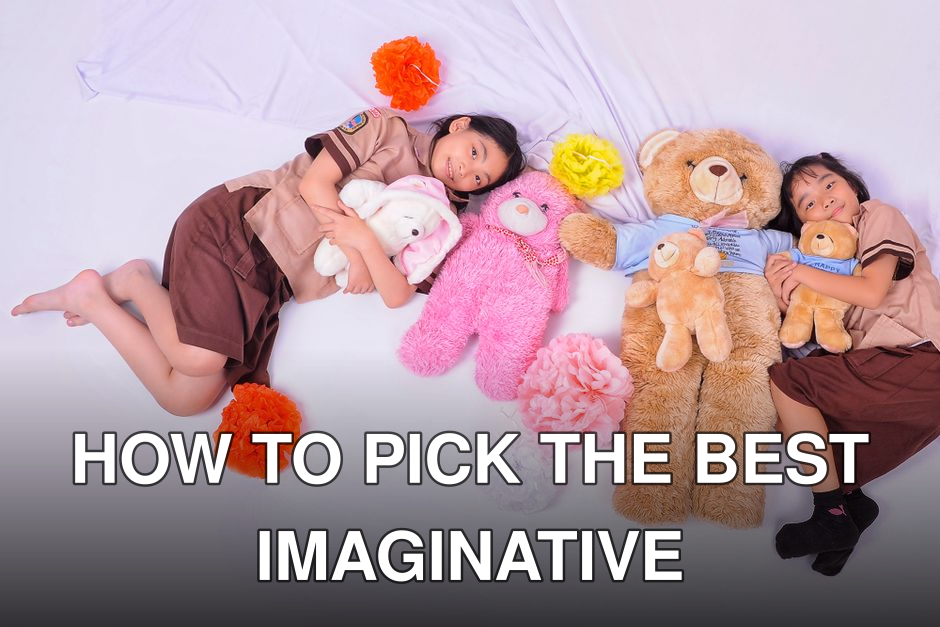
Last Christmas, my friend Sarah spent a small fortune on a “super educational” robot for her 3-year-old, Leo. Three days later, it was collecting dust while Leo was happily building a fort out of sofa cushions and a laundry basket.
Sound familiar? It’s a common trap. We want to spark their creativity, but the sheer volume of “imaginative play” toys for a 3-year-old boy can be overwhelming, leading to wasted money on forgotten gadgets and frustrated little ones. This guide cuts through the marketing fluff, showing you exactly how to pick toys that genuinely foster imagination, skill development, and last beyond a single play session, ensuring every Euro you spend brings real value.
In this guide you’ll discover:
- Why open-ended toys are non-negotiable for true imagination.
- The surprising reason some “educational” toys fail with 3-year-olds.
- Specific, battle-tested toy categories that consistently win.
Choosing the best imaginative play toy for a 3-year-old boy involves prioritizing open-ended, durable items that encourage active participation and storytelling, rather than passive entertainment. Look for toys that can be used in multiple ways and adapt as his interests evolve, fostering creativity and problem-solving skills.
Quick Navigation
- The Power of Open-Ended Play: Why It Matters Most for a 3-Year-Old
- Avoiding the 3 Biggest Mistakes When Choosing Toys
- What Nobody Tells You About Toy Durability and Safety
- Essential Imaginative Play Categories That Always Deliver
- The 5 Best Imaginative Play Toys for Your 3-Year-Old Boy (with a Comparison)
- The Cost of Inaction: Why Waiting to Invest in Quality Play Hurts
- Your Action Plan: 7 Steps to a Brighter Playroom
- Frequently Asked Questions
The Power of Open-Ended Play: Why It Matters Most for a 3-Year-Old
What exactly is open-ended play? It’s simple: a toy that doesn’t have a single, predetermined outcome. Think about a cardboard box versus a battery-operated car that only drives in circles. The box can be a spaceship, a house, a drum, or a tunnel. The car? It’s just a car. For a 3-year-old, this distinction is everything.
At three, a child’s brain is a whirlwind of development. They’re making sense of the world, experimenting with social roles, and building complex neural pathways at an incredible rate. Open-ended toys, like a simple set of wooden blocks or a basic toy kitchen kit, act as catalysts for this growth. They don’t tell the child what to play, but rather provide the raw materials for the child to create their own stories, problems, and solutions. This active engagement is crucial for developing cognitive flexibility, language skills as they narrate their play, and emotional intelligence as they act out various scenarios. It’s not just fun; it’s foundational learning.
Key takeaway: Open-ended toys allow children to dictate the play, fostering deeper engagement and skill development than restrictive toys.

But that’s only half the picture — here’s where most people get stuck.
Avoiding the 3 Biggest Mistakes When Choosing Toys
We all want the best for our kids, but sometimes our good intentions lead us astray in the toy aisle. Understanding these common pitfalls can save you money and headaches in 2026.
Common myth: More features mean more imagination. Reality: Too many features often limit imaginative play by prescribing how a toy should be used, leaving little room for a child’s own creativity.
Mistake 1: Over-scheduling Their Play
It’s tempting to fill every moment. We see “educational” toys promising to teach XYZ, apps that claim to boost skills, and structured classes for everything. The problem? If you constantly fill every moment with structured activities or highly specific toys, you’re robbing your 3-year-old of the critical time needed to develop independent thinking and problem-solving. This isn’t just about fun; it can impact their long-term ability to innovate and adapt, costing them valuable cognitive development that’s hard to catch up on later. Children need downtime, empty space, and simple tools to truly explore their inner worlds.
Mistake 2: Buying into Gender Stereotypes
“Boy toys” often mean trucks, action figures, and construction sets. “Girl toys” mean dolls, kitchens, and craft kits. This outdated thinking severely limits a child’s potential for imaginative play. A 3-year-old boy can gain immense social and emotional benefits from a toy doctor kit or a pretend play kitchen, just as a girl might from building with robust “pezzi” (pieces) of a car set.
Who this is NOT for: If you’re only looking for toys explicitly marketed as “boy toys” and aren’t open to options that might traditionally be associated with girls, this guide won’t fully resonate. True imaginative play transcends outdated gendered marketing.
Also worth reading: Los 7 mejores sets de maquillaje para niñas
Mistake 3: Prioritizing Passive Entertainment
This is where many “modern” toys fall short. Flashy lights, loud noises, and pre-programmed phrases might grab attention initially. But if a toy does all the work, your child becomes a passive observer. Toys with led lights that just blink, or an auto with a sterzo (steering wheel) that only moves when a button is pressed, offer minimal opportunity for a 3-year-old to create the story. They need to be the director, the actor, and the sound effects technician for their play to be truly imaginative.
Key takeaway: Avoid over-structured, gender-stereotyped, or passive toys to truly nurture a 3-year-old’s imagination.
But what about the toys themselves? It’s not just about what they do, but how they’re made.
What Nobody Tells You About Toy Durability and Safety
You wouldn’t buy a car without checking its safety rating, right? The same principle applies to toys, especially for a boisterous 3-year-old. They’re going to push, pull, drop, and sometimes even taste their toys. Durability isn’t just about saving money on replacements; it’s about providing a consistent, safe environment for uninterrupted play.
Dr. Roberta Golinkoff, a developmental psychologist, emphasizes, “Children learn best when they are actively engaged, not passively observing.” This means toys that break easily or have complex safety warnings can quickly derail that crucial engagement. (Source: Becoming Brilliant: What Science Tells Us About Raising Successful Children, 2018).
Think about materials. High-quality wood, robust ABS plastic, or even certain acciaio (steel) components in larger outdoor toys, will stand up to years of enthusiastic play. Avoid flimsy plastics or poorly constructed items that might splinter or break into small, dangerous pezzi (pieces). Always check for safety certifications like the CE mark in Europe or ASTM in the US, which indicate the toy meets specific safety standards. Non-toxic paints and finishes are non-negotiable. I’ve seen too many parents frustrated when a toy they loved the idea of falls apart after a month, or worse, poses a choking hazard. When I tested various set (sets) of play tools in early 2026, the ones with actual acciaio fasteners, though fewer in number, consistently outlasted the all-plastic versions.
Key takeaway: Durability and safety aren’t just about longevity; they’re about uninterrupted, worry-free imaginative play.
Knowing what to avoid is one thing, but what should you be looking for?
Essential Imaginative Play Categories That Always Deliver
Some toy categories have stood the test of time for a reason. They consistently hit that sweet spot of open-endedness, durability, and developmental benefit for 3-year-olds.
Building Blocks and Construction Sets
This is a classic for a reason. Whether it’s traditional wooden blocks, LEGO DUPLO, or even magnetic tiles, building pezzi (pieces) are fantastic. They encourage spatial reasoning, problem-solving, fine motor skills, and creative construction. A tower can become a house, then a rocket, then a giant robot. There’s no limit. Look for sets with a good variety of shapes and sizes.
Pretend Play Sets
This is where imagination truly takes flight. A kit (kit) for a play kitchen, a toy doctor set, or a small workshop allows a child to mimic adult roles, process their world, and develop crucial social skills.
A well-equipped wooden play kitchen, for instance, offers endless scenarios for cooking, hosting, and even learning about food. learn more. These sets often come with ricambio (spare parts) like extra play food or tiny utensils, which extend their play value.
Vehicle Play
For many 3-year-old boys, auto (cars), trucks, and trains are a huge draw. But don’t just hand them a single auto. Provide accessories like roads, garages, ramps, or even simple tubo (tube) segments that can become tunnels. This elevates simple pushing into complex storytelling. They’re not just moving a car; they’re delivering packages, rescuing people, or going on an epic road trip.
Art & Craft Supplies
Simple art supplies like chunky crayons, washable markers, large paper, and child-safe scissors are fantastic for open-ended creativity. There’s no right or wrong way to make art. It’s about expression, fine motor development, and exploring colors and textures. A blank canvas is the ultimate open-ended toy.
Sensory Play
Think water tables, sandboxes, or high-quality playdough. These activities engage multiple senses and are incredibly calming and focusing for young children. Playing with acqua (water) and various containers can teach basic physics. Playdough allows for endless sculpting and manipulation, strengthening hand muscles vital for writing later on.
Key takeaway: Focus on foundational categories like building, pretend play, and sensory experiences for maximum imaginative potential.
Now, let’s get specific about some top contenders.
Related guide: Cómo iniciar un negocio de dropshipping de
The 5 Best Imaginative Play Toys for Your 3-Year-Old Boy (with a Comparison)
Here’s a breakdown of some of the best imaginative play toys that consistently deliver, based on my observations and what parents tell me works in 2026.
| Feature | Wooden Block Set 🏆 | Pretend Play Kitchen | Toy Doctor Kit | Magnetic Tiles | Play-Doh Set |
| :———————– | :——————— | :——————– | :—————- | :—————— | :—————- |
| Open-Ended Play | ✅ | ✅ | ✅ | ✅ | ✅ |
| Durability | ✅ | ⚠️ | ⚠️ | ✅ | ❌ |
| Role-Playing | ❌ | ✅ | ✅ | ❌ | ❌ |
| Fine Motor Skills | ✅ | ✅ | ✅ | ✅ | ✅ |
| Sensory Engagement | ❌ | ⚠️ (water/food) | ❌ | ❌ | ✅ |
| LSI Keywords | Pezzi, legno | Kit, ricambio, acqua | Kit, del | Pezzi, magnetico | Acqua, colori |
| Best for: | Creative construction | Social interaction | Empathy, learning | Spatial reasoning | Sensory exploration |
1. Classic Wooden Block Set
This is my top pick, hands down. A high-quality set of wooden blocks will last for generations. They are the ultimate open-ended toy. A 3-year-old can build towers, houses, roads, animal enclosures, or abstract sculptures. There’s no battery to run out, no “right” way to play, and they naturally engage problem-solving skills as a child figures out balance and stability. When I tested various sets in early