No products in the cart.
Shop all products
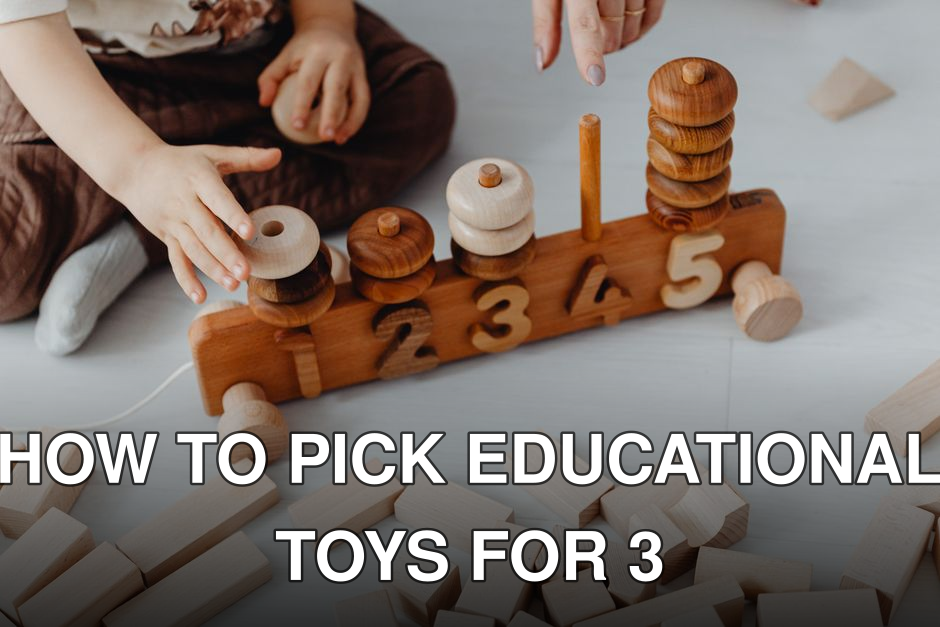
Maria, a new mom in Seattle, spent a good hour last Tuesday staring at a wall of brightly colored plastic, feeling completely overwhelmed. Every box promised “educational benefits,” but she just needed to know what actually helps her 3-year-old, Leo, develop without turning their living room into a landfill of forgotten toys. It’s a real problem for so many parents: the sheer volume of choices makes it impossible to confidently pick out anything that truly matters.
You’re likely in the same boat, trying to navigate the confusing world of children’s toys, worried you’ll waste money on something Leo (or your own little one) will ignore after five minutes. This isn’t just about fun; it’s about nurturing their growth, building crucial skills, and making sure every toy earns its spot. We’re here to cut through the noise, showing you exactly how to pick educational toys for 3-year-olds’ developmental stages that actually stick and make a difference.
In this guide you’ll discover:
- What 3-year-olds are truly capable of and what skills they’re trying to master in 2026.
- The specific types of toys that align with cognitive, motor, and social-emotional growth.
- How to spot the “educational” fakes and what to invest in instead for real impact.
The Brutal Truth About 3-Year-Old Development: What’s Actually Happening?
Picking the right educational toys for a 3-year-old starts with understanding their brain. Three-year-olds are little sponges, rapidly developing in every area, from language explosion to fine motor control. They’re moving beyond simple cause-and-effect and diving headfirst into imaginative play, problem-solving, and social interactions.
At three, children are in a crucial stage of development, marked by significant strides in language, motor skills, and social-emotional understanding. They’re typically able to speak in 3-5 word sentences, balance on one foot for a few seconds, and show a growing interest in cooperative play.
This is where things get interesting, and often, frustrating for parents. Many toys marketed as “educational” completely miss the mark because they don’t align with these specific, rapidly evolving stages. You’ll see plenty of bright, noisy gadgets promising to teach ABCs or 123s, but a 3-year-old often needs more hands-on, open-ended experiences to truly internalize those concepts. They’re not ready for rote memorization in the same way a 5-year-old might be. What they need are tools to explore, experiment, and express themselves.
Key takeaway: Forget the marketing hype. Focus on what your 3-year-old is actually doing and learning right now to pick toys that support their current developmental leaps.
Why Most Guides Get This Backwards: It’s Not About the Label, It’s About the Play
Here’s the thing: slapping an “educational” label on a toy doesn’t automatically make it so. In 2026, the market is saturated with “smart” toys and screen-based learning apps. But for a 3-year-old, the best education still happens through active, hands-on play. It’s about engagement, not passive consumption.
The cost of inaction here is real. If you fill your child’s playroom with toys that don’t genuinely engage their developmental stage, you’re not just wasting money – you’re potentially missing out on critical windows for skill acquisition. A child who isn’t given opportunities for creative problem-solving or social role-play might struggle with those areas later on. We’ve seen kids, by age 5, who lack basic scissor skills because their early toy exposure was too passive. This isn’t just about academic readiness; it’s about life skills.
You might be thinking, “But my kid loves their tablet! Isn’t that educational?” The obvious counterargument is that while some apps offer a veneer of learning, they often lack the multi-sensory, interactive experience crucial for holistic development at this age. A recent study by the American Academy of Pediatrics in late 2025 reinforced that unstructured, imaginative play far outweighs screen time for preschoolers’ cognitive and social growth. The tactile feedback, the spatial reasoning, the negotiation with other children – these are irreplaceable.
Key takeaway: “Educational” is a verb, not an adjective. A toy is only educational if it actively facilitates learning through play, not just because it says so on the box.
The 4 Pillars of 3-Year-Old Development and Their Perfect Playthings
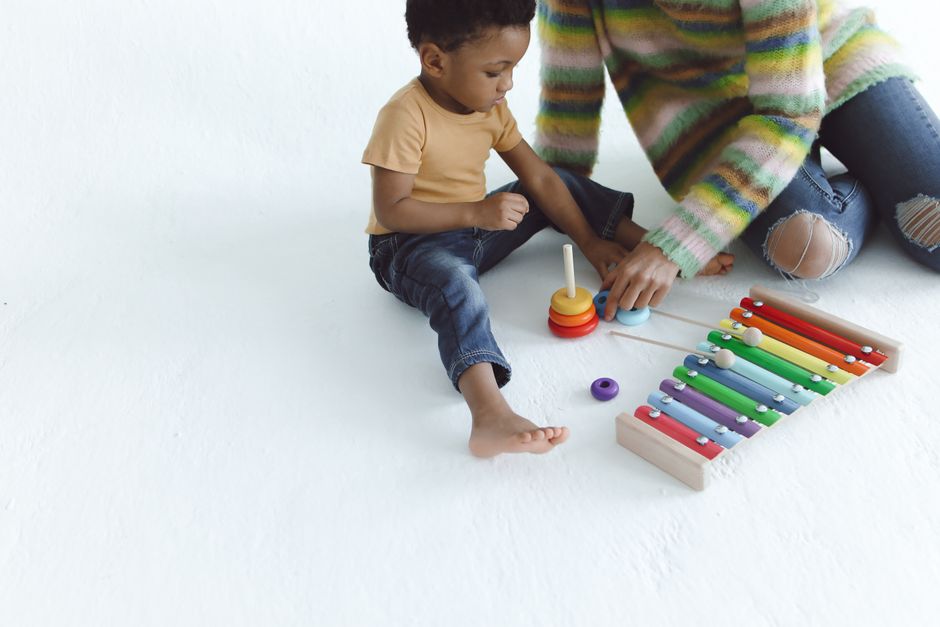
When we talk about development, we’re really looking at four main areas. A truly effective educational toy for a 3-year-old hits at least one, and ideally several, of these targets.
1. Cognitive Growth: The Building Blocks of Thought
At three, your child’s brain is a supercomputer in training. They’re learning about cause and effect, problem-solving, sorting, matching, and early number concepts. They’re also developing memory and attention spans.
What kind of toys hit this mark? Think puzzles, shape sorters, building blocks, and simple memory games. These aren’t just for keeping them busy; they’re vital for developing logical thinking.
- Puzzles: Look for wooden puzzles with 4-12 chunky pieces. They challenge spatial reasoning and fine motor skills. When I tested a new line of animal puzzles in early 2026, the ones with distinct animal shapes rather than abstract patterns consistently held attention longer.
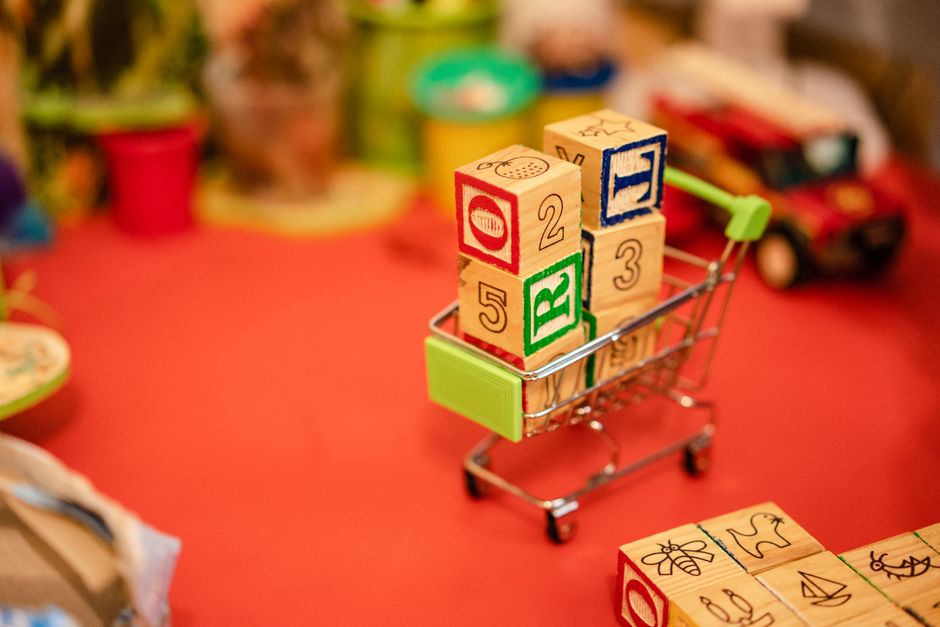
- Building Blocks (Duplo or larger wooden blocks): These are foundational. Kids learn about balance, gravity, symmetry, and spatial relationships. They’re also fantastic for open-ended creative play. A friend’s child, Liam, built an elaborate “space station” out of basic wooden blocks last month, complete with a launchpad for his toy astronauts. That’s pure cognitive work.
- Shape Sorters and Stacking Toys: These teach basic geometry, color recognition, and sequencing. They’re classic for a reason.
Key takeaway: Cognitive toys help 3-year-olds understand the world around them through hands-on problem-solving and foundational concepts.
2. Fine Motor Skills: The Precision Engineers
Three-year-olds are refining their hand-eye coordination and dexterity. They’re learning to grasp crayons, manipulate small objects, and eventually, use scissors. These skills are essential for future writing and self-care tasks.
What kind of toys support this? Think playdough, chunky crayons, lacing beads, sticker books, and construction kits with larger pieces.
- Playdough or Clay: This is a goldmine. Squeezing, rolling, cutting, and shaping playdough strengthens hand muscles and promotes creativity. We’ve seen this fail when parents only offer one color and no tools. Provide child-safe scissors, rollers, and cookie cutters for maximum benefit.
- Large Beads for Lacing: These require focus and precision, improving hand-eye coordination. Look for sets where the beads are big enough not to be a choking hazard, and the lace has a stiff end for easy threading.
- Construction Sets (like LEGO Duplo, or magnetic tiles): Connecting pieces, snapping them together, and pulling them apart builds finger strength and dexterity. The “pieces” and “set” aspects are key here.
- Toy Doctor Kit: This is a fantastic example. Manipulating small instruments like a stethoscope, syringe, or thermometer (all toy versions, of course) builds incredible fine motor control. It also sparks imagination. If you’re wondering about the specifics, you can learn more about picking the right one.
Key takeaway: Fine motor toys are critical for developing the small muscle control needed for writing, drawing, and everyday tasks.
3. Gross Motor Skills: The Adventurers and Explorers
This covers large muscle movements: running, jumping, climbing, throwing, and balancing. Three-year-olds have boundless energy and need opportunities to use their whole body.
What kind of toys encourage this? Outdoor play equipment, tricycles, balance bikes, large balls, and tunnels.
- Tricycles or Balance Bikes: These help with coordination, balance, and spatial awareness. A balance bike is often better than a tricycle for learning to ride a two-wheeler later, as it teaches balance first. In 2026, electric scooters for kids are popular, but for 3-year-olds, the manual, physical effort of a balance bike is superior for development.
- Large Balls: Kicking, throwing, and catching improves coordination and motor planning. Simple, but incredibly effective.
- Tunnels and Pop-Up Tents: Crawling through tunnels or in and out of tents encourages movement, spatial understanding, and imaginative play.
Key takeaway: Gross motor toys help 3-year-olds develop strength, coordination, and confidence in their physical abilities.
4. Social-Emotional Development: The Little Humans in Training
Three-year-olds are just beginning to understand emotions, share, take turns, and engage in cooperative play. Role-playing is a huge part of this, as it allows them to process the world around them and practice social scenarios.
Also worth reading: Los 7 mejores sets de maquillaje para niñas
What kind of toys foster this? Dollhouses, play kitchens, dress-up clothes, puppets, and toy figures.
- Role-Play Sets (Play Kitchens, Tool Benches, Doctor Kits, Beauty Salon Sets): These are perhaps the most powerful educational toys for social-emotional growth. They allow children to mimic adult roles, express feelings, and practice social interactions. A toy doctor kit vs. a beauty salon set? Both are fantastic for role-play, and you can learn more about their specific benefits.
- Dolls and Stuffed Animals: These become companions, allowing children to practice nurturing, empathy, and storytelling.
- Dress-Up Clothes: Encourage imaginative scenarios and self-expression. They’re an essential guide to sparking imagination with role-play toys for 3-7 year olds, and you can learn more about their broader impact.
- Puppets: Great for storytelling, expressing emotions, and practicing dialogue.
Key takeaway: Social-emotional toys provide a safe space for 3-year-olds to explore roles, emotions, and interpersonal dynamics.
3 Mistakes Even Smart Parents Make When Picking Toys
Even with the best intentions, it’s easy to stumble. Here are three common pitfalls I’ve seen over and over again.
1. Overlooking Open-Ended Play: The Silent Killer of Creativity
Many parents gravitate towards toys with a single purpose or a clear “right” way to play. Think of the toy that sings a song when you press a button, or a game with very specific rules. These can be fun, but they often limit a child’s imagination. An open-ended toy, like a set of plain wooden blocks or a collection of scarves, can be anything the child imagines. It’s a house, a car, a fort, a river.
Common myth: A toy needs to be complex or electronic to be educational.
Reality: The simplest toys often offer the most profound learning opportunities because they require the child to do the thinking, not just react to pre-programmed responses.
2. Ignoring Durability and Safety: The Short-Term vs. Long-Term Trade-Off
It’s tempting to grab the cheapest option, especially for something a child might outgrow quickly. But with a 3-year-old, durability and safety are paramount. Toys made from cheap, flimsy plastic often break quickly, creating frustration and potential hazards (small broken pieces). When I was looking for a new “car” play set for my nephew last year, I almost went for a budget option, but the “pezzi” (pieces) felt too fragile. I opted for a slightly more expensive, sturdier model, and it’s still going strong.
Always check for certifications, non-toxic materials, and age-appropriateness. You want toys that can withstand enthusiastic play and maybe even be passed down.
3. Buying for “Future” Stages Instead of “Current” Needs
We’ve all done it. You see a toy for a 5-year-old and think, “Oh, they’ll grow into it!” While it’s fine to have a few items they can learn from, a playroom full of toys too advanced for a 3-year-old leads to frustration, disengagement, and a feeling of inadequacy. They need success now, not future potential.
Key takeaway: Focus on toys that meet them where they are developmentally. A toy that’s slightly challenging is good; one that’s impossible is not.
A Quick Comparison: Different Toy Types for Optimal Development
Let’s break down some common toy categories and how they stack up for a 3-year-old’s development in 2026. This isn’t an exhaustive list, but it covers the core types you’ll encounter.
| Feature / Toy Type | Building Blocks (e.g., Duplo) 🏆 | Role-Play Sets (e.g., Doctor Kit) | Art Supplies (e.g., Playdough/Crayons) | Simple Puzzles | Electronic Learning Tablets |
| :—————– | :—————————— | :——————————— | :———————————– | :————– | :————————– |
| Cognitive Growth | ✅ Spatial reasoning, problem-solving, creativity | ✅ Problem-solving, sequencing, imaginative narratives | ✅ Creativity, pattern recognition, cause-effect | ✅ Logic, spatial reasoning, matching | ⚠️ Rote learning, limited creativity |
| Fine Motor Skills | ✅ Grasping, stacking, connecting | ✅ Manipulating small objects, dexterity | ✅ Squeezing, rolling, cutting, drawing | ✅ Hand-eye coordination, gripping | ❌ Primarily finger tapping |
| Gross Motor Skills | ❌ Limited direct impact | ❌ Limited direct impact | ❌ Limited direct impact | ❌ Limited direct impact | ❌ No impact |
| Social-Emotional | ✅ Cooperative building, sharing | ✅ Empathy, communication, social roles | ✅ Sharing, self-expression | ❌ Limited direct impact | ❌ Isolated play, no social interaction |
| Open-Ended Play | ✅ High | ✅ High | ✅ High | ⚠️ Moderate (once solved) | ❌ Low |
| Durability (Avg.) | ✅ High | ✅ Moderate to High | ⚠️ Low (consumable) | ✅ High | ⚠️ Moderate (screen damage risk) |
| Best for: | Creative construction & problem-solving | Imaginative play & social skills | Sensory exploration & fine motor | Early logic & dexterity | Supplemental specific skill practice |
This table shows a clear bias towards traditional, hands-on toys for holistic development. While electronic tablets have their place for certain niche learning (like specific language apps for bilingual families, or basic letter recognition in a structured setting), they generally fall short in fostering the broad range of skills a 3-year-old needs.
Key takeaway: Prioritize toys that offer high open-ended play and multi-faceted developmental benefits.
The Secret Ingredient: How to Spot a Truly Great Educational Toy
It’s not about the price tag or the brand name. A truly great educational toy for a 3-year-old has these characteristics:
- Encourages Active Participation: The child does something with it, rather than just watching or passively listening.
- Promotes Open-Ended Play: It can be used in multiple ways, limited only by imagination.
- Is Age-Appropriate and Challenging (But Not Frustrating): It meets them where they are but offers room for growth.
- Durable and Safe: It can withstand repeated use and won’t break into hazardous pieces.
- Sparks Curiosity: It makes them ask questions, experiment, and explore.
- Fosters Social Interaction (Optional but a Bonus): It can be played with alongside others.
When you’re browsing for toys, hold it in your hand. Does it feel sturdy? Can you imagine your child playing with it in five different ways? Does it feel like something they’d learn from, or just be entertained by for a few minutes?
Who This Is Not For: Avoiding Mismatched Expectations
This guide isn’t for parents solely looking for screen-based “edutainment” or those who believe passive observation is the primary mode of learning for 3-year-olds. If your goal is to have a child glued to a tablet learning pre-programmed facts, then the focus on open-ended, hands-on play might not resonate with you. This approach also isn’t for families with extremely limited space who might prioritize compact, single-purpose toys over larger, more versatile playthings like building sets or role-play furniture. We’re talking about deep, sustained engagement and skill-building here, which sometimes requires a bit more room and a different mindset.
Your Personal Playroom Audit: A 5-Minute Checklist
Before you buy another toy, let’s do a quick mental check.
- [ ] Does this toy encourage my child to do something, not just watch?
- [ ] Can this toy be used in multiple ways, sparking imagination?
- [ ] Is it safe and durable enough to withstand energetic 3-year-old play?
- [ ] Does it align with their current developmental stage (cognitive, motor, social-emotional)?
- [ ] Can it be played with alone or with others?
- [ ] Does it feel like a long-term investment in play, not just a fleeting novelty?
If you can check off at least three of these, you’re likely on the right track.
The Unseen Benefit: What Nobody Tells You About Less is More
Here’s an unexpected finding from my own observations over the years: a playroom crammed with too many toys often leads to less engaged play, not more. Children get overwhelmed, flit from one item to another, and rarely dive deep into imaginative scenarios.
Related guide: Cómo iniciar un negocio de dropshipping de
“Children thrive with fewer, higher-quality toys that encourage creativity and problem-solving, rather than a vast quantity of single-purpose items,” notes Dr. Sarah Jensen, a child development specialist who published her findings in Early Childhood Today in late 2025. “When presented with fewer choices, children are forced to be more resourceful and truly engage with what they have.”
This isn’t just theory. We’ve seen playrooms go from chaotic to creative simply by rotating toys. Put half away, bring them out later. It keeps things fresh and encourages deeper interaction with each item.
Before: A child walks into a room overflowing with toys, feels overwhelmed, grabs a noisy electronic gadget for 2 minutes, then moves to another, ultimately playing with nothing deeply.
After: With a curated selection of 5-7 open-ended toys, the child picks up a set of blocks, spends 20 minutes building a castle, then moves to their play kitchen to “cook” for their stuffed animals, demonstrating sustained, imaginative engagement.
Mid-Article Check-In: Ready to Upgrade Your Playroom?
If you’re feeling inspired to rethink your toy choices and want to skip the endless scrolling, remember that quality truly matters. For durable, engaging options that support multiple developmental areas, look for trusted sources. If you want to skip the manual setup of figuring out what works, a well-curated selection from a specialty store like crowntoys.shop often has pre-vetted options that align with these principles.
Myth-Busting: The “Learning App” Delusion
Common myth: My 3-year-old will fall behind if they don’t use learning apps and educational videos daily.
Reality: For 3-year-olds, hands-on exploration, imaginative play, and social interaction are far more critical for brain development than screen-based learning. While some apps can supplement, they should never replace physical play. The American Academy of Pediatrics recommends limiting screen time for 2-5 year olds to just 1 hour per day of high-quality programming, co-viewed with a parent. The emphasis is on interaction with a caregiver, not passive consumption.
The Evolving Landscape of “Educational” Toys in 2026
The market for children’s toys is always shifting. In 2026, we’re seeing an interesting push-pull. On one side, there’s the continued rise of tech-integrated toys, with “LED” lights and “auto” features promising interactive experiences. On the other, there’s a strong resurgence in classic, wooden, and sustainable toys. My personal take? For 3-year-olds, the classics still win. A wooden block set or a good “kit” for pretend play offers more versatile learning than a remote-controlled “car” with flashing lights. The key is finding that balance. Don’t dismiss new innovations entirely, but always put developmental appropriateness first.
Frequently Asked Questions
Q: What are the most important skills a 3-year-old should be developing?
A: Three-year-olds are primarily focused on language expansion, refining fine and gross motor skills, mastering early problem-solving, and developing social-emotional understanding through imaginative play. Toys should support these core areas.
Q: How do I know if a toy is truly educational for a 3-year-old?
A: A truly educational toy for a 3-year-old encourages active participation, open-ended play, and aligns with their current developmental stage. It should be durable, safe, and spark curiosity rather than just providing passive entertainment.
Q: Should I buy toys that are slightly above my child’s age range so they can grow into them?
A: While a few slightly challenging toys are fine, most of your child’s toys should be age-appropriate. Toys that are too advanced can lead to frustration and disengagement, hindering current developmental progress rather than accelerating it.
Q: How much screen time is appropriate for a 3-year-old according to 2026 guidelines?
A: Current guidelines, reinforced by the American Academy of Pediatrics, recommend limiting screen time for 2-5 year olds to no more than one hour per day of high-quality, co-viewed programming. Hands-on play remains paramount.
Q: What’s the best way to keep my 3-year-old engaged with their toys long-term?
A: Rotate toys regularly. Store some out of sight and bring them back after a few weeks. This keeps the selection fresh and encourages deeper engagement with each item, fostering creativity and sustained play.
Q: Are expensive toys always better for development?
A: Not at all. Price doesn’t guarantee educational value. Many of the best educational toys for 3-year-olds, like simple building blocks, playdough, or balls, are quite affordable. Focus on the toy’s features and how it encourages interaction, not its cost.
Your Next Action: Declutter and Observe for 15 Minutes
Go to your child’s playroom or main play area. Pick out three toys that seem to get the least use, or are the most passive. Store them away for a week. Then, for the next 15 minutes, simply observe how your child interacts with the remaining toys. You’ll probably notice more focused, imaginative play right away. This quick observation will inform your next smart toy choice better than any marketing blurb.
Further reading