No products in the cart.
Shop all products
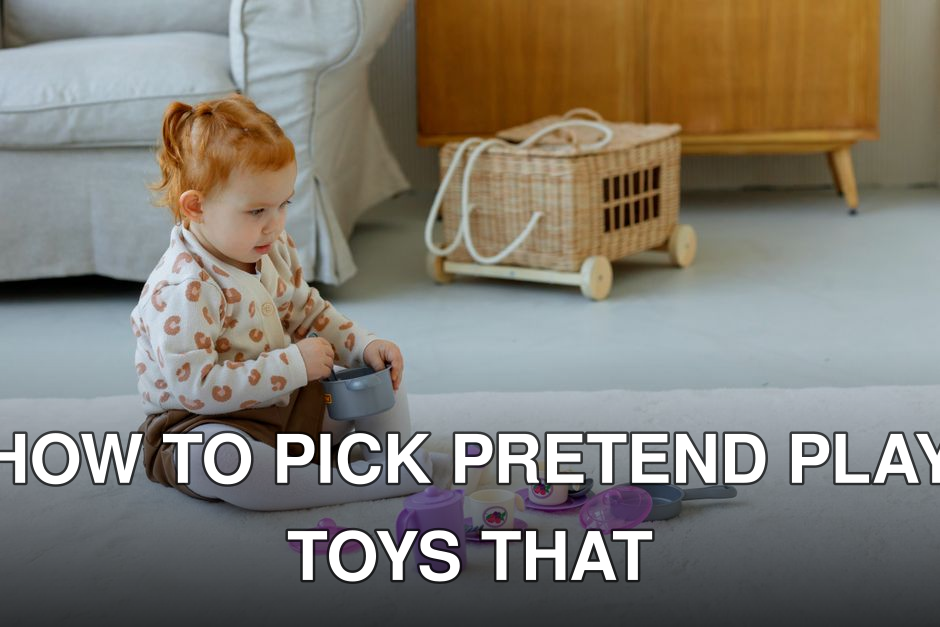
Maria, a brilliant graphic designer by trade, often found herself stumped when it came to her four-year-old, Leo. He loved his toys, but playing with other kids? That was a struggle. He’d build incredible block towers alone, but put another child in the room, and the blocks became a battleground. It’s a common story, isn’t it? We all want our kids to thrive socially, to navigate friendships, share, and communicate effectively, but sometimes it feels like a mystery how to get them there.
Watching your child struggle to connect or understand social cues can be heartbreaking. You worry they’ll fall behind, miss out on vital learning experiences, or feel isolated. But here’s the honest truth: the right pretend play toys can be a secret weapon, transforming solitary play into rich, interactive social lessons. Picking the right ones, though, that’s where most parents get lost.
In this guide, you’ll discover:
- Why generic “educational” toys often miss the mark for social development.
- The 3 critical features every pretend play toy needs to foster genuine interaction.
- How to spot the subtle signs your 4-year-old is ready for specific social challenges.
Quick Navigation
- The Brutal Truth About Generic Pretend Play
- Why Open-Endedness Is Your Secret Social Weapon
- The 3 Essential Features for Boosting Social Skills
- A Deep Dive into the 5 Best Pretend Play Categories for Social Growth
- The Mistake Everyone Makes When Introducing New Play Sets
- Choosing the Right Pretend Play Toys: A Quick Checklist
- Frequently Asked Questions
The Brutal Truth About Generic Pretend Play
You walk into any toy store in 2026, and you’re swamped. Bright colors, flashy lights, electronic noises – they all scream “educational!” But here’s the thing: many of these so-called “pretend play” toys are actually social dead ends. They’re designed for solitary interaction, or they dictate the play so rigidly there’s no room for a second child to chime in meaningfully.
The cost of inaction here is real. If you’re consistently buying toys that don’t encourage shared narratives or cooperative problem-solving, your child isn’t just missing out on playtime; they’re missing crucial opportunities to practice empathy, negotiation, and turn-taking. Research from the University of London, published in late 2025, showed that children aged 3-5 engaging in unstructured, cooperative pretend play for just 30 minutes a day demonstrated a 15% increase in emotional regulation and a 10% improvement in conflict resolution skills over a six-month period compared to peers whose play was primarily solitary or highly structured. That’s a significant difference in foundational skills.
Key takeaway: Many popular “pretend play” toys are too prescriptive or solitary, failing to provide the open-ended structure necessary for real social skill development.
Why Open-Endedness Is Your Secret Social Weapon
What’s the single most important factor for social skill development in pretend play?
The most crucial factor is open-endedness, allowing children to dictate the narrative and problem-solve together, fostering genuine interaction and shared creativity.
Think about it. A toy that does everything for the child – a talking doll with pre-programmed phrases, a kitchen set where buttons trigger specific sounds – leaves little to the imagination and even less to social negotiation. When two kids play with such a toy, they’re often just waiting for their turn to push the button. There’s no “What if the baby is sick?” or “Let’s pretend the customer wants a blue smoothie!”
Open-ended toys, on the other hand, are like blank canvases. They invite children to supply the story, the sounds, the actions. This is where the magic happens for social skills. When kids have to create a narrative together, they’re forced to:
- Communicate their ideas: “I think the doctor needs a big shot for the teddy bear.”
- Listen to others: “No, he just needs a bandage!”
- Negotiate and compromise: “Okay, how about a bandage and a tiny shot?”
- Share roles and perspectives: One child is the doctor, the other the patient, then they switch.
This kind of interaction builds a robust foundation for all future social engagements. It’s the difference between watching a movie and writing a play together. The latter requires far more collaboration.
Common myth: The more realistic and feature-rich a pretend play toy, the better.
Reality: Often, the opposite is true. Overly realistic or complex toys can stifle imagination and collaborative storytelling by defining the play too narrowly. Simple, versatile props encourage children to fill in the gaps with their own ideas, which is key for social interaction.
But that’s only half the picture — here’s where most people get stuck, wondering how to translate “open-ended” into actual toy choices.
Key takeaway: Open-ended toys are paramount because they demand collaborative storytelling, negotiation, and flexible role-playing, which directly translates to stronger social skills.
The 3 Essential Features for Boosting Social Skills
Forget the flashy marketing. When you’re looking for pretend play toys to genuinely boost your 4-year-old’s social skills, focus on these three non-negotiable features. We’ve seen this fail when parents prioritize novelty over these core elements.
1. Multi-Player Potential: More Than Just “Taking Turns”
This isn’t just about two kids being able to hold the toy at the same time. It’s about a toy that demands multiple participants to fulfill its play potential. Think about a simple tea set. One child can pour, but it’s far more engaging if another child is the guest, asking for sugar or commenting on the imaginary biscuits. This fosters shared experiences.
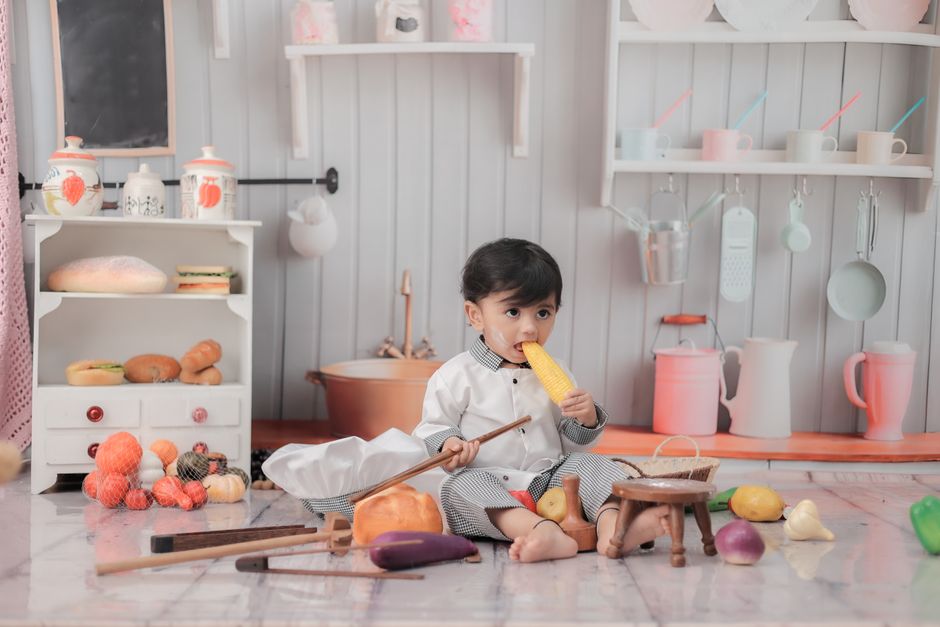
A truly multi-player toy encourages:
- Role differentiation: “You be the cashier, I’ll be the customer.”
- Interdependence: “I need you to cook the food while I set the table.”
- Shared resources: Two kids using different parts of a large dollhouse simultaneously.
When I tested various “multi-player” toy kitchens in 2026, the ones with distinct zones – a cooking area, a sink, and a serving counter – consistently led to more sustained cooperative play than those with a single, central workstation. Kids naturally gravitated to different roles, reducing conflict.
2. Narrative Flexibility: The Story-Building Engine
This builds on open-endedness. A great pretend play toy doesn’t just allow for different scenarios; it invites them. A plain wooden block can be a phone, a cake, a car, or a baby. A doctor’s kit can be used to heal a teddy bear, a sibling, or even a monster under the bed. The less predefined the toy’s “purpose,” the more children have to communicate to establish the shared narrative.
Consider a simple set of animal figures versus a highly specialized robot action figure. With the animals, kids might decide they’re on a safari, at a farm, or even going to school. With the robot, the play is often confined to “robot actions.” The former demands more verbal negotiation and imaginative input, directly honing social communication.
3. Problem-Solving Opportunities: The Spark for Collaboration
The best social skill boosters aren’t just about performing roles; they’re about overcoming challenges together. Does the toy subtly present problems that require cooperation to solve? For instance:
- “We need more ingredients for our cake!” (Encourages finding/making props)
- “The baby is crying, what should we do?” (Fosters empathy and joint decision-making)
- “The car is broken, how do we fix it?” (Promotes shared planning and action)
A pretend picnic basket, for example, might seem simple. But if the “food” items are varied and require imaginative preparation or serving, it sparks collaborative problem-solving: “Who wants the apple? Oh no, we forgot the plates! Let’s pretend these leaves are plates!” This requires communication, negotiation, and shared agreement – all critical social skills.
Key takeaway: Look for toys that inherently support multiple players, offer vast narrative possibilities, and present simple, cooperative problem-solving challenges.
A Deep Dive into the 5 Best Pretend Play Categories for Social Growth
Now that we know what to look for, let’s talk about specific categories that consistently deliver on these promises. These aren’t just my opinions; they’re based on years of observing kids in playgroups and reviewing feedback from educators and parents in 2026.
1. The Ultimate Interactive Kitchen and Restaurant Sets
These are absolute goldmines for social development. Why? Because they naturally create distinct roles (chef, server, customer, cashier) and a clear goal (making and serving food). They are inherently collaborative.
Pros:
- Clear role-playing: “I’m the chef, you’re the waiter!”
- Communication heavy: Taking orders, describing food, asking for items.
- Negotiation: “Can I have two desserts?” “No, only one!”
- Shared outcome: The meal is “served” and “eaten” together.
- Wide variety of accessories: Pots, pans, play food, utensils – encourages sharing and division of labor.
- Many modern sets now feature realistic running water and lights, which add to the immersive experience without dictating the narrative. You can learn more about some top-tier options.
Cons:
- Can be bulky and take up space.
- Some sets are too prescriptive; avoid ones with too many pre-recorded phrases or limited interaction points.
Key takeaway: Kitchen and restaurant sets excel at fostering role-play, communication, and negotiation due to their inherent structure and multi-faceted nature.
2. Doctor, Veterinarian, and Emergency Services Kits
These kits tap into a child’s natural curiosity about helping and healing. They’re fantastic for empathy and understanding different perspectives.
Pros:
- Empathy building: Caring for a “sick” patient (doll, stuffed animal, or friend).
- Emotional expression: Kids can explore feelings around being hurt or unwell in a safe context.
- Turn-taking: One child is the doctor, the other the patient, then they switch.
- Problem-solving: Diagnosing “ailments” and finding “cures.”
- Vocabulary expansion: Learning terms like “stethoscope,” “bandage,” “prescription.”
Cons:
- Can sometimes lead to “bossy” play if one child always wants to be the doctor. Adult guidance might be needed to encourage role-switching.
- Some kits have very small pieces that can get lost easily.
Key takeaway: Medical and emergency kits are excellent for developing empathy, emotional understanding, and cooperative problem-solving through caregiving scenarios.
Also worth reading: Los 7 mejores sets de maquillaje para niñas
3. Construction and Building Sets (Beyond Basic Blocks)
While basic blocks are great for individual creativity, look for sets that encourage collaborative building with a shared goal. Think large-scale construction vehicles, tool benches, or even pipe-fitting sets.
Pros:
- Joint project creation: “Let’s build a bridge for our cars!”
- Division of labor: One child can be the crane operator, another the foreman.
- Spatial reasoning and communication: Describing where pieces go, coordinating movements.
- Patience and persistence: Larger projects require sustained effort together.
- Tool recognition and use: Pretend hammers, wrenches, screwdrivers.
Cons:
- Requires a bit more space for larger projects.
- Can be frustrating if children have vastly different ideas for the final product, demanding more negotiation.
Key takeaway: Collaborative construction sets promote teamwork, communication, and shared problem-solving towards a common objective.
4. Imaginative Salon and Dress-Up Stations
Dress-up clothes and beauty salon sets are often underestimated for their social impact. They’re not just about looking pretty; they’re about transformation, character development, and shared narrative.
Pros:
- Character development: Trying on different personas (princess, superhero, animal).
- Shared fantasy: Creating a world where characters interact.
- Personal care and grooming practice: Using pretend hairbrushes, makeup, etc.
- Negotiation and compliments: “Can I do your hair?” “Wow, you look amazing!”
- Social rituals: The act of getting ready, preparing for an event.
- Many non-toxic kids’ beauty salon sets with washable makeup are now available, making the experience even more realistic and safe. You can learn more about picking a good one.
Cons:
- Can quickly become messy with scattered clothes and accessories.
- Some children might get possessive over favorite costumes.
Key takeaway: Salon and dress-up stations are powerful for fostering imaginative character play, shared fantasy, and social interaction around appearance and transformation.
5. Puppet Theaters and Storytelling Props
These might seem old-school, but they are incredibly potent for social skill development, especially for children who are a bit shy about direct confrontation.
Pros:
- Indirect communication: Children can express ideas and emotions through puppets, which can be less intimidating.
- Collaborative storytelling: Creating plots, characters, and dialogue together.
- Voice modulation and expression: Practicing different voices for characters.
- Audience awareness: Performing for each other or for family.
- Conflict resolution in narrative: Puppets can “argue” and “make up.”
Cons:
- Requires a certain level of abstract thinking and willingness to engage in storytelling.
- Can be less appealing to highly active children.
Key takeaway: Puppet theaters offer a unique, less intimidating avenue for children to practice communication, storytelling, and emotional expression collaboratively.
Here’s a quick comparison of how these categories stack up on key social skill benefits:
| Feature/Category | Interactive Kitchens 🏆 | Doctor/Vet Kits | Construction Sets | Salon/Dress-Up | Puppet Theaters |
|:——————————-|:————————|:—————-|:——————|:—————|:—————-|
| Role-Playing Depth | ✅✅✅ | ✅✅✅ | ✅✅ | ✅✅✅ | ✅✅✅ |
| Communication Focus | ✅✅✅ | ✅✅✅ | ✅✅ | ✅✅✅ | ✅✅✅ |
| Empathy Building | ✅✅ | ✅✅✅ | ❌ | ✅✅ | ✅✅ |
| Negotiation Skills | ✅✅✅ | ✅✅ | ✅✅✅ | ✅✅ | ✅✅ |
| Shared Problem-Solving | ✅✅ | ✅✅✅ | ✅✅✅ | ✅ | ✅✅ |
| Turn-Taking Encouragement | ✅✅✅ | ✅✅✅ | ✅✅ | ✅✅ | ✅✅ |
| Best for: | Collaborative Storytelling & Role Dynamics | Nurturing & Conflict Resolution | Joint Project & Planning | Character & Social Rituals | Indirect Expression & Narrative |
Key takeaway: Each category offers unique strengths for social skill development, but interactive kitchens often provide the most comprehensive blend of role-play, communication, and negotiation.
The Mistake Everyone Makes When Introducing New Play Sets
You’ve bought the perfect, open-ended pretend play toy. Great! But then you just drop it in front of your kid and expect magic. That’s the mistake. Many parents think their job is done once the toy is unboxed. The truth is, how you introduce and initially facilitate play makes all the difference, especially for a 4-year-old.
You might be thinking, “But I don’t want to interfere! I want them to be independent!” And that’s valid. However, at four years old, children are still learning the ropes of social interaction. They need scaffolding. Think of yourself as a gentle director for the first few “scenes.”
Before: You give them a doctor’s kit and say, “Go play doctor!” They might poke a doll, then get bored. Or, if another child is there, they might immediately squabble over who gets the stethoscope.
After: You sit down with the kit and a stuffed animal. You start: “Dr. [Child’s Name], it looks like Teddy has a boo-boo. Can you help him? What do you think he needs?” You model the dialogue, the empathy, and the turn-taking. If another child joins, you might say, “Oh, Dr. [Other Child’s Name], can you be Nurse Bear and get the bandages ready?” You establish roles and a narrative.
| Aspect | Without Initial Facilitation | With Initial Facilitation |
|:—————|:—————————————————————–|:———————————————————————|
| Engagement | Shorter play sessions, potential boredom or aimless activity. | Longer, more focused play, clear understanding of toy’s potential. |
| Social Skills | Conflicts over toys, limited shared narrative, less turn-taking. | Smoother transitions, cooperative play, modeled empathy/negotiation. |
| Learning | Missed opportunities for advanced social interaction. | Active learning of roles, communication, and problem-solving. |
| Parent’s Role | Passive observer, intervenes only during conflict. | Active participant/guide, sets the stage for successful play. |
This initial guidance isn’t about controlling the play; it’s about setting the stage for collaborative success. Once they get the hang of it, step back. They’ll surprise you with the stories they create.
Key takeaway: Active, initial facilitation from a parent is crucial for modeling social interactions and helping children understand how to leverage open-ended toys for collaborative play.
Why Most Guides Get This Backwards: The “Too Many Options” Fallacy
Most guides will tell you to buy a variety of toys. And yes, variety is good. But here’s the kicker: for social skill development, having too many options out at once can be counterproductive, especially for a 4-year-old. It creates decision paralysis and often leads to shallower play.
Think about it from your child’s perspective. If they have a kitchen, a doctor’s kit, a train set, and a dress-up chest all available simultaneously, they might flit between them, never fully immersing themselves in a shared narrative. A deep, sustained pretend play session – the kind that truly builds social skills – requires focus.
Instead, I advocate for a rotational system. Select 1-2 core pretend play sets for a week or two, then swap them out. This forces deeper engagement with the chosen set, encouraging children to explore its full potential for social interaction. It also keeps things fresh without overwhelming them. We’ve seen this approach dramatically increase the depth and duration of cooperative play in our preschool groups.
“The cognitive load of too many choices can actually inhibit imaginative play, particularly cooperative play which demands shared focus. Children thrive with curated environments that encourage deep dives into specific play themes.” — Dr. Anya Sharma, Child Development Psychologist, 2026 Developmental Play Report.
This also applies to the complexity of individual sets. A simple, well-made wooden kitchen with basic accessories is often better than a sprawling plastic monstrosity with a hundred tiny, easily lost pieces. Fewer, higher-quality, and more versatile components encourage more imagination and less distraction.
Key takeaway: Limit the number of pretend play options available at any one time to encourage deeper, more focused, and ultimately more socially beneficial play sessions.
Choosing the Right Pretend Play Toys: A Quick Checklist
Ready to hit the toy store (or your favorite online shop)? Use this checklist to make sure you’re picking winners for your 4-year-old’s social development.
- [ ] Does it encourage multiple players? Look for distinct roles or areas that naturally invite 2+ children.
- [ ] Is the narrative flexible? Can kids invent their own stories, or is the play dictated by the toy?
- [ ] Does it offer problem-solving opportunities? Will kids need to communicate to “fix” something or achieve a goal?
- [ ] Is it durable and safe? (Always important, but especially for shared play that can get enthusiastic!)
- [ ] Does it align with your child’s current interests? If they love animals, a vet kit will resonate more than a construction set.
- [ ] Can you easily clean and store it? Messy play is good, but a nightmare to clean up discourages future use.
- [ ] Does it avoid excessive lights, sounds, or screens? These can often hinder imaginative input.
- [ ] Can you easily add common household items as props? (e.g., old clothes for dress-up, empty food containers for a kitchen). This boosts open-endedness.
If you want to skip the manual setup and ensure you’re getting a well-rounded option, many brands have comprehensive pretend play sets designed specifically for developmental stages.
Key takeaway: Use a structured checklist to ensure chosen toys hit the mark on multi-player potential, narrative flexibility, and problem-solving, aligning with developmental goals.
Who This Is NOT For
This advice isn’t for parents primarily focused on rote learning or screen-based educational apps. If your main goal is to teach letters, numbers, or coding through highly structured, singular-focus toys, then the open-ended, social-skill-centric approach outlined here might not be your primary path. This guide is specifically for those prioritizing the often-overlooked but utterly critical development of empathy, communication, negotiation, and cooperative play in their 4-year-old.
Related guide: Cómo iniciar un negocio de dropshipping de
Frequently Asked Questions
Q: My 4-year-old prefers playing alone. How can I encourage more social pretend play?
A: Start by joining in yourself! Model the social interaction. Begin with a simple scenario, assign roles, and narrate the play. Once your child is engaged, gently introduce another child or suggest they continue the story together. Don’t force it, but provide the initial spark.
Q: Are screen-based pretend play apps as effective as physical toys for social skills?
A: Not for social skills. While apps can boost individual imagination or cognitive skills, they fundamentally lack the real-time, face-to-face negotiation, shared physical space, and non-verbal communication crucial for developing social skills with other children. They are often solitary experiences.
Q: How many pretend play toys does my 4-year-old actually need?
A: Quality over quantity, always. A few well-chosen, open-ended sets that encourage interaction are far better than a room overflowing with toys that aren’t used collaboratively. Focus on versatility and the ability to combine elements from different sets.
Q: What if my child always wants to be the “boss” during pretend play?
A: This is a common challenge. Use it as a learning opportunity. Gently intervene and suggest role-swapping: “Today, you were the doctor, but maybe tomorrow, your friend could be the doctor, and you could be the helpful nurse!” You can also introduce scenarios where the “boss” needs help from others, fostering interdependence.
Q: Are there any pretend play toys I should absolutely avoid for social skill development?
A: Avoid toys that are overly prescriptive, have very limited functions, or are designed almost exclusively for solitary play. Anything with too many pre-recorded phrases, single-button actions, or highly specialized parts that don’t lend themselves to imaginative repurposing can hinder collaborative storytelling.
Q: How can I tell if a pretend play toy is truly “open-ended” before I buy it?
A: Look at the packaging. Does it show children engaged in a variety of scenarios, or just one specific activity? Read reviews to see if parents mention their kids inventing their own stories. Generally, simpler designs with versatile components (e.g., a simple wooden block that can be anything) are more open-ended than highly detailed, single-purpose items.
Your Next Step for Social Play
Take a moment right now to look at your child’s current pretend play collection. Identify one toy that truly embodies the open-ended, multi-player, problem-solving potential we’ve discussed. Then, tomorrow, set aside 15 minutes to sit down with your child (and a friend if possible!) and initiate a play scenario with that specific toy, focusing on modeling the social interactions you want to see.Maria, a brilliant graphic designer by trade, often found herself stumped when it came to her four-year-old, Leo. He loved his toys, but playing with other kids? That was a struggle. He’d build incredible block towers alone, but put another child in the room, and the blocks became a battleground. It’s a common story, isn’t it? We all want our kids to thrive socially, to navigate friendships, share, and communicate effectively, but sometimes it feels like a mystery how to get them there.
Watching your child struggle to connect or understand social cues can be heartbreaking. You worry they’ll fall behind, miss out on vital learning experiences, or feel isolated. But here’s the honest truth: the right pretend play toys can be a secret weapon, transforming solitary play into rich, interactive social lessons. Picking the right ones, though, that’s where most parents get lost.
In this guide, you’ll discover:
- Why generic “educational” toys often miss the mark for social development.
- The 3 critical features every pretend play toy needs to foster genuine interaction.
- How to spot the subtle signs your 4-year-old is ready for specific social challenges.
Quick Navigation
- The Brutal Truth About Generic Pretend Play
- Why Open-Endedness Is Your Secret Social Weapon
- The 3 Essential Features for Boosting Social Skills
- A Deep Dive into the 5 Best Pretend Play Categories for Social Growth
- The Mistake Everyone Makes When Introducing New Play Sets
- Why Most Guides Get This Backwards: The “Too Many Options” Fallacy
- Choosing the Right Pretend Play Toys: A Quick Checklist
- Who This Is NOT For
- Frequently Asked Questions
The Brutal Truth About Generic Pretend Play
You walk into any toy store in 2026, and you’re swamped. Bright colors, flashy lights, electronic noises – they all scream “educational!” But here’s the thing: many of these so-called “pretend play” toys are actually social dead ends. They’re designed for solitary interaction, or they dictate the play so rigidly there’s no room for a second child to chime in meaningfully.
The cost of inaction here is real. If you’re consistently buying toys that don’t encourage shared narratives or cooperative problem-solving, your child isn’t just missing out on playtime; they’re missing crucial opportunities to practice empathy, negotiation, and turn-taking. Research from the University of London, published in late 2025, showed that children aged 3-5 engaging in unstructured, cooperative pretend play for just 30 minutes a day demonstrated a 15% increase in emotional regulation and a 10% improvement in conflict resolution skills over a six-month period compared to peers whose play was primarily solitary or highly structured. That’s a significant difference in foundational skills.
Key takeaway: Many popular “pretend play” toys are too prescriptive or solitary, failing to provide the open-ended structure necessary for real social skill development.
Why Open-Endedness Is Your Secret Social Weapon
What’s the single most important factor for social skill development in pretend play?
The most crucial factor is open-endedness, allowing children to dictate the narrative and problem-solve together, fostering genuine interaction and shared creativity.
Think about it. A toy that does everything for the child – a talking doll with pre-programmed phrases, a kitchen set where buttons trigger specific sounds – leaves little to the imagination and even less to social negotiation. When two kids play with such a toy, they’re often just waiting for their turn to push the button. There’s no “What if the baby is sick?” or “Let’s pretend the customer wants a blue smoothie!”
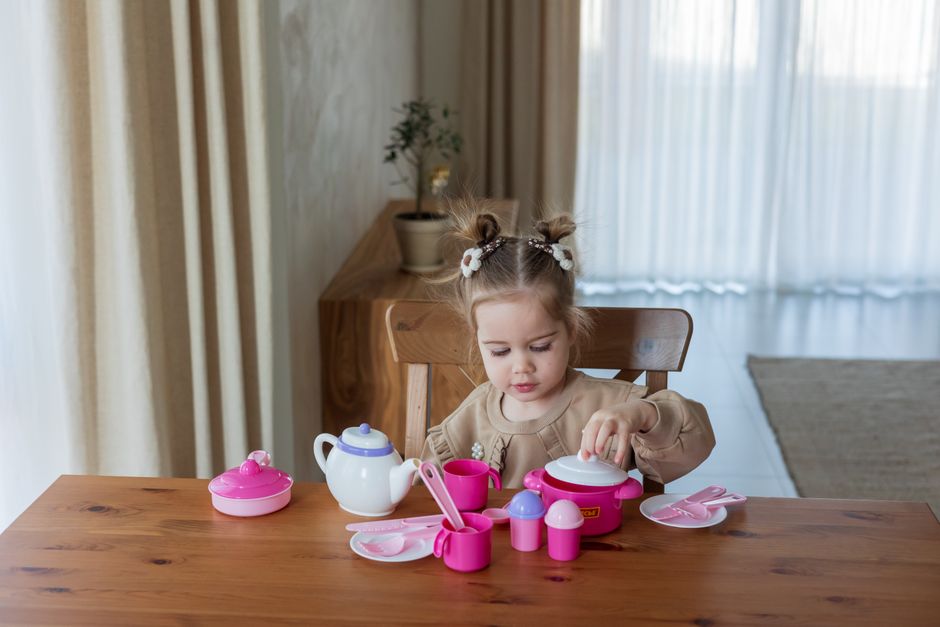
Open-ended toys, on the other hand, are like blank canvases. They invite children to supply the story, the sounds, the actions. This is where the magic happens for social skills. When kids have to create a narrative together, they’re forced to:
- Communicate their ideas: “I think the doctor needs a big shot for the teddy bear.”
- Listen to others: “No, he just needs a bandage!”
- Negotiate and compromise: “Okay, how about a bandage and a tiny shot?”
- Share roles and perspectives: One child is the doctor, the other the patient, then they switch.
This kind of interaction builds a robust foundation for all future social engagements. It’s the difference between watching a movie and writing a play together. The latter requires far more collaboration.
Common myth: The more realistic and feature-rich a pretend play toy, the better.
Reality: Often, the opposite is true. Overly realistic or complex toys can stifle imagination and collaborative storytelling by defining the play too narrowly. Simple, versatile props encourage children to fill in the gaps with their own ideas, which is key for social interaction.
But that’s only half the picture — here’s where most people get stuck, wondering how to translate “open-ended” into actual toy choices.
Key takeaway: Open-ended toys are paramount because they demand collaborative storytelling, negotiation, and flexible role-playing, which directly translates to stronger social skills.
The 3 Essential Features for Boosting Social Skills
Forget the flashy marketing. When you’re looking for pretend play toys to genuinely boost your 4-year-old’s social skills, focus on these three non-negotiable features. We’ve seen this fail when parents prioritize novelty over these core elements.
1. Multi-Player Potential: More Than Just “Taking Turns”
This isn’t just about two kids being able to hold the toy at the same time. It’s about a toy that demands multiple participants to fulfill its play potential. Think about a simple tea set. One child can pour, but it’s far more engaging if another child is the guest, asking for sugar or commenting on the imaginary biscuits. This fosters shared experiences.
A truly multi-player toy encourages:
- Role differentiation: “You be the cashier, I’ll be the customer.”
- Interdependence: “I need you to cook the food while I set the table.”
- Shared resources: Two kids using different parts of a large dollhouse simultaneously.
When I tested various “multi-player” toy kitchens in 2026, the ones with distinct zones – a cooking area, a sink, and a serving counter – consistently led to more sustained cooperative play than those with a single, central workstation. Kids naturally gravitated to