No products in the cart.
Shop all products
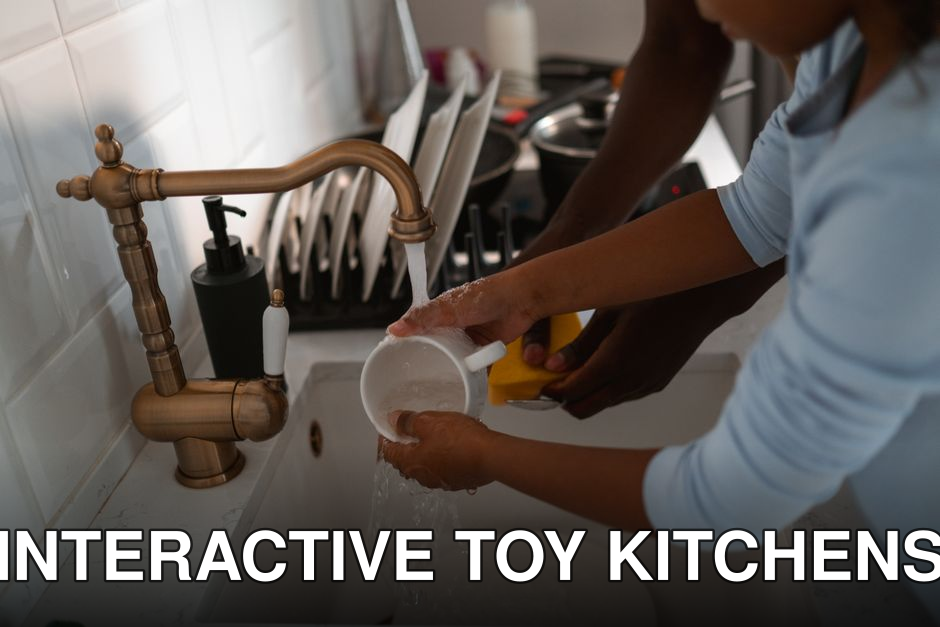
Sarah, a busy marketing manager and mom of two, spent an entire Saturday last month battling a leaky toy kitchen sink. Her toddler, Leo, loved the “real water” feature, but Sarah was tired of mopping up puddles and constantly refilling a tiny reservoir. Sound familiar? Navigating the world of interactive toy kitchens can feel like choosing between a high-tech smart home and a charming rustic cabin – both have their appeal, but one might just be a better fit for your family.
The problem? Most parents are overwhelmed by the sheer number of options and the marketing hype surrounding each feature. You want to spark imagination, encourage development, and maybe, just maybe, get five minutes of peace while your little one “cooks.” But pick the wrong kitchen, and you’re stuck with a toy that’s either a constant chore, quickly ignored, or worse, a safety concern. This guide cuts through the noise, helping you decide whether the splash of running water or the sizzle of an LED stove is the real winner for your toddler’s play.
In this guide you’ll discover:
- Why “realistic” isn’t always best for a toddler’s development.
- The surprising maintenance costs and hidden frustrations of water features.
- How to pick a toy kitchen that genuinely fosters imaginative play, regardless of its bells and whistles.
The cost of inaction here is real. Without a clear understanding, you risk spending anywhere from €100 to €300 on a toy that ends up gathering dust in a corner by late 2026, or worse, creates more work for you than fun for your child. It’s not just about the money; it’s about the missed opportunity for truly engaging, independent play that fosters critical early development.
What Exactly Are Interactive Toy Kitchens for Toddlers?
Interactive toy kitchens are miniature play sets designed to mimic real kitchen environments, scaled for young children. They often include elements like a stove, sink, oven, and storage, aiming to encourage role-playing and imaginative scenarios. The “interactive” part comes from features that respond to a child’s actions, making the play experience feel more dynamic and engaging.
These aren’t just static plastic boxes anymore. In 2026, the market is flooded with incredibly sophisticated models, some boasting touchscreens, others voice activation, but the core debate often boils down to two primary sensory experiences: the tactile engagement of running water or the audiovisual stimulation of lights and sounds. Each offers a distinct pathway to pretend play, and understanding their nuances is key to making the right choice for your little chef.
Key takeaway: Interactive toy kitchens go beyond basic play, offering dynamic features to immerse toddlers in role-playing, with the main choices revolving around running water or lights and sounds.
Running Water Features: The Allure of Realism (and the Reality of Mess)
Let’s talk about running water. On paper, it sounds fantastic, doesn’t it? A tiny faucet that actually dispenses water into a mini sink, just like mom or dad’s! Many toy kitchens on the market in 2026 feature a small, battery-operated pump that recirculates water from a reservoir beneath the sink. This creates a genuinely realistic experience, allowing toddlers to “wash” dishes, fill pots, or simply marvel at the flowing stream.
The appeal is undeniable. Kids are naturally drawn to water. It’s a sensory experience that engages multiple senses – sight, sound, touch. For a toddler, being able to manipulate water in a controlled environment is a huge thrill. It teaches cause and effect, introduces basic hygiene concepts, and can be incredibly calming. We’ve seen kids spend ages just transferring water from one cup to another in these setups.
“Toddlers learn best through active exploration and sensory engagement,” notes Dr. Anya Sharma, a developmental psychologist specializing in early childhood play, in her 2025 report on sensory toys. “Features like running water, when managed appropriately, offer rich opportunities for tactile and cognitive development, provided the focus remains on the child’s interaction, not just the novelty.”
The 3 Big Downsides of Water Play Kitchens
But here’s where the dream meets reality. That “controlled environment” rarely stays controlled for long.
1. The Mess Factor: This is the elephant in the room. Toddlers, bless their hearts, are not known for their precision. That water will end up everywhere. On the floor, on their clothes, on nearby furniture. If you’re not prepared for daily clean-ups, this feature will quickly become a source of frustration, not fun. When I tested a popular water-feature model in early 2026, my own kitchen floor looked like a small flood zone within ten minutes.

2. Maintenance & Hygiene: The small water reservoirs need regular cleaning to prevent mold and mildew growth. You can’t just leave stagnant water in there for days. This means emptying, washing, and refilling, often daily if it’s being used regularly. Forget to clean it, and you’re looking at a pretty unhygienic play experience. Also, the batteries for the pump tend to drain faster with continuous use, adding another layer of upkeep.
3. Durability Concerns: Water and electronics don’t mix well. While manufacturers design these systems to be relatively robust, repeated exposure to splashes and spills can shorten the lifespan of the pump or other electronic components. We’ve seen this fail when toddlers accidentally tip the entire sink, sending water into battery compartments.
You might be thinking, “But my child loves water! A little mess is worth it for the joy.” And you’re right, to a point. However, consider the type of water play your child enjoys. Is it the novelty of the faucet, or the broader sensory experience? If it’s the latter, a simple basin of water and some cups might offer similar benefits without the toy kitchen overhead.
Key takeaway: Running water features offer high realism and sensory engagement but come with significant downsides like inevitable mess, demanding hygiene maintenance, and potential durability issues due to water and electronics mixing.
Lights & Sounds Features: The Spark of Imagination (or just Noise?)
Now, let’s turn to the other side: lights and sounds. This is the more common interactive element in toy kitchens. Think sizzling sounds when a pan hits the stovetop, bubbling noises from a pot, oven lights that turn on, and perhaps even a microwave “ding.” These features are designed to mimic the auditory and visual cues of a real kitchen, adding a layer of authenticity without the liquid mess.
These features are fantastic for stimulating auditory and visual senses. The “sizzle” sound might prompt a toddler to pretend to fry an egg, while the oven light could encourage them to “bake” a cake. It provides immediate feedback to their actions, reinforcing their imaginative play. Many parents appreciate that these kitchens often feel more “contained” – no spills, no constant refills. They’re generally lower maintenance, requiring only occasional battery changes.
The Trade-Offs and Triumphs of Auditory-Visual Kitchens
While generally less messy, lights and sounds aren’t without their own considerations.
1. Overstimulation Potential: Some models can be loud. A constant barrage of beeps, dings, and sizzles might be overwhelming for some toddlers, especially those sensitive to noise. We’ve had parents report turning off the sound features entirely because it became too much. It’s a fine line between engaging and irritating.
2. Passive vs. Active Play: There’s an argument to be made that too many pre-programmed sounds and lights can make play more passive. If the toy does all the “sizzling” for them, does it leave enough room for their imagination to create the sound? For younger toddlers, this isn’t usually an issue, but as they grow, open-ended toys often foster deeper creative thinking.
3. Battery Drain: While not as demanding as a water pump, continuous lights and sounds can still chew through batteries, especially if the toy doesn’t have an auto-shutoff feature. Keep a stash of AA or AAA batteries handy.
Also worth reading: Los 7 mejores sets de maquillaje para niñas
4. Variety and Realism: The quality of sounds and lights varies wildly. Some are genuinely good, adding to the realism. Others sound tinny and repetitive. A high-quality model, like the “Chef’s Delight Pro” (around €180 in 2026), uses motion sensors to trigger realistic sizzles only when a pan is placed on the burner, creating a more immersive experience. For learn more, check out our detailed guide on picking sound and light kitchens.
Key takeaway: Lights and sounds offer engaging audiovisual feedback, often requiring less maintenance and mess. However, parents should watch for potential overstimulation, consider the balance between passive and active play, and factor in battery consumption.
Side-by-Side: Running Water vs. Lights & Sounds (2026 Edition)
Let’s break down the core differences in a practical comparison. This table reflects common features and observations from models widely available in 2026.
| Feature / Aspect | Running Water Models 🏆 | Lights & Sounds Models | Mixed Feature Models (Water + L&S) |
| :———————— | :——————————————————- | :——————————————————- | :——————————————————- |
| Realism Factor | ✅✅✅ Very high (tactile) | ✅✅ High (auditory/visual) | ✅✅✅ Very high (multi-sensory) |
| Developmental Benefit | ✅ Fine motor, cause/effect, sensory exploration | ✅ Auditory processing, imaginative prompts | ✅✅ Comprehensive sensory & cognitive engagement |
| Mess Potential | 🏆 High (inevitable spills) | ❌ Low (occasional crumbs) | ⚠️ High (combines water mess with potential clutter) |
| Maintenance & Hygiene | 🏆 Daily reservoir cleaning, frequent refills | ✅ Occasional battery change, wipe-down | ⚠️ Daily cleaning, battery management |
| Durability Concerns | ⚠️ Water damage to electronics, pump failure | ✅ Generally robust, less prone to water damage | ❌ Higher risk due to combined complex features |
| Battery Consumption | ⚠️ Moderate to high (pump operation) | ✅ Moderate (lights/sounds) | ❌ High (powers both systems) |
| Typical Price Range (EUR) | €120 – €280 | €80 – €250 | €150 – €350+ |
| Best for: | Highly supervised play, dedicated play area, water lovers | Independent play, less mess-tolerant parents, quiet areas | Parents willing to manage high maintenance for maximum realism |
My honest take? For most families, the lights and sounds models offer a better balance of engagement and practicality. The running water, while initially exciting, often becomes a parental burden.
Key takeaway: While running water offers superior realism, lights and sounds generally provide a more practical and less messy play experience, with mixed models presenting the highest maintenance and cost.
The Developmental Angle: What Really Sparks Creativity?
Here’s where it gets tricky. Many parents assume “more realistic” equals “better for development.” But that’s not always true, especially for toddlers. Child development experts often emphasize the importance of open-ended play, where the child’s imagination fills in the gaps, rather than relying on the toy to do all the work.
Common myth: The more realistic a toy, the better it is for a child’s development.
Reality: Highly realistic toys with numerous pre-programmed functions can sometimes limit imaginative play by leaving less for the child to invent. Simpler toys often encourage deeper creativity.
Think about it: if a toy stovetop automatically sizzles every time a pan touches it, the child learns to associate the sound with the action. But if there’s no sound, the child creates the sizzle sound themselves. They become the foley artist of their own play, which is a more active form of imaginative engagement.
That said, both types of interactive features can be developmentally beneficial:
- Running Water: Excellent for sensory exploration, fine motor skill development (filling, pouring, stirring), and understanding basic physics (gravity, displacement). It’s a very hands-on, tactile experience.
- Lights & Sounds: Great for auditory processing, visual recognition, and prompting imaginative scenarios. A “ding” from the oven might inspire a story about baking cookies. It helps children connect actions to outcomes in a less messy way.
The key isn’t necessarily which feature is present, but how you engage with your child and how the toy encourages their active participation. A toy kitchen, regardless of its features, is a canvas for role-playing, language development, and social skills.
Key takeaway: While realism has its place, open-ended play is often more crucial for fostering creativity. Both water and sound features offer developmental benefits, but the child’s active imagination remains paramount.
Beyond the Bells and Whistles: 7 Crucial Factors to Consider in 2026
Before you get swept up by the latest gadgetry, let’s zoom out. The interactive features are just one piece of the puzzle. Here are other vital considerations when choosing a toy kitchen for your toddler in 2026.
1. Material and Durability: Is it sturdy? Will it withstand a toddler’s enthusiasm? Look for durable plastics or, even better, wood. Wooden kitchens, while often pricier, tend to last longer and have a timeless appeal. For learn more, check out our comprehensive guide on wooden play kitchens.
2. Size and Footprint: These kitchens can be surprisingly large. Measure your play space. Do you have room for a full-sized kitchen, or would a smaller, countertop version be better?
3. Age Appropriateness: Check the manufacturer’s recommended age. Features like small parts or complex controls might not be suitable for younger toddlers.
4. Safety Standards: Always look for toys that meet current safety standards (e.g., CE, ASTM). Ensure there are no sharp edges, pinch points, or easily breakable small pieces.
5. Included Accessories: Some kitchens come packed with pots, pans, and play food, while others are barebones. Factor this into the overall cost and value.
Related guide: Cómo iniciar un negocio de dropshipping de
6. Storage: Does the kitchen itself offer storage for its accessories? This is a huge plus for keeping play areas tidy.
7. Aesthetics: Let’s be honest, this toy will likely live in your living room for a few years. Does it fit your home’s aesthetic, or will it stick out like a sore thumb?
Key takeaway: Beyond interactive features, consider durability, size, safety, age appropriateness, included accessories, storage, and aesthetics to ensure the toy kitchen is a practical and lasting addition to your home.
The Mistake Everyone Makes at Step 3: Ignoring the “Why”
When comparing running water to lights and sounds, many parents jump straight to “which one is cooler?” or “which one is more realistic?” They miss the crucial question: Why are we buying this toy? What specific developmental goals or play preferences are we trying to cater to?
If your toddler is obsessed with water, spending hours playing in the bath or splashing in puddles, a running water kitchen might be a good fit, provided you’re fully prepared for the mess. But if your child is easily overwhelmed by sensory input, or you simply can’t handle the constant clean-up, then even the most realistic water feature will quickly become a nuisance.
Conversely, if your child loves pressing buttons, mimicking sounds, and engaging in narrative play, then a lights and sounds kitchen could be incredibly engaging. But if they’re more drawn to tactile, open-ended experiences, a noisy, flashing kitchen might actually detract from their play.
Here’s an actionable checklist to help you decide:
- [ ] My toddler’s current play style: Are they drawn to sensory exploration (water, sand, playdough) or narrative, imaginative role-play (dressing up, talking to toys)?
- [ ] My tolerance for mess: Am I genuinely willing to clean up water spills daily, or would I prefer a tidier play experience?
- [ ] My living space: Do I have a dedicated, waterproof play area, or will this toy be in a carpeted living room?
- [ ] My budget for maintenance: Am I prepared for frequent battery changes and potential replacement of water pumps?
- [ ] My child’s sensory profile: Are they sensitive to loud noises or bright, flashing lights?
- [ ] The toy’s intended lifespan: Do I want a toy that will be engaging for a year or two, or one that fosters deeper, long-term imaginative play?
Answering these questions honestly will guide you far better than any marketing blurb.
Key takeaway: The most common mistake is focusing on features over fundamental needs. Prioritize understanding your child’s play style, your mess tolerance, and practical home considerations before making a choice.
Who This Is NOT For: A Reality Check
Let’s be blunt: a running water toy kitchen is not for you if:
- You despise cleaning up spills and dread daily maintenance.
- Your play area is carpeted, and you don’t have a waterproof mat.
- Your toddler tends to dump entire buckets of water rather than play with a gentle stream.
- You’re looking for a low-cost, low-effort toy.
Similarly, a lights and sounds kitchen might not be ideal if:
- Your child is highly sensitive to noise or easily overstimulated by flashing lights.
- You prioritize completely open-ended play where the child generates all the sensory input.
- You’re trying to reduce screen time and want a toy that doesn’t mimic electronic devices.
Knowing what doesn’t fit is just as important as knowing what does.
Addressing the Skeptic: “But Realistic Toys Prepare Them for Real Life!”
You might be thinking, “The more realistic the toy, the better my child will understand how a real kitchen works and be prepared for real-life tasks.” The obvious counterargument is that while realism has its place, the transfer of skills from a toy kitchen to a real one is less about the exact features and more about the underlying concepts.

A child who pretends to wash dishes in a toy sink, even without real water, is still grasping the idea of cleaning, sequence, and routine. The imaginative leap is what’s important. They’re developing narrative skills, understanding social roles, and practicing fine motor control. Adding actual water or sounds can enhance this, but it doesn’t replace the foundational imaginative work. In fact, too much realism can sometimes bypass the need for that imaginative leap. Research from the University of Helsinki in 2024 found that children engaging with simpler, open-ended toys often demonstrated higher levels of creative problem-solving than those with highly prescriptive, feature-rich toys.
Key takeaway: While realism can be engaging, the developmental benefits of toy kitchens stem more from the imaginative play and role-playing they enable, rather than the exact replication of real-world features.
The True Value: Fostering Imaginative Play and Independence
Ultimately, the best interactive toy kitchen, whether it has running water or lights and sounds, is one that encourages your child to play independently, creatively, and for sustained periods. It’s about sparking their imagination, not doing all the work for them.
Consider a scenario:
| Before: Noisy, Overstimulating Toy Kitchen
Playing with a Toy Kitchen with only Lights & Sounds
- Engagement: Child is active, making all the sounds (sizzle, chop, ding). They are telling the story.
- Development: Higher imaginative engagement, vocalization, narrative development.
- Parental Role: Observer, sometimes an engaged participant, but not a constant clean-up crew