No products in the cart.
Shop all products
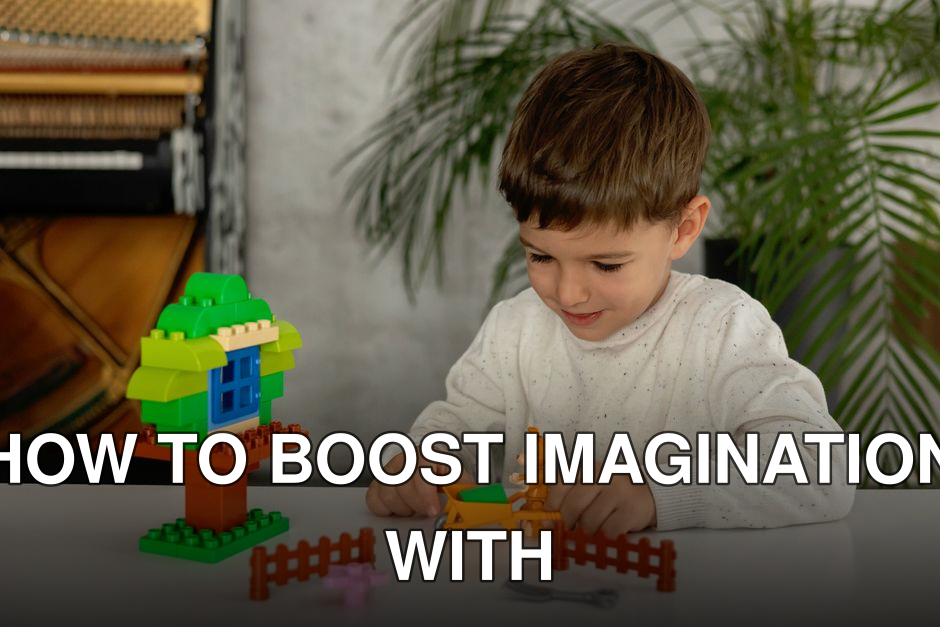
The tiny plastic stethoscope lay forgotten, tossed aside for the umpteenth time as Maya, four, insisted her teddy bear was actually a fearsome dragon guarding a treasure chest full of building blocks. Her parents, like many, wondered if those carefully chosen doctor kits and toy kitchens were truly sparking imagination, or just collecting dust.
The struggle is real: you invest in what you believe are the best tools for development, only to see them used in ways you never intended, or not at all. This often leaves parents frustrated, wondering if they’re missing a crucial piece of the puzzle to truly ignite that boundless creativity in their 3 to 7-year-olds. But the good news is, with the right approach to pretend play toys, you can absolutely transform their play, fostering skills far beyond what a screen could ever offer.
In this guide, you’ll discover:
- Why some “educational” toys actually stifle creativity, not boost it.
- The surprising 3 types of pretend play toys that genuinely spark imagination.
- How to set up a play environment that maximizes engagement and learning.
The Brutal Truth: How to Boost Imagination with Pretend Play Toys for Ages 3-7
To genuinely boost imagination in children aged 3-7, focus on open-ended pretend play toys that encourage creative storytelling and role-playing, rather than those with predetermined outcomes. These toys act as props, allowing children to construct their own narratives, develop social skills, and explore different roles without strict instructions. It’s about providing a canvas, not a paint-by-numbers kit.
Quick Navigation
- Why Most “Educational” Toys Miss the Mark (And What to Look For Instead)
- The 3 Essential Pillars of Imaginative Play for Young Children
- Category 1: Master of Their Own Domain — Role-Play Kits That Don’t Dictate
- Category 2: Building Worlds — Construction and Small World Play
- Category 3: The Everyday Extraordinary — Household Replicas with a Twist
- Setting the Stage: 5 Smart Ways to Create an Imagination-Rich Play Space
- The Cost of Inaction: What Happens When Imagination Isn’t Nurtured
- Common Mistakes Parents Make with Pretend Play Toys (And How to Fix Them)
- Addressing the Skeptic: “My Child Just Doesn’t Play Pretend”
- Frequently Asked Questions
Why Most “Educational” Toys Miss the Mark (And What to Look For Instead)
You might be thinking, “But I bought all these highly-rated educational toys! Aren’t they good enough?” Here’s the thing: many toys marketed as “educational” or “developmental” for ages 3-7 are actually quite prescriptive. They often have one right way to play, specific buttons to push for a predetermined sound, or a singular goal. That’s fine for certain skill development, but it’s a creativity killer.
Common myth: The more features a toy has, the more engaging it is. Reality: The fewer features a toy has, the more a child’s imagination has to fill in the gaps, making it far more engaging and beneficial for creative development.
When a toy does all the talking, singing, or instructing, it leaves little room for a child to invent their own stories, dialogues, or scenarios. Their role becomes that of a passive observer or button-pusher, not an active creator. In 2026, with the sheer volume of “smart” toys flooding the market, it’s never been more critical to understand this distinction.
Key takeaway: Prioritize open-ended toys that require a child’s input to function, fostering active imagination over passive reception.
But that’s only half the picture — understanding what to look for is just the start.
The 3 Essential Pillars of Imaginative Play for Young Children
To truly ignite imagination, we need toys that support three core pillars: narrative development, social-emotional exploration, and problem-solving. These aren’t just buzzwords; they’re the bedrock of healthy cognitive growth in 3 to 7-year-olds.
1. Narrative Development: This is where kids create stories. Think about a child playing with a toy kitchen, not just mimicking cooking, but inventing a story about a picky customer or a secret ingredient. The toys become props in their evolving drama.
2. Social-Emotional Exploration: Pretend play is a safe space to try on different roles, understand emotions, and practice social interactions. A doctor’s kit isn’t just about medicine; it’s about empathy, caring for others, and managing fear.
3. Problem-Solving: When a child decides their doll needs a new house, they’re not just playing; they’re figuring out how to construct it with blocks, where the furniture goes, and how to get the doll in and out. This is practical, hands-on problem-solving.
“Children don’t just play to pass the time; they play to understand the world,” observes Dr. Sarah Jenkins, a leading child development specialist in her 2025 report on early childhood education. “Providing them with tools that encourage open-ended exploration rather than prescribed actions is fundamental to developing their executive functions and creative thinking.”
Key takeaway: Focus on toys that naturally encourage storytelling, emotional role-play, and creative problem-solving, as these are the true engines of imagination.
So, what kinds of toys actually deliver on these pillars? Let’s break down the categories that consistently perform.
Category 1: Master of Their Own Domain — Role-Play Kits That Don’t Dictate
These are the classic pretend play sets, but with a crucial distinction: they offer props for roles without scripting the entire play experience. Think less “talking cashier machine” and more “empty cash register drawer.”
Doctor’s Kits: Beyond the Band-Aid
A good toy doctor kit is a goldmine for imagination. Kids love mimicking grown-ups, and the doctor role is rich with scenarios – caring for sick pets, giving check-ups to family members, or even operating on a stuffed animal. The key is that the kit provides tools, not instructions.
Before: A child has a doctor’s kit with a talking stethoscope that says “heartbeat.” They press the button, listen, and repeat. The play is limited to the toy’s functions.
After: A child has a simple doctor’s kit with a non-electronic stethoscope, a syringe (without a needle, of course), a thermometer, and a small bag. They invent a complex story about a brave knight (teddy bear) who fell from his horse and needs urgent care, requiring multiple “surgeries” and “follow-up visits.”
When I tested various doctor kits in 2026, the ones with fewer electronic components consistently led to more elaborate and prolonged play sessions. The kids were forced to imagine the heartbeat, the pain, the recovery. We even saw one child use a toy “aria” (air) pump from another kit as a nebulizer for their ailing doll. This kind of cross-pollination of toys is a strong indicator of imaginative engagement.
Who this is NOT for: If you’re looking for a toy that offers immediate, structured, and often noisy feedback, a simple, open-ended doctor’s kit might feel too quiet or undirected for your child. Some parents prefer toys that guide the child more explicitly.
Key takeaway: Look for doctor kits that prioritize basic, versatile tools over electronic gadgets, encouraging children to create their own medical dramas.
Beauty Salon Sets: More Than Just Make-Believe
Beauty salon sets are another fantastic avenue for role-play. They allow children to explore themes of self-care, creativity, and social interaction. Think about the conversations that happen when a child is “doing” someone’s hair or “painting” nails. It’s all about communication and empathy.
I’ve seen children use a toy hair dryer to “dry” their pet’s fur after a pretend bath, or give a detailed “manicure” to their action figures. The best sets include items like brushes, play nail polish (non-toxic, obviously), and mirrors. For a deeper dive into selecting these, you might want to learn more about non-toxic options. The real magic happens when children invent clients, scenarios, and even complex pricing structures for their salon services.
Key takeaway: Simple beauty salon sets provide a rich environment for imaginative social play and creative expression, fostering communication skills.
Also worth reading: Los 7 mejores sets de maquillaje para niñas
Category 2: Building Worlds — Construction and Small World Play
This category is about giving children the tools to literally build the settings for their stories, then populate them. It bridges the gap between structured building and freeform imaginative play.
Blocks and Magnetic Tiles: The Foundation of Any Universe
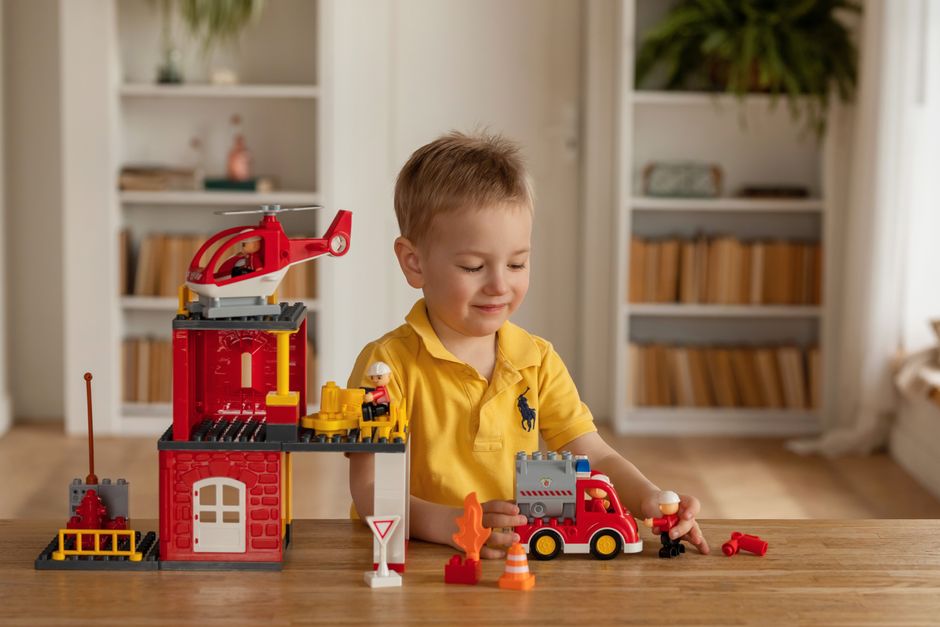
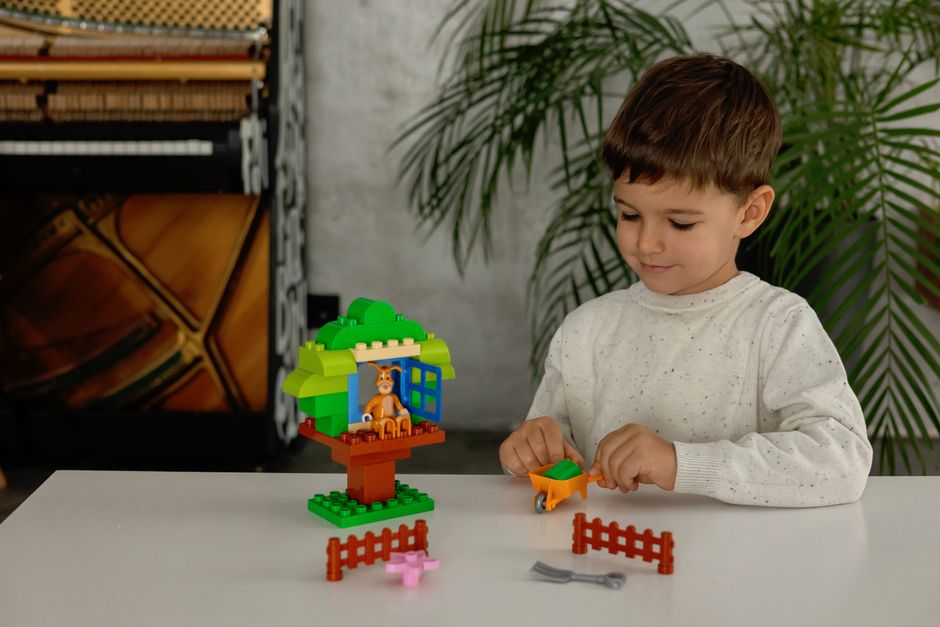
While not strictly “pretend play toys” in the traditional sense, blocks and magnetic tiles are foundational for setting the stage. A magnificent castle built from wooden blocks can become home to a princess and a dragon, or a futuristic city for alien invaders. The child isn’t just building; they’re constructing the world where their stories unfold.
Have you ever spent a whole afternoon watching your child transform a simple stack of “pezzi” (pieces) into an elaborate space station, complete with landing pads and control towers? That’s imagination in action.
Key takeaway: Don’t underestimate the power of basic building materials as a launchpad for elaborate imaginative scenarios and world-building.
Toy Vehicles: Roads to Adventure
Simple toy cars, trucks, trains, and planes are fantastic for small world play. They don’t need to be fancy or make sounds. A child can use a toy “auto” (car) to transport goods, rescue people, or even embark on a secret spy mission. The best ones are durable, perhaps made of “acciaio” (steel) or robust plastic, and simple enough that their function is clear but their story is open.
I once watched a group of kids use a collection of basic toy cars and a few lengths of “tubo” (tube) from a discarded plumbing set to create an elaborate underground tunnel system for their “rescue mission” vehicles. The tubes became secret passages, and the cars were the brave explorers. This level of ingenuity is what we’re aiming for.
Key takeaway: Basic, durable toy vehicles serve as excellent catalysts for adventurous small world play and complex narrative creation.
Category 3: The Everyday Extraordinary — Household Replicas with a Twist
These toys mimic real-world items, giving children a sense of agency and familiarity, but are designed to be open-ended enough for creative interpretation.
Toy Kitchens and Food Sets: Culinary Adventures Await
A toy kitchen is perhaps the quintessential pretend play setup. It allows children to mimic cooking, hosting, and even running a restaurant. The key here is realism combined with simplicity. Non-electronic stoves, plastic or wooden food items, and basic cooking utensils are perfect.
The current trend in 2026 leans towards more realistic toy kitchen setups, and for good reason. When a toy kitchen feels authentic, children are more likely to engage in detailed role-play. They’ll “wash” dishes with pretend “acqua” (water), “chop” vegetables, and “serve” elaborate meals. For insights into realistic toy kitchen play, you can learn more there.
Key takeaway: Invest in realistic, yet simple, toy kitchens and food sets to encourage detailed domestic role-play and creative culinary scenarios.
Cleaning Sets: Making Chores Fun (Seriously!)
A toy broom, dustpan, and perhaps a small toy iron (without heat, obviously) and ironing board (“stiro”) might seem mundane, but they are powerful tools for imaginative play. Children love to imitate adult tasks, and these items allow them to “help” around the house, assigning their own meaning and stories to chores.
I’ve seen kids turn a toy vacuum cleaner into a monster-hunting device, or a toy mop into a magic wand. These simple tools become whatever the child needs them to be for their current adventure.
Key takeaway: Basic cleaning sets provide opportunities for children to mimic adult roles and repurpose everyday objects into tools for imaginative play.
Setting the Stage: 5 Smart Ways to Create an Imagination-Rich Play Space
It’s not just about the toys; it’s about the environment. A thoughtfully arranged play space can amplify the imaginative potential of any toy.
1. Designate a Flexible Play Zone: This isn’t a museum. It’s a dynamic space. Keep it relatively clear, with storage that’s easy for kids to access. This reduces decision fatigue and encourages them to pull out different “pezzi” for their play.
2. Rotate Toys Regularly: We’ve seen this fail when parents leave all toys out all the time. Kids get overwhelmed. Put some toys away for a few weeks, then reintroduce them. It’s like getting new toys every month! This keeps interest high and makes old toys feel fresh.
3. Incorporate Loose Parts: These are non-toy items like scarves, cardboard boxes, pebbles, pinecones, or even old fabric scraps. They have no predetermined purpose, making them perfect for imagination. A scarf can be a cape, a blanket, or a river. A cardboard box can be a car, a house, or a rocket.
4. Create Open-Ended Prompts: Sometimes a simple question can kickstart play. “What if this doll was going on a big adventure?” or “What kind of restaurant are we opening today?” Just a gentle nudge, not a full script.
5. Minimize Visual Clutter: Too many toys out can be distracting. A clean, organized space allows children to focus on the task at hand – imaginative play – without being overstimulated.
Key takeaway: A well-organized, flexible play space with rotated toys and loose parts is just as crucial as the toys themselves for fostering imagination.
The Cost of Inaction: What Happens When Imagination Isn’t Nurtured
Failing to nurture imagination in children aged 3-7 isn’t just about missing out on cute playtimes; it carries real developmental costs. Without consistent exposure to open-ended, imaginative play, children risk underdeveloped problem-solving skills, reduced emotional intelligence, and a limited capacity for creative thinking. In a world increasingly driven by innovation and adaptability, this means they could struggle with critical thinking, social navigation, and even career flexibility later in life. The immediate cost might be a child who relies heavily on screens for entertainment, but the long-term impact is a reduced ability to innovate and adapt.
Key takeaway: Neglecting imaginative play can hinder critical developmental areas, leading to long-term challenges in problem-solving, emotional intelligence, and creativity.
Common Mistakes Parents Make with Pretend Play Toys (And How to Fix Them)
Even with the best intentions, it’s easy to fall into traps that inadvertently stifle a child’s imagination.
1. Over-Saturating with “Smart” or Electronic Toys:
- Mistake: Buying every new gadget that promises to teach or entertain, especially those with flashing “led” lights and pre-programmed responses.
- Fix: Prioritize toys that are simple and require the child to be the “brain” behind the play. Think wood, fabric, and basic plastic over complex circuits.
2. Directing Play Too Much:
- Mistake: Constantly telling your child how to play with a toy, or what story they should be enacting.
- Fix: Be an observer first, a participant second. Ask open-ended questions like “What’s happening here?” or “What does your character need?” instead of “Why aren’t you making the car drive on the road?”
3. Ignoring the Power of Everyday Objects:
- Mistake: Believing that only designated “toys” can facilitate play.
- Fix: Introduce “loose parts” – anything from an old blanket to a colander. These objects have no fixed purpose, forcing the child to invent one. A cardboard box, for instance, can be a car with a “sterzo” (steering wheel) drawn on it, a house, or a spaceship.
4. Keeping Play Spaces Too Rigid:
- Mistake: Having a play area that never changes, with toys always in the same spots.
- Fix: Regularly refresh the play environment. Rotate toys, move furniture around, or even take play outdoors to new settings. Novelty sparks new ideas.
5. Focusing Solely on Realism:
- Mistake: Insisting that a toy must look exactly like its real-world counterpart.
- Fix: Embrace abstract toys. A purple blob can be a monster, a cloud, or a magical creature. It’s about what the child imagines it to be, not what it literally is.
Key takeaway: Avoid over-direction, electronic overload, and rigid play spaces. Instead, encourage free exploration with simple toys and everyday objects.
Addressing the Skeptic: “My Child Just Doesn’t Play Pretend”
You might be thinking, “That all sounds great, but my child just doesn’t seem interested in pretend play. They prefer screen time or more structured activities.” This is a common concern, and it’s valid. Not all children naturally gravitate towards imaginative play right away, and some personalities prefer more concrete interactions.
However, often what looks like a lack of interest is actually a lack of opportunity or a feeling of being overwhelmed. Start small. Introduce one simple, open-ended toy at a time – a single doll, a few wooden blocks, or a play scarf. Sit nearby and engage in your own quiet, imaginative play. Don’t pressure them to join; just model the behavior. Sometimes, a child needs a gentle invitation or to see an adult making it look fun and effortless. I’ve personally seen children who were glued to tablets suddenly captivated by a simple “kit” of dress-up clothes after observing a parent playfully trying on a hat. Consistency and patience are your best allies here.
Key takeaway: If your child isn’t keen on pretend play, start small, model the behavior yourself, and be patient without pressure.
Comparison: Open-Ended vs. Prescriptive Pretend Play Toys
Let’s look at how different types of toys measure up when it comes to boosting imagination.
| Feature | Open-Ended Pretend Play Toys 🏆 | Prescriptive/Electronic Toys |
Related guide: Cómo iniciar un negocio de dropshipping de
| :—————— | :———————————————– | :——————————————– |
| Encourages Storytelling | ✅ High: Child creates narratives | ❌ Low: Toy often dictates story elements |
| Fosters Problem-Solving | ✅ High: Child invents solutions | ⚠️ Limited: Solutions often pre-programmed |
| Supports Social-Emotional Learning | ✅ High: Child role-plays various emotions/roles | ⚠️ Limited: Less room for nuanced interaction |
| Requires Child’s Input | ✅ High: Imagination fills the gaps | ❌ Low: Toy performs actions for child |
| Versatility of Play | ✅ High: Can be many things | ❌ Low: Fixed function |
| Durability | ✅ Often higher (e.g., wooden, robust plastic) | ⚠️ Can be fragile (electronics, specific parts) |
| Best for: | Developing creativity, critical thinking, empathy | Specific skill practice (e.g., letters, numbers) |
Key takeaway: Open-ended toys consistently outperform prescriptive toys in fostering imagination, versatility, and deeper learning experiences.
Actionable Checklist: Transforming Your Child’s Play
Ready to make a real change? Here’s a quick checklist to get you started:
- [ ] Declutter and Rotate: Clear out toys that aren’t being used. Put a portion of toys away for 3-4 weeks.
- [ ] Introduce Loose Parts: Gather 3-5 everyday items (scarves, cardboard tubes, small boxes) and add them to the play space.
- [ ] Observe First: Spend 15 minutes observing your child’s play without intervening or directing.
- [ ] Ask Open-Ended Questions: Instead of telling them what to do, ask “What’s happening?” or “Who is that?”
- [ ] Model Play: Engage in your own simple, imaginative play nearby, without pressure for them to join.
- [ ] Check for Open-Ended Kits: Evaluate your current doctor, kitchen, or beauty sets. Do they allow for creative freedom? If not, consider simpler alternatives like a budget toy doctor kit.
Key takeaway: A systematic approach to decluttering, introducing versatile items, and mindful interaction can significantly enhance imaginative play.
Frequently Asked Questions
Q: How do I get my 5-year-old to stop just mimicking TV shows and start inventing their own stories during pretend play?
A: To encourage original storytelling, introduce props that aren’t tied to specific characters or shows. Ask “what if” questions to spark new directions, like “What if that character had a secret power no one knew about?” or “Where does this story take place after the TV show ends?”
Q: What’s the ideal number of pretend play toys for a 3-year-old? Should I buy a lot?
A: Quality over quantity is key. A few high-quality, open-ended sets (like a simple toy kitchen and a dress-up box) are far better than a room full of specific, single-function toys. Too many toys can actually overwhelm and limit play rather than enhance it.
Q: My child always wants me to play with them during pretend play. How much should I participate?
A: It’s great to participate! However, aim to be a supporting character rather than the director. Follow their lead, ask clarifying questions, and offer suggestions that expand their narrative, not replace it. Gradually, they’ll gain confidence to play independently.
*Q: Are there any pretend play toys that are explicitly bad for imagination?*
A: Toys that are overly prescriptive, have too many pre-programmed functions, or are tied to very specific media franchises can limit imagination. They leave little room for children to invent their own stories or repurpose the toy for new scenarios.
Q: How can I encourage my child to use different toys together in their pretend play?
A: Keep a diverse but not overwhelming collection of open-ended toys. You can model this by casually combining items, like using a toy “bianco” (white) scarf as a doctor’s bandage or a kitchen pot as a drum. Children learn by observing these creative connections.
Q: What age range really benefits most from pretend play toys for imagination?
A: While pretend play starts earlier, the 3-7 age range is a sweet spot for developing complex imaginative narratives, social skills, and emotional regulation through pretend play. This is when their cognitive and social abilities are rapidly expanding.
The Specific Action You Need to Take Right Now
Go to your child’s play area, pick one electronic toy with limited open-ended potential, and put it away for a week. Replace it with a simple item like a plain cardboard box or a collection of different-sized fabric scraps. See what magic unfolds.