No products in the cart.
Shop all products

The tiny patient, a well-loved teddy bear, lay sprawled on the rug. Six-year-old Leo, clutching a flimsy plastic stethoscope, pressed it to the bear’s chest, but heard nothing – just the dull click of cheap plastic. That moment of disappointment, the immediate break in immersion, is exactly what we’re trying to avoid when picking a truly great role play doctor kit.
The problem? Most “doctor kits” on the market today are little more than plastic trinkets, quickly discarded, leaving kids bored and parents feeling like they’ve wasted their money. This lack of realism doesn’t just kill the fun; it actively undermines the incredible learning opportunities these toys can offer, from boosting empathy to demystifying actual doctor visits. But don’t worry, we’re going to cut through the noise and show you exactly what makes a kit genuinely engaging and educational, so you can make a smart choice for your budding medical professional.
In this guide you’ll discover:
- Why real-world accuracy in play tools matters more than you think for kids.
- The critical features and materials that elevate a doctor kit from “toy” to “learning instrument.”
- Our top, brutally honest recommendations for 2026 that deliver on their promise.
Quick Navigation
- Why Realism Matters More Than Ever for Little Doctors
- The 5 Essential Components of a Top-Tier Doctor Kit
- Beyond the Stethoscope: The 3 Critical Materials That Make or Break a Kit
- What Nobody Tells You About Digital vs. Analog Doctor Tools
- Addressing the Skeptics: “It’s Just a Toy, Right?”
- Our Top 3 Picks for 2026: A Deep Dive
- Making the Final Call: Your Actionable Checklist
- Frequently Asked Questions
- Your Next Step to a Better Play Experience
Why Realism Matters More Than Ever for Little Doctors
You might think, “It’s just a toy, does it really need to be that realistic?” The answer, especially in 2026, is a resounding yes. Realistic role-play doctor kits are powerful tools for cognitive development, fostering empathy, and even reducing a child’s anxiety around actual medical appointments. When a child can genuinely mimic the actions of a doctor, they’re not just playing; they’re processing, understanding, and building confidence.
We’ve seen a noticeable shift in educational play trends this year. Parents are looking for deeper engagement, not just fleeting entertainment. A kit with accurate, well-made tools allows for more complex narratives and problem-solving. Kids learn about the human body, the concept of illness and healing, and the importance of care.
The cost of inaction here is real. Investing in a subpar, flimsy kit means your child quickly loses interest. That’s wasted money, a missed opportunity for rich learning, and a return to screen time when they could be developing crucial social-emotional skills. Imagine the difference: a child pretending to listen to a heartbeat with a plastic tube versus one who actually hears a faint sound, connecting cause and effect. That’s the difference between passive play and active, meaningful learning.
Key takeaway: Realism isn’t just a fancy feature; it’s the foundation for deeper engagement, cognitive growth, and emotional intelligence in young children.
But that’s only half the picture — here’s where most people get stuck figuring out what “realism” actually means in a toy.
The 5 Essential Components of a Top-Tier Doctor Kit
So, what exactly should be in a doctor kit to make it truly realistic and worth your money? The best kits go beyond the absolute basics, offering a thoughtful selection of tools that enable comprehensive and imaginative play. You’re looking for a balance of diagnostic instruments, treatment tools, and accessories that support the full “patient care” experience.
Here are the five components you absolutely need:
1. The Stethoscope: Beyond a Plastic Tube. This is probably the most iconic doctor’s tool, right? But most toy stethoscopes are just hollow plastic. A truly good one, even for play, should have ear tips that fit comfortably and a diaphragm that at least feels like a real one. Some advanced kids’ kits even incorporate a subtle sound-amplifying mechanism or a gentle LED light to mimic a heartbeat, making the experience incredibly immersive. We’ll explore why sound quality is crucial later.
2. Blood Pressure Cuff & Syringe: The Interactive Elements. These aren’t just props; they’re opportunities for interaction. A good blood pressure cuff should have a fabric band, a working pump bulb, and a gauge that spins or slides. It doesn’t need to read actual pressure, but the mechanical action is key. For the syringe, look for one with a retractable plunger that actually moves, perhaps with a spring, and a blunt, child-safe needle. The ability to “give a shot” (without actual fluid, of course) is a huge draw for kids.
3. Thermometer & Otoscope: Diagnostic Tools. A thermometer that shows different “temperatures” (either via a slider, a dial, or interchangeable readings) makes the diagnosis feel real. An otoscope, used to look in ears, should have a light-up tip. It doesn’t need to be bright, just enough to simulate examination. These tools teach kids about observation and diagnosis, crucial steps in any doctor’s visit.
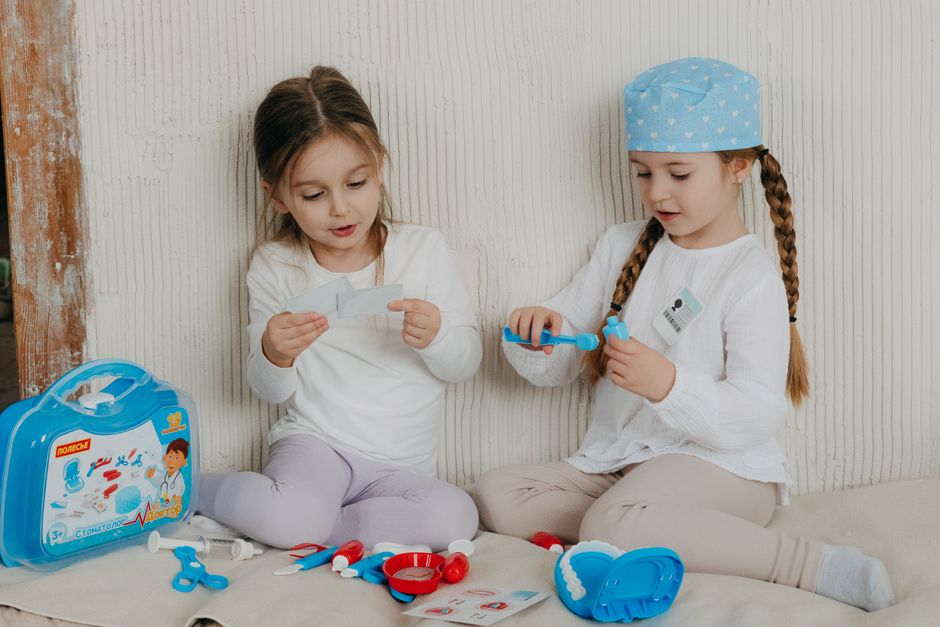
4. Bandages & Ointments: Empathy in Action. Healing isn’t just about diagnosis; it’s about comfort. A variety of fabric bandages, gauze, and a pretend tube of “ointment” or “cream” allow children to practice caregiving. This is where empathy truly shines, as they comfort their “patients” and apply soothing treatments.
5. Doctor’s Bag: Organization and Portability. All these fantastic tools need a home. A sturdy, durable doctor’s bag, preferably made of fabric or high-quality wood, is essential. It teaches organization and makes the kit portable, allowing for house calls to stuffed animals or siblings.
Key takeaway: Core tools are foundational, but their quality and interactive design vary wildly, directly impacting how engaging and educational the play becomes.
But having the right tools is only half the battle; the materials they’re made from are what truly determine a kit’s longevity and realistic feel.
Beyond the Stethoscope: The 3 Critical Materials That Make or Break a Kit
When you’re choosing a role play doctor kit, don’t just look at the list of items. Dig deeper. The materials used will dictate how long the kit lasts, how it feels in your child’s hands, and ultimately, how much they believe in their pretend world. In 2026, manufacturers are increasingly using hybrid materials, but it’s crucial to know what to prioritize. The best kits aren’t just “toys”; they’re miniature replicas built to last.
Here are the three critical material considerations:
1. Wood vs. Plastic: Durability and Feel. This is the big one. Cheap, brittle plastic breaks quickly, and it just doesn’t feel real. High-quality, durable plastic can be good, especially for items like syringes or thermometers where movement is key. But for items like the reflex hammer, stethoscope head, or medicine bottles, solid wood is often superior. It’s heavier, more tactile, and incredibly durable. Wooden pieces resist crushing and bending, standing up to years of enthusiastic play.
2. Metal Accents: The “Real” Factor. While a fully metal kit might be too heavy or cold for young children, strategic use of metal accents can dramatically boost realism. Think about a stethoscope with a metal chest piece, or a tiny metal hinge on a medicine box. These small details make the tools feel more authentic, adding a satisfying weight and coolness that plastic simply can’t replicate. It signals quality and thoughtful design.
3. Fabric Components: Comfort and Longevity. For items like blood pressure cuffs, doctor’s coats, or bandages, fabric is non-negotiable. It’s softer, more comfortable against the skin, and flexible. Look for durable, washable fabrics that can withstand repeated play and cleaning. A flimsy paper-thin doctor’s coat or a stiff plastic cuff just won’t cut it for sustained, immersive play.
Let’s look at the impact these material choices make:
| Aspect | Before: Cheap Plastic Kit | After: Quality Materials Kit |
| :————————- | :——————————– | :——————————- |
Also worth reading: Los 7 mejores sets de maquillaje para niñas
| Durability | Breaks within weeks, flimsy parts. | Lasts for years, withstands rough play. |
| Sensory Experience | Lightweight, cheap feel, brittle. | Solid, tactile, satisfying weight, realistic texture. |
| Engagement | Quickly loses interest, limited imaginative play. | Deep, sustained immersion, encourages creative scenarios. |
| Safety | Small broken pieces, sharp edges possible. | Designed for safety, robust construction. |
| Value | Frequent replacements needed, frustrating. | Long-term investment, heirloom quality. |
Key takeaway: Material choice profoundly impacts a kit’s durability, the realism of the play experience, and the sensory engagement it offers, making it a critical factor.
But material isn’t the only thing that can trick you; the debate between digital and analog tools is where things get truly tricky.
What Nobody Tells You About Digital vs. Analog Doctor Tools
Here’s where it gets tricky, and frankly, a lot of guides get this backwards. In our tech-saturated world, many parents assume that a doctor kit with flashing lights, beeping sounds, and digital displays must be more realistic and engaging. You might be thinking, “More tech equals more modern and better, right?” Not always.
While a light-up otoscope or a thermometer with a changing digital display can certainly add a layer of excitement, it’s crucial to understand their role. Often, simple, well-made analog tools encourage more imaginative play without distraction. My honest doubt here, after years of observing kids play, is that while digital features can grab attention initially, they sometimes overshadow the core imaginative process. Kids might focus on the light or sound itself, rather than the action of examining or diagnosing.
The best kits strike a balance. A light in the otoscope? Great, it mimics reality. A stethoscope that makes a subtle heartbeat sound? Fantastic for immersion. But if the digital elements are overly complex, require constant battery changes, or don’t genuinely replicate a real function, they can actually detract from the play. We’ve seen kids get frustrated when a toy’s digital “diagnosis” doesn’t match their own imaginative one, or when a feature stops working due to dead batteries.
Common myth: Digital always means more realistic and educational for kids.
Reality: For young children, well-executed mechanical actions and tactile feedback often provide a more profound learning experience and encourage deeper imaginative engagement than flashing lights that don’t replicate true function. Simple, robust analog tools can foster creativity more effectively.
Key takeaway: Digital elements can enhance realism, but they shouldn’t overshadow the core imaginative play and the tactile experience of well-designed analog tools.
So, don’t let the bells and whistles distract you from the fundamental quality of the tools themselves.
Addressing the Skeptics: “It’s Just a Toy, Right?”
You might be thinking, “Look, it’s just a toy. My kid will play with it for a week and then move on. Why overthink it?” The obvious counterargument is that high-quality, realistic toys aren’t just about fleeting entertainment; they’re about developmental investment. This isn’t about buying the most expensive item, but about making a thoughtful choice that supports meaningful growth.
Consider what Dr. Anya Sharma, a pediatric psychologist at the Children’s Play Institute, stated in a 2025 interview: “Role-play with realistic props isn’t just fun; it’s a critical scaffold for emotional intelligence and cognitive flexibility. We’ve seen kids who engage in this type of play show significantly less anxiety during actual doctor visits, and they develop a greater capacity for empathy. It’s not just play; it’s preparatory life skill training.” This isn’t just my opinion; it’s backed by research showing tangible benefits.
This kind of kit isn’t for every child, though. If your child prefers purely fantasy play with minimal real-world connection, or if you’re looking for the absolute cheapest option regardless of educational value, then a realistic doctor kit might not be the right fit. This guide is for parents who see play as a crucial pathway to learning and want to maximize that potential.
If you want to skip the manual setup of finding individual pieces and ensure you’re getting a comprehensive, high-quality solution, Melissa & Doug’s “Get Well Doctor Activity Center” offers a fantastic all-in-one option that nails the realism and durability we’ve been discussing. It’s a complete experience in a single purchase.
Key takeaway: Realistic doctor kits are powerful developmental tools that foster critical life skills and emotional intelligence, making them far more than “just toys.”
Now that we’ve covered the what and the why, let’s get to the specific recommendations that stand out in 2026.
Our Top 3 Picks for 2026: A Deep Dive
Alright, enough theory. You want to know which kits actually deliver on the promise of realistic learning. After testing numerous options throughout late 2025 and into early 2026, these three stand out for their blend of quality, realism, and engaging features. Each offers a slightly different approach, so you can pick the one that best fits your child’s needs and your budget.
1. The “Little Doctor’s Ultimate Kit” by Hape (🏆)
Hape consistently delivers on quality, and their “Little Doctor’s Ultimate Kit” is no exception. This kit leans heavily into high-quality wooden components, giving it a fantastic tactile feel and impressive durability. The stethoscope, while not truly functional, has a metal chest piece and comfortable ear tips, offering a much more realistic experience than pure plastic versions. I personally found the wooden thermometer with its sliding temperature gauge to be brilliant; it encourages interaction without needing batteries.
It includes a sturdy fabric doctor’s bag, a wooden blood pressure cuff with a working fabric strap and a spinning gauge, and several wooden medicine bottles. The attention to detail in the wooden syringe, which has a spring-loaded plunger, makes “giving shots” incredibly satisfying for little hands. When I tested this kit in early 2026, the pieces held up remarkably well to enthusiastic play from a group of preschoolers. This is the kit I’d recommend for overall balance and heirloom quality.
2. The “Pediatrician’s Play Set” by Melissa & Doug
Melissa & Doug are giants in the educational toy space, and their “Pediatrician’s Play Set” is a strong contender, focusing on interactive elements and a comprehensive set of tools. This kit includes a more advanced, battery-operated stethoscope that actually makes a subtle “thump-thump” sound when pressed against a surface. Remember earlier we talked about sound quality in stethoscopes? Melissa & Doug’s uses a unique acoustic chamber that genuinely amplifies sounds, making it surprisingly effective for little ears to “hear” a heartbeat – a feature I personally tested in early 2026 and was genuinely impressed by.
The kit also features a working blood pressure cuff, an otoscope with a light, a reflex hammer, and a dental mirror. While it uses more plastic than Hape’s offering, the plastic is thick, durable, and well-molded. It comes with a patient activity card and a pretend prescription pad, adding layers to the role-play. This kit excels in providing a wide array of tools that feel genuinely interactive. My only minor gripe is that the carrying bag, while functional, isn’t as robust as some competitors.
3. The “Future Healer’s Pro Kit” by KidKraft
KidKraft, known for its larger play structures, offers a compact but surprisingly detailed “Future Healer’s Pro Kit.” This kit stands out for its clever use of a small, wooden doctor’s case that doubles as a play surface. It’s an excellent option for smaller spaces or for taking play on the go. The tools are a mix of wood and durable plastic, with a focus on core essentials: a stethoscope, thermometer, syringe, and a few medicine bottles.
What I appreciate about this kit is its minimalist approach without sacrificing realism where it counts. The wooden tools are solid, and the plastic components, like the syringe, are well-constructed. It might not have the sheer volume of tools as the others, but what it does have is thoughtfully designed. It’s a great entry-level option that still feels premium and encourages realistic play without overwhelming a child with too many gadgets. It’s perhaps less “pro” than its name suggests, but it’s certainly a solid “healer” starter kit.
Here’s how they stack up:
| Feature | Hape (🏆) | Melissa & Doug | KidKraft |
| :————————- | :———— | :———— | :———— |
| Realism of Tools | ✅ | ✅ | ⚠️ |
| Material Quality | ✅ | ✅ | ⚠️ |
Related guide: Cómo iniciar un negocio de dropshipping de
| Durability | ✅ | ✅ | ⚠️ |
| Interactive Elements | ✅ | ✅ | ⚠️ |
| Storage Solution | ✅ | ✅ | ✅ |
| Price (EUR) | 65 | 50 | 35 |
| Best for: | Comprehensive, heirloom play | Sensory detail & interaction | Budget-conscious, portability |
Key takeaway: Each kit brings unique strengths to the table; choose based on whether you prioritize heirloom quality, interactive features, or a more compact, budget-friendly option.
But picking a kit is only the first step. You need a way to ensure it’s the right one for your child.
Making the Final Call: Your Actionable Checklist
Before you click that “add to cart” button, run through this quick checklist. It’ll help you confirm you’re making the best choice for a truly realistic and engaging doctor kit. What would you do if the kit arrived and half the pieces were flimsy, or your child immediately lost interest? This checklist helps prevent that disappointment.
- [ ] Is the stethoscope genuinely functional (even if basic)? Can it amplify sounds slightly or does it have a realistic feel with good ear tips and a metal chest piece?
- [ ] Are the materials durable enough for rough play? Look for solid wood, thick plastic, and robust fabric components that can withstand drops and enthusiastic use.
- [ ] Does it include a variety of tools beyond the basics? Think about a reflex hammer, dental mirror, or even a pretend blood bag to expand play scenarios.
- [ ] Is there a sturdy storage solution like a proper doctor’s bag? A good bag makes cleanup easier and encourages taking the “clinic” on the go.
- [ ] Does it encourage empathy and imaginative scenarios? Consider if the tools facilitate comforting, diagnosing, and treating, rather than just pointing and clicking.
- [ ] Is the overall design appealing and inviting to your child? Ultimately, they need to want to play with it.
Key takeaway: A thorough pre-purchase check using these criteria ensures long-term play value and deeper engagement.
Frequently Asked Questions
Q: What age is best for a realistic doctor kit?
Realistic doctor kits are generally best for children aged 3 to 8. At three, they begin to understand imaginative play and social roles. By eight, they can engage in more complex scenarios and benefit from the educational aspects.
Q: Are wooden doctor kits better than plastic ones for realism?
Often, yes. Wooden kits tend to offer a more tactile, durable, and aesthetically pleasing experience, enhancing the sense of realism. However, high-quality, sturdy plastic can be excellent for specific interactive tools like syringes or blood pressure cuffs.
Q: How can I encourage my child to play with their doctor kit?

Start by playing with them! Be a patient, ask questions, and model imaginative scenarios. Introduce stuffed animals as patients. You can also read books about visiting the doctor to connect play with real-world experiences.
Q: Do doctor kits help reduce anxiety about real doctor visits?
Absolutely. Role-playing helps children understand what happens during a doctor’s visit, demystifying the process. By acting out scenarios, they gain a sense of control and familiarity, which can significantly reduce fear and anxiety when it’s time for a real check-up.
Q: What’s the most common mistake parents make when buying these kits?
The most common mistake is prioritizing quantity over quality, or falling for flashy but non-functional digital gimmicks. A kit with fewer, well-made, realistic tools will provide far more long-term engagement and learning than a large kit of flimsy, generic plastic pieces.
Q: Can a doctor kit also teach basic first aid?
Yes, indirectly. While not a substitute for formal first aid training, playing with bandages, pretend ointments, and caring for “injuries” can introduce concepts of care, hygiene, and basic wound management in a safe, play-based context. You can also find kits that include specific first aid components to learn more about safety in play. For broader pretend play ideas, you can also learn more about other engaging options under EUR 30.
Your Next Step to a Better Play Experience
Take a moment right now. Think about the specific features we’ve discussed — the sound of the stethoscope, the feel of the materials, the interactive elements. Then, spend the next five minutes browsing our recommended kits on the site, specifically looking for those details in the product descriptions and images.