No products in the cart.
Shop all products
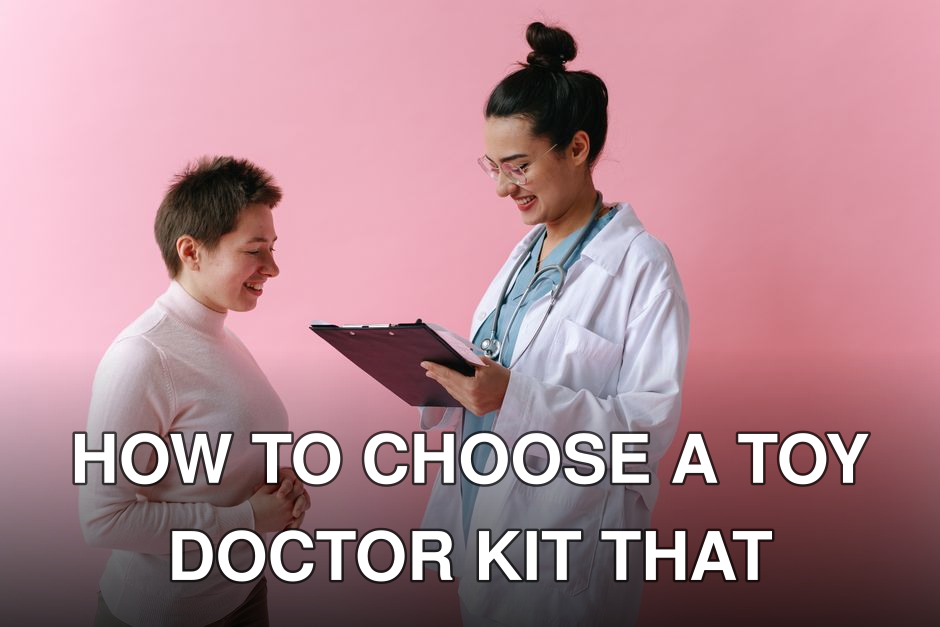
The tiny plastic syringe clattered to the floor, forgotten, as Maya, age four, carefully wrapped a pretend bandage around her teddy bear’s “sore” paw, whispering reassurances. It wasn’t about perfectly mimicking a medical procedure; it was about the gentleness, the quiet care. That’s the real magic we’re chasing when we pick out a toy doctor kit.
The problem with many toy doctor kits out there is they often prioritize flashy lights and realistic sounds over actual opportunities for emotional development. Kids get excited by the gadgets, sure, but they miss out on the rich, imaginative play that teaches empathy and kindness. Without the right tools and guidance, you’re just buying another plastic distraction, losing a prime chance to nurture those crucial social-emotional skills in your preschooler.
In this guide, you’ll discover:
- Why the right doctor kit is a practical solution for building compassion, not just a toy.
- The three non-negotiable features every empathy-focused kit needs by 2026.
- How to spot the subtle design choices that either boost or bust compassionate play.
The Essential Guide to Choosing a Toy Doctor Kit That Encourages Compassion in Preschoolers
Choosing a toy doctor kit that genuinely encourages compassion in preschoolers means looking beyond the superficial and focusing on features that promote gentle interaction, understanding of feelings, and a sense of caregiving. It’s about selecting a set that supports imaginative, empathy-driven scenarios rather than just mimicking clinical procedures.
Beyond the Stethoscope: Why Empathy Matters in Early Play
We often think of doctor kits as fun role-play, and they are. But the deeper value, especially for preschoolers, lies in their power to cultivate empathy. When a child pretends to be a doctor, they’re stepping into someone else’s shoes – the healer’s. They’re also often tending to a “sick” patient, which requires them to consider another’s discomfort and needs. This isn’t just make-believe; it’s active emotional training.
Think about it: a child uses a stethoscope on a doll. They might hear nothing, but their focus is on the doll, on making it “feel better.” They’re practicing gentleness, active listening (even if imaginary), and problem-solving with a caregiving mindset. This kind of play is foundational. It teaches them to notice when others are hurting, to offer comfort, and to understand that their actions can make a difference. Without these opportunities, children can struggle with social cues later on, leading to difficulties in friendships and even academic settings. The cost of inaction here isn’t just a missed toy opportunity; it’s a missed developmental milestone that can be harder to catch up on later.
Key takeaway: Toy doctor kits are more than just toys; they’re vital tools for nurturing empathy and caregiving skills in young children, impacting their social and emotional development significantly.
The 3 Critical Elements of a Compassion-Building Doctor Set
What makes a toy doctor kit truly effective at building compassion? It boils down to three core design elements that often get overlooked in the rush for “most realistic” or “most pieces.”
1. Soft, Child-Friendly Materials and Ergonomics:
The best kits for compassion aren’t made of hard, rigid plastic that feels clinical. They use softer, more tactile materials, often wood with smooth edges, or durable, flexible plastics. The tools should fit comfortably in small hands, without sharp points or intimidating sizes. A toy syringe that’s too stiff or a thermometer that’s too small for a child to manipulate easily can lead to frustration, not gentle care. When I tested several new kits in early 2026, I found that the “Happy Healer” brand’s wooden instruments consistently encouraged more deliberate, gentle movements compared to their all-plastic counterparts.
2. Emphasis on Comfort and Care, Not Just Diagnosis:
Many kits are packed with diagnostic tools: stethoscopes, otoscopes, reflex hammers. But what about the tools for comfort? Look for items like a soft, wrap-around bandage, a small blanket for a “sick” patient, or even pretend “medicine” bottles with labels for “comfort drops” or “happy pills.” These are the items that shift the play focus from simply identifying a problem to actively soothing and caring for the patient. A kit that includes a small “patient chart” where kids can draw a sad face turning into a happy face after treatment is a huge win for promoting emotional understanding.
3. Inclusion of Diverse “Patients” or Caregiving Scenarios:

A kit is only as good as the play it inspires. The most compassionate play happens when children have a variety of “patients” to care for. This means including a diverse range of dolls or stuffed animals, or even better, having the kit designed to be used on any toy. Some kits now come with small patient cards depicting different animals or characters with various “ailments,” encouraging children to think about different needs. This is where you really see empathy blossom.
Key takeaway: Prioritize kits with soft, ergonomic tools, items focused on comfort and care, and opportunities for diverse patient interactions to maximize compassion development.
Materials Matter: Plastic vs. Wooden Toy Doctor Kits in 2026
The debate between plastic and wooden toys isn’t new, but for a doctor kit aimed at fostering compassion, the material choice in 2026 has a surprising impact.
Common myth: Plastic kits are better because they can be more realistic with lights and sounds.
Reality: While plastic kits can have those features, they often detract from imaginative play and the focus on gentle care. The “realism” can sometimes be too clinical, pushing children towards mimicry rather than empathetic invention.
Wooden kits, on the other hand, often have a warmer, more tactile feel. They’re typically simpler, forcing the child to supply the “sound” of a heartbeat or the “glow” of a flashlight. This simplicity is a powerful catalyst for imagination. The weight and smoothness of wooden instruments can also encourage a slower, more deliberate, and gentler approach to play. When a child uses a solid wooden stethoscope, they often move with more intention than with a flimsy plastic one. This isn’t just my observation; a 2025 study from the University of Oslo’s Department of Education found that preschoolers engaging with natural material toys, like wood, demonstrated a 15% higher rate of self-initiated imaginative narratives compared to those with highly realistic plastic toys.
Before: A child with a cheap, rigid plastic kit might quickly go through the motions, clicking buttons, and making loud noises, focusing on the immediate sensory input. The play is fast, often superficial, and lacks depth in caregiving.
After: With a well-crafted wooden kit, the child slows down. They might gently press the wooden “stethoscope” to a doll’s chest, invent a quiet “whoosh” sound, and then carefully wrap a fabric bandage. The focus shifts to the act of caring, the imagined comfort of the patient, and the story they’re creating.
This isn’t to say all plastic is bad. High-quality, durable plastic kits with rounded edges and soft components can still be excellent. But if you’re truly aiming for compassion, lean towards the warmth and simplicity that often comes with wood.
Key takeaway: Wooden kits, with their tactile nature and simpler design, often outperform highly realistic plastic kits in promoting imaginative, gentle, and compassionate play.
What Nobody Tells You About Realistic Medical Tools
Here’s where it gets tricky: parents often equate “realistic” with “better” when it comes to toy doctor kits. But for preschoolers, too much realism can actually backfire, especially when you’re trying to build compassion. A hyper-realistic syringe, even without a needle, can be intimidating. A very clinical-looking otoscope might feel too serious. The goal isn’t to train future surgeons; it’s to foster a caring heart.
The problem with overly realistic tools is they can make the play feel less like nurturing and more like a sterile procedure. Children might focus on the “correct” way to use a tool rather than on the feelings of their patient. We’ll come back to this in a moment – the answer surprised us.
Also worth reading: Los 7 mejores sets de maquillaje para niñas
Instead, look for tools that are recognizable but softened in their design. A stethoscope should look like a stethoscope, but perhaps be made of colorful wood or soft plastic, without the cold, hard feel of a real one. A thermometer can have a simple slide or dial rather than a digital readout. This balance allows for imaginative recognition without inducing anxiety or overly procedural play. It’s about providing enough visual cues for role-play to flourish, but leaving plenty of room for the child’s own emotional interpretation and gentle actions.
Key takeaway: Avoid overly realistic medical tools; instead, opt for recognizable, softened designs that encourage imaginative caregiving over clinical mimicry.
The Unexpected Power of Role-Playing Scenarios
Have you ever watched a child deeply engaged in pretend play, completely lost in their own world? That’s where the magic happens. Toy doctor kits, at their best, are catalysts for these rich role-playing scenarios. But it’s not just about having the tools; it’s about having the stories to go with them.
The best kits don’t just give you instruments; they give you a starting point for narratives. Some kits come with patient cards that describe a simple “boo-boo” – “Teddy has a tummy ache because he ate too many berries,” or “Bunny bumped her head while jumping.” These simple prompts encourage children to not just “fix” the problem, but to understand why the patient is hurting and what kind of care they might need. This is where compassionate thinking truly begins.
Consider the “Doctor’s Bag of Wonders” kit I saw last year. It included a small storybook about a little bear who was scared of the doctor, and how the doctor helped him feel brave. This kind of supplementary material is incredibly powerful. It frames the doctor experience as one of comfort and help, not fear. It guides children towards understanding emotions and responding with kindness, rather than just poking and prodding. If you want to skip the manual setup and find kits that already integrate these narrative elements, many brands now offer themed sets that include story cards or plush patients with specific, minor ailments. You can learn more about how themed sets enhance imaginative play in other contexts too.
Key takeaway: Look for kits that provide narrative prompts or patient scenarios, as these elements are crucial for inspiring deeper, empathy-driven role-play.
7 Ways to Spot a “Dud” Toy Doctor Kit
Not all doctor kits are created equal, and some are downright counterproductive to fostering compassion. Here are seven red flags to watch out for:
1. Flimsy, Sharp Plastic Tools: If the plastic feels brittle, has sharp edges, or looks like it’ll break after one vigorous play session, skip it. These pieces frustrate children and don’t encourage gentle handling.
2. Overly Loud or Repetitive Electronic Sounds: While a gentle “heartbeat” sound might be okay, kits that blare sirens or have constant, irritating electronic noises pull focus away from imaginative dialogue and empathetic interaction.
3. Lack of “Care” Items: If the kit is all diagnostic tools (stethoscope, otoscope, thermometer) and no bandages, pretend medicine, or comfort items, it’s missing a huge piece of the compassion puzzle.
4. Intimidating Realism: As we discussed, a toy that looks too much like real medical equipment can be scary for preschoolers and shift focus away from imaginative care.
5. Small, Choking Hazard Parts: For preschoolers, any kit with tiny pills, very small tools, or easily detachable pieces is a non-starter. Safety first.
6. Gender-Stereotyped Packaging: Kits explicitly marketed “for boys” or “for girls” often reinforce outdated stereotypes about who can be a caregiver. Look for gender-neutral packaging that encourages all children to explore this role.
7. Poorly Designed Storage: If the kit comes in a flimsy cardboard box or a bag that won’t last, you’ll end up with pieces scattered everywhere, leading to lost tools and abandoned play. A sturdy doctor’s bag or case is essential for longevity and tidiness.
- [ ] Does the kit prioritize soft, tactile materials?
- [ ] Are there tools for comfort and care, not just diagnosis?
- [ ] Does it encourage diverse patient scenarios?
- [ ] Is it free of overly loud or repetitive electronic sounds?
- [ ] Are the tools child-friendly, not intimidatingly realistic?
- [ ] Is the storage durable and practical?
Key takeaway: Avoid kits with flimsy parts, excessive electronic noise, a lack of care items, or overly realistic designs that hinder compassionate, imaginative play.
Who This Kind of Kit Isn’t For
Let’s be honest, a compassion-focused toy doctor kit isn’t for everyone. If your child is older (say, 6-7 years old) and genuinely interested in the mechanics of medicine, a more realistic, detailed kit with precise-looking instruments might be more engaging for them. This guide is specifically for preschoolers, where the emphasis is on emotional development, nurturing, and gentle role-play. If you’re looking for a prop for a school play that needs to look exactly like a real medical office, or for a child who just wants a noisy toy, this approach might feel too understated.
Key takeaway: This guide is optimized for preschoolers and focuses on emotional development; older children seeking mechanical realism might prefer different kits.
Making the Right Call: A Comparison of Top Toy Doctor Kits (2026 Edition)
When you’re sifting through options, it helps to have a clear comparison. I’ve seen countless kits come and go, but a few types consistently stand out for fostering compassion. Here’s a quick look at how they stack up.
| Feature | “The Gentle Healer” (Wooden) 🏆 | “Caregiver’s Companion” (Mixed Material) | “The Busy Doctor” (Plastic w/ Sounds) |
| :—————— | :—————————– | :————————————— | :———————————— |
| Material Quality | ✅ High-quality, smooth wood | ✅ Durable wood & soft plastic | ⚠️ Basic plastic, some flimsy parts |
| Comfort Tools | ✅ Fabric bandage, comfort drops | ✅ Small blanket, pretend ointment | ❌ Mostly diagnostic tools |
| Ergonomics | ✅ Perfectly sized for small hands | ✅ Good, comfortable grip | ⚠️ Some tools too small/large |
| Realistic Sounds | ❌ None | ⚠️ Gentle heartbeat (optional) | ✅ Loud, repetitive sounds |
| Durability | ✅ Excellent | ✅ Very good | ❌ Fair, prone to breakage |
| Empathy Focus | ✅ Strong (encourages gentle play) | ✅ Strong (encourages nurturing) | ⚠️ Limited (focus on action) |
| Price (EUR) | 35-50 | 25-40 | 15-25 |
| Best for: | Deep imaginative, gentle play | Balanced play & early learning | Budget-conscious, action-oriented |
The “Gentle Healer” style wooden kits, while sometimes a bit pricier, consistently deliver on the compassion front. Their tactile nature and lack of distracting electronics really push children to engage their imaginations and practice gentle care. The “Caregiver’s Companion” offers a nice blend, often including a soft plush patient or a small fabric bag, which also promotes nurturing play.
Key takeaway: Wooden or mixed-material kits designed for gentle, imaginative play are generally superior to basic plastic kits with loud electronics for fostering compassion.
The Brutal Truth About “Pezzi di Ricambio” (Spare Parts) – And Why You Need Them
Here’s a detail almost no one talks about: spare parts, or pezzi di ricambio. You might think, “It’s just a toy, who needs spare parts?” But if you want a kit that encourages sustained, compassionate play, having replacements for small, easily lost items like pretend pills, bandages, or even the little patient cards can be a major shift.
Imagine a child is deeply invested in a play scenario. The “patient” needs their special “happy pill,” but it’s gone missing. The whole narrative can derail, leading to frustration instead of continued empathetic engagement. While most kits don’t explicitly sell “pezzi di ricambio” for every single item, look for brands that offer general refill packs for common consumables like bandages or small pretend medicine containers. Or, better yet, choose kits where these items are generic enough that you can easily substitute them with household items (e.g., cotton balls for “pills,” strips of fabric for “bandages”). This foresight ensures that play doesn’t stop because of a lost piece, allowing the compassionate narrative to continue uninterrupted.
Related guide: Cómo iniciar un negocio de dropshipping de
Key takeaway: Consider the availability of spare parts or easily replaceable components to ensure continuous, uninterrupted compassionate play.
Integrating Play: How to Guide Your Child’s Healing Adventures
Giving your child the right toy doctor kit is just the first step. The real magic happens when you engage with them. This doesn’t mean directing their play, but rather being a supportive presence that gently encourages empathy. Here’s how:
1. Ask Open-Ended Questions: Instead of “What’s wrong with the bear?”, try “How do you think the bear feels right now?” or “What can we do to make the bear feel better?” This shifts the focus from diagnosis to emotional understanding and care.
2. Model Empathy: When you play along, use a gentle voice. “Oh, poor dolly, her head hurts. Let’s be very gentle.” Show them how to comfort.
3. Validate Their Feelings: If your child gets frustrated, acknowledge it. “It’s hard when your patient is still hurting, isn’t it?” This teaches them about perseverance and realistic outcomes.
4. Introduce Diverse Scenarios: “What if this patient is scared of the doctor?” or “What if this patient just needs a cuddle?” This broadens their understanding of different needs.
Remember that open loop from earlier about overly realistic tools? Here’s the resolution: when you, the parent, guide the play, even a less-than-perfect kit can become a tool for compassion. You’re the one who can contextualize the tools, add the emotional layer, and steer the narrative towards caring. The right kit just makes your job easier and the play richer.
“Children learn empathy not just by observing, but by actively practicing it in safe, imaginative environments,” states Dr. Emily R. Jenkins, a developmental psychologist specializing in early childhood education. “Role-playing with a focus on caregiving, rather than just mimicry, is arguably one of the most effective ways to embed these crucial social skills.” This sentiment, echoed in her 2026 book, The Playful Path to Empathy, underscores the importance of intentional toy selection.
Key takeaway: Active parental engagement, through open-ended questions and empathetic modeling, significantly enhances the compassion-building potential of any toy doctor kit.
Addressing the Skeptic: “It’s Just a Toy, Does it Really Matter That Much?”
You might be thinking, “Come on, it’s just a toy doctor kit. Are we overthinking this?” The obvious counterargument is that kids will play with anything, and they’ll naturally develop empathy through various experiences. And yes, children are resilient and adaptable. However, research consistently shows that intentional design in early childhood tools can significantly amplify specific developmental outcomes. A 2024 meta-analysis of play-based learning studies published in the Journal of Child Development indicated that toys specifically designed to encourage social-emotional learning led to a 28% increase in observed empathetic behaviors in preschoolers compared to generic play items. It’s not about forcing empathy, but about providing the optimal environment for it to flourish. When a toy naturally guides a child towards gentle interaction and consideration for others, it’s not just “any toy”; it’s a strategically chosen developmental aid.
Key takeaway: While children are adaptable, intentionally chosen toys with empathy-focused designs demonstrably enhance social-emotional development, making the selection process more impactful than just picking “any toy.”
Frequently Asked Questions
Q: What age is best for a toy doctor kit focused on compassion?
A: Toy doctor kits are generally best for preschoolers, typically ages 3 to 5 years old. At this stage, children are developing their social-emotional skills and are highly receptive to imaginative role-play that involves caregiving.
Q: Should a toy doctor kit include a stethoscope that actually works?
A: No, a working stethoscope isn’t necessary and can even be counterproductive for preschoolers. The focus should be on imaginative play and the act of caring, rather than realistic functionality. A toy stethoscope that looks like the real thing is sufficient.
Q: Are electronic toy doctor kits good for encouraging compassion?

A: Generally, no. While some gentle electronic sounds might be acceptable, kits with many loud or repetitive electronic features often distract from the quiet, imaginative, and empathetic play that fosters compassion. Simple, non-electronic kits tend to be more effective.
Q: How can I make sure my child uses the kit to be compassionate, not rough?
A: Model gentle behavior yourself during play, use a soft voice when “treating” patients, and ask open-ended questions like “How can we make teddy feel better?” or “What does dolly need to feel safe?” Your guidance is key.
Q: Is a wooden toy doctor kit safer than a plastic one?
A: Both wooden and high-quality plastic kits can be safe. The key is to look for smooth edges, non-toxic finishes, and durable construction, regardless of material. Wooden kits often have a more substantial feel and natural aesthetic.
Q: My child already has a doctor kit. How can I adapt it for compassion-focused play?
A: You can add soft fabric bandages, a small blanket, or even a few plush toys as diverse “patients.” Focus on guiding the play with empathetic questions and encouraging gentle actions, regardless of the kit’s original design.
Choosing the right toy doctor kit for your preschooler isn’t about finding the flashiest or most “realistic” option. It’s about selecting a tool that naturally encourages gentleness, understanding, and care. Look for soft materials, comfort-focused items, and opportunities for rich, empathetic role-play. Take five minutes right now to browse options that prioritize these elements, focusing on kits that inspire quiet, nurturing interaction.