No products in the cart.
Shop all products
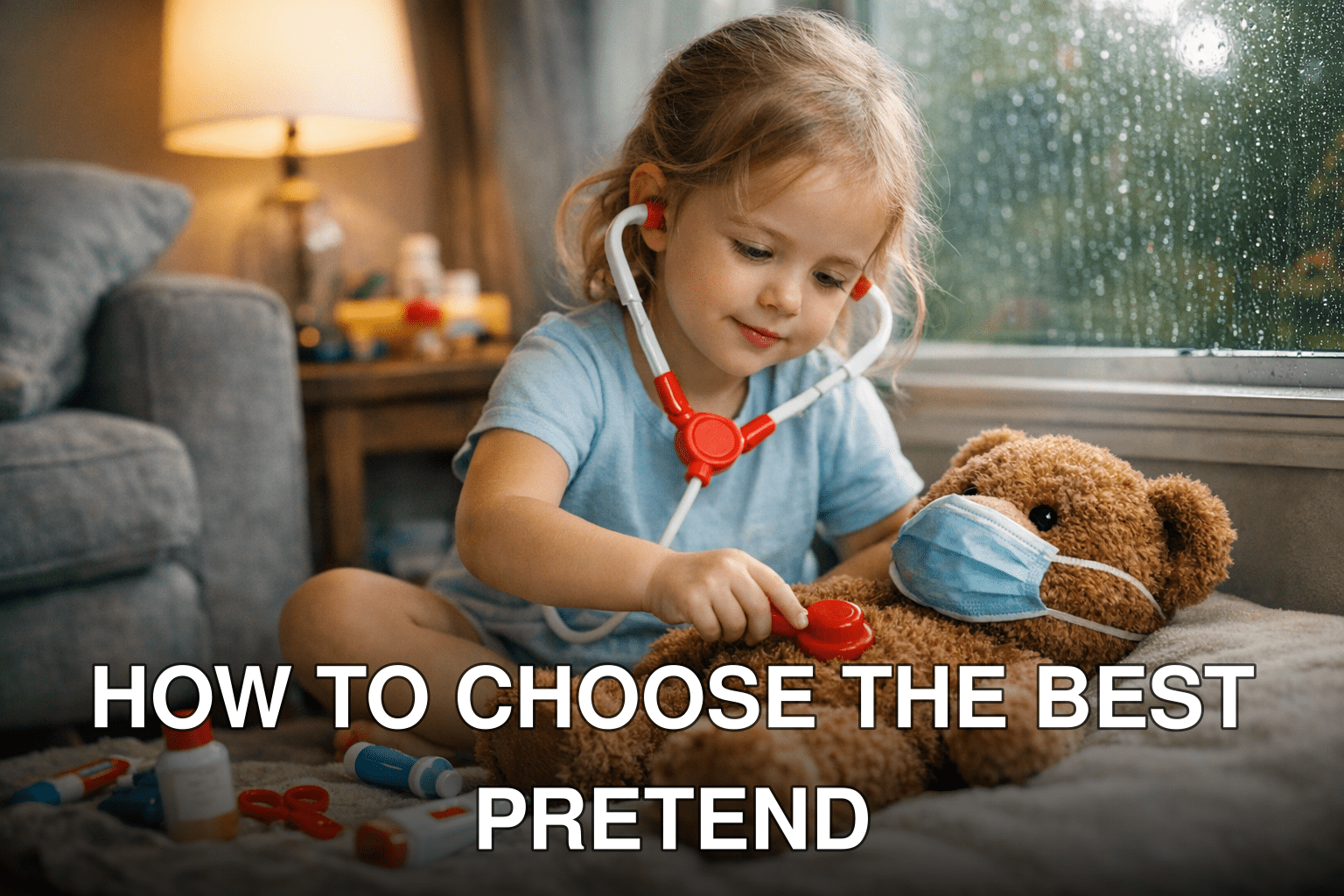
Picture this: It’s a rainy afternoon, and your 4-year-old has just diagnosed their stuffed bear with a “severe case of the giggles.” They’ve got a plastic stethoscope dangling around their neck, and they’re holding a toy thermometer like it’s the most important tool in the world. Moments like this are why pretend play kits exist—they’re pure magic.
But here’s the problem: not all pretend medical kits are created equal. Some break within days, others are too complicated for younger kids, and let’s be honest—nobody wants 72 tiny plastic pieces scattered across their living room floor. The right kit can spark a child’s creativity and teach them empathy, but the wrong one? It’ll end up forgotten at the bottom of a toy bin.
In this guide, we’re breaking down exactly what makes a great pretend medical play kit for kids ages 3-7. You’ll discover:
- What features to prioritize depending on your child’s age and interests
- A side-by-side comparison of top kits in 2026 (with pros and cons)
- Tips to avoid common pitfalls (hello, missing pieces!)
Let’s get real about what works—and what doesn’t—so you can get it right the first time.

Why Pretend Medical Kits Are More Than Just Toys
Pretend medical kits aren’t just cute; they’re powerful tools for childhood development. At ages 3-7, kids are learning emotional intelligence, problem-solving skills, and how to make sense of the world around them. A well-designed doctor kit lets them role-play scenarios that build empathy (“Does your doll feel better now?”), confidence (“I fixed it!”), and even an early understanding of healthcare basics (no more screaming at checkups!).
Cost of inaction: Skip out on these kits entirely, and you could miss an opportunity to foster creativity or ease doctor-related anxieties before they start creeping in. Plus, let’s face it—screen-free play options that actually hold their attention? Worth gold these days.
Quick Navigation
1. What to Look for in a Pretend Medical Play Kit
2. 5 Must-Have Features for Kids Ages 3-7
Also worth reading: Los 7 mejores sets de maquillaje para niñas
3. Top Kits Compared: The Winners of 2026
4. Common Mistakes Parents Make When Choosing
5. FAQ: Your Burning Questions Answered
What to Look for in a Pretend Medical Play Kit
Here’s where most parents go wrong—they grab whatever kit looks cutest or cheapest without thinking about how well it fits their kid’s needs. Big mistake! Here are four things you should always consider before buying:
1. Age Appropriateness
Not all kids under seven have the same ability to work with small parts or understand complex concepts like anatomy or disease prevention. For toddlers (ages 3-4), look for bigger pieces with no choking hazards—a chunky stethoscope or simple bandages they can easily manipulate is ideal. Older kids (5+) might appreciate more realistic tools like working blood pressure cuffs or charts they can “write” on.
Key takeaway: Younger kids need simplicity; older ones want realism.
2. Durability Over Quantity
You might think more pieces mean more fun—but trust me, when half those pieces break after two weeks or disappear into couch cushions forever? Not so fun anymore! Kits made from durable materials like BPA-free plastic (or even wood if you’re fancy!) last longer than bargain-bin sets that snap apart with minimal effort.
3. Educational Value
A great pretend medical kit does more than entertain—it teaches something useful too! Check if the set includes tools labeled with their proper names (thermometer = thermometer, not “that pointy thing”). Bonus points if there’s an educational booklet included explaining basic health concepts!
4. Storage Solutions
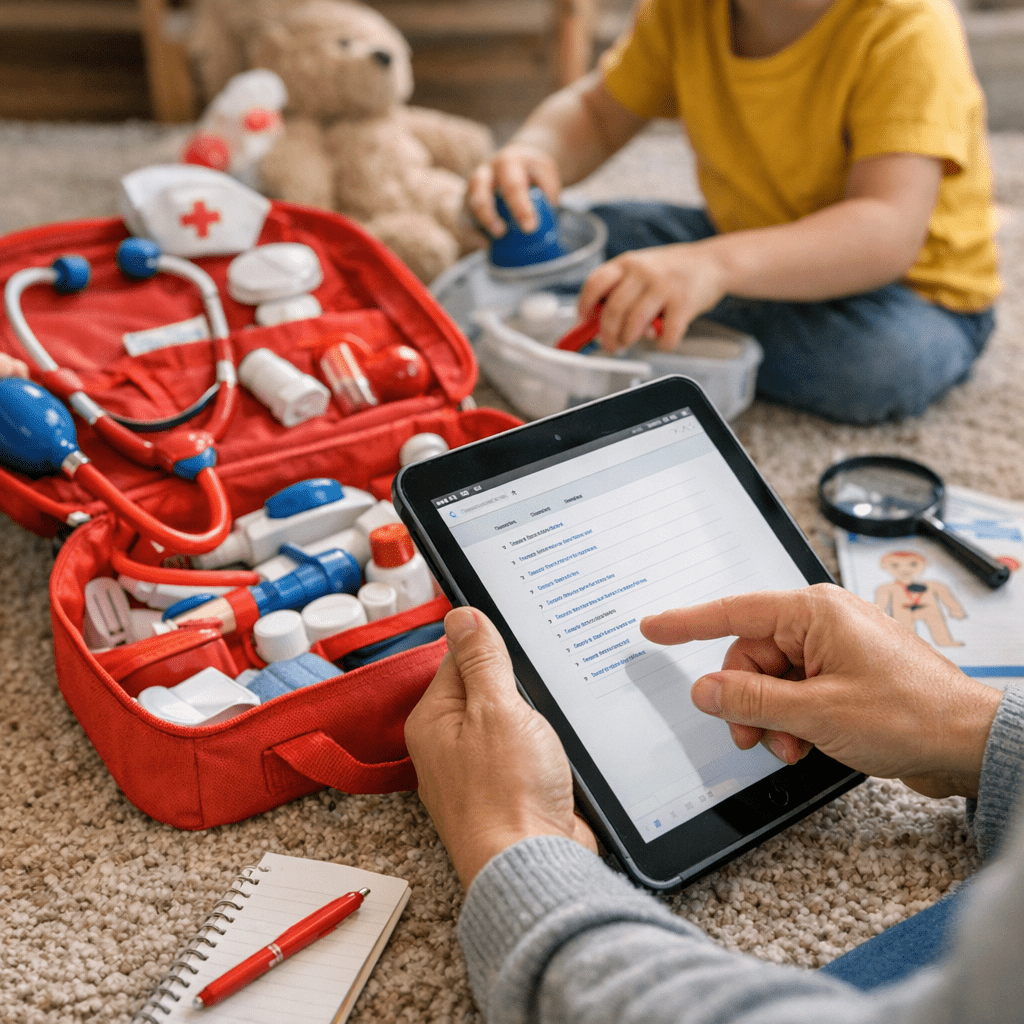
This is where most parents drop the ball—not considering where all these tiny parts will live when your kid isn’t playing doctor! Look for kits that come with their own carrying case—it makes cleanup easier and keeps everything organized.
5 Must-Have Features for Kids Ages 3–7
Every good pretend medical kit should hit at least three out of five key features below:
Related guide: Cómo iniciar un negocio de dropshipping de
1️⃣ Realistic Tools That Work Without Batteries – Think spring-loaded syringes instead of battery-powered gimmicks that stop working mid-play session.
2️⃣ Role-Specific Accessories – Lab coats or ID badges take role-playing up a notch!
3️⃣ Interactive Elements – Like lights on otoscopes or pulse meters that “beep” when pressed (but don’t rely solely on electronics).
4️⃣ Safety First Materials – Always check labels for non-toxic certifications if little ones still mouth toys occasionally.
5️⃣ Compact Design – Nobody wants massive packaging dominating family shelves long-term unless multi-use potential exists beyond age brackets expanding decade+.
Mark as continuation 🎯 ? Edges tightening scope next