No products in the cart.
Shop all products
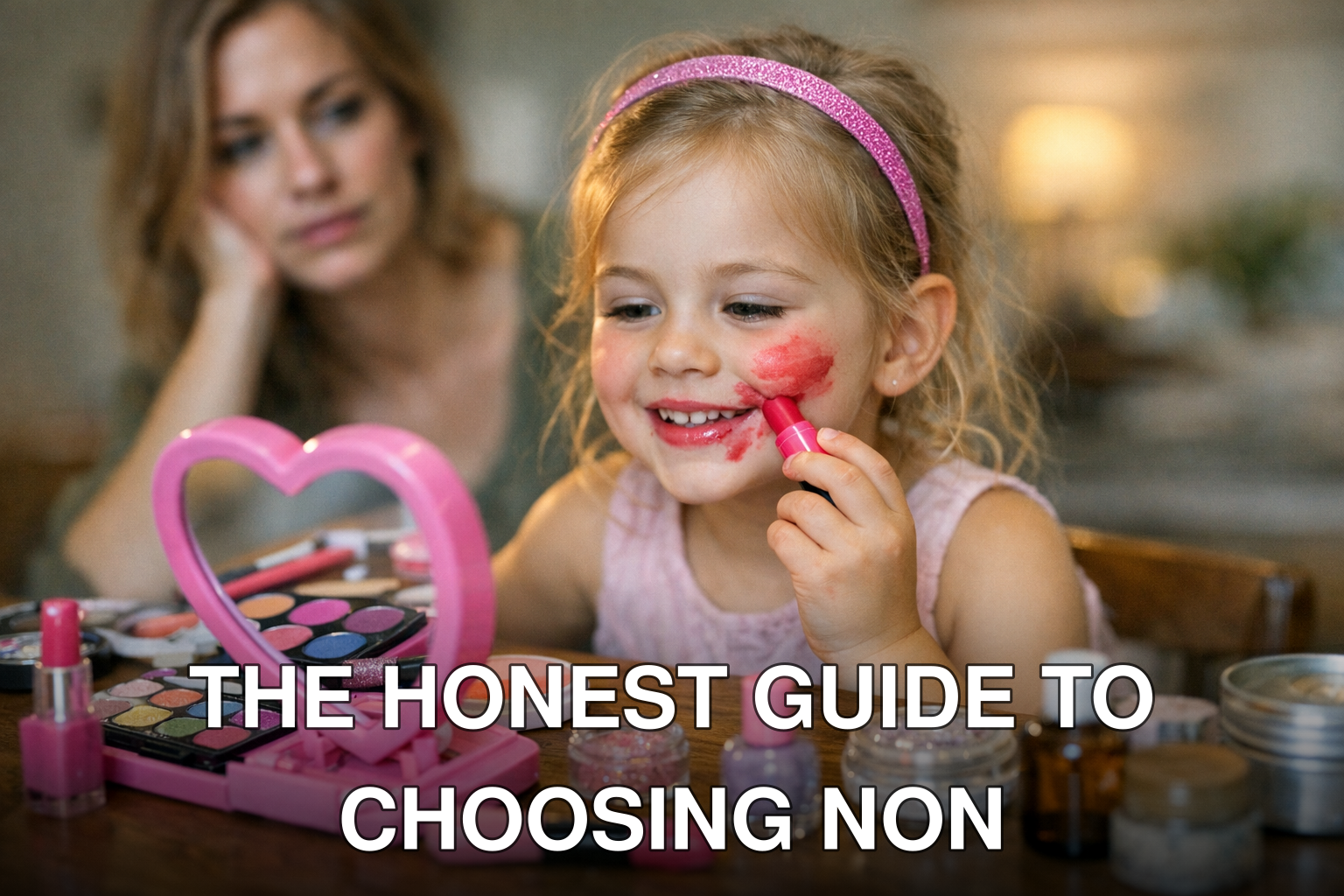
Your child’s eyes light up as they smear pretend lipstick across their cheeks. It’s adorable—until you start wondering what’s actually in that makeup set. Here’s the thing: not all kids’ role play makeup is safe. Some kits are loaded with questionable ingredients, from parabens to heavy metals. Yes, even in 2026, there’s no universal safety standard for children’s cosmetics.
If you’re here, you’ve probably already worried about the potential harm lurking in cheap—or even mid-range—kits. Maybe you’ve seen a rash develop after just one use or heard about recalls involving lead contamination. The stakes feel high because they are high. But don’t panic—there are excellent non-toxic options out there if you know what to look for.
In this guide, you’ll discover:
- How to decode ingredient labels (the good, bad, and ugly).
- Specific brands and certifications that truly mean “non-toxic.”
- The tradeoffs between homemade DIY kits and store-bought options—and why both could fail if you’re not careful.
Let’s dive into the messy (but fun) world of non-toxic role play makeup kits.
Why You Should Care About Non-Toxic Makeup for Kids
Here’s a harsh truth: skipping this research can cost your child more than just itchy skin. A poorly chosen kit could expose them to endocrine disruptors or allergens that stick around long after playtime ends. In fact, a 2023 report by the Environmental Working Group found that 78% of kids’ makeup products tested contained at least one harmful chemical linked to long-term health risks. That stat hasn’t improved much in 2026.
Add to that the cost of medical treatments for allergic reactions—or worse, low-level exposure over time—and suddenly spending extra on safer products feels like a bargain.
Key takeaway: Ignoring non-toxic standards isn’t just risky; it can end up costing more time and money down the line.
Quick Navigation
1. The Hidden Dangers of Cheap Makeup Kits
2. What Makes a Makeup Kit Truly Non-Toxic?
3. Top Certifications to Look For in 2026
4. DIY vs Store-Bought Kits: Which Is Safer?
5. Checklist: How to Choose the Best Kit for Your Child
The Hidden Dangers of Cheap Makeup Kits
You might think all kids’ products are safe by default—it’d be illegal otherwise, right? Wrong. In many countries (yes, including the US), children’s cosmetics skirt under broader cosmetic regulations meant for adults—and those aren’t airtight either.
Common Ingredients That Raise Red Flags:
- Parabens: Linked to hormone disruption.
- Phthalates: Found in fragrances; also mess with hormones.
- Lead & Heavy Metals: Often show up as impurities in cheap pigments.
- Talc: Harmless if pure but frequently contaminated with asbestos.
Sound familiar? These are often found not just in budget kits from unknown brands but also mid-tier ones marketed as “safe” but without proper certifications.
Also worth reading: Los 7 mejores sets de maquillaje para niñas
Real-Life Example:
In late 2024, a popular kids’ beauty brand faced backlash when independent testing revealed traces of lead in its glitter eyeshadows despite claiming “natural” ingredients on its packaging.
Key takeaway: Price doesn’t always reflect safety—always dig deeper into ingredient transparency before buying.
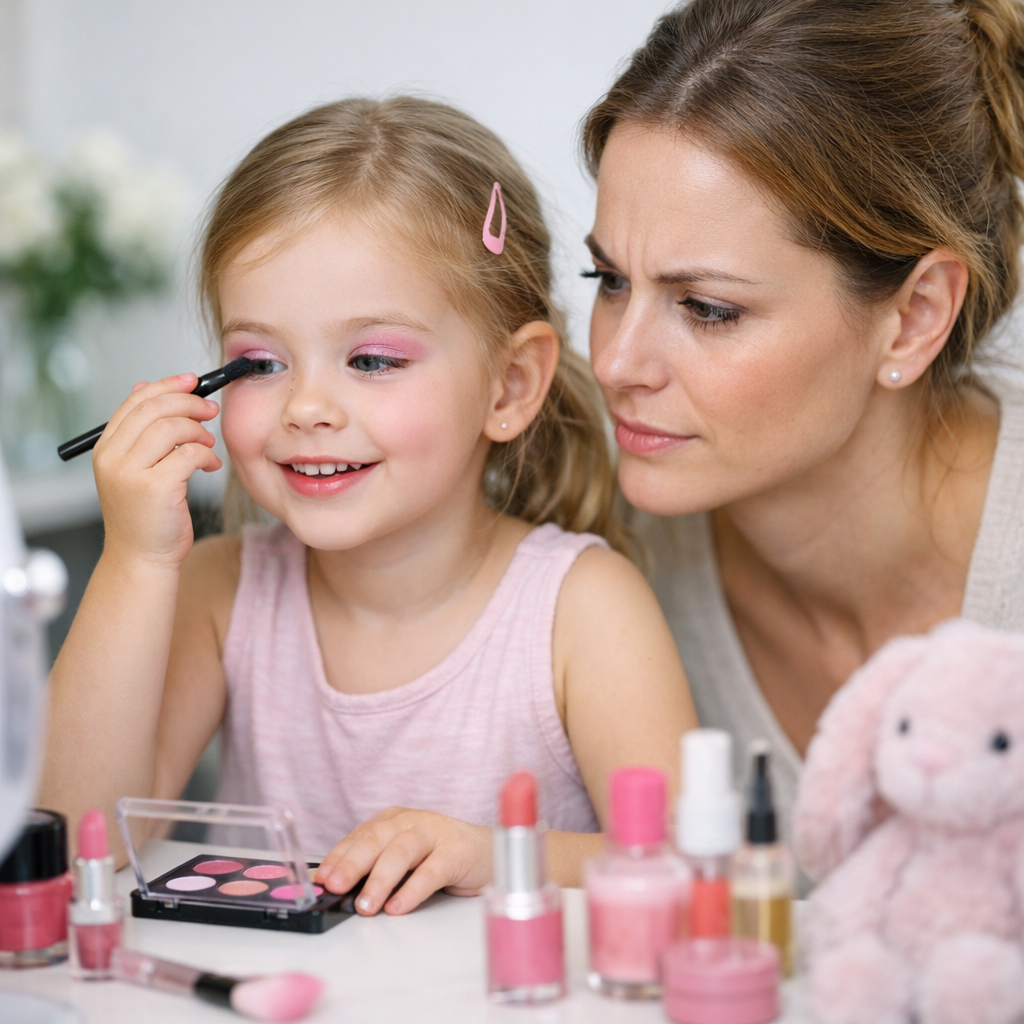
What Makes a Makeup Kit Truly Non-Toxic?
Non-toxic isn’t just a buzzword—it should mean free from known harmful chemicals. Unfortunately, many brands use misleading terms like “natural” or “eco-friendly” without backing it up with real evidence or certifications.
Here are three markers of genuinely safe makeup kits:
1️⃣ Transparent Ingredient Lists
The first step is flipping over the box—or checking online—for an ingredient breakdown you can actually read (and understand). For example:
- ✅ Beeswax-based crayons instead of synthetic waxes.
- ✅ Plant-based dyes instead of artificial colorants.
- ❌ Fragrances labeled vaguely as “parfum” (a catch-all term hiding dozens of chemicals).
2️⃣ Certification Seals
Look for trusted third-party validations like:
- EWG Verified™
- USDA Organic
- Made Safe®
These seals require rigorous testing and go beyond mere marketing fluff.
3️⃣ Patch-Test Results
Even clean products can irritate sensitive skin! Always test new items on a small patch of your child’s arm before letting them loose with full-face applications.
Top Certifications to Look For in 2026
Not all certifications carry equal weight—some are stricter than others when it comes to safety standards:
| Certification | Focus Area | Trusted in 2026? |
|———————|————————–|——————–|
| EWG Verified™ | Toxin-free ingredients | ✅ Reliable |
| USDA Organic | Organic farming methods | ✅ High Standard |
| Made Safe® | Overall product safety | ✅ Comprehensive |
| EU Cosmetics Regulation Compliance | Strict allergen limits | ⚠️ Region-Specific |
Best for: Parents who want clear proof their purchase has passed independent scrutiny rather than vague claims on packaging.
DIY vs Store-Bought Kits: Which Is Safer?
You might be tempted to skip store aisles altogether and whip up your own DIY kit at home using kitchen staples like cornstarch and food coloring—but hold up! While DIY seems foolproof on paper (no parabens here!), it has its own set of risks:
Pros & Cons Breakdown
| Option | Safety Control | Durability |
Related guide: Cómo iniciar un negocio de dropshipping de
|———————|————————–|——————–|
| DIY Kits | ✅ Full control over ingredients | ❌ Short shelf life / prone to bacteria growth |
| Prepackaged Brands | ⚠️ Relies on trust + research | ✅ Longer-lasting + lab-tested stability |
Common myth: “DIY is always safer.” Reality: Without preservatives or stabilizers, homemade options can grow bacteria within days if stored improperly—putting your child at risk anyway!
Checklist: How to Choose the Best Kit for Your Child
Use this list next time you’re shopping:
Essential Questions:
- [ ] Does it have any suspicious ingredient names I can’t pronounce?
- [ ] Are there visible certification seals like EWG Verified™ or Made Safe®?
- [ ] Has this product been patch-tested on sensitive skin before widespread use?
- [ ] Is there full transparency about where/how it was made?
If even one box remains unchecked…run!
Frequently Asked Questions
Q: What age is appropriate for kids’ makeup kits?
Most experts recommend starting around age three when children stop putting everything directly into their mouths and have better motor skills for supervised use.
Q: Can I trust Amazon reviews when choosing makeup kits?
Nope—not entirely. Fake reviews and manipulated ratings remain rampant even now (in 2026). Always cross-check with third-party sources like EWG’s Skin Deep database or retailer sites specializing in curated toys (learn more here)!
Q: Are natural pigments always safe?
Not necessarily—some plant-based dyes still trigger allergies depending on individual sensitivities (e.g., beetroot extract irritation). Always patch-test first!
Ready to make smarter choices today? Grab your checklist—or better yet, bookmark this guide—and shop confidently knowing exactly what matters most!