No products in the cart.
Shop all products
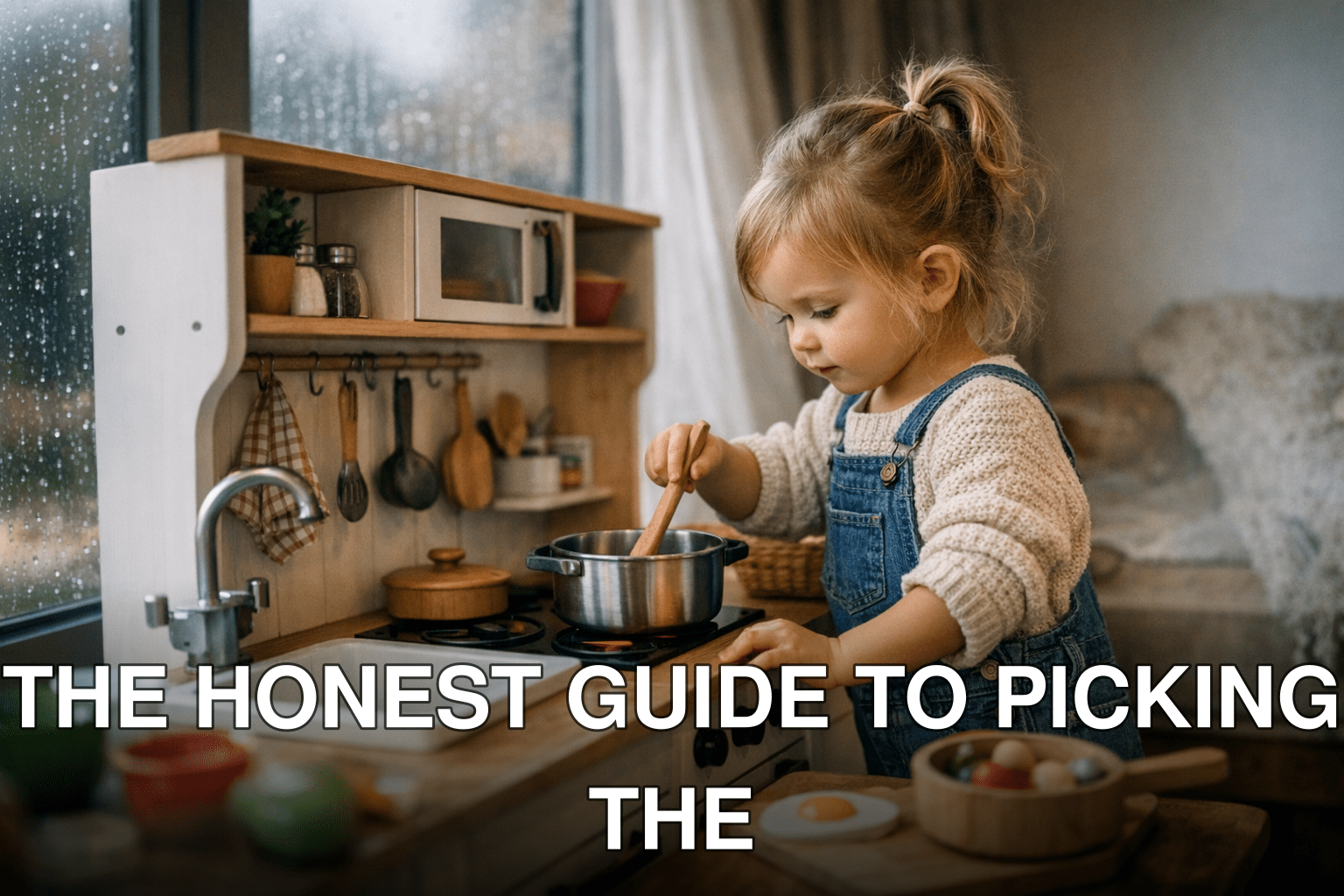
Picture this: It’s a rainy Saturday afternoon, and your toddler is “cooking” up a storm with mismatched Tupperware and an old wooden spoon. Cute, sure, but now there’s flour on your carpet and a saucepan dented beyond recognition. Sound familiar? That’s when you realize it might be time to invest in a proper wooden play kitchen set.
But here’s the thing—choosing one isn’t as simple as grabbing the first cute option you see online. Get it wrong, and you’ll end up with a bulky piece of furniture your kid ignores or something that falls apart before they can even make their first imaginary mac & cheese.
In this guide, you’ll discover:
- What features actually matter (and why most parents get this wrong).
- The biggest mistakes people make when picking a play kitchen—and how to avoid them.
- Real examples of wooden play kitchens that work for different needs, homes, and budgets.
Let’s get into it.
Why Wooden Play Kitchens Are Worth It
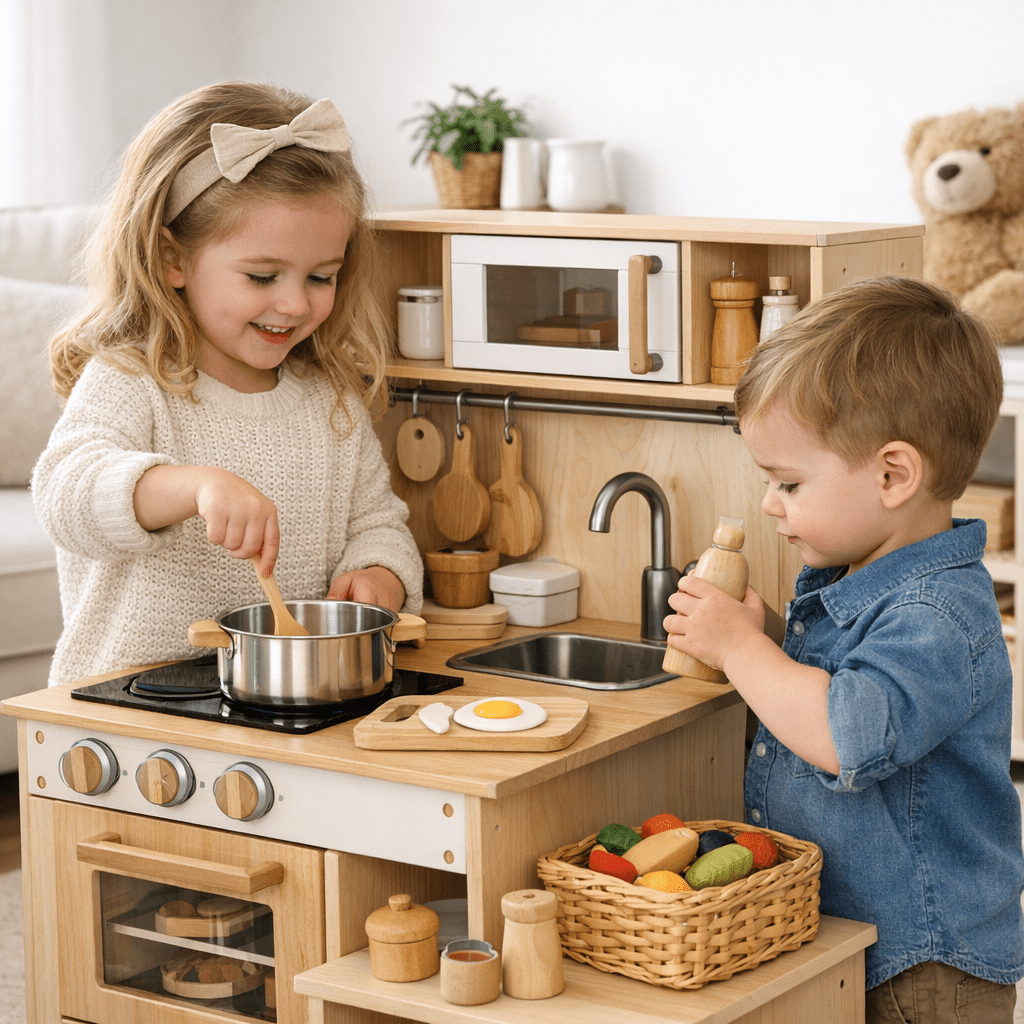
Before we dive into specifics, let me just say: A good wooden play kitchen is more than just a toy—it’s an experience. Unlike cheap plastic sets that crack within months or look outdated fast, wood lasts. It feels solid under tiny hands and gives off that timeless charm most parents can’t resist.
Plus, studies in 2025 showed that open-ended pretend play (like cooking) helps kids develop critical skills like problem-solving, empathy, and creativity. So yes—it’s fun and functional.
But there’s a catch: Not all wooden play kitchens are created equal. Some look adorable in pictures but are frustratingly impractical when unpacked. Others might tick all the boxes for durability but lack interactive features that keep kids engaged. You’ve got to find the right balance.
So how do you pick one your toddler will actually use without regretting your purchase later?
Also worth reading: Los 7 mejores sets de maquillaje para niñas
1. Size Matters More Than You Think
Here’s where most parents get it wrong—they pick something either way too big or way too small for their space or their kid’s size. Trust me, I’ve been there: excitedly unboxing a gorgeous kitchen only to realize it barely fits against the wall or towers over my two-year-old like some kind of culinary monolith.
How to Get It Right:
- Measure Your Space First: Use painter’s tape to map out where the kitchen will go before buying anything.
- Toddler-Friendly Heights: For kids under 3 years old, look for sets between 20–30 inches tall at countertop level.
- Multi-Kid Households: If you’ve got more than one child playing at once—or if friends often come over—consider wider setups with multiple stations so everyone has room to “work.”
Key takeaway: A mismatched size = frustration for both you and your little chef. Measure twice; buy once.
2. Materials That Can Take a Beating
Toddlers are not gentle creatures (to put it mildly). Whatever you buy is going to be slammed, banged on with utensils, possibly climbed on—and occasionally chewed by younger siblings or furry pets.
What to Look For:
- Solid Wood Frames: Avoid MDF-heavy options if possible—real wood holds up better long-term.
- Non-Toxic Finishes: In 2026 especially, safety regulations have tightened around harmful chemicals in toys—but always double-check labels for phrases like “lead-free” or “BPA-free.”
- Sturdy Hardware: Pulls and knobs should feel secure—not wobbly—that way they won’t fall off after five minutes of enthusiastic twisting.
One example worth mentioning is the Melissa & Doug Wooden Chef’s Kitchen. Built from durable materials with rounded edges (less risk of injury), it easily withstands rough handling while still looking great in any room.
Key takeaway: Durability means fewer replacement costs—and less worrying about safety hazards.
3. Does It Have Enough Storage?
This might sound like an afterthought until you’re tripping over stray fake eggs every morning during your coffee run… Not ideal!
The best kitchens include built-in storage spaces like shelves or cupboards where kids can stash their “groceries,” dishes, and accessories after playtime ends (or at least shove them out of sight).
What Works Best:
- Open Shelving vs Closed Cabinets: Open shelving makes clean-up easier because everything has its spot—but closed cabinets are great for hiding clutter quickly.
- Built-In Bins: Some sets come with pull-out bins underneath the oven/stove area—super handy!
Our favorite here? The KidKraft Uptown Espresso Kitchen. Its combination of closed cabinets and open shelving makes tidying up surprisingly manageable—even after chaotic playdates.
Key takeaway: A disorganized mess kills the vibe fast; invest in smart storage solutions upfront!
Related guide: Cómo iniciar un negocio de dropshipping de
4. Interactive Features Keep Toddlers Engaged Longer
Here’s where things get fun—and functional! The best wooden kitchens aren’t just static—they invite interaction through working doors/drawers/knobs/lights/sounds/etc., sparking curiosity naturally while encouraging imaginative scenarios (“Does this oven really bake cookies?”).
Look out specifically for:
1️⃣ Clicking knobs
2️⃣ Doors/cabinets that open & close seamlessly
3️⃣ Sinks with removable basins (for pretend dishwashing!)
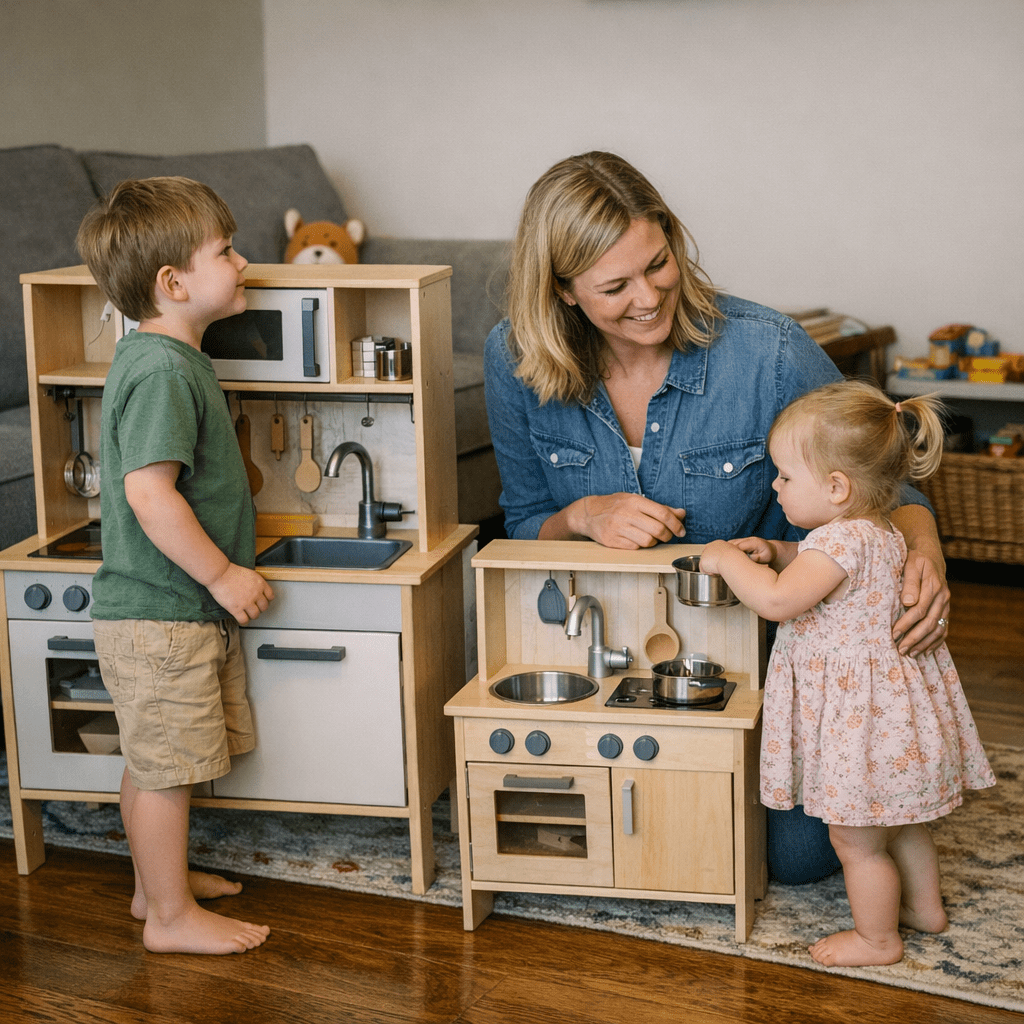
A standout option packed full of these features is Ikea Duktig—a minimalist model offering endless ways children explore everyday tasks independently yet creatively!
Also worth noting…