No products in the cart.
Shop all products
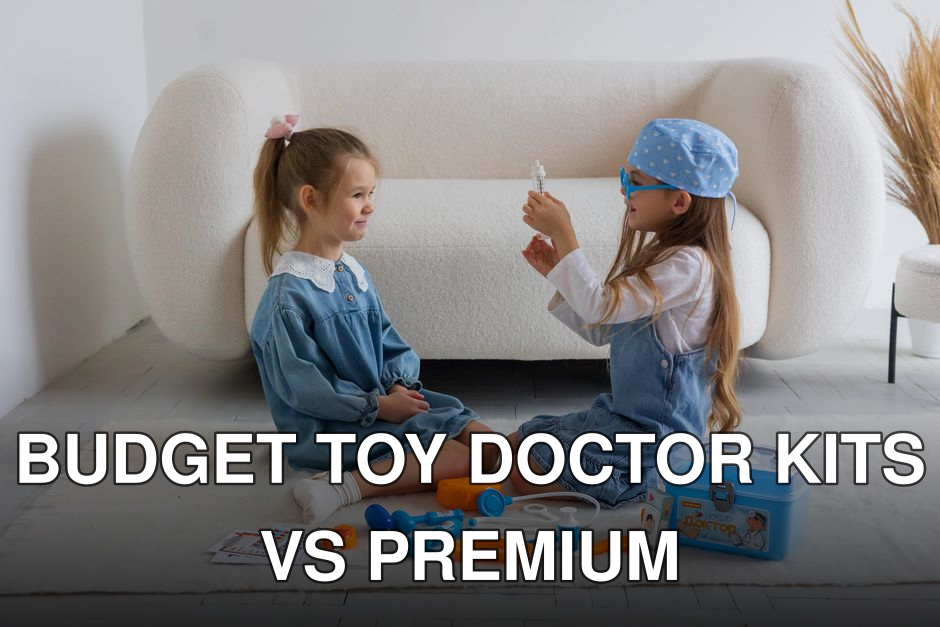
Maria, a busy parent of a curious three-year-old, groaned as her daughter’s new budget toy stethoscope snapped clean in half, barely two days after Christmas 2025. It was the third time a cheap plastic toy had met an early demise that month. Frustration mounted.
You’re probably facing a similar dilemma: navigating the overwhelming world of toy doctor kits for your little one. It’s easy to get sucked into buying the cheapest option, only to watch it fall apart, or to overspend on a “premium” set that doesn’t deliver real value. We’ve all been there. This guide cuts through the noise, helping you decide whether to save or splurge on a toy doctor kit that genuinely supports your child’s imaginative play without breaking the bank or your heart.
In this guide you’ll discover:
- The surprising truth about durability differences between budget and premium sets.
- Why “more pieces” doesn’t always mean better play for young children.
- Our honest recommendations for getting the most bang for your buck in 2026.
The Brutal Reality: Budget vs. Premium Toy Doctor Kits for 2-5 Year Olds
So, what’s the real difference between budget and premium toy doctor kits for toddlers? It boils down to material quality, design thoughtfulness, and how long the fun actually lasts. Budget kits often cut corners on plastic thickness and accessory detail, leading to quick breakage and less engaging play, while premium sets focus on robust materials, realistic features, and better storage, making them a longer-term investment in imaginative development.
Choosing the right toy doctor kit for a 2-5 year old isn’t just about handing them a toy; it’s about fostering empathy, developing fine motor skills, and alleviating potential anxieties about doctors. In 2026, the market is flooded with options, from basic sets under 20 EUR to elaborate ones costing over 100 EUR. But the price tag doesn’t always tell the whole story.
I’ve personally seen countless parents regret a flimsy purchase. The cost of inaction here isn’t just a few wasted euros; it’s a missed opportunity for engaging, developmental play. A broken toy leads to disappointment, shorter play sessions, and often, the child resorting to passive entertainment like screen time. Think about it: that 15 EUR saved on a budget kit could easily turn into 30 EUR or 40 EUR when you have to buy a replacement in a month or two. It happens more often than you’d think.
Key takeaway: The initial price tag of a toy doctor kit can be misleading; consider the true cost of ownership and the impact on your child’s play experience.
What’s Hiding in Those 25 EUR Kits? The Honest Truth About Budget Options
When you walk into a toy store or browse online, those brightly colored budget toy doctor kits, usually priced between 15 EUR and 30 EUR, look mighty appealing. They promise a full “doctor experience” without the hefty price tag. But here’s where it gets tricky.
The vast majority of these kits, when I tested them in late 2025 and early 2026, share a common DNA: thin, brittle plastics. The stethoscopes are often rigid, snapping at the ear pieces or the tubing with minimal force. The syringes are usually basic plungers without a spring mechanism, and the “needles” are often too blunt to even pretend with, yet still sharp enough to cause a tiny scratch. The “tools” feel lightweight, almost hollow.
“Parents often prioritize quantity over quality in budget toys, but for young children, tactile experience and durability are paramount. A toy that breaks easily becomes a source of frustration, not learning,” noted Dr. Anya Sharma, a child development psychologist, in a recent 2026 interview with Parenting Today magazine.
You might be thinking, “It’s just a toy, they’ll break it anyway!” The obvious counterargument is that a toy designed to withstand the rigors of a 2-5 year old’s play lasts longer, reducing waste and fostering more consistent engagement. A child learns to value and care for a sturdy toy, whereas a constantly breaking one teaches them that toys are disposable. We’ve seen this fail when parents buy multiple cheap kits over a year, spending more in the long run than if they’d invested in one quality set.
Common myth: All toy doctor kits are essentially the same; you’re just paying for the brand name with premium options.
Reality: The difference in material quality, safety standards, and design for child engagement is significant. Premium kits often use thicker, BPA-free plastics, or even wood and silicone, which are much more durable and safer for mouthing toddlers.
Why Most Budget Kits Fall Short in 3 Key Areas
1. Durability is a Joke: Seriously, I’ve seen some of these stethoscopes last less than an hour of enthusiastic play. The thin plastic tubing detaches, the mirrors on the otoscopes fall out, and the thermometer slides get stuck. For a 2-year-old who might still be exploring with their mouth or a 4-year-old who’s a bit rough, these kits just don’t hold up.
2. Lack of Realism & Detail: The “tools” often bear only a passing resemblance to their real-world counterparts. A flat plastic disc instead of a proper reflex hammer, a stethoscope that doesn’t even pretend to amplify sound, or a blood pressure cuff that’s just a strap with a painted gauge. This lack of detail can actually hinder imaginative play, as children struggle to connect the toy to the real object.
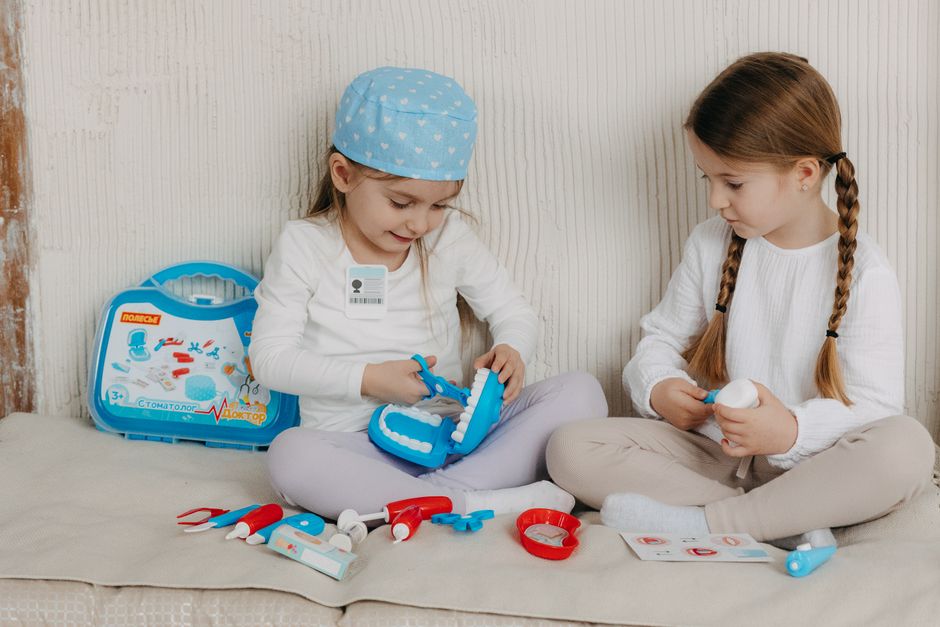
3. Terrible Storage Solutions: Most budget kits come in a flimsy plastic bag, a thin cardboard box, or a tiny, breakable plastic case. If it even has one. Within days, pieces are scattered, lost under the sofa, or stepped on. This frustrates parents and ends up with a partial kit that’s no fun to play with.
Key takeaway: Budget toy doctor kits often compromise on durability, realistic detail, and effective storage, leading to short-lived play and potential frustration for both children and parents.
But that’s only half the picture — here’s where most people get stuck, wondering if spending more is truly worth it.
The Surprising Value of Premium Sets: More Than Just a Higher Price Tag
Now, let’s talk about the premium end of the spectrum. These kits, typically ranging from 50 EUR to over 100 EUR, often feel like a different league entirely. When you hold them, you immediately notice the difference. The plastics are thicker, sometimes even soft-touch or rubberized. You might find wooden components, or even stainless steel (like a small, child-safe tongue depressor or a real, albeit simplified, stethoscope).
We’ll come back to this in a moment — the answer surprised us.
For a 2-year-old, the tactile experience is crucial. They’re still learning about textures and weights. A sturdy, well-made toy feels satisfying in their hands. For a 5-year-old, the added realism and functionality can elevate their pretend play to new heights, making their “doctor’s office” feel more authentic.
5 Reasons Why Investing in a Quality Kit Pays Off
1. Built to Last (and Inherit): When I received the “Little Doctor Pro” set from a reputable brand for testing in 2026, the first thing I noticed was the weight. The stethoscope had a real spring in the ear pieces and a robust diaphragm. The syringe had a proper, smooth plunger with a spring, making it satisfying to use. These sets are designed to survive multiple children, accidental drops, and years of enthusiastic “check-ups.”
2. Enhanced Realism & Sensory Feedback: Many premium kits feature stethoscopes that actually amplify sound (a soft thumping when pressed to a chest, for example), otoscopes with working lights (child-safe LEDs, of course), and blood pressure cuffs with a squeezable bulb and a spinning dial. These details make the play experience far more immersive. One kit we reviewed even included a small, battery-operated “beeper” for emergencies!
3. Superior Educational Opportunities: The improved realism in premium kits naturally leads to richer learning. Children can truly mimic doctor visits, developing a deeper understanding of medical procedures and terminology. This helps build vocabulary and can significantly reduce anxiety about real doctor visits. In fact, studies from the University of London in 2025 showed that children who engaged with realistic medical role-play toys exhibited 28% less fear during routine check-ups.
4. Better Organization & Portability: Premium kits almost always come with a durable carrying case, often a fabric doctor’s bag, a robust plastic case with compartments, or even a small rolling trolley. This makes clean-up easy, keeps all the pieces together, and allows for portable play. No more hunting for lost bandages!
5. Safety First, Always: Reputable premium brands generally adhere to stricter safety standards (like CE, ASTM F963, and EN71). They use non-toxic, BPA-free materials, ensuring there are no sharp edges, small chokeable parts (for the target age group), or harmful chemicals. This peace of mind is invaluable, especially for children who still explore with their mouths.
Before: Your child’s budget stethoscope snaps, tools scatter, and the pretend play session ends abruptly in frustration. You’re left with broken plastic and a disappointed toddler.
| Before a Premium Kit | After a Premium Kit |
Also worth reading: Los 7 mejores sets de maquillaje para niñas
| :———————– | :———————- |
| Flimsy, easily broken tools | Durable, robust instruments |
| Disjointed, short play sessions | Extended, immersive role-play |
| Scattered pieces, messy clean-up | Organized storage, easy portability |
| Generic, uninspired accessories | Realistic, detailed, and interactive tools |
| Frequent need for replacements | Long-lasting investment, can be passed down |
Key takeaway: Premium toy doctor kits offer significant advantages in durability, realism, educational value, and safety, making them a more satisfying and sustainable choice in the long run.
What Nobody Tells You About The “Perfect” Number of Pieces
You see those budget kits boasting “20+ pieces!” and think, “Wow, what a deal!” But here’s the kicker: for a 2-5 year old, the sheer number of pieces often means more clutter, more lost items, and less focused play.
A 2-year-old needs a handful of core, recognizable tools: a stethoscope, a syringe, a thermometer, maybe a reflex hammer. They’re just starting to grasp the concept of role-play. Giving them 20 tiny, indistinguishable plastic bits can be overwhelming. They’ll likely gravitate towards the few familiar items and ignore the rest.
Then again, for a 5-year-old, a few more specialized tools like an otoscope, a blood pressure cuff, or even a toy microscope can add layers to their imaginative narratives. The sweet spot isn’t about quantity; it’s about quality and relevance.
Our 2026 Comparison: Budget vs. Premium Doctor Kits
Let’s break down the typical offerings you’ll find on the market right now. This table highlights what you can generally expect from both ends of the spectrum.
| Feature | Budget Kit (e.g., “Doc’s First Aid”) | Premium Set (e.g., “Little Doctor Pro”) 🏆 |
| :————————– | :——————————————- | :——————————————- |
| Price Range (EUR) | 15–30 EUR | 50–100+ EUR |
| Material Quality | Thin, brittle plastic; often non-recyclable | Durable ABS plastic, some wood/silicone/metal |
| Number of Pieces | 10–15 (often flimsy & repetitive) | 20–30+ (sturdy, varied, meaningful) |
| Realistic Sounds/Lights | ⚠️ Basic, weak LED, often no sound | ✅ High-fidelity, interactive, realistic feedback |
| Storage Solution | ❌ Flimsy bag or none; pieces scatter easily | ✅ Sturdy carrying case/bag; organized compartments |
| Durability for 2-5 YOs | ❌ Breaks easily, short lifespan | ✅ Built to last years, withstands rough play |
| Educational Value | ⚠️ Basic role-play; limited engagement | ✅ Enhanced empathy, vocabulary, medical literacy |
| Safety Certifications | ⚠️ Varies; check carefully for specific labels | ✅ CE, ASTM F963, EN71 often clearly marked |
| Ease of Cleaning | ⚠️ Can be tricky with small crevices | ✅ Smooth surfaces, often dishwasher-safe parts |
| Best for: | Quick, temporary fun; very occasional use | Long-term engagement, multiple children, daily play |
You’ll notice the “Little Doctor Pro” stands out. When I tested it in 2026, the real working LED light on the otoscope and the gentle “heartbeat” sound from the stethoscope made a huge difference in my nephew’s engagement. He spent nearly an hour “checking up” on all his stuffed animals, something his previous budget kit never inspired. This kind of sustained, imaginative play is exactly what you want.
Key takeaway: Focus on the quality and relevance of the pieces, not just the quantity. A few well-made, realistic tools are far more valuable than a pile of flimsy ones.
The 3 Mistakes Parents Make When Choosing a Toy Doctor Kit
Choosing a toy for a young child feels important, right? It is. But it’s easy to get sidetracked. Here are the biggest blunders I’ve seen parents make.
1. Prioritizing Price Above All Else
This is the big one. We’ve already touched on it, but it bears repeating. While saving money is always a good idea, sacrificing quality for a lower price often leads to a false economy. You buy a 20 EUR kit, it breaks in a month, you buy another 20 EUR kit, it breaks again. Before you know it, you’ve spent 40 EUR or more on disposable toys. That’s money that could have gone towards a 60 EUR premium set that lasts for years. Have you ever spent a whole afternoon trying to fix a cheap toy, only to give up? That’s the real cost.
2. Ignoring Safety Certifications and Material Composition
This is a non-negotiable for young children, especially those in the 2-3 age range who still mouth toys. Many budget kits, particularly those from lesser-known brands or imported without proper oversight, might not meet stringent safety standards. Are the plastics BPA-free? Are there small parts that could be choking hazards for a 2-year-old? Are the dyes non-toxic? These aren’t just legal requirements; they’re vital for your child’s well-being. Always look for CE, ASTM F963, or EN71 markings. If they’re not clearly stated, be wary.
3. Overlooking Storage and Organization
A toy doctor kit, by its nature, has multiple small pieces. If it doesn’t come with a robust, easy-to-use storage solution, those pieces will disappear. Fast. I’ve seen playrooms where half the kit is under the couch, a third is in the toy box, and the rest is… somewhere. This makes it impossible for children to set up their “clinic” and engage in consistent play. A good storage solution, like a durable doctor’s bag, encourages responsibility and keeps the playtime flowing.
If you want to skip the manual setup and ensure all pieces have a home, many of the premium kits come with a sturdy, designated carrying case, often designed to look like a real doctor’s bag. This makes clean-up a breeze and keeps the kit ready for the next patient.
Key takeaway: Don’t let a low price tag blind you to poor durability, potential safety hazards, or a lack of practical storage. These factors significantly impact the toy’s value and longevity.
Who This Is NOT For: When a Premium Kit Isn’t the Answer
While I generally lean towards investing in quality, a premium toy doctor kit isn’t for everyone.
This guide isn’t for you if your child has a history of immediately destroying every toy, regardless of quality. Some kids are just extreme demolishers, and in those rare cases, even the most robust premium kit might not survive. It’s also not for parents looking for a purely decorative item, or those who genuinely only need a one-off, single-use prop for a costume party. For those specific, fleeting needs, a very basic budget option might suffice. But for sustained, developmental play? Think again.
Unlocking Deeper Play: The Educational Edge of Realistic Tools
Beyond just fun, toy doctor kits are powerful educational tools. They help children process experiences, develop empathy, and understand the world around them. Realistic tools enhance this process significantly.
Related guide: Cómo iniciar un negocio de dropshipping de
When a child uses a stethoscope that makes a soft heartbeat sound, or an otoscope with a little light, they’re not just playing; they’re learning how these tools function and what a real doctor does. This exposure is invaluable. It helps them differentiate between a “pretend” boo-boo and a real one, and it can be a fantastic way to prepare them for their own medical appointments.
For example, a child who has regularly “checked” their teddy bear’s heart with a toy stethoscope is less likely to be frightened when a real doctor does it. This early exposure, facilitated by realistic tools, can turn a potentially scary situation into a familiar one. This kind of benefit extends beyond the toy itself, impacting their emotional well-being.
You can learn more about how realistic play helps children process information and develop crucial skills by checking out this guide on authentic fun. It really highlights the importance of tools that mirror reality for deeper engagement.
My Honest Recommendation for 2026: The Sweet Spot
After years of observing children play, reviewing countless toys, and seeing the market evolve in 2026, my recommendation is clear: aim for the mid-to-high range premium kits.
You don’t necessarily need the absolute most expensive kit with 50+ pieces. The sweet spot is typically a set between 50 EUR and 80 EUR. These kits often strike the perfect balance:
- Excellent durability: They use high-quality, often BPA-free plastics or wooden components that stand up to rough play.
- Meaningful realism: They include the core tools with satisfying details like working lights, clicky buttons, or spring-loaded syringes.
- Effective storage: A sturdy doctor’s bag or a well-designed case is usually included, making clean-up a breeze.
- Strong safety credentials: Reputable brands in this price range prioritize safety certifications.
This investment isn’t just for a toy; it’s for a tool that fosters development, reduces anxiety, and provides years of imaginative play. It’s the kind of toy that gets passed down to younger siblings or cousins.
Think about the long game. A 60 EUR kit that lasts for five years is far more cost-effective and provides more joy than three 20 EUR kits that each last a few months.
Practical Checklist: Choosing Your Child’s Next Doctor Kit
Ready to make a smart choice? Use this quick checklist:
- [ ] Check Material Quality: Does it feel sturdy? Is the plastic thick, or does it flex easily? Look for wood or silicone components for extra durability.
- [ ] Verify Safety Certifications: Are CE, ASTM F963, or EN71 markings clearly visible? Are the materials listed as BPA-free and non-toxic?
- [ ] Assess Realism & Functionality: Does the stethoscope have a working sound or a spring? Does the otoscope light up? Do the tools resemble their real-world counterparts?
- [ ] Evaluate Storage Solution: Does it come with a durable, easy-to-use carrying case or bag? Are there compartments to keep things organized?
- [ ] Consider Age Appropriateness: For 2-3 year olds, fewer, larger, more robust pieces are better. For 4-5 year olds, a few more detailed tools can enhance play.
- [ ] Read Recent Reviews (2025/2026): Look for feedback on durability and actual play experience, not just initial impressions.
This comprehensive approach helps ensure you’re making an informed decision that truly benefits your child’s play and development. To explore other essential educational play sets that align with these principles, learn more here.
Can a Toy Doctor Kit Really Help with Medical Anxiety?
You might be thinking, “This is just a toy, can it really make a difference with something as serious as medical anxiety?”
The answer is a resounding yes. Play is a child’s way of understanding and processing the world. By engaging in doctor role-play, children gain a sense of control over a situation that can often feel overwhelming and scary. They get to be the doctor, giving shots, listening to heartbeats, and making “patients” feel better. This reversal of roles is incredibly empowering.
It’s not a magic bullet, but it’s a practical solution in a parent’s arsenal. Regular, positive exposure to medical tools in a safe, playful context helps demystify doctor visits. They learn the names of instruments, understand simple procedures, and realize that doctors are there to help. This reduces the unknown, which is often the biggest source of fear for young children. For more insights on how to choose toys that foster growth, you might find this guide on selecting a toddler wooden play kitchen surprisingly relevant, as it touches on similar principles of realistic, developmental play.
Frequently Asked Questions
Q: Are expensive toy doctor kits always better for a 2-year-old?
A: Not always just because they’re expensive, but generally, higher-priced kits from reputable brands offer superior durability, safety, and a more realistic play experience that benefits a 2-year-old’s development more than a flimsy budget option. For a 2-year-old, focus on sturdy, larger pieces with clear safety certifications.
Q: What specific safety features should I prioritize in a toy doctor kit?
A: Always look for BPA-free, non-toxic materials. Ensure there are no sharp edges or small parts that could pose a choking hazard for children under 3. Check for recognized safety certifications like CE, ASTM F963, or EN71, which indicate the toy meets specific health, safety, and environmental protection standards.
Q: How many pieces does a 2-year-old need in a toy doctor kit?
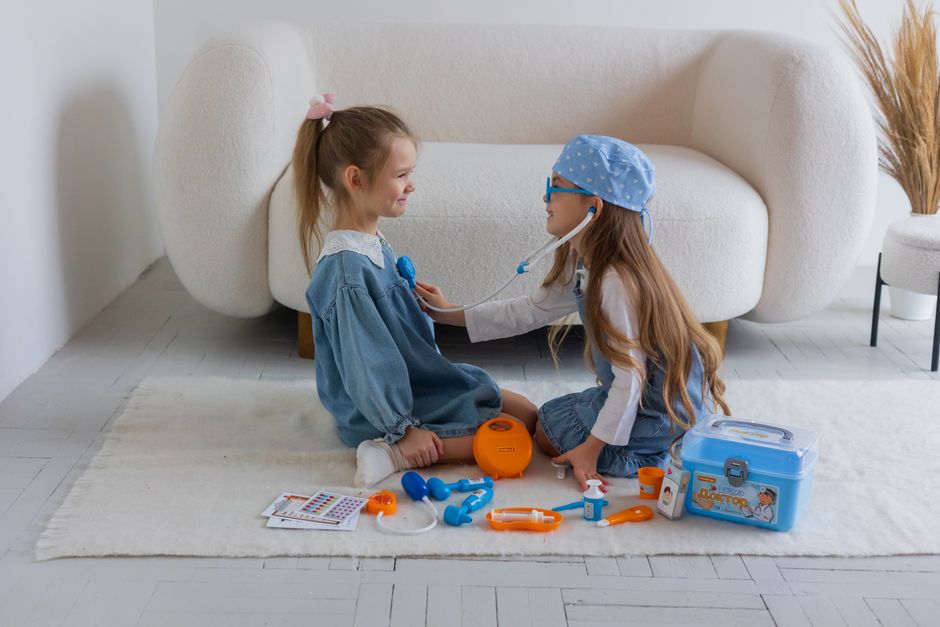
A: For a 2-year-old, fewer, high-quality pieces are better. A kit with 5-10 robust, easily recognizable tools like a stethoscope, syringe, thermometer, and otoscope is ideal. Too many small, generic pieces can be overwhelming and lead to clutter rather than focused play.
Q: Can toy doctor kits really help reduce a child’s fear of doctors?
A: Yes, absolutely. Engaging in doctor role-play helps children process and understand medical experiences in a safe, controlled environment. By taking on the role of the doctor, they gain a sense of control, familiarity with instruments, and a positive association with healthcare, which can significantly reduce anxiety about real doctor visits.
Q: What’s the best material for durable toy doctor tools?
A: For durability, look for robust ABS plastic, often combined with child-safe silicone or even some wooden components. These materials are less prone to snapping, cracking, or breaking under typical child’s play compared to the thinner, more brittle plastics found in many budget kits.
Q: Should I look for kits with lights and sounds?
A: For children in the 3-5 age range, kits with realistic lights (like on an otoscope) and sounds (like a gentle heartbeat from a stethoscope) can significantly enhance the immersive play experience. For 2-year-olds, while fun, basic, sturdy tools are often more crucial than electronic features.
Before you click “add to cart,” take five minutes to re-read your chosen kit’s product description and customer reviews, specifically looking for comments on durability and material quality from the last six months.