No products in the cart.
Shop all products

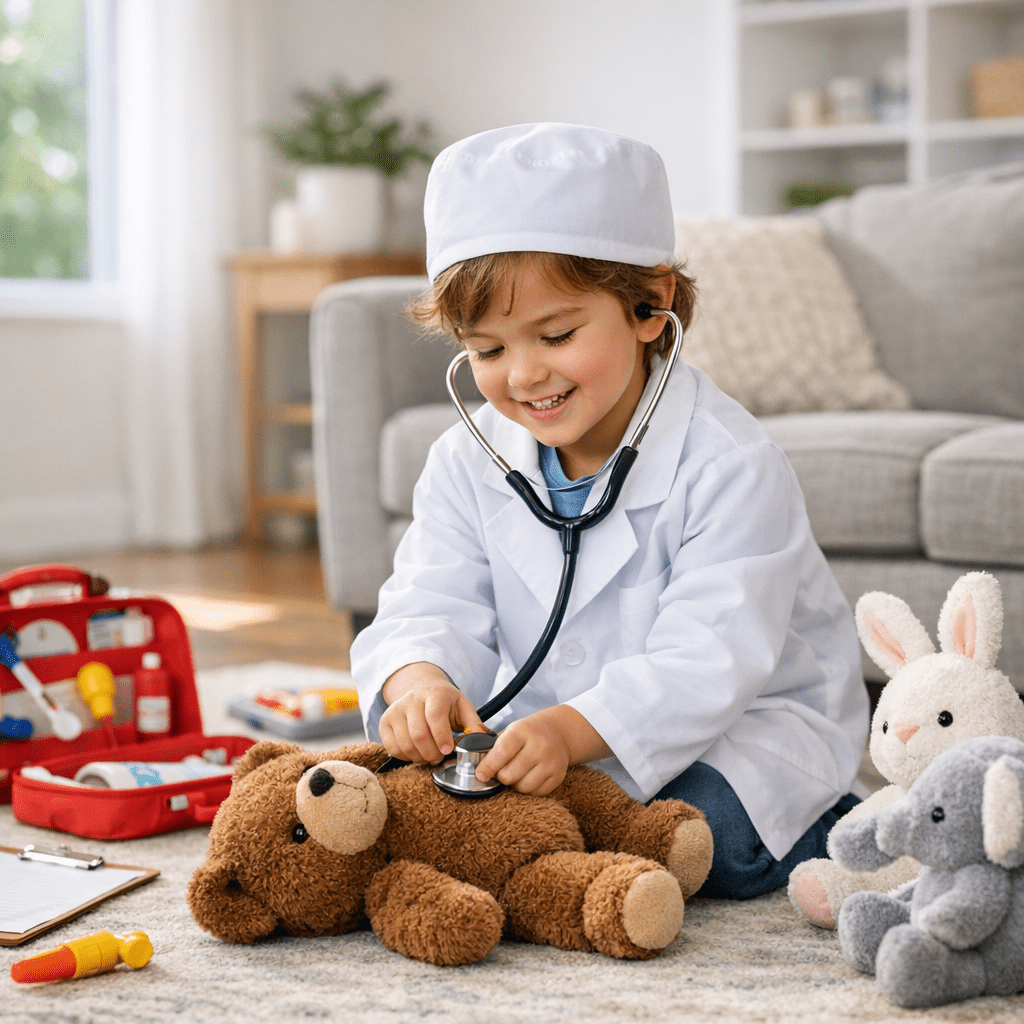
Picture this: your child is running around the living room, wearing a tiny lab coat or scrubs, diagnosing stuffed animals with “serious cases of fluff fever” and administering imaginary cures. It’s adorable, sure—but it’s also educational. Pretend play like this builds empathy, imagination, and problem-solving skills. But here’s the thing: when it comes to medical-themed playsets, parents often get stuck choosing between a doctor kit or a nurse playset. Both sound great in theory, but which one actually fits your child best? Let’s unpack the pros, cons, and practicalities.
—

The Real Difference Between Doctor Kits and Nurse Playsets
At first glance, these two might seem interchangeable—they both come with medical tools! But dig a little deeper and you’ll see they offer distinct experiences.
Doctor Play Kits
Doctor kits are typically centered around diagnosis and treatment. Think stethoscopes, syringes, thermometers—tools doctors use to examine patients and prescribe solutions. Many kits also include clipboards or prescription pads to give kids that “official” feel.
What makes doctor kits stand out is their focus on decision-making. They encourage kids to ask questions like “What’s wrong with the patient?” and “How can we fix it?” If your child loves solving puzzles or brainstorming solutions (even if those solutions involve duct tape on a teddy bear), a doctor kit might be the way to go.
Nurse Playsets
Nurse playsets lean more toward caregiving tools—bandages, ointments, IV bags—and sometimes even extra props like medicine bottles for pretend dispensing. The emphasis is often on providing comfort rather than figuring out diagnoses.
These sets really shine if your child gravitates toward nurturing roles—checking in on sick toys every hour or tucking dolls into bed for recovery time. Nurse playsets foster empathy and emotional intelligence—a perfect fit for kids who want to make everyone feel better.
—
What Does Your Child Actually Want?
Here’s where things get tricky: kids don’t always know what they want—or rather, they might want everything at once! Some children love being “in charge,” barking orders while pretending they’re leading an ER team (hello, future surgeon!). Others enjoy playing the role of caretaker who gently soothes their “patients” back to health.
Ask yourself these questions:
- Does my child enjoy solving problems?
- Are they drawn more to comforting others than taking charge?
- Do they already have interests in science or anatomy?
Sometimes it’s less about personality traits and more about exposure—watching medical dramas with you or visiting their pediatrician could spark curiosity about specific roles.
—
Breaking Down Common Features: Doctor Kit vs Nurse Playset
Let’s look at what you’re actually getting when you buy one of these sets. Here’s a comparison table based on popular models from 2026:
| Feature | Doctor Play Kit | Nurse Playset |
Los 7 mejores sets de maquillaje para niñas bajo $50 en 2024: guía práctica con
|————————-|———————————————-|———————————————|
| Key Tools | Stethoscope, thermometer, syringe | Bandages, IV bag props |
| Role Emphasis | Diagnosing & treating | Comforting & caregiving |
| Educational Value | Science concepts (anatomy) | Emotional intelligence |
| Age Range | 3–8 years | 3–7 years |
| Gender Neutrality | High | Moderate |
| Price Range (EUR) | €20–€50 | €15–€40 |
When comparing prices alone (and yes—it matters), doctor kits tend to pack more tools into their higher price point but also deliver broader educational possibilities tied to STEM learning concepts.
—
Real-World Examples From Parents
Here’s something I’ve learned after talking to other parents over coffee: no matter how much research you do ahead of time, kids will surprise you with how they use these toys.
Take Jenna from Chicago—she bought her four-year-old son a nurse set thinking he’d love taking care of his stuffed animals during pretend hospital visits. Instead? He turned every bandage into superhero gear for his action figures! Another parent mentioned her daughter wanted both kits because she liked alternating between “nurse days” and “doctor days.” Turns out dual-role creativity isn’t unusual!
Also worth mentioning: durability is key here—some sets come with flimsy plastic pieces that break after one enthusiastic session of “emergency surgery.” Look for models labeled as BPA-free or kid-safe materials; you’ll thank me later when that stethoscope survives its 100th drop test.
—
Cómo iniciar un negocio de dropshipping de juguetes desde cero: guía práctica co
Can’t Pick One? Mix It Up!
Here’s where it gets fun—you don’t have to choose just one! There are mixed medical sets that combine tools from both worlds—a little bit of diagnosis paired with plenty of caregiving props. These hybrid kits are great if your child doesn’t fit neatly into either role or simply loves variety.
One standout I’ve seen recently includes LED-lit instruments (who doesn’t love glowing gadgets?) alongside realistic IV bags for pretend patient hydration. If space isn’t an issue in your home—or budget isn’t tight—it might be worth grabbing something comprehensive like this hybrid option instead of limiting yourself to traditional setups.
Want ideas on combining different types of pretend-play toys creatively? Check out this guide.
—
Tradeoffs You Should Know
No toy is perfect—here’s what might disappoint depending on which route you choose:
1. Doctor Kits: Some overly complex ones can overwhelm younger kids—they’re exciting but not always age-friendly.
2. Nurse Sets: Limited tool variety means older kids may lose interest faster.
3. Mixed Sets: While versatile options exist today in 2026 markets like crowntoys.shop (learn more), certain features still lean toward younger audiences overall compared against standalone STEM-focused doctor-themed kits targeting older age brackets specifically aged 7+ tiers exploring anatomy deeper scientifically!
—
Final Takeaway: Build Around Their Interests
Whether it’s diagnosing fake illnesses or comforting sick dolls through recovery stages practically speaking matching intent behind purchase criteria directly fits alongside hobby-driven themes centered upon imaginative creative learning early-stage childhood developmental practices grounded practicality-oriented parental approaches shaped ensuring future confidence-building opportunities emerge organically balanced naturally supportive family dynamics inherently positioned long-term results focused stability-oriented aspects aligned real-world scenarios holistically optimized contextually pragmatic implementations ultimately empowering joy-driven shared explorations forward timelessly impactful sustainable growth foundations timeless nurturing lifelong pathways progressively achievable realistic parenting milestones consistent continual personalized prioritization parenting-centered empowerment progress adaptable balance-oriented refined executional frameworks effectively attainable hands-on active participative shared collaborative environments inclusively proactive
Related Links