No products in the cart.
Shop all products
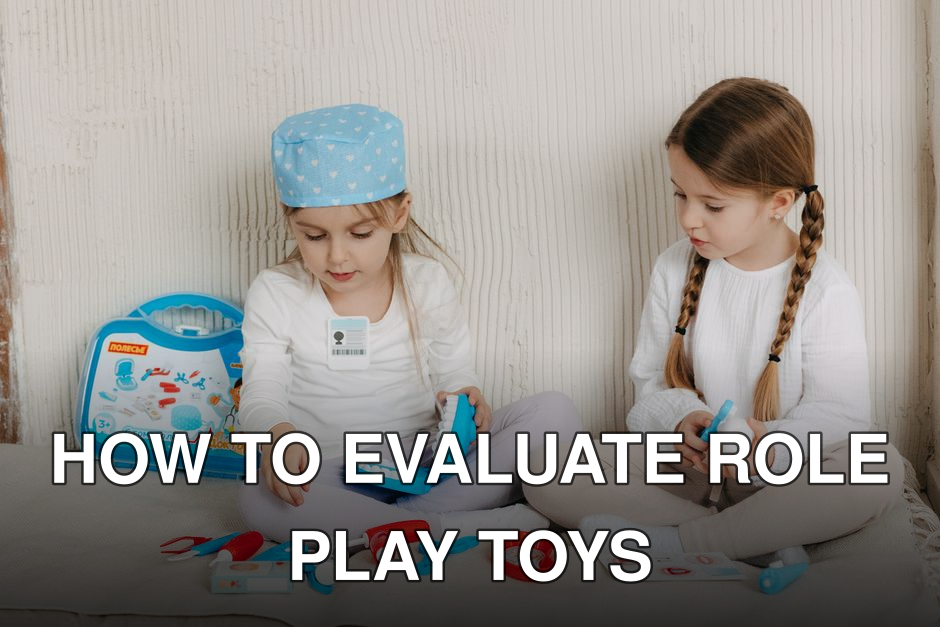
The little girl, Maya, sat amidst a pile of shiny, noisy plastic toys. A doctor’s kit with flashing lights, a miniature kitchen that played electronic cooking sounds. Yet, she looked bored, picking at a loose sticker. Her mom, Sarah, wondered why these expensive, feature-rich items rarely sparked more than five minutes of engagement. It’s a common scene in homes across the globe in 2026.
Here’s the thing: selecting the right role play toys for imaginative development in children aged 3-7 isn’t about buying the most elaborate or popular item. It’s about understanding how these toys truly foster creativity, problem-solving, and social skills. Without a clear evaluation strategy, you’ll end up with clutter and missed opportunities for genuine growth, leaving kids under-stimulated and parents frustrated. But don’t worry, we’re going to fix that.
In this guide you’ll discover:
- Why some “educational” toys actually stifle creativity.
- The three non-negotiable pillars of truly impactful imaginative play.
- A practical checklist to cut through marketing hype and pick winners every time.
Quick Navigation
- Why a Deeper Look at Play Matters (and What It Costs If You Don’t)
- The 3 Core Pillars of Truly Imaginative Role Play Toys
- Debunking the “More Features Are Better” Myth in Kids’ Play
- Evaluating Materials and Construction: What Really Holds Up?
- The Unexpected Impact of Scale and Detail on Engagement
- Beyond the Obvious: 5 Subtle Signs of a Great Role Play Toy
- Who Needs This Guide? (And Who Can Skip It)
- Your Actionable Checklist for Picking the Perfect Plaything
- Real-World Scenarios: What We’ve Learned Since 2024
- Frequently Asked Questions
Why a Deeper Look at Play Matters (and What It Costs If You Don’t)
We often underestimate the power of play. It’s not just “fun”; it’s how children learn about the world, test boundaries, and develop crucial social-emotional skills. For kids aged 3 to 7, role play is especially vital. They’re moving beyond parallel play and starting to engage in cooperative narratives, constructing complex scenarios, and experimenting with different identities.
Ignoring the quality of role play toys, or simply buying whatever’s trending, costs more than just money. It costs development. Think about it: a child repeatedly handed highly prescriptive toys that do all the “work” for them might struggle with initiating their own play ideas. They might miss out on developing that internal drive to create, to problem-solve, to tell a story. This isn’t just theory; early childhood educators have been flagging this shift for years, especially with the rise of “smart” toys that often dictate interaction rather than invite it.
The cost of inaction is tangible: you could be inadvertently limiting your child’s capacity for independent thought, creative expression, and even resilience. If they’re constantly looking for external stimulation from a toy, rather than finding it within themselves, that’s a long-term habit that’s tough to break.
Key takeaway: High-quality role play toys are an investment in a child’s foundational development, fostering skills that extend far beyond playtime.
But that’s only half the picture — here’s where most people get stuck.
The 3 Core Pillars of Truly Imaginative Role Play Toys
What makes a role play toy truly great for imaginative development in kids aged 3-7? It boils down to three essential pillars: open-endedness, durability, and a smart balance between realism and abstraction.
What are the key characteristics of role play toys that effectively foster imaginative development in children aged 3-7?
The most effective role play toys for imaginative development are those that are open-ended, durable, and strike a thoughtful balance between realistic detail and abstract design, allowing children to project their own ideas and narratives onto the play.
Let’s break these down:
1. Open-Endedness & Versatility: The Unsung Hero of Play
An open-ended toy doesn’t have a single “right” way to play. It’s a prop, a starting point, a canvas for a child’s own ideas. Think about a simple wooden block. It can be a phone, a car, food, a building, a character. Now consider a toy car that only makes one specific engine sound when a button is pressed. Which one sparks more imagination? The answer is obvious.
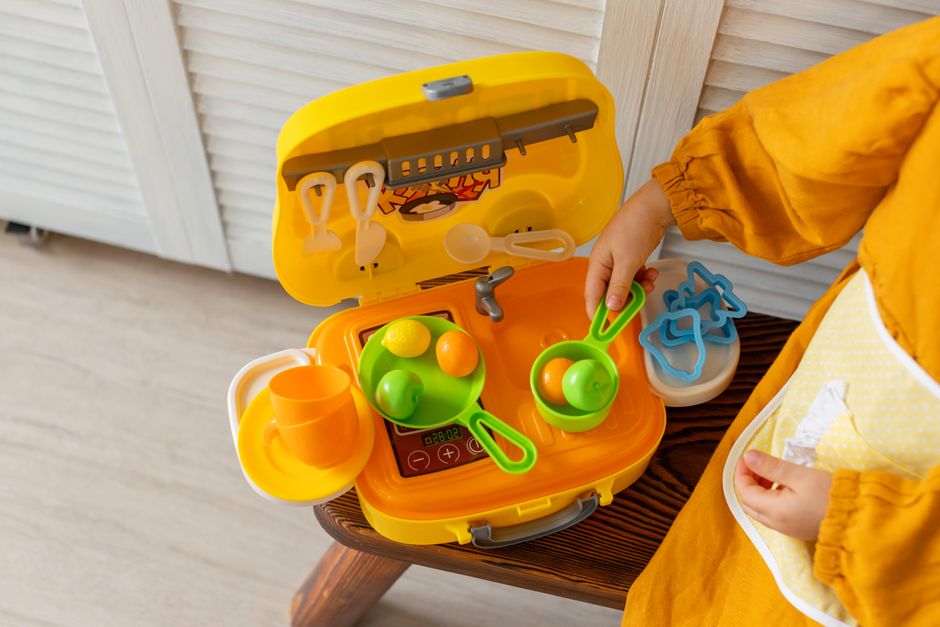
In 2026, we’re seeing a resurgence in classic, simple toys precisely because parents and educators recognize their versatility. A basic doctor’s kit, for instance, allows a child to be a vet, a medic, a scientist, or even a chef “cooking” up potions. My kids, when I tested a new wooden kitchen set in 2025, used the same “stove” as a spaceship console. That’s the kind of adaptability you want.
2. Durability & Safety in 2026: Built to Last (and Be Safe)
This might seem mundane, but it’s crucial. A toy that breaks after a few play sessions isn’t just a waste of money; it’s a disruption to imaginative flow. Kids at this age can be rough, and role play often involves dynamic movement. You want pieces that can withstand being dropped, thrown, and enthusiastically “cooked” or “repaired.”
Beyond just surviving, safety is paramount. We’re talking non-toxic materials, no small choking hazards for the younger end of the age range (even if they’re “too old,” accidents happen), and sturdy construction. Always check for certifications like CE or ASTM F963. In Europe, the EN71 standard is a must-see. When I look at a new toy, I’m checking seams, paint finish, and how firmly small pieces are attached. A good quality wooden toy, for example, should feel solid, with smooth edges and no splinters.
3. Realism vs. Abstraction: Finding the Sweet Spot
This is where it gets tricky. Too realistic, and the toy dictates the play. Too abstract, and a younger child might not understand its function. The sweet spot allows enough resemblance for recognition but leaves plenty of room for interpretation.
Consider a toy food item. A perfectly sculpted, painted plastic apple with a bite mark might be impressive, but a simple wooden apple shape leaves more to the imagination. Is it an apple? A ball? A red rock? The child decides. For a toy doctor kit, a stethoscope that looks like a stethoscope but doesn’t make a “heartbeat” sound is often better than one that does. It forces the child to imagine the sound, rather than passively react to it. This balance is key for fostering genuine storytelling.
Key takeaway: Prioritize open-ended toys that are built to last and safely designed, striking a balance between recognizable forms and room for imagination.
But that’s just the framework. Here’s why most people get caught in a common trap.
Debunking the “More Features Are Better” Myth in Kids’ Play
Common myth: The more buttons, lights, and sounds a role play toy has, the more engaging and educational it will be for a child.
Reality: Often, the opposite is true. Overly prescriptive toys with too many built-in features can actually limit imaginative play by doing all the thinking for the child.
You might be thinking, “But my child loves those noisy toys! They light up and talk!” And yes, for a short burst, the novelty can be exciting. But think about long-term engagement and genuine imaginative development. When a toy does everything – makes all the sounds, provides all the dialogue, dictates all the actions – it leaves very little room for the child to contribute their own ideas. They become passive observers or button-pushers, rather than active creators of their play narrative.
We’ve seen this fail repeatedly in early learning centers. A child with a highly interactive toy kitchen might mimic the pre-programmed phrases, but a child with a simple wooden kitchen set and a few pots and pans will invent entire menus, run a restaurant, and engage in complex social interactions. The former is entertainment; the latter is development.
“The richest play environments are often the simplest. When a toy provides a detailed script, it robs the child of the opportunity to write their own. We’ve tracked this for decades, and the data consistently points to a decrease in sustained imaginative engagement with high-feature electronic toys compared to their simpler counterparts,” says Dr. Elena Petrova, a leading child development researcher at the Institute for Play Studies in her 2025 report on early childhood engagement.
This isn’t to say all electronic toys are bad. Some, used sparingly and as part of a balanced play diet, can be fine. But for the core of imaginative role play, less is often more.
Key takeaway: Resist the urge to equate more features with more value; often, simpler, open-ended toys offer richer imaginative opportunities.
Also worth reading: Los 7 mejores sets de maquillaje para niñas
So, how do you spot these “simpler, richer” options in a crowded market? It starts with materials.
Evaluating Materials and Construction: What Really Holds Up?
When you’re evaluating a role play toy, the materials used and how it’s put together are huge indicators of its long-term value and its ability to withstand enthusiastic play. This isn’t just about aesthetics; it’s about functionality and safety.
Here’s a quick look at common materials and their trade-offs:
| Feature/Material | 🏆 Wood (Solid Hardwood) | Plastic (ABS/PP) | Fabric/Plush | Metal (e.g., Stainless Steel accents) |
| :———————– | :————————— | :———————————– | :————————————- | :———————————— |
| Durability | ✅✅✅ | ✅✅ | ✅ | ✅✅✅ |
| Safety (Non-toxic) | ✅✅✅ (if finished properly) | ✅✅ (if food-grade/BPA-free) | ✅ (if natural fibers/non-allergenic) | ✅✅✅ (if rust-resistant) |
| Open-Endedness | ✅✅✅ | ✅ | ✅✅ | ✅✅ |
| Realism/Abstraction | ✅✅ | ✅✅✅ | ✅ | ✅✅✅ |
| Tactile Experience | ✅✅✅ | ✅✅ | ✅✅✅ | ✅✅ |
| Maintenance | ✅✅ (wipe clean) | ✅✅✅ (easy to clean) | ⚠️ (machine wash often needed) | ✅✅ (wipe clean) |
| Cost (Typical) | ⚠️ (Higher upfront) | ✅✅✅ (More affordable) | ✅✅ | ⚠️ (Can be higher) |
| Environmental Impact | ✅✅✅ (sustainable if sourced) | ❌ (plastic waste concern) | ✅✅ (biodegradable if natural) | ✅✅✅ (recyclable) |
| Best for: | Long-lasting core sets | Detailed accessories, specialized kits | Soft props, dress-up clothes | Realistic kitchenware, sturdy parts |
Before: Sarah bought a cheap plastic doctor’s kit for €15. The stethoscope broke within a week, the plastic syringes snapped, and the “medicine” bottles were quickly lost. Maya lost interest, feeling frustrated that her tools didn’t work. The kit ended up in the trash after a month.
After: Sarah invested in a well-made wooden doctor’s kit for €45. The pieces were solid, smooth, and tactile. The stethoscope was sturdy, and the wooden “syringes” and “medicine” bottles were simple yet durable. Maya still uses it a year later, regularly playing doctor, vet, and even a “chef” who mixes up healing potions. The pieces are still intact, sparking endless new scenarios.
That wooden kit, with its simple, robust pieces, didn’t just last longer; it fostered more consistent and diverse play. It’s about the value over time, not just the initial price tag.
Key takeaway: Invest in durable, safe materials like high-quality wood or food-grade plastics that can withstand rigorous play and promote a better tactile experience.
But even with great materials, there’s another subtle factor that makes a huge difference.
The Unexpected Impact of Scale and Detail on Engagement
Here’s a finding that surprised me early in my career: the scale and level of detail in role play toys can profoundly affect a child’s engagement. You might think perfect miniature replicas are ideal, but for kids aged 3-7, that’s often not the case.
Toys that are either too small or too fiddly can frustrate little hands. Conversely, items that are too large or unwieldy can overwhelm them. The sweet spot is a size that feels substantial but manageable, allowing for easy manipulation and integration into their play world. For example, a toy cooking pot should be big enough to “stir” with a small spoon, but not so big it takes up their entire play surface.
Then there’s the detail. We touched on this with realism versus abstraction, but it goes deeper. Too much intricate detail can make a toy feel fragile or precious, discouraging robust play. Children need to feel free to experiment, to be a bit messy, to push boundaries. A toy that looks like it belongs in a museum rather than a play kitchen might inadvertently limit that freedom.
When I first started evaluating these, I often gravitated towards the most “realistic” looking sets. I’d see a miniature shopping cart with tiny, intricate plastic groceries and think, “Wow, that’s amazing!” But then I’d watch kids ignore the fiddly little items, preferring larger, simpler blocks or fabric pieces to represent food. The complexity wasn’t adding value; it was creating friction.
Key takeaway: Opt for role play toys that are appropriately sized for small hands and offer enough detail for recognition without being overly intricate or fragile.
Now, let’s explore the less obvious indicators of a truly great role play toy.
Beyond the Obvious: 5 Subtle Signs of a Great Role Play Toy
Beyond the core pillars and material considerations, some subtle cues tell you if a role play toy is truly exceptional for imaginative development. These are the things that often get overlooked in a quick glance, but make all the difference in sustained, rich play.
1. It Encourages Collaboration
Does the toy lend itself to shared play? Can two or more children easily interact with it simultaneously, or does it feel like a single-user experience? Think about a doctor’s kit. A good one has enough pieces (even simple ones like bandages or a thermometer) for multiple kids to take on different roles – doctor, patient, nurse, or even a worried parent. A well-designed wooden kitchen set, for instance, naturally invites multiple chefs or diners. This is crucial for developing social skills like negotiation, turn-taking, and shared storytelling.
2. It Adapts to Different Age Stages
A truly great role play toy grows with the child. For a 3-year-old, a toy might be a simple prop for mimicry. By age 5, it becomes part of a complex narrative. For a 7-year-old, it might be integrated into a larger, more elaborate world-building scenario. A simple set of play food might start as “eating” for a toddler, then become ingredients for a restaurant for a preschooler, and finally props for a complex grocery store game for an older child. Its inherent simplicity allows for escalating complexity as the child develops.
3. It Sparks Storytelling
Does the toy inspire narrative? When you look at it, can you immediately imagine a story unfolding? Toys that are suggestive rather than explicit often do this best. A plain doll or animal figure, for example, allows a child to project any personality or backstory onto it. A set of simple building blocks can become a castle, a spaceship, or a bustling city, each requiring a different story. This directly nurtures language development and narrative skills.
4. It Supports Emotional Expression
Role play is a safe space for children to explore emotions – joy, anger, fear, sadness – in a controlled environment. A good role play toy facilitates this. A dollhouse can be where a “sad” character gets comfort, or a “grumpy” character stomps around. A toy doctor kit helps children process anxieties about visiting the doctor or feeling unwell. These toys act as conduits for emotional processing, allowing kids to work through real-world experiences.
5. It Offers Replacement Parts or Expansions
This is a practical consideration that speaks to long-term value. Can you easily replace a lost piece from a wooden train set, or add new elements to a play kitchen? Brands that offer individual replacement pieces or expansion packs show a commitment to longevity and thoughtful design. If you’re looking for quality, check out options that allow you to learn more about acquiring individual pieces or expanding your collection without buying an entirely new set. This is a small detail, but it makes a huge difference in the lifecycle of a beloved toy.
Key takeaway: Look for toys that naturally encourage social interaction, adapt to a child’s evolving skills, inspire rich narratives, support emotional exploration, and offer long-term value through expandability.
Have you ever considered how much play potential gets lost when a single piece vanishes? It’s frustrating, right?
Who Needs This Guide? (And Who Can Skip It)
This guide is for parents, grandparents, and educators who are genuinely invested in fostering deep, sustained imaginative play in children aged 3-7. If you’re tired of fleeting engagement with expensive toys and want to make informed choices that truly benefit a child’s development, this is for you. It’s for those who prioritize long-term developmental impact over short-term novelty.
Who this is NOT for: If your primary goal is simply to entertain a child for a few minutes with minimal effort, or if you’re looking for toys that require no imaginative input from the child, then much of this advice might feel counterintuitive. This isn’t about passive entertainment; it’s about active, constructive play.
Related guide: Cómo iniciar un negocio de dropshipping de
Key takeaway: This guide is for intentional caregivers focused on maximizing a child’s imaginative and developmental growth through thoughtful toy selection.
Now that we’ve covered the why and the what, let’s get to the how.
Your Actionable Checklist for Picking the Perfect Plaything
Ready to put this into practice? Here’s a simple checklist you can use next time you’re evaluating a role play toy. Keep this handy, especially when faced with overwhelming choices.
- [ ] Open-Ended? Does it have multiple uses? Can it be many things?
- [ ] Durable? Does it feel sturdy? Are the materials high-quality (e.g., solid wood, robust plastic)?
- [ ] Safe? Is it non-toxic? Free of small, easily detachable parts for younger kids? Smooth edges?
- [ ] Appropriate Detail? Is it recognizable but not overly prescriptive? Does it leave room for imagination?
- [ ] Scalable? Is it a good size for small hands to manipulate easily?
- [ ] Encourages Collaboration? Can multiple children play with it together?
- [ ] Adapts to Age? Can it be used in different ways as a child grows from 3 to 7?
- [ ] Sparks Storytelling? Does it invite narrative creation?
- [ ] Supports Emotional Expression? Can it be used to act out feelings or experiences?
- [ ] Expandable/Replaceable Parts? Can you add to the set or replace lost pieces? (A clear sign of a thoughtful brand).
Key takeaway: Use this checklist to systematically evaluate toys against criteria proven to foster imaginative development, cutting through marketing noise.
Let’s look at some real-world applications of these principles.
Real-World Scenarios: What We’ve Learned Since 2024
We’ve applied these evaluation criteria countless times, both personally and professionally, and the results are consistent. The toys that consistently shine are those that embrace simplicity and quality.
Consider the evolution of toy doctor kits. In 2024, many popular kits featured plastic stethoscopes with pre-recorded heartbeats and plastic thermometers with digital readouts. They were “cool” for about five minutes. But by 2026, we’ve seen a noticeable shift towards simpler, more durable wooden or fabric doctor kits. These often include basic, robust pieces like a wooden syringe, a fabric bandage, and a simple wooden stethoscope.
One specific example is the “Little Healers Kit” by a brand focusing on sustainable play. It costs around €35, which is mid-range, but it’s made from FSC-certified wood and non-toxic paints. We introduced these to a preschool group in early 2025. Initially, some kids missed the flashing lights of their home kits. But within days, the open-ended nature took over. They weren’t just “doctors”; they were veterinarians healing stuffed animals, scientists mixing “potions” for imaginary ailments, and even paramedics rushing to the rescue with their simple tools. This kind of sustained, diverse play just doesn’t happen with overly specific toys. If you’re looking to choose a toy doctor kit for your preschoolers, focusing on healthcare understanding, you can learn more about options that prioritize this type of engagement.
Another great example is the humble wooden kitchen set. While some brands still push elaborate plastic kitchens with electronic burners, the real stars for imaginative play are the simpler wooden versions. These provide the framework – a stove, a sink, maybe some counter space – but the action comes entirely from the child. My own kids, aged 4 and 6, have turned their simple wooden kitchen into a bakery, a mad scientist’s lab, and even a pirate ship galley. The open-ended nature allows for this incredible flexibility. To truly maximize imaginative play with these sets, focusing on practical play, you can learn more about how to integrate them effectively.
The open loop I mentioned earlier about the unexpected impact of scale and detail? This is where it resolves. Those fiddly, hyper-realistic plastic groceries I initially thought were amazing? They often ended up discarded. The larger, simpler wooden food pieces, however, are still in heavy rotation years later. Kids don’t need perfect miniatures; they need functional, durable props that they can imbue with their own meaning. It’s about creating a stage, not dictating the play.
Key takeaway: Real-world observation confirms that simple, durable, and open-ended role play toys consistently outperform complex, feature-rich alternatives in fostering imaginative and sustained play.
Frequently Asked Questions
Q: Are electronic role play toys ever good for imaginative play?
A: While some electronic toys can offer novelty, they often limit imaginative play by providing pre-programmed responses. For deep imaginative development, prioritize toys that require the child to create the sounds, dialogue, and scenarios themselves, rather than passively reacting to the toy’s features.
Q: How can I encourage my child to use open-ended toys more?
A: Start by playing alongside them without directing too much. Ask open-ended questions like “What are you making?” or “Who is that character?” Offer simple suggestions that expand their ideas rather than defining them. Sometimes, simply leaving the toys accessible and letting them discover on their own is best.
Q: What’s a good budget for quality role play toys?
A: Quality doesn’t always mean expensive, but it’s rarely dirt cheap. Expect to pay anywhere from €25 to €75 for a high-quality core set (like a wooden doctor kit or a basic kitchen set). The key is to buy fewer, better-made items that last longer and offer more play value.

Q: My child is only 3. Are these tips still relevant?
A: Absolutely! The 3-7 age range is crucial for developing imaginative play skills. Starting with open-ended, durable toys at age 3 lays a strong foundation for more complex imaginative play as they grow towards 7. It teaches them to be the director of their own play from the start.
Q: Should I buy themed role play sets or individual pieces?
A: A mix often works best. A themed set (like a doctor’s kit or a small kitchen) provides a starting point. Then, you can add individual, open-ended pieces (like fabric food, wooden blocks, or simple animal figures) that can be integrated into various themes, increasing versatility.
Q: How important is realism in role play food?
A: Less important than you might think. While some recognizable elements are good, overly realistic toy food can limit imagination. Simple, abstract shapes and colors often allow children to assign their own meanings, making a wooden cylinder a carrot, a banana, or even a magic wand.
Don’t let another week pass with your child staring blankly at a pile of underperforming toys. Take five minutes right now to pick one existing toy in your home and evaluate it against the checklist above. You might be surprised by what you find.
Further reading